Your boat deserves more than basic protection. A customized foam collar1 transforms your vessel from ordinary to unmistakably yours while delivering serious safety benefits.
Boat foam collars can be fully customized with color-matched UV-stable coatings2, non-slip textures for safe deck access, integrated logos3 and vessel names, plus D-shape or custom profiles. These modifications enhance both aesthetics and functionality without compromising the core protective performance.
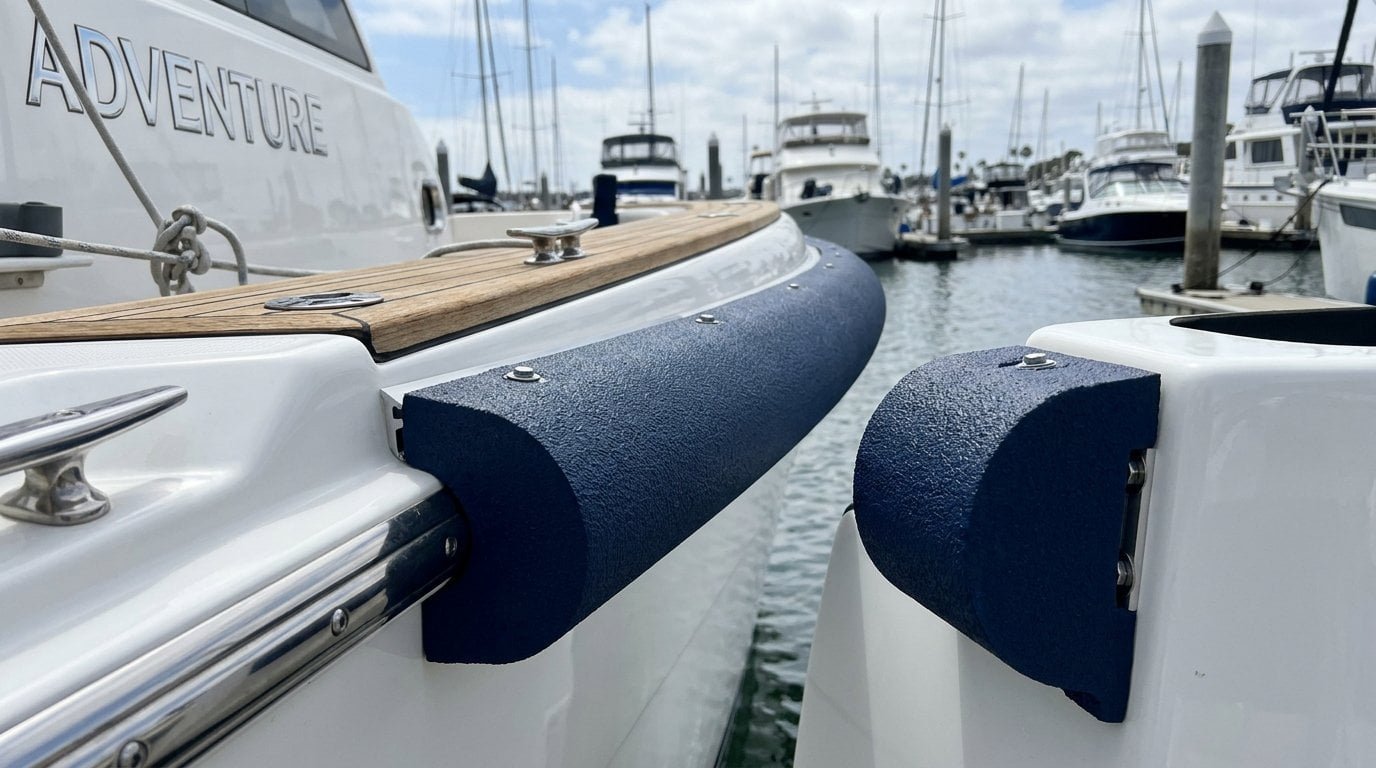
I have worked with boat owners worldwide who initially thought foam collars were purely functional. They were amazed to discover how much customization is possible. Let me walk you through every option available.
Available color options and UV stability
Standard foam collars come in basic colors that fade fast. This frustrates owners who take pride in their vessel's appearance.
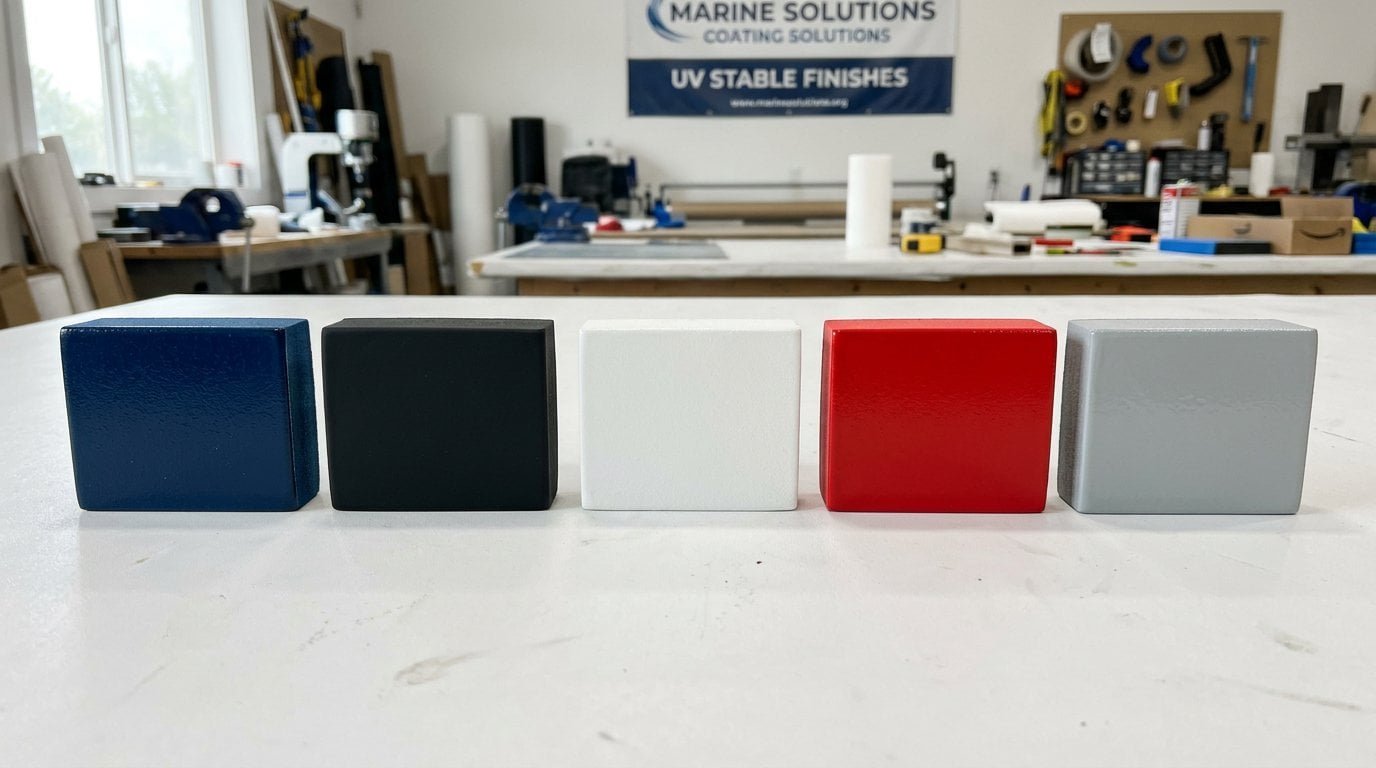
Modern polyurea-coated foam collars4 offer custom color matching with UV-stable pigments that resist fading for 5+ years, even in tropical sunlight. Colors range from classic navy and black to custom-matched hull colors using RAL or Pantone systems5.
Understanding UV Stability Technology
The secret lies in the SPUA (Spray Polyurea Elastomer) coating system. This isn't paint. It is a sprayed elastomer that bonds molecularly with the foam substrate.
| Color Type | UV Resistance Rating | Best Use Case |
|---|---|---|
| Dark Navy | Excellent | Commercial vessels, classic yachts |
| Black | Excellent | High-end boats, minimal maintenance |
| White | Good | Tropical climates, heat reflection |
| Custom Match | Very Good | Brand consistency, aesthetic matching |
| Bright Red/Orange | Good | High-visibility safety applications |
The polyurea coating contains UV absorbers and hindered amine light stabilizers (HALS). These additives absorb harmful UV radiation and neutralize free radicals before they break down the polymer chains. This is why properly coated foam collars outlast uncoated alternatives by years.
Color Matching Process
When you request a custom color, we need a sample. This could be:
- A hull paint chip
- A fabric swatch from your upholstery
- A RAL or Pantone code
- A high-resolution photograph (less accurate but workable)
Our coating supplier creates a custom pigment blend. We spray test panels for your approval before applying to your actual foam collar. This ensures the match meets your expectations.
Adding texture for non-slip safety (e.g., stepping on gunwales)
Wet decks are dangerous. Crew members slip. Injuries happen. Insurance claims follow.
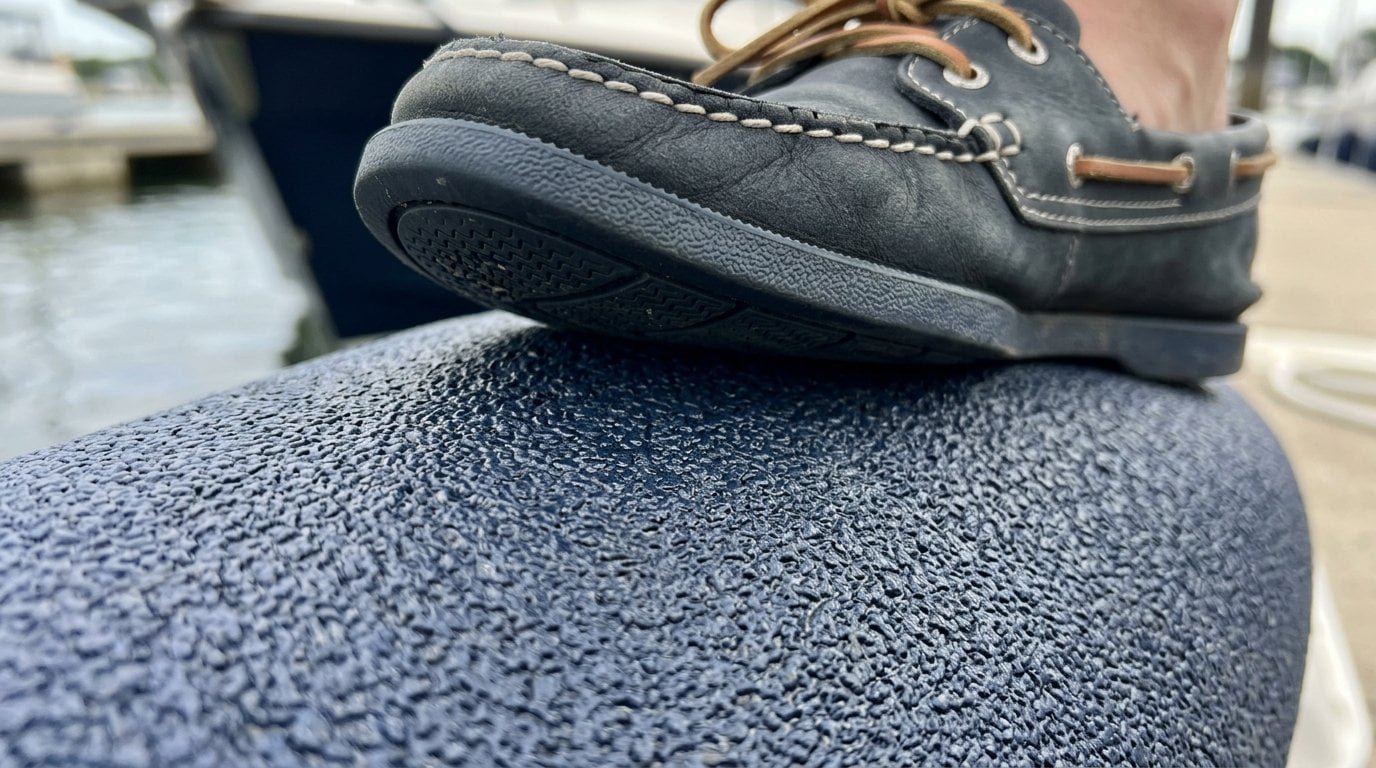
Textured foam collar surfaces increase friction coefficients by 40-60% compared to smooth finishes. The applied texture creates microscopic peaks and valleys6 that grip shoe soles, even when wet. This makes gunwale stepping safer for crew working on deck.
Texture Options and Applications
Not all textures serve the same purpose. We offer several patterns based on your specific needs:
| Texture Pattern | Friction Increase | Best Application |
|---|---|---|
| Fine Orange Peel | 40% | General deck areas, aesthetic preference |
| Medium Grit | 55% | Gunwales, boarding areas, high traffic zones |
| Heavy Aggressive | 70% | Commercial fishing vessels, workboats |
| Custom Pattern | Varies | Brand-specific textures, unique requirements |
The texture is applied during the coating process. We adjust spray gun parameters and add texture media to the polyurea formulation. This creates a permanent, integral surface that won't peel or wear off like adhesive grip tape.
Safety Standards and Testing
Our textured surfaces meet ASTM C1028 friction testing7 standards. The coefficient of friction exceeds 0.60 when wet, which classifies as "high slip resistance8" per OSHA guidelines.
I have seen textured foam collars prevent countless slips on commercial vessels where crew work on wet decks daily. The small additional cost pays for itself in injury prevention.
Incorporating boat names and logos into the foam design
Your vessel is your brand. Whether you operate a charter fleet or own a private yacht, branding matters.
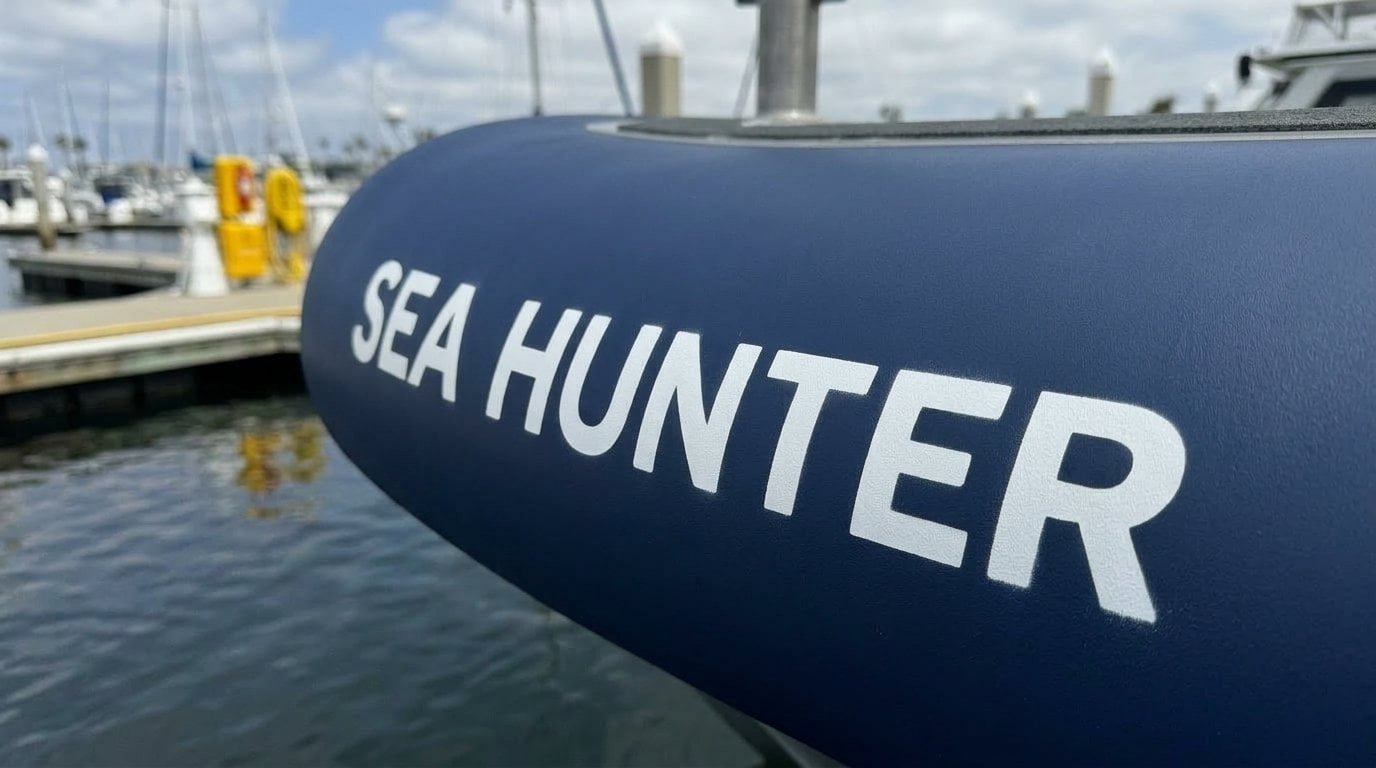
Boat names and logos can be permanently integrated into foam collars through three methods: CNC-cut recessed lettering filled with contrasting coating, applied polyurethane domed decals9. Each method offers different durability and visual impact levels.
Method Comparison
| Integration Method | Durability | Visual Impact | Cost | Lead Time |
|---|---|---|---|---|
| CNC Recessed Fill | 10+ years | High | Medium | +3 days |
| Polyurethane Domed Decal | 7-10 years | Very High | Low | +1 day |
| Molded Relief | 15+ years | Medium | High | +2 weeks |
CNC Recessed Lettering Process
This is our most popular option. Here is how it works:
- You provide vector artwork (AI, EPS, or high-res PDF)
- We program the CNC router with your design
- The machine cuts precise recesses into the cured foam
- We mask the surrounding area
- Contrasting polyurea coating fills the recesses
- Final clear coat seals everything
The result is permanent lettering that becomes part of the collar itself. It cannot peel, fade unevenly, or catch on lines and fenders.
Logo Placement Strategy
Placement matters for visibility and durability. I recommend:
- Port and Starboard Bow: Maximum visibility when approaching
- Amidships: Best for documentation photography
- Stern: Visibility from behind, popular for charter vessels
Avoid placing text in high-flex areas where the foam curves sharply. This prevents stress cracking in the coating over time.
Shape profiles: D-shape, round, or custom profiles
Not all boats have straight gunwales. Curves, angles, and unique hull shapes require thoughtful profile selection.
D-shape profiles10 offer the best protection-to-space ratio for most vessels. Round profiles excel on commercial boats with heavy fendering needs. Custom profiles match unique hull geometries. All profiles can be produced in continuous lengths or segmented sections11 based on shipping and installation constraints.
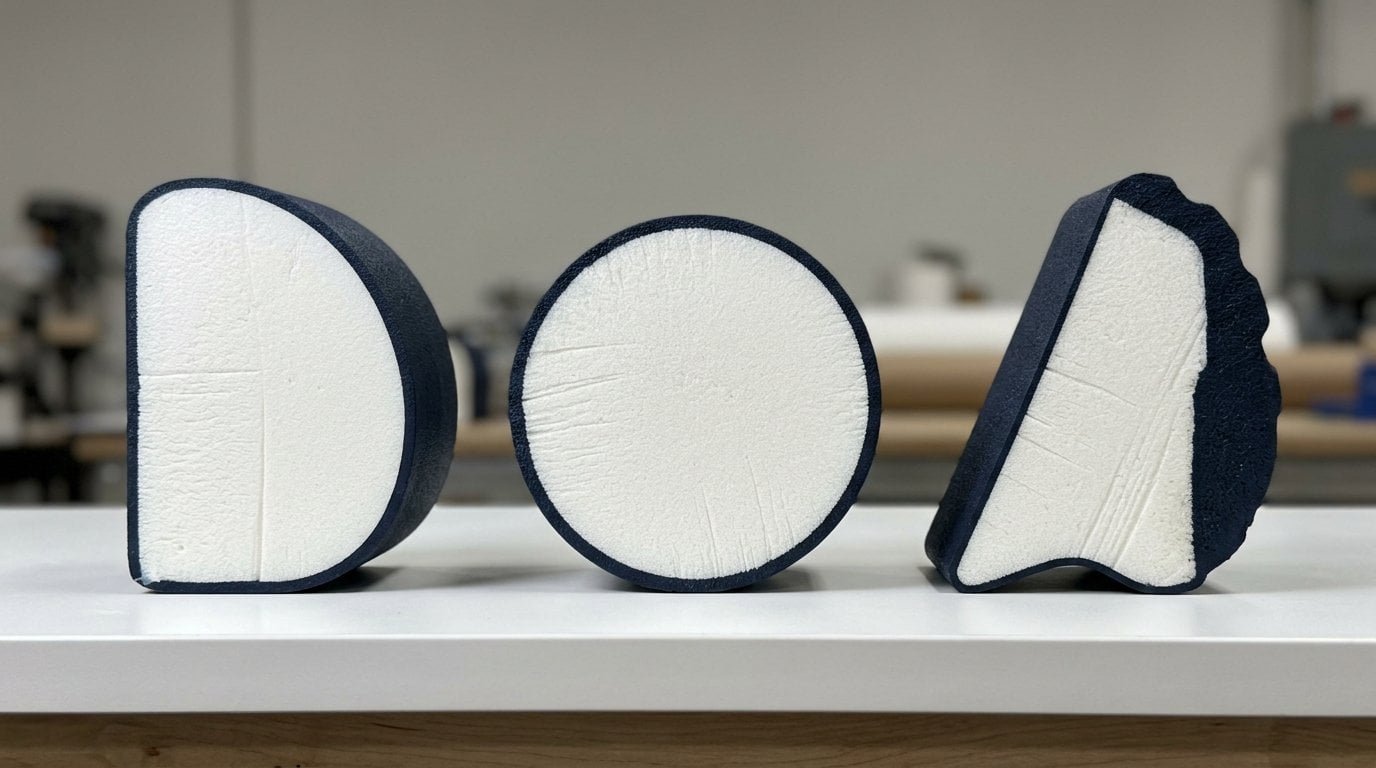
Profile Selection Guide
| Profile | Protection Level | Space Required | Best For |
|---|---|---|---|
| D-Shape | High | Moderate | Most recreational and commercial vessels |
| Round | Very High | High | Heavy commercial use, tugs, workboats |
| Flat-Back D | High | Low | Boats with limited gunwale space |
| Custom Profiles | Variable | Variable | Unique hull shapes, specific requirements |
D-Shape: The Universal Choice
The D-shape is our most requested profile. The flat back mounts flush against the hull. The curved outer face absorbs impact energy efficiently. The flat top provides a useful stepping surface when boarding.
The D-shape's geometry distributes impact forces across the hull surface rather than concentrating them at a single point. This reduces stress on both the collar and the vessel structure.
Custom Profiles for Unique Requirements
We have produced various shapes of marine foam fenders for customers around the world, including D-shaped and custom cross-section profiles, all in long strips. When a standard profile won't work, we create custom profile dies.
Custom profiles we have manufactured include:
- Asymmetric D-shapes for boats with angled hull sides
- Multi-radius profiles that follow compound curves
- Recessed channel profiles for hiding fasteners
- Integrated rub rail profiles combining fendering and trim
Segmented vs. Continuous Delivery
Segmented transportation is usually easier to produce and has lower shipping costs. However, many customers request the production and delivery of continuous, one-piece foam collars. In these cases, we use plywood in our workshop to create a mold matching the hull's shape, allowing us to produce foam fenders that fit the boat perfectly. Of course, this approach involves higher production and transportation costs.
| Delivery Method | Production Cost | Shipping Cost | Installation Complexity | Best For |
|---|---|---|---|---|
| Segmented Sections | Lower | Lower | Moderate | Standard hulls, budget-conscious projects |
| Continuous One-Piece | Higher | Higher | Lower | Complex curves, premium fit requirements |
Conclusion
Customizing your boat foam collar transforms a standard protective component into a tailored solution that reflects your vessel's identity and enhances its functionality. From UV-stable colors that match your hull to non-slip textures that protect your crew, every customization option serves a practical purpose.
At Jettyguard, we manufacture long strip foam collars with customizable cross-section shapes including D-shape and custom profiles. Whether you need segmented sections11 for easy shipping or continuous one-piece collars12 for perfect fit, we deliver foam fenders engineered to your exact specifications. Contact us to discuss how we can customize your foam collar project.
Explore how customized foam collars enhance both safety and aesthetics for your boat. ↩
Learn about the significance of UV-stable coatings in prolonging the life of your boat's foam collar. ↩
Find out how branding your boat with integrated logos can enhance visibility and identity. ↩
Explore the advantages of polyurea coatings for durability and UV resistance. ↩
Discover how RAL and Pantone systems ensure accurate color matching for your boat. ↩
Learn how texture design improves safety by increasing friction on wet surfaces. ↩
Understand the importance of ASTM C1028 testing for ensuring slip resistance on boats. ↩
Find out how high slip resistance can prevent accidents on wet decks. ↩
Discover how polyurethane domed decals can enhance the visual impact of your boat's branding. ↩
Understand why D-shape profiles are the most popular choice for boat protection. ↩
Understand the advantages of segmented sections for easier shipping and installation. ↩
Explore why continuous one-piece collars provide a premium fit for complex hull shapes. ↩