Static protection systems fail when tides fluctuate. Your monopiles are left exposed to heavy ship impacts. Donut foam fenders solve this by floating with the water level.
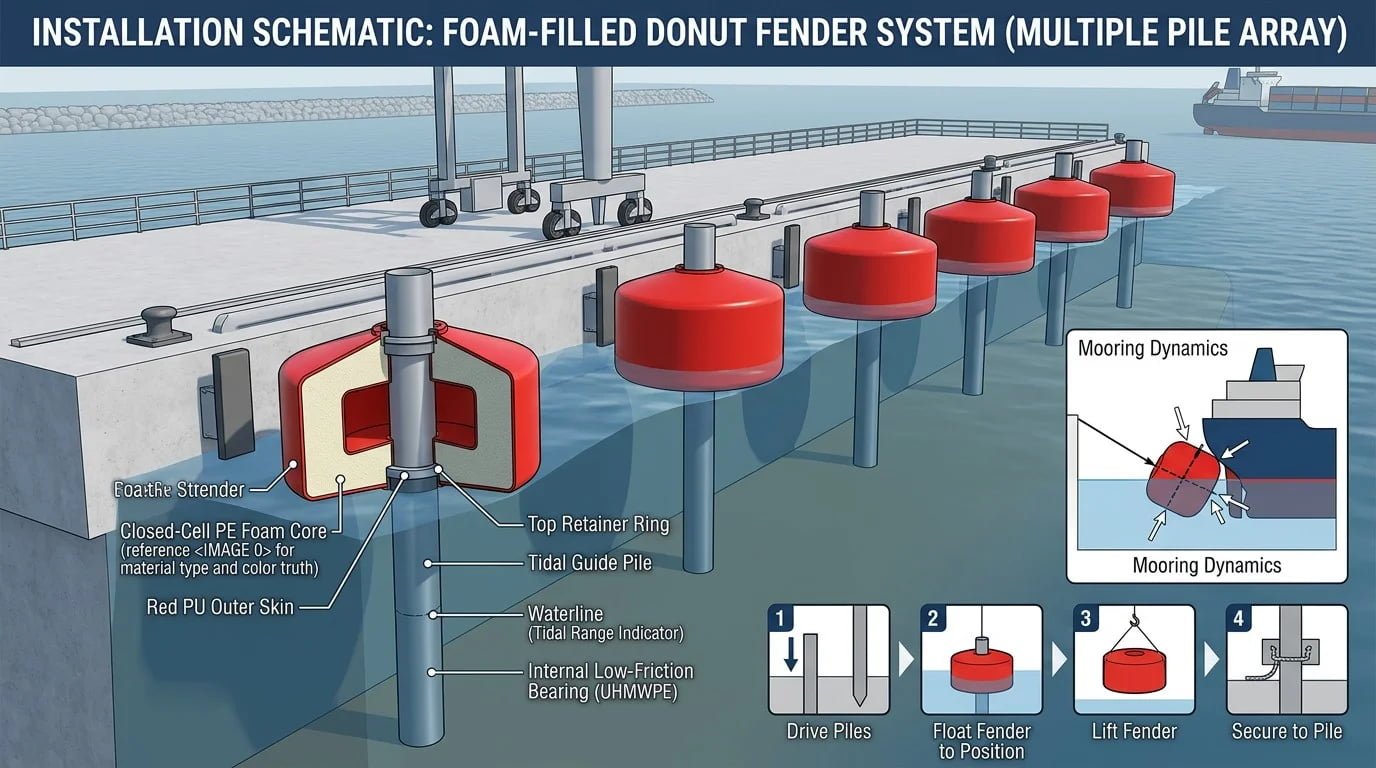
Donut foam fenders are specialized cylindrical marine guards designed to slip over stationary monopiles. They feature a buoyant foam core1 and low-friction internal bearing. This allows them to freely float up and down with tidal changes while rotating to deflect vessel impacts away from the pile.
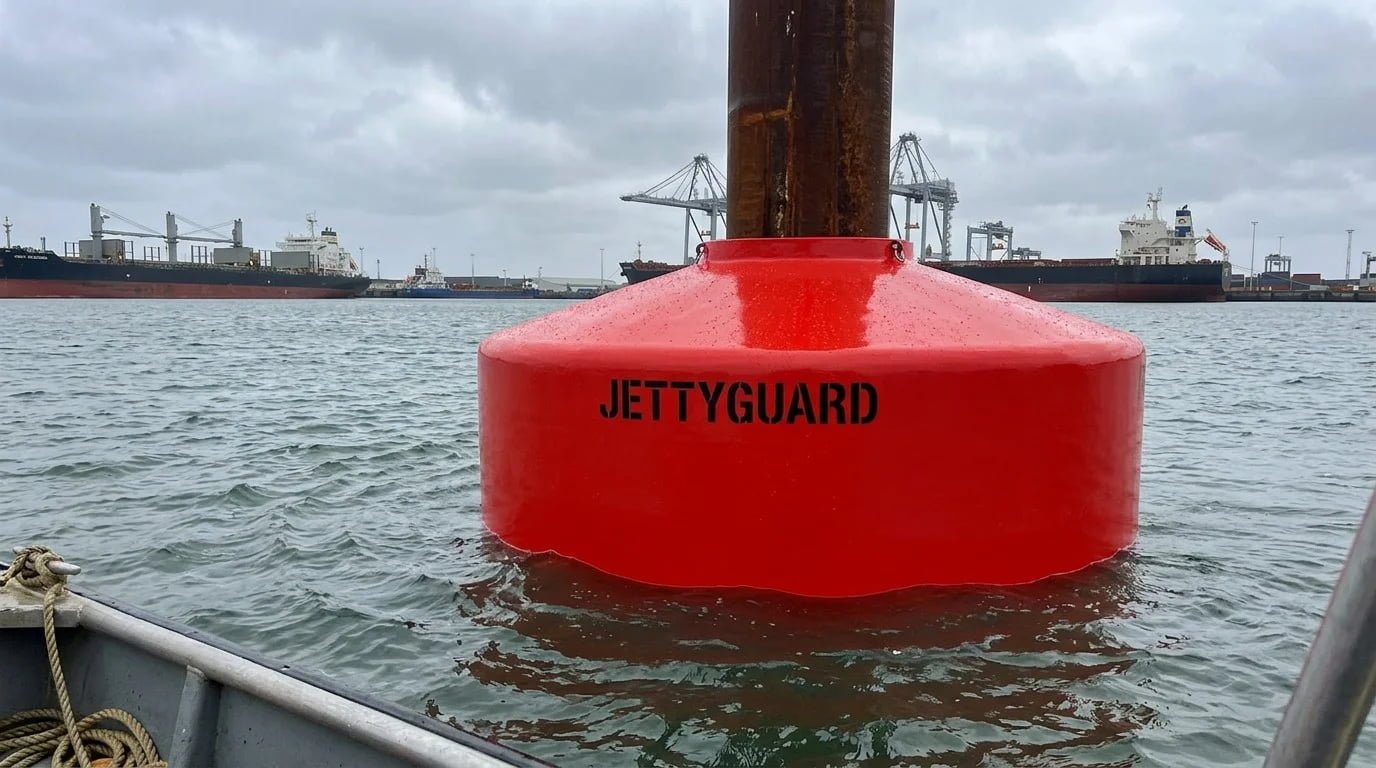
If you want to stop replacing damaged piles in dynamic tidal zones2, you need to understand how these floating workhorses operate. Let me break down the mechanics behind this smart protection.
How donut fenders self-adjust to tidal changes
Tides move constantly, leaving fixed fenders underwater or hanging too high. This puts vessels and infrastructure at massive risk. Self-adjusting donut fenders eliminate this dangerous gap completely.
Donut fenders use a highly buoyant closed-cell EVA foam core. This foam allows the entire fender structure to float on the water surface. As the tide rises or falls, the fender slides up and down the monopile, ensuring continuous impact protection at the exact waterline.
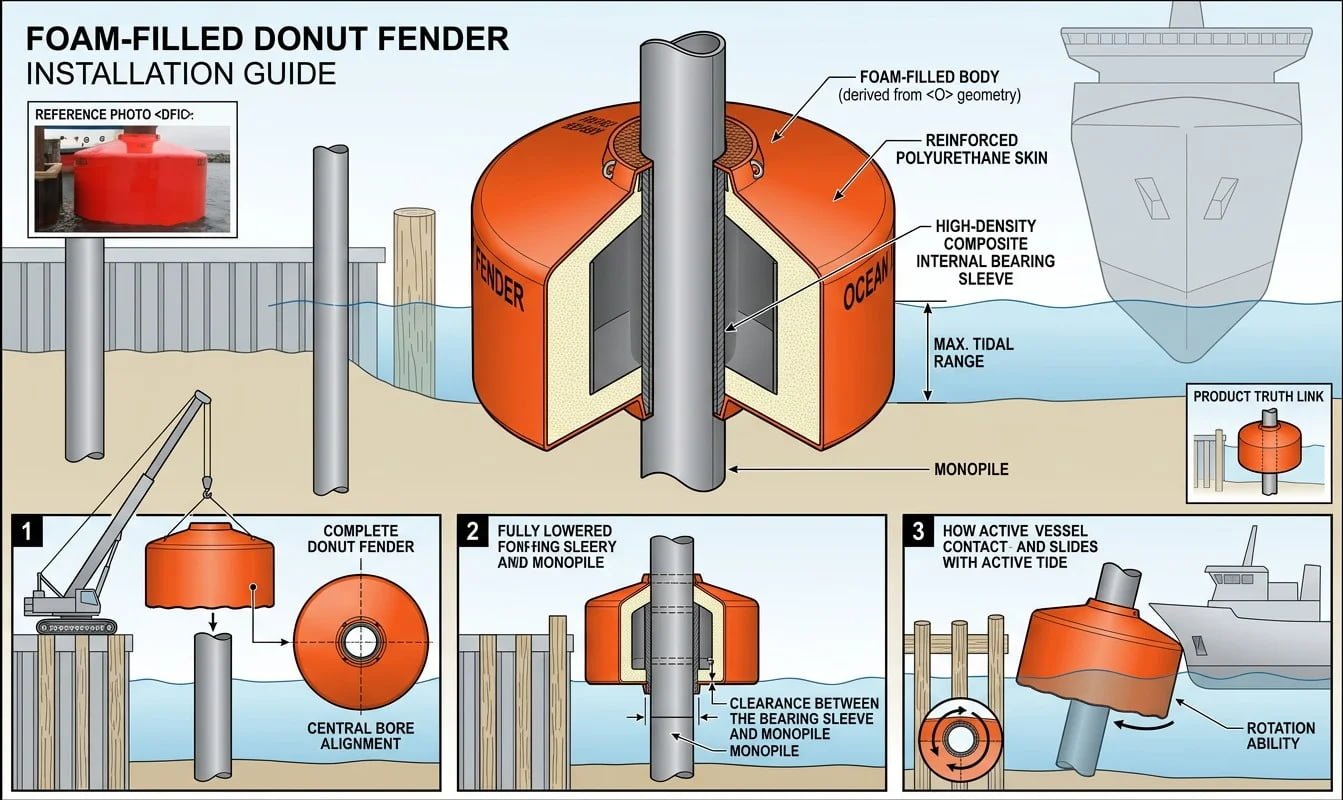
The secret to tidal adjustment lies in the precise calculation of buoyancy. Many factories use the standard steel frame, EVA foam, and polyurea coating3. However, they lack the true engineering skills needed to make it work.
Without exact engineering, a donut fender might not have enough buoyancy. It will sink too low in the water. This ruins the drafted height and leaves the top of the monopile exposed.
I see this happen often with cheap alternatives. The materials look the same on paper. Yet, the final product fails to sit at the correct waterline. This defeats the whole purpose of a floating fender.
At Jettyguard, we approach this differently. Our engineering team calculates the exact weight of the steel core and the required foam volume. We guarantee the perfect draft for your specific project conditions.
We make light work of protection by ensuring the fender always floats right where the ship strikes. You never have to worry about tidal drops leaving your dock vulnerable. The fender simply glides with the sea.
Internal low-friction bearing designs
Direct impacts transfer massive force into your monopile. Stiff fenders cause structural cracking over time. An internal low-friction bearing absorbs and redirects this dangerous kinetic energy.
The core of a donut fender contains synthetic low-friction bearing pads4. These pads sit between the fender's steel frame and the steel monopile. When a vessel strikes, the bearings allow the entire fender to spin freely, turning direct impact force into harmless rotational energy.
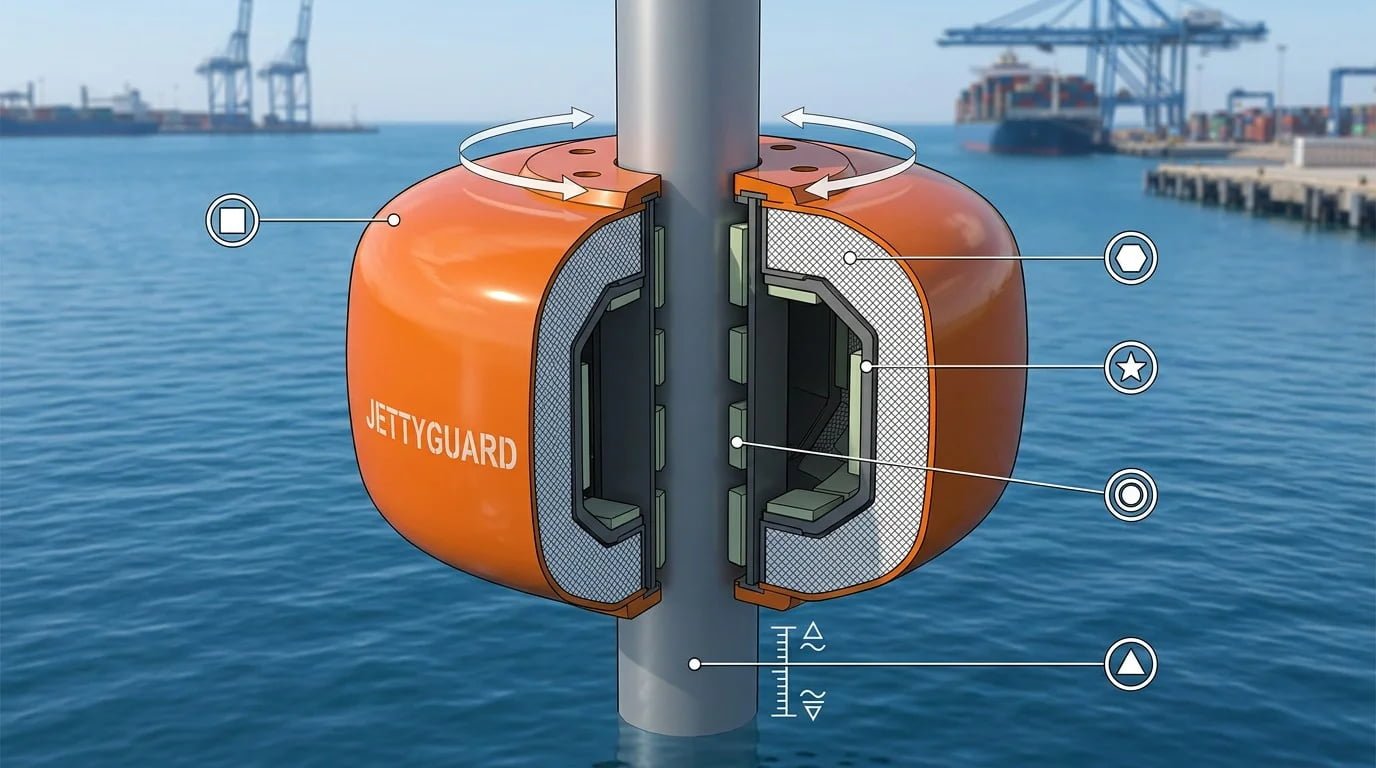
A donut fender does not just absorb hits. It deflects them. When a ship hull pushes against the outer polyurea skin, the fender begins to rotate.
This rotation is crucial for safety. It guides the vessel smoothly along the structure. The low-friction pads inside the core make this spinning action effortless.
These synthetic bearings are tough. They resist wear from constant spinning and sliding. They also perform perfectly in harsh saltwater environments without degrading.
I always tell project managers to check the bearing material. Cheap pads wear out fast. Once they degrade, the fender gets stuck on the pile. A stuck fender absorbs too much force and damages the pile.
We ensure our bearings offer the lowest possible friction coefficient. They keep the fender turning smoothly year after year. This protects the boat hull from scratching and saves the monopile from bending.
This smart design drastically reduces the sheer stress on your marine infrastructure. It is a cost-effective way to extend the lifespan of your turning dolphins5.
Applications for turning dolphins and lock entrances
Narrow waterways create high collision risks. Ships struggle to navigate tight lock entrances6 smoothly. Proper turning dolphin protection keeps heavy vessels on track without causing structural damage.
Donut fenders are the perfect solution for turning dolphins and lock entrances. Their spinning ability helps physically guide ships around tight corners. If a captain misjudges a turn, the rolling fender absorbs the mistake and gently redirects the ship back into the safe channel.
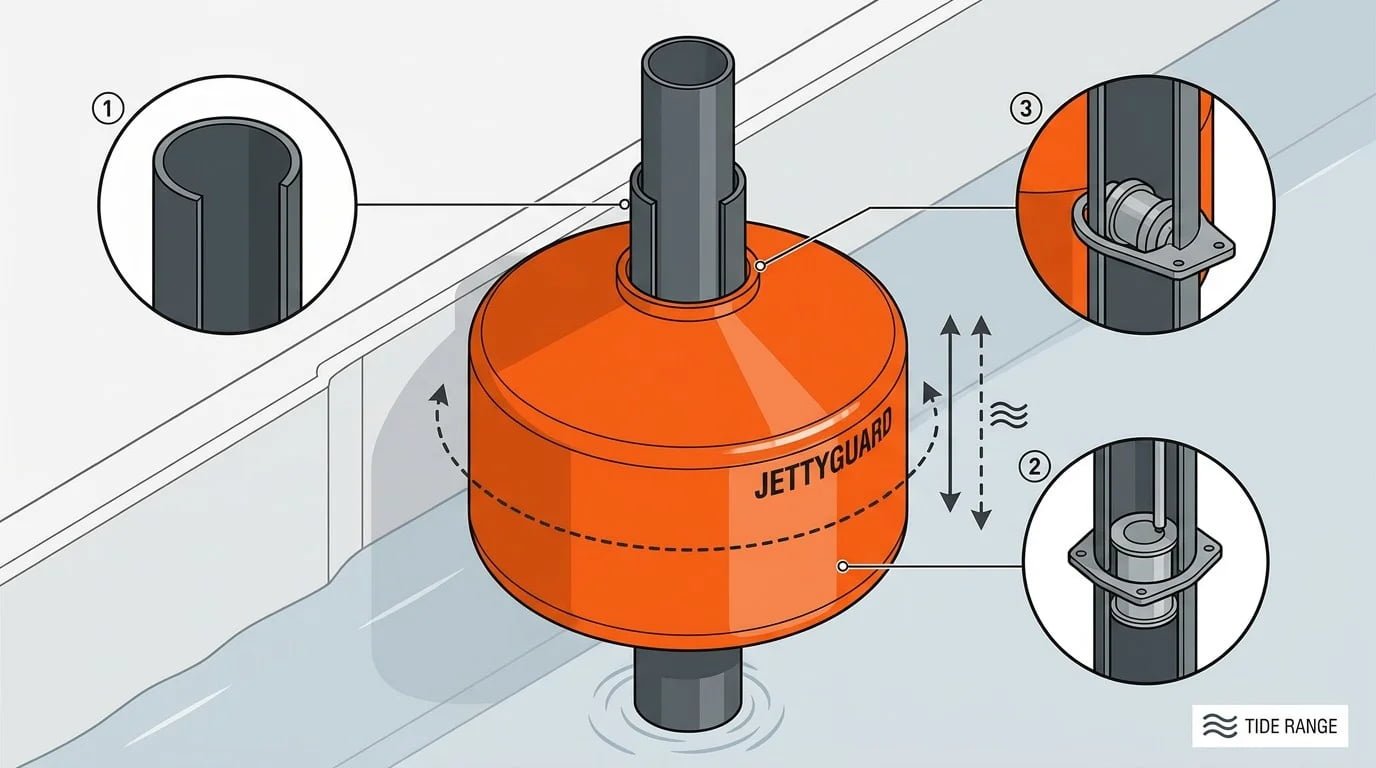
Turning dolphins act as pivot points for large ships. Vessels lean on these structures to make sharp turns. Standard fixed fenders grab the hull and create massive friction.
Donut fenders solve this problem completely. The ship presses into the foam cushion, and the fender simply rolls with the hull. This rolling action guides the boat exactly where it needs to go.
Lock entrances benefit from this same rolling mechanic. Ships must enter locks at very precise angles. Wind and current easily push them off course.
When a ship hits the corner of a lock, a donut fender spins it back straight. The energy absorption of the EVA foam prevents hull damage. The rotation keeps the ship moving forward.
Procurement leaders love these setups because they prevent catastrophic accidents. One damaged lock can halt marine traffic for weeks. The right fender keeps everything flowing safely.
By using donut fenders at these critical junction points, you ensure maximum safety. They act as a physical bumper lane for massive steel ships.
Guiding structures in high-traffic waterways
Heavy vessel traffic wears down standard dock defenses fast. Constant bumps and scrapes destroy traditional rubber guards. You need a dynamic system to handle continuous daily abuse.
In high-traffic waterways7, donut fenders act as highly durable guiding structures. Multiple donut fenders can be installed in a row along approach channels8. They create a continuous, rolling barrier that safely funnels both small boats and large ships into their designated berths.
Approach channels get busy very quickly. Boats of all sizes rush to dock. This chaotic environment leads to frequent minor collisions.
A line of donut fenders forms a perfect approach wall. If a ship drifts too close, it just bounces and rolls along the fenders. The vessel never touches the hard concrete or steel behind them.
We build these fenders with a tough polyurea skin. This coating resists cuts, tears, and heavy impacts. It handles the daily grind of busy ports without breaking down.
Overseas distributors know that durability is the biggest selling point. Clients want fenders they can install and forget. Donut fenders require very little maintenance over their long lifespan.
You do not have to inflate them. You do not have to patch leaks. The closed-cell foam simply cannot deflate. Even if the outer skin is deeply cut, the fender keeps floating and spinning.
This reliability makes them ideal for crowded guiding structures. They give port operators peace of mind. Every ship gets a safe, smooth ride into the harbor.
Conclusion
Donut foam fenders provide ultimate, self-adjusting protection for monopiles and turning dolphins. Their precise engineering and rotating design ensure safe vessel guidance. Contact Jettyguard today to upgrade your marine protection with our lightweight, expertly drafted donut fenders.
Learn why a buoyant foam core is crucial for effective protection against vessel impacts. ↩
Gain insights into how dynamic tidal zones affect marine structures and necessary protections. ↩
Learn the significance of polyurea coatings in enhancing the longevity of marine structures. ↩
Find out about the materials and technologies behind effective low-friction bearing pads. ↩
Learn how turning dolphins assist ships in navigating tight marine environments. ↩
Understand the specific challenges of navigating lock entrances and how to address them. ↩
Explore effective solutions for maintaining safety in busy waterways through protective measures. ↩
This link offers insights into the importance of well-designed approach channels in safe docking. ↩