Does the thought of a 100-ton vessel snapping its mooring lines keep you up at night? It should. A single failed bollard due to poor installation or neglected maintenance can turn a routine docking into a multi-million dollar disaster, risking lives and infrastructure. But with the right protocols, this nightmare is entirely preventable.
Mooring bollard installation and maintenance are the critical safeguards that ensure port safety and operational continuity. Proper installation begins with precise template matching to avoid costly misalignment, while effective maintenance relies on routine inspections and immediate corrosion control. This guide covers the essential steps—from the first pour of concrete to the final load test—to guarantee your bollards stand the test of time and tide.
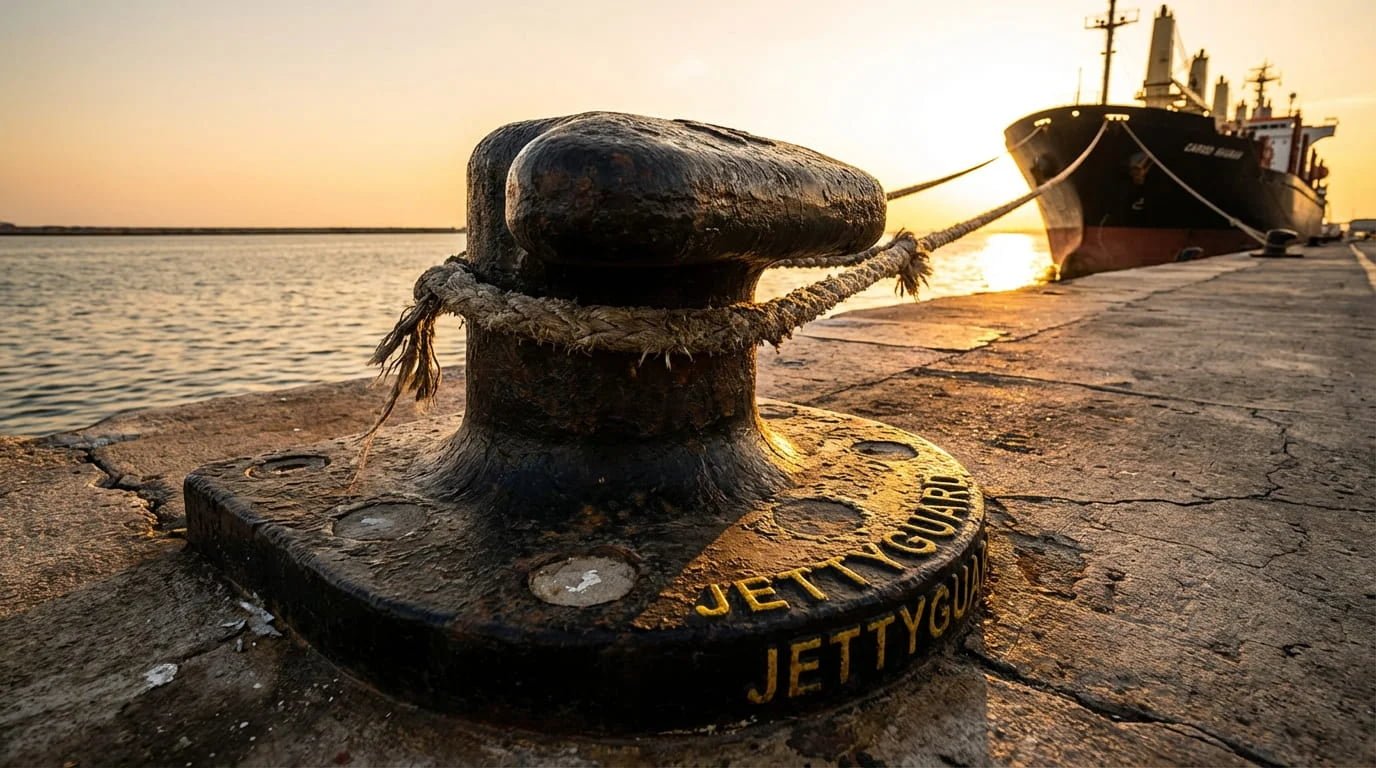
Most port operators treat bollards as "install and forget" equipment, only paying attention when rust eats through the base or bolts loosen. This reactive approach is a ticking time bomb. Let’s dismantle that mindset and build a proactive strategy that saves you money and headaches.
What are the critical pre-installation site assessments?
Before a single drop of concrete is poured, you must understand exactly what forces your bollard will face. Ignoring local environmental factors is the fastest way to shorten your equipment's lifespan.
To ensure a successful installation, you need a comprehensive site assessment that goes beyond just checking the blueprints. You must evaluate the tidal range and current strength, as these determine the vertical and horizontal angles of the mooring lines. A bollard designed for a calm harbor might fail catastrophically in a location with extreme tidal variations if the line angles exceed its design capacity. Furthermore, soil analysis is non-negotiable; the stability of your quay wall dictates the type of foundation and anchor bolts1 required. Finally, consider the vessel mix—will you be berthing small tugs or massive container ships? The diversity of your traffic defines the load ratings you need.
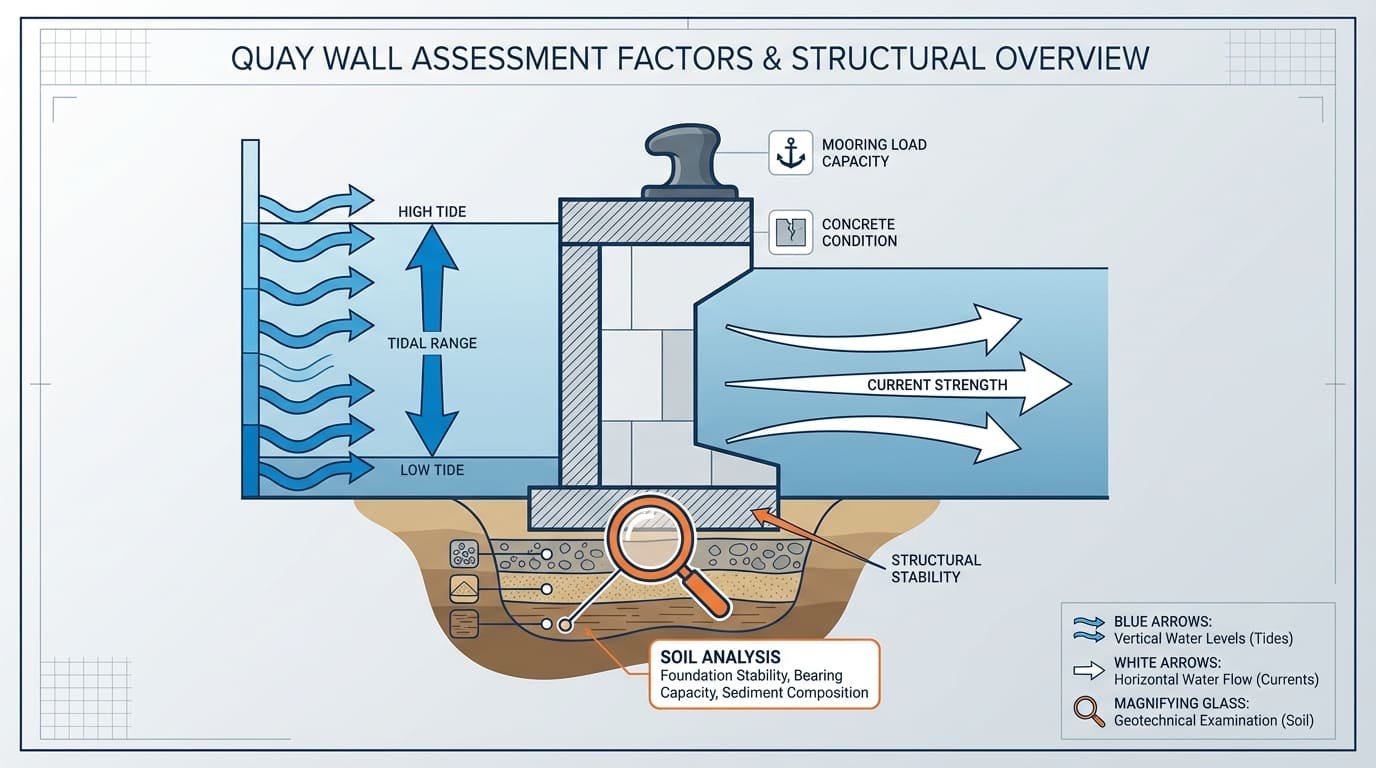
I’ve seen too many projects where the bollard capacity was chosen based solely on the largest vessel's displacement, ignoring the local conditions. That’s a mistake. You have to look at the exposure. Is the berth open to the sea? If so, swell and wind loads can impose dynamic forces far higher than static calculations suggest.
Also, don't forget the spacing. The distance between bollards isn't just a suggestion; it's a calculation based on the ship's length and the optimal line angles. Place them too far apart, and you risk steep line angles that reduce holding power. Place them too close, and you waste budget. A proper assessment balances these factors to create a mooring layout that is both safe and economical. It’s about matching the hardware to the reality of your port, not just the theory.
How to correctly install mooring bollard anchor bolts and foundations?
The most terrifying moment in any installation project is lowering the bollard onto the bolts and realizing... they don't fit.
The alignment of the pre-embedded bolts with the bollard's bolt holes is the single most critical factor in installation success. A deviation of even a few millimeters can force you into a nightmare of on-site engineering fixes or, worse, scrapping the product entirely.
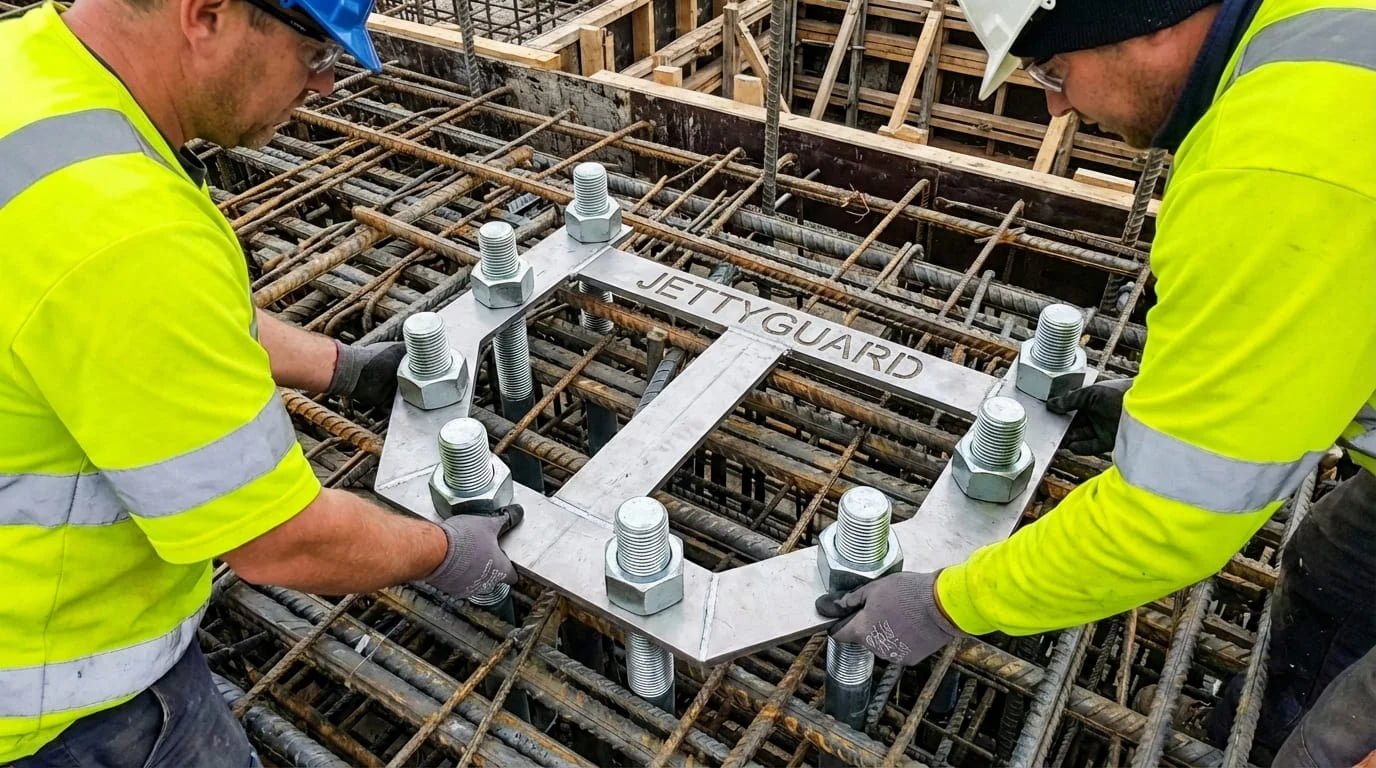
In my years in this industry, I have seen the "bolt mismatch" disaster happen more times than I care to count. It is devastating. You have the concrete poured, the anchors set, and the bollard arrives—only to find the holes don't line up. The cost of rectifying this is astronomical, whether it involves drilling new holes in reinforced concrete (compromising strength) or remanufacturing the bollards.
That is why at Jettyguard, we don't leave this to chance. We always manufacture a steel template that matches the exact bolt pattern of the bollards. We don't just send you a drawing; we send you the physical template. We ship this to the contractor before the bollards arrive—often with the anchor cages—so they can use it directly during the concrete pouring phase. This simple step acts as a "physical guarantee" that when the bollards finally show up, they will slide onto those bolts like a hand into a glove. It’s a small upfront effort that eliminates a massive downstream risk.
What is the step-by-step procedure for proper bollard installation?
Installation is not just about tightening nuts; it's a precise sequence that ensures load transfer from the ship to the quay.
A proper installation follows a strict sequence: positioning the template, pouring and curing the concrete, grouting the base, and finally, applying the correct torque to the anchor bolts. Rushing any of these steps compromises the structural integrity of the entire mooring system.
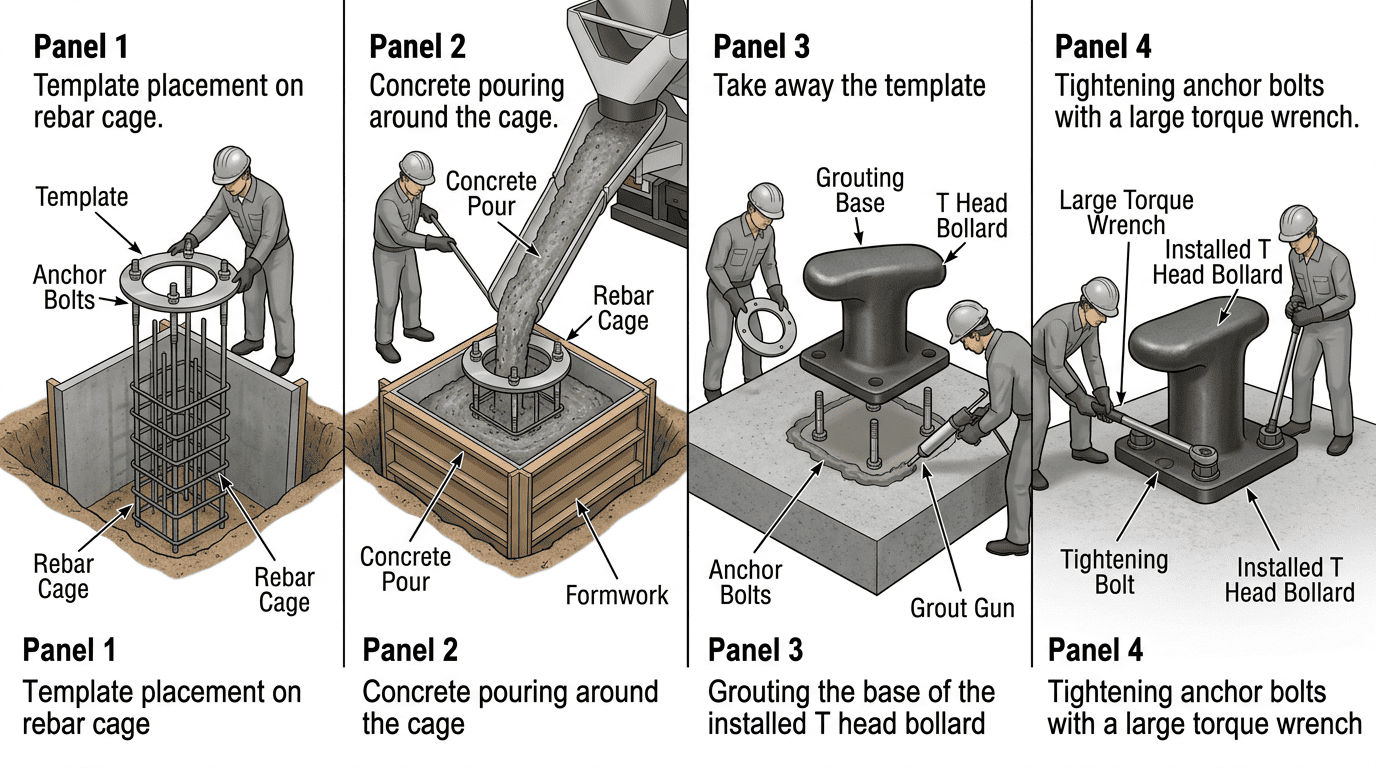
Let's talk about grouting, the unsung hero of bollard installation. The grout pad isn't just there to level the bollard; it ensures that the load is evenly distributed across the concrete foundation. Without a high-strength, non-shrink grout, you get point loading—high stress on specific spots of the concrete—which leads to cracking and eventual failure.
And then there’s torque. You can’t just tighten the bolts "until they feel tight." You need a calibrated torque wrench to apply the specific pre-load defined by the manufacturer. This pre-load prevents the bolts from experiencing fatigue when the bollard is under cyclic load (like a ship bobbing in the waves). If the bolts are too loose, the bollard will move, hammering the concrete. If they are too tight, you risk snapping the bolts or stripping threads. Follow the specs. It’s simple, but it’s vital.
How to prevent corrosion2 in harsh marine environments?
You can't stop the ocean from trying to rust your equipment, but you can certainly slow it down.
Corrosion is the number one enemy of mooring bollards, but it can be managed effectively. While factory-applied coatings3 are the first line of defense, the real battle is won through vigilant on-site maintenance and timely touch-ups of the inevitable damage that occurs during transport and installation.
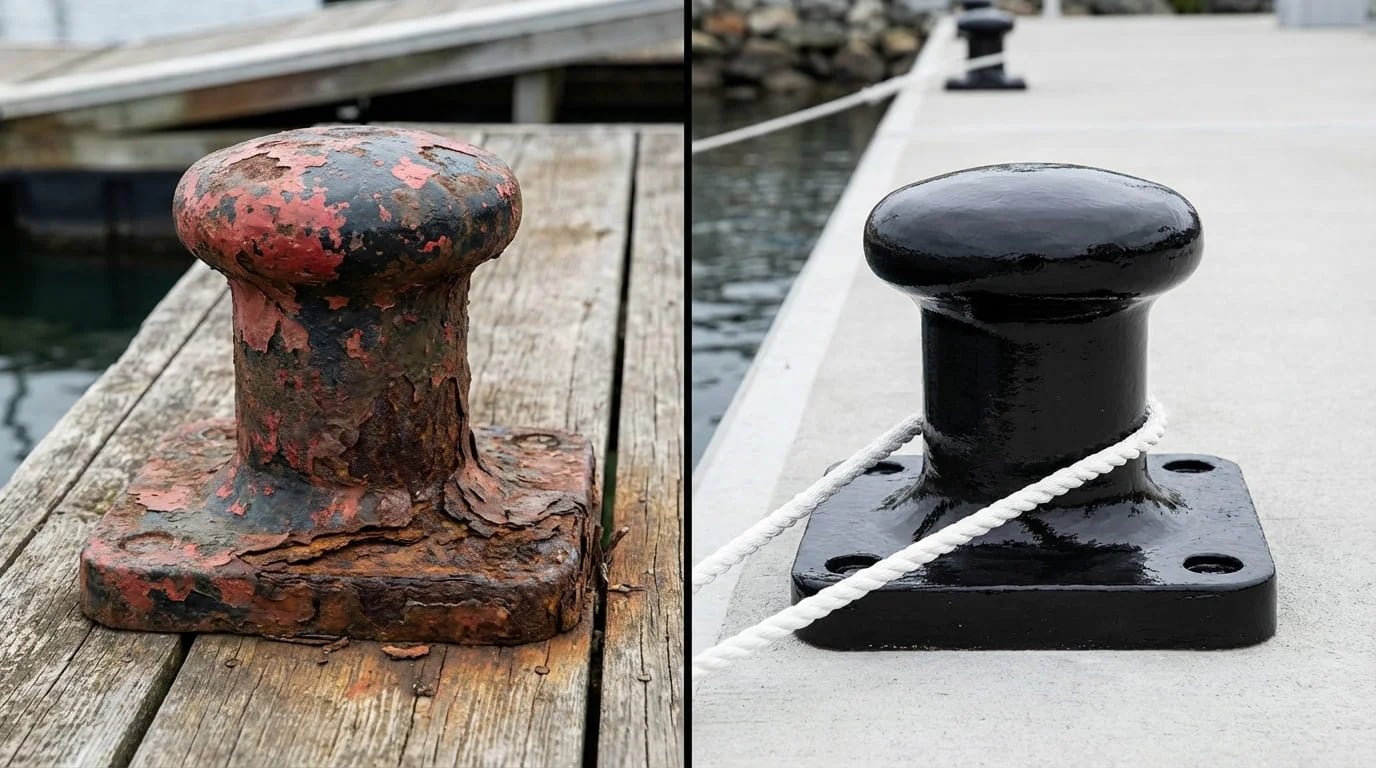
Let’s be real for a second. We can apply the most advanced, multi-layer coating systems in our factory—shot blasting to SA2.5, zinc-rich primers, high-build epoxies. But in the rough-and-tumble world of engineering transport and installation, damage to the paint surface and even the hot-dip galvanized layer is almost impossible to avoid. Chains rub, cranes bump, and tools slip. It happens.
But here is the good news: you don't need to panic, and you certainly don't need to replicate our factory's "in-house" standards out on the windswept dock. You just need to be timely. For on-site maintenance, simple is effective. Don't overcomplicate it. Thorough mechanical rust removal (wire brushing or sanding) followed by a solid application of a high-quality epoxy paint is sufficient. This "field repair" seals the breach and prevents the salt from getting a foothold. It extends the life of the bollard and the bolts significantly, delaying the onset of deep corrosion. The goal isn't perfection; it's protection.
How to perform load testing and structural integrity verification?
How do you know your bollard will hold 100 tons? You test it. But how you test it matters.
Load testing verifies that your bollard can actually handle its rated capacity. While new bollards can be tested in the factory to ensure manufacturing quality, existing bollards require periodic on-site pull tests to verify that the foundation and anchors haven't degraded over time.
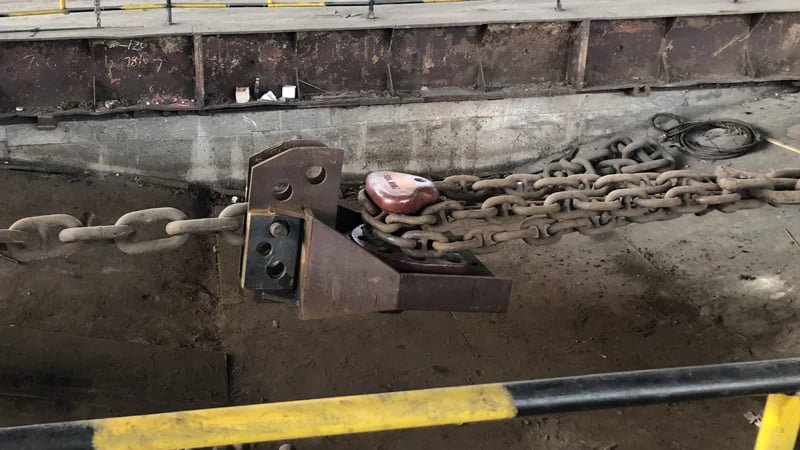
There is a big difference between testing a new product and testing an installed one. For new procurement, Jettyguard provides paid tensile testing services. We rig the bollard in our test frame and pull it to proof load (usually 1.1 to 1.5 times the Safe Working Load, depending on the standard). We document this with photos and charts, giving you absolute peace of mind before the unit even leaves our factory.
However, post-installation load testing4 is often costly due to the heavy equipment required on-site. It involves bringing in hydraulic jacks, reaction frames, and safety zones. But for aging ports, it’s a necessary evil. If you have bollards that have been in service for 15+ years, or if you suspect foundation damage, you need to know if they are still safe. There are specialized third-party service providers who can perform these on-site pull tests. It’s an investment, yes, but compare that to the cost of a breakaway ship damaging a loading arm or a neighboring vessel. The test is cheap insurance.
Conclusion
Bollard safety isn't magic; it's method. Use a template for installation, touch up the paint immediately, and test when in doubt. These simple habits are the difference between a secure port and a disaster waiting to happen.
Learn the best practices for installing anchor bolts to ensure secure mooring bollard setups. ↩
Explore effective strategies for managing corrosion and extending the life of your mooring bollards. ↩
Understand the benefits of factory-applied coatings in protecting mooring bollards from corrosion. ↩
Learn about the load testing procedures that verify the safety and capacity of mooring bollards. ↩