A bollard seems like a simple chunk of metal, but choosing the wrong one can cost you millions in damages. Do you know which type your port actually needs?
The right mooring bollard1 depends on your vessel size, tidal range, and mooring angles. While T-Head bollards are the versatile "workhorse" for most modern ports, specialized shapes like Horn or Kidney bollards are essential for steep angles or specific rope protection needs.
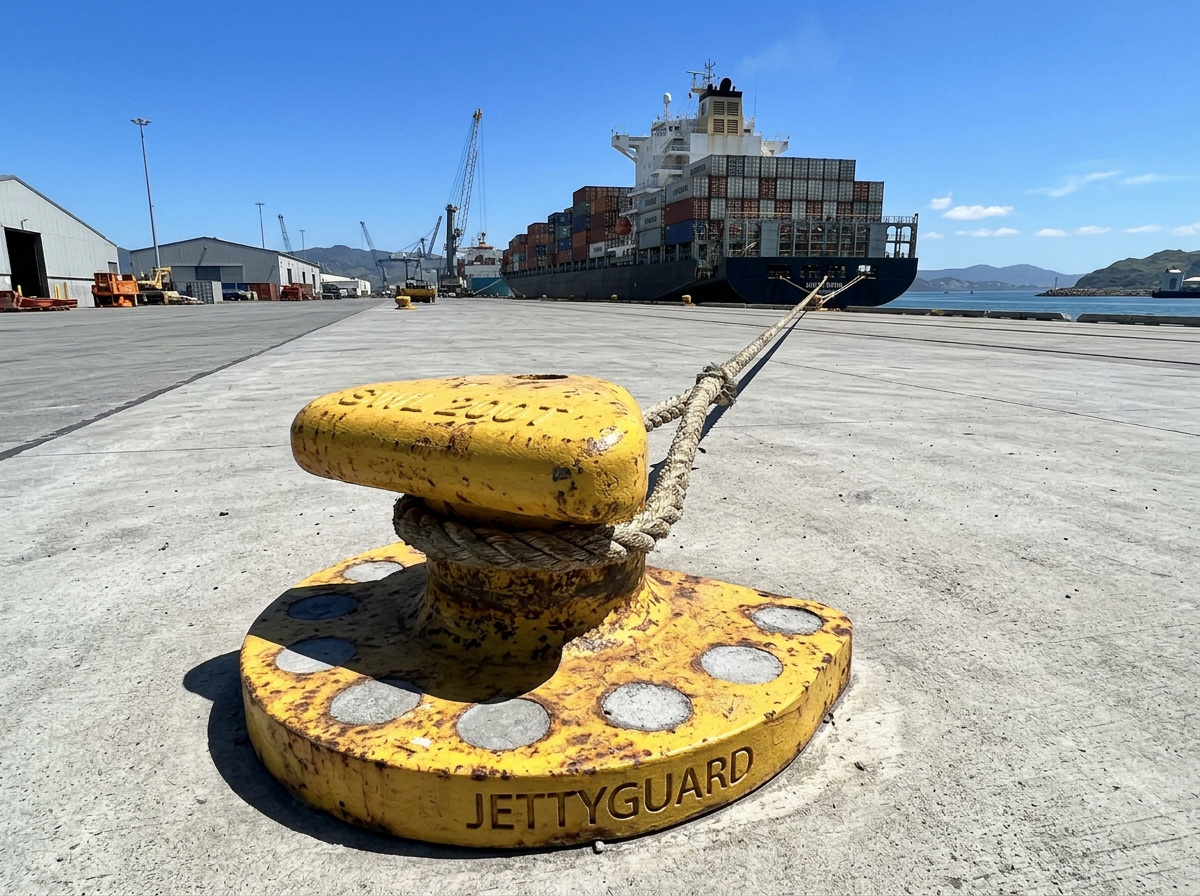
With so many regional names and shapes, it is easy to get confused. Let me break down the differences so you can make the right choice for your project.
Why Is the T-Head Bollard My Top Recommendation?
You might wonder which bollard is the safest bet for a new project. If you are unsure, where should you start?
The T-Head bollard2, often called the "Tee Bollard," is the most versatile option on the market. It handles steep line angles well and is fantastic for multi-purpose berths handling various vessel sizes.
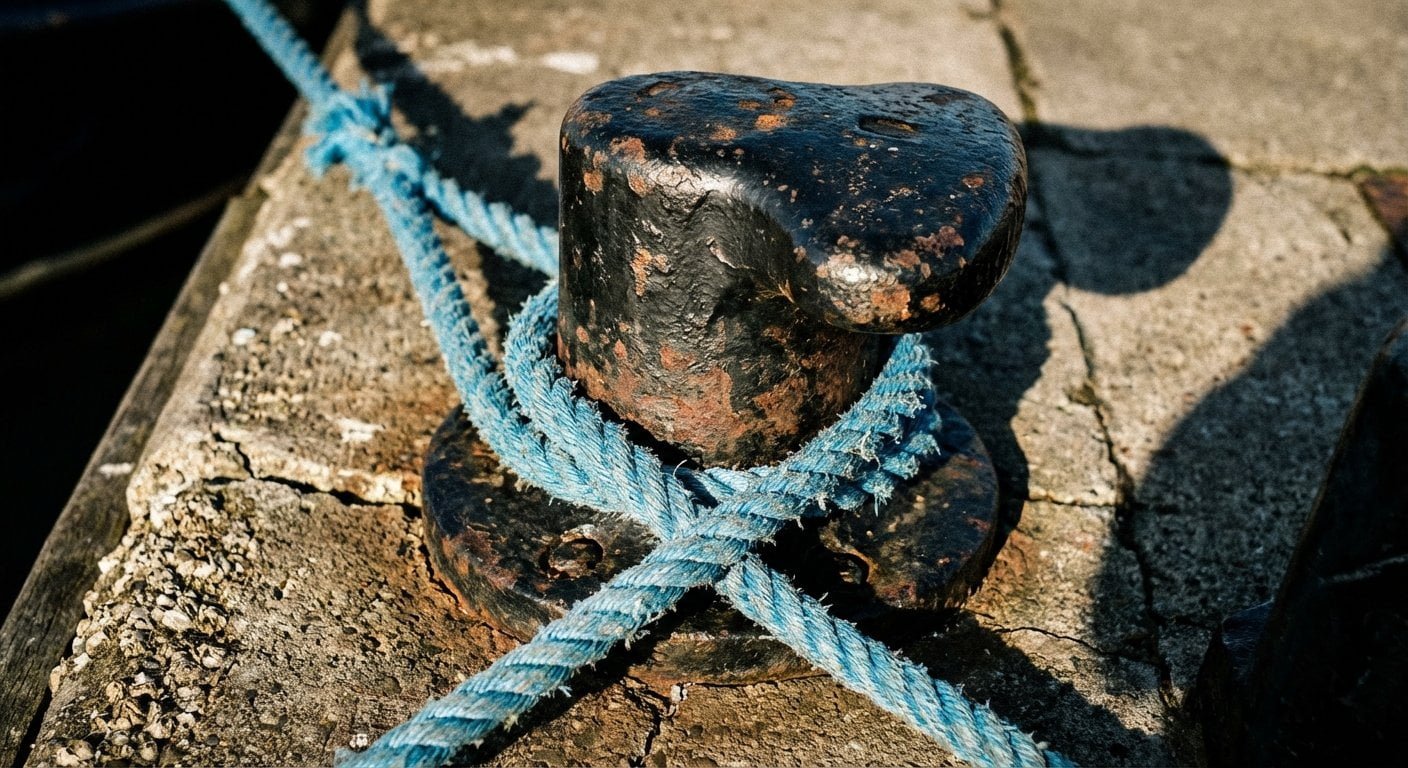
When clients come to me with a new project, unless they have a specific regional habit or a unique constraint, I almost always recommend the T-Head type. In fact, it is currently our largest export item by volume. Why? Because it just works. It covers the widest range of mooring scenarios without fuss.
I remember discussing this with Tommy, one of our long-time distributors in South Korea. He is very particular about quality because he supplies major shipyards. He told me that for the T-Head bollards we supply, the quality is "above average" compared to what he sees in the market, yet our pricing remains average or even below average. That balance of high performance and reasonable cost is why the T-Head has become the default choice for so many of our partners. It holds up to 300 tonnes, handles line angles up to 60 degrees, and is compact enough to not clutter the deck. If you want a "install and forget" solution, this is it.
When Should You Choose a Horn or Staghorn Bollard?
What if your port has massive tidal variations or vessels with very high freeboards? You need a bollard that prevents the rope from slipping off at steep angles.
The Horn bollard3, also known as the Staghorn, is designed specifically for these challenging geometry problems. Its complex shape acts like a hook to keep mooring lines secure even when the ship is high above the dock.

I have seen ports in regions with 10-meter tidal range4s where a standard pillar bollard would be dangerous. As the tide rises, the line angle gets steeper. If the bollard lip is too shallow, the rope can pop right off. The Staghorn prevents this. The downside is that it is more complex to cast and slightly more expensive than a T-Head. But for those specific "steep angle" scenarios, it is not a luxury; it is a necessity. It is also excellent for multi-line mooring, as the "horns" allow you to cross lines without them jamming against each other. If your berth handles large car carriers or RoRo vessels with high decks, this is likely your best option.
Is the Kidney Bollard Better for Rope Protection?
Do you worry about your expensive mooring lines wearing out too quickly? The shape of your bollard might be the culprit.
The Kidney bollard is famous for its smooth, rounded design that minimizes abrasion on ropes. It is perfect for locations with low to medium tidal ranges where line angles are not extreme.
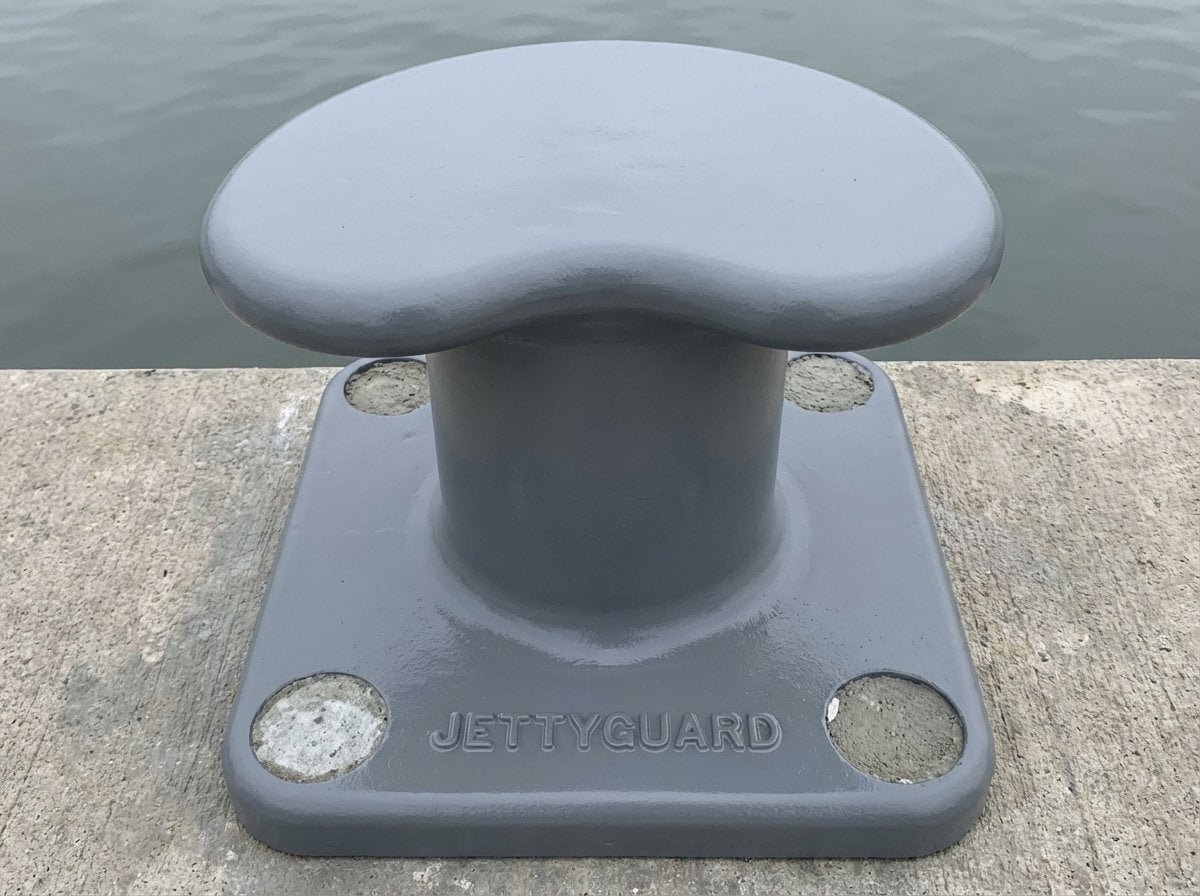
We often see this specified in European projects or for specific RoRo terminals. The "Kidney" shape has no sharp edges, which means your hawser lines last longer. However, I usually advise clients to be careful with this type if they expect steep angles. Unlike the T-Head or Horn, the Kidney bollard has a relatively shallow lip. If the line angle gets too high, there is a risk of slippage. It is a fantastic, economical choice for stable water levels, but you must know your tidal environment before committing to it. It is all about matching the tool to the job.
What About Single and Double Bitt Bollards?
Are you working with limited space on your wharf or need to retrofit an older American-style port? Bitt bollards are the traditional answer.
Single Bitt and Double Bitt bollard5s offer a small footprint and are excellent for high-density mooring where space is at a premium.
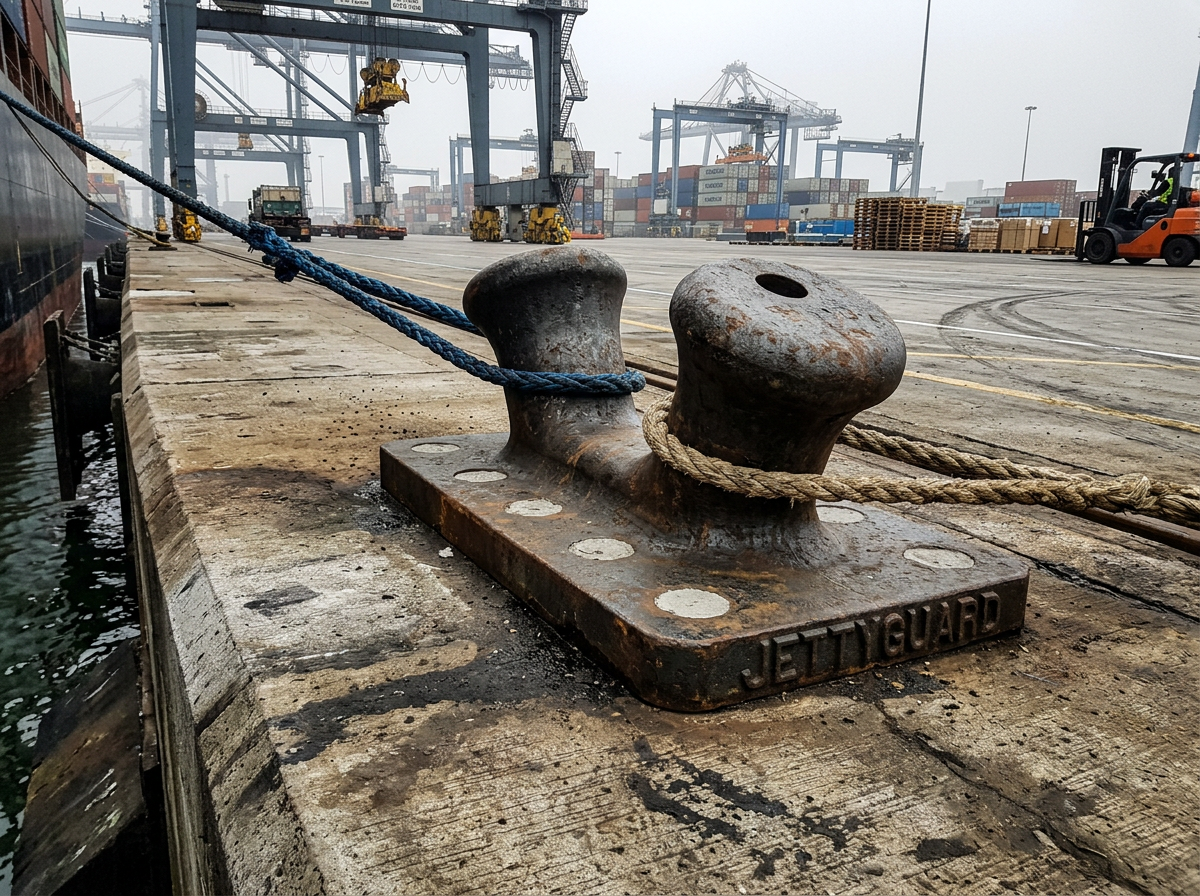
The Single Bitt is often called the "US Style" because it fits the bolt patterns of many older American ports. It is great for retrofitting. The Double Bitt, or "Twin Horn," is even more interesting. It allows you to secure multiple lines from different ships without them interfering with each other. This is crucial in busy ports where ships are berthed close together. I have supplied these to terminals where the apron width was very narrow. A T-Head might have obstructed the crane rails, but the Double Bitt fit perfectly. They are compact, strong, and handle steep angles better than you might think, thanks to the cross-bar design.
How Do You Decide the Safe Working Load (SWL)?
Selecting the shape is only half the battle. How do you ensure the bollard won't rip out of the concrete during a storm?
You must calculate the Safe Working Load (SWL)6 based on the displacement of the largest vessel you expect, combined with wind and current forces.
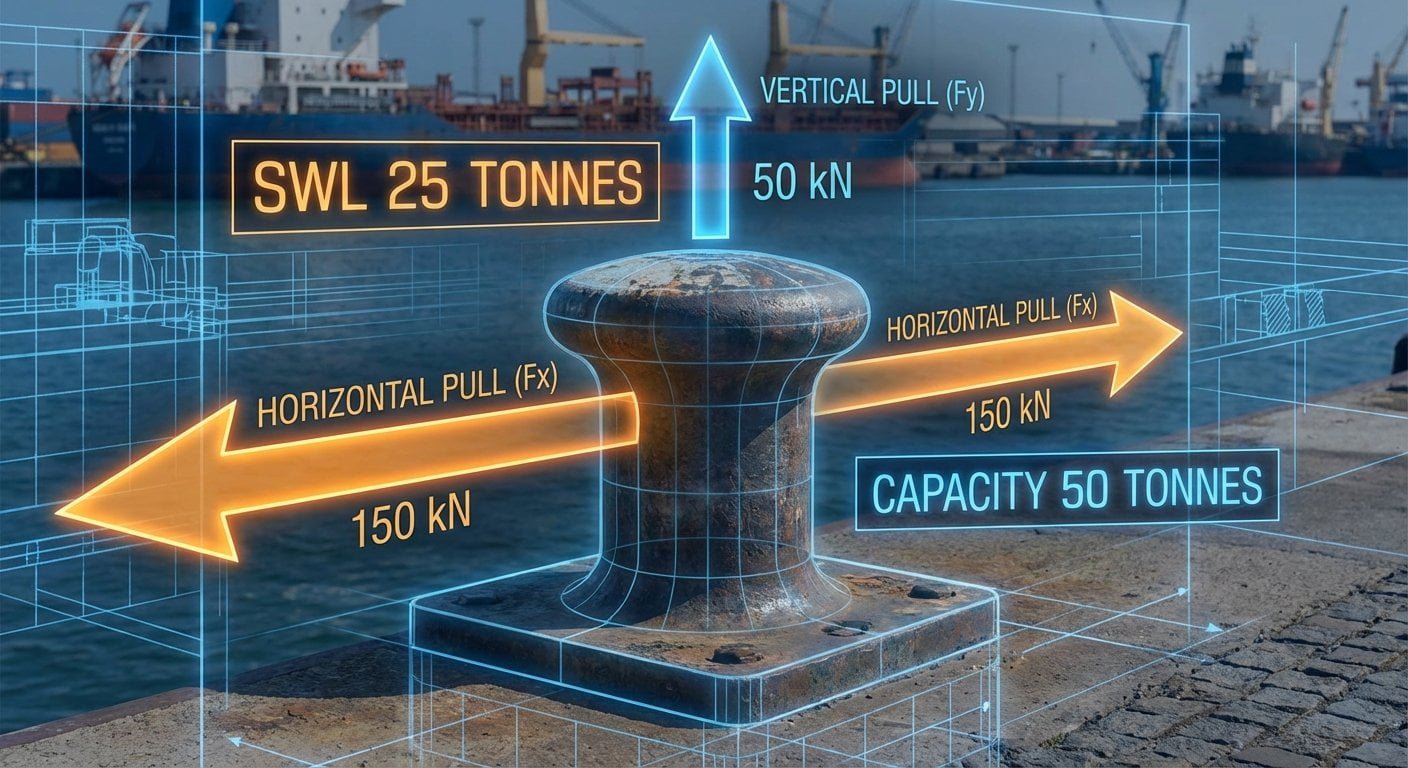
Many people guess, and that is dangerous. You need to look at the displacement tonnage of the vessel, the windage area, and the current speed. Standard tables exist, but every port is unique. For example, a 100,000 DWT container ship might need 150-tonne bollards, but if that berth is exposed to open ocean swells, you might need to upgrade to 200 tonnes. Also, remember the material matters. Cast steel is stronger but can corrode faster. Spheroidal graphite (SG) iron—what we mostly use—offers the best balance of strength and corrosion resistance. Always consult with a marine engineer7 to get the SWL right. It is cheap insurance for your port.
Conclusion
Choosing the right bollard is about balancing versatility, safety, and cost. While I strongly recommend the T-Head for most new projects due to its all-around performance and value, your specific tidal range or wharf layout might dictate a Horn or Bitt type.
Understanding mooring bollards is crucial for safe and effective docking. Explore this link to learn more about their functions. ↩
T-Head bollards are versatile and widely used. Discover their benefits and why they are recommended for various projects. ↩
Horn bollards are designed for steep angles. Learn when to choose this type for optimal mooring safety. ↩
Tidal range can complicate mooring. Explore its effects on bollard selection and vessel safety. ↩
Double Bitt bollards allow for multiple lines without interference. Learn how they enhance mooring efficiency. ↩
Calculating SWL is vital for safety. Discover the factors involved in determining the right load for your port. ↩
Consulting a marine engineer ensures safety and compliance. Learn why their expertise is invaluable. ↩