Your foam filled fender is your dock's silent guardian—until it isn't. When failure strikes, vessels collide, repairs cost thousands, and safety crumbles.
Foam filled fenders1 typically last 10 to 20 years with proper maintenance and coating protection. Their lifespan depends on foam core quality, UV exposure2 levels, and maintenance frequency.
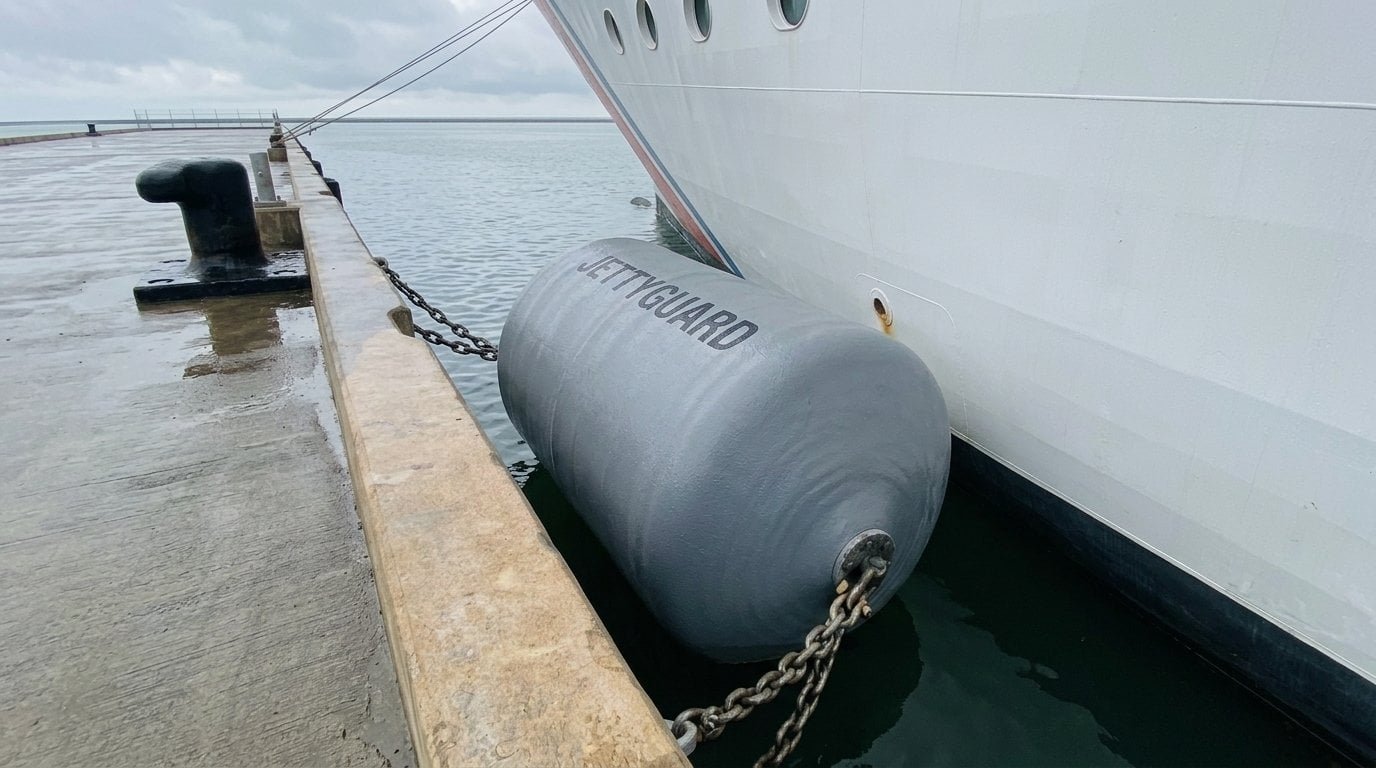
I have seen too many buyers focus only on surface durability while ignoring what matters most—the foam core inside. Let me show you what truly determines fender longevity.
Expected Lifespan: 10 to 20 Years Explained
You expect your investment to protect your assets for decades. Then you discover cheap fenders failing in just 3-5 years.
Quality foam filled fenders last 10-20 years. Premium polyurethane cores3 extend life, while low-density PE foam degrades faster under compression cycles.
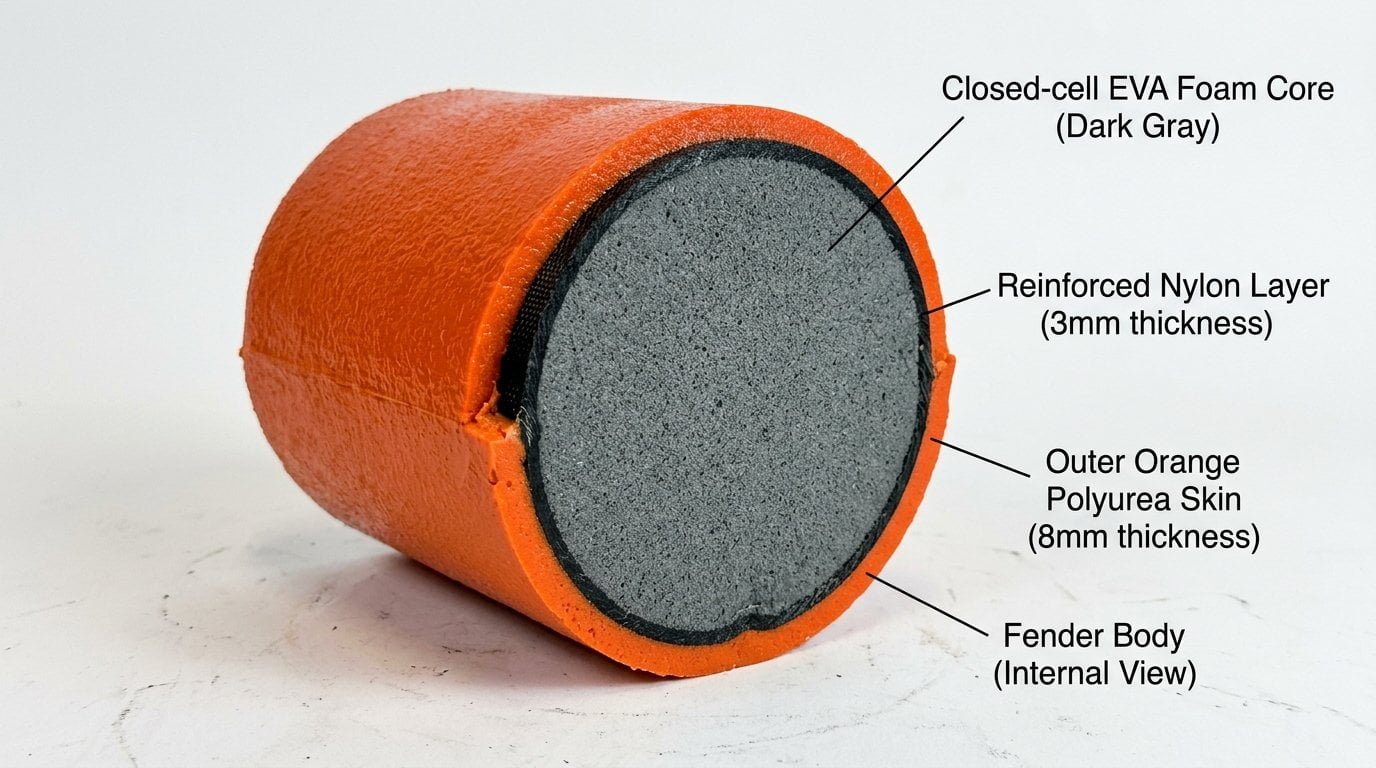
The 10-20 year range is not arbitrary—it reflects real-world performance differences. I have observed fenders with high-grade polyurethane cores maintaining shape and resilience after 15+ years of service. Conversely, units using low-density PE foam often show permanent deformation within 2-3 years.
The compression-recovery cycle4 is what wears fenders down. Each time a vessel presses against your fender, the foam compresses. Quality foam returns to shape. Inferior foam stays compressed. This is why I always emphasize core material over outer appearance.
What the Years Actually Mean
| Year Range | Condition | Recommended Action |
|---|---|---|
| 0-5 | Peak performance | Regular inspection |
| 5-10 | Minor wear visible | Increase monitoring |
| 10-15 | Surface coating may need refresh | Evaluate core integrity |
| 15-20 | Extended life with premium cores | Plan replacement assessment |
The key insight from my experience: specifications matter. When buyers prioritize price over technical specs, manufacturers may substitute PE foam for polyurethane. The fender looks identical but performs drastically differently.
Signs of End-of-Life: When to Replace Your Fender
You assume your fender is fine because it looks intact. Hidden damage threatens your vessels.
Replace foam filled fenders when you notice permanent deformation5, surface cracks exposing core material, loss of buoyancy, or recovery too slow after compression.
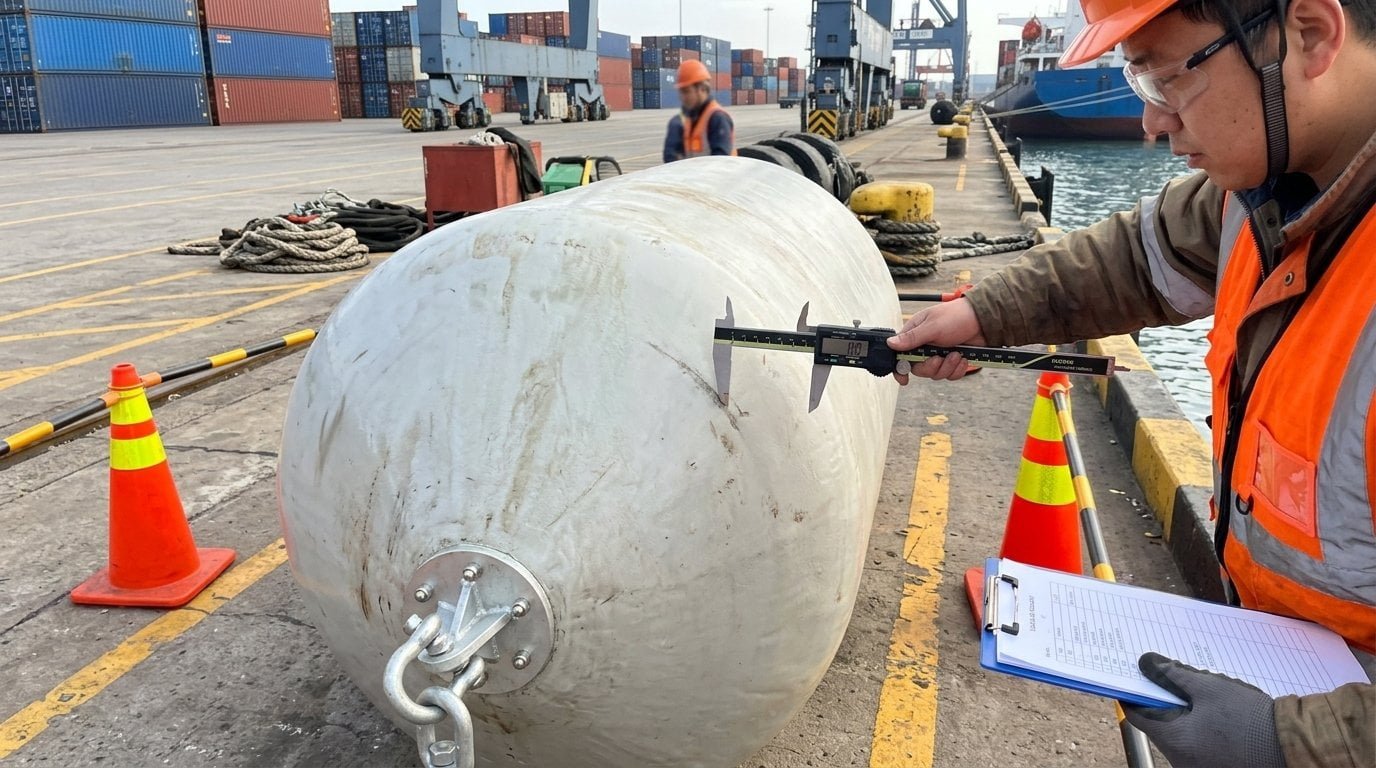
Visual inspection reveals only part of the story. I recommend a simple compression test: press firmly and release. A healthy fender rebounds quickly to over 90% of its original diameter. Delayed recovery indicates foam fatigue.
Critical Warning Signs
Permanent flattening is the death knell. Once foam loses structural memory, it cannot absorb impact energy effectively. Your vessel transfers force directly to the dock structure—exactly what the fender exists to prevent.
Surface cracks deserve immediate attention. The outer layer protects against UV and abrasion. When cracks expose the foam core, degradation accelerates exponentially. Water infiltration compounds the damage.
Impact of UV Exposure on Uncoated vs. Coated Foam
The sun is your fender's worst enemy. UV radiation breaks down polymer chains.
Coated foam fenders last 3-5 times longer than uncoated ones. UV-resistant polyurethane or rubber coatings prevent surface degradation and core exposure.
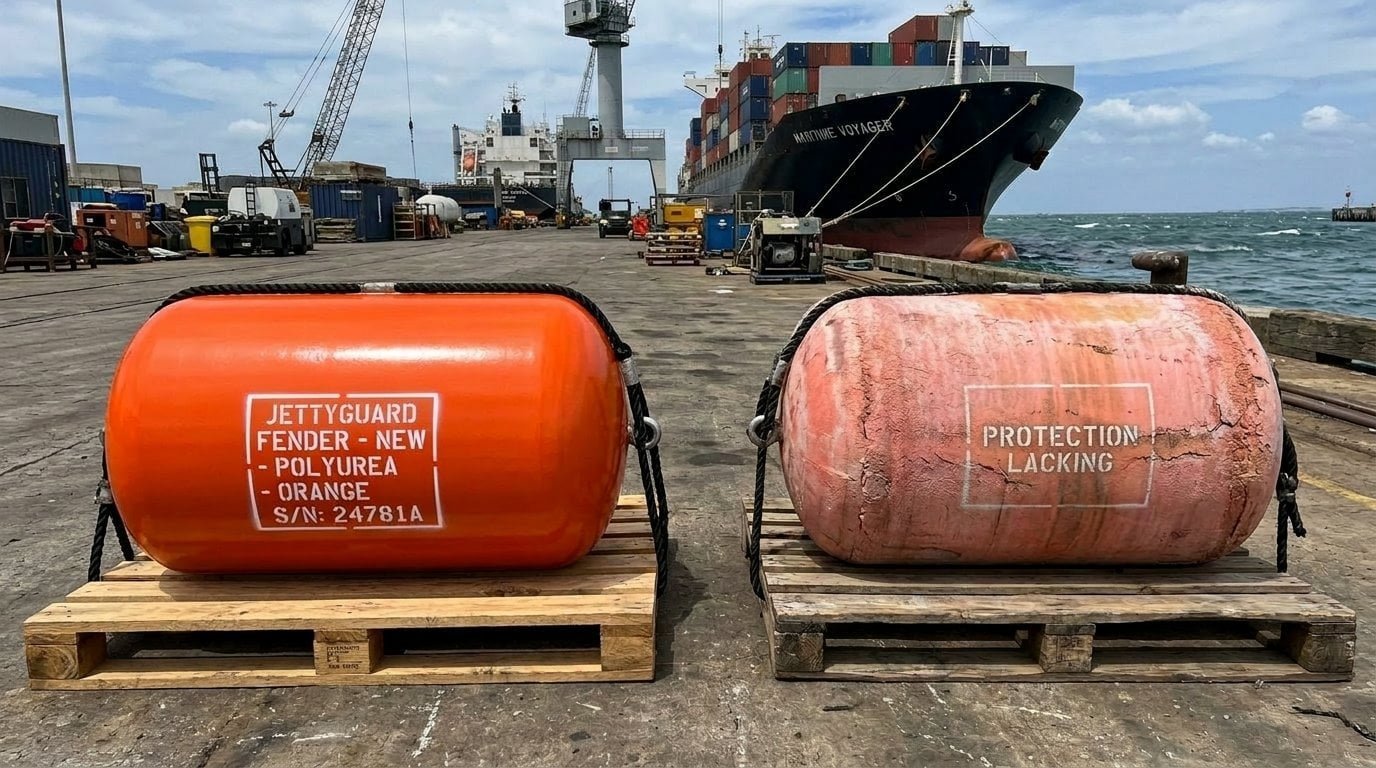
I have witnessed the brutal truth in tropical ports. Uncoated foam fenders6 turn yellow and brittle within 12-18 months. The surface becomes chalky, then cracks, then the core absorbs water.
Coating is not cosmetic—it is structural armor. Premium coatings contain UV stabilizers that absorb harmful radiation before it reaches the foam. This single layer extends service life by 5-10 years.
The economics are clear: coated fenders cost 20-30% more upfront but last 3-5 times longer. Total cost of ownership favors coated products decisively.
The "No-Deflation" Guarantee: Reliability Over Time
Air-filled fenders puncture. Foam filled fenders do not deflate.
Foam filled fenders maintain structural integrity even when outer coating is damaged. The closed-cell foam core continues providing protection without air pressure.
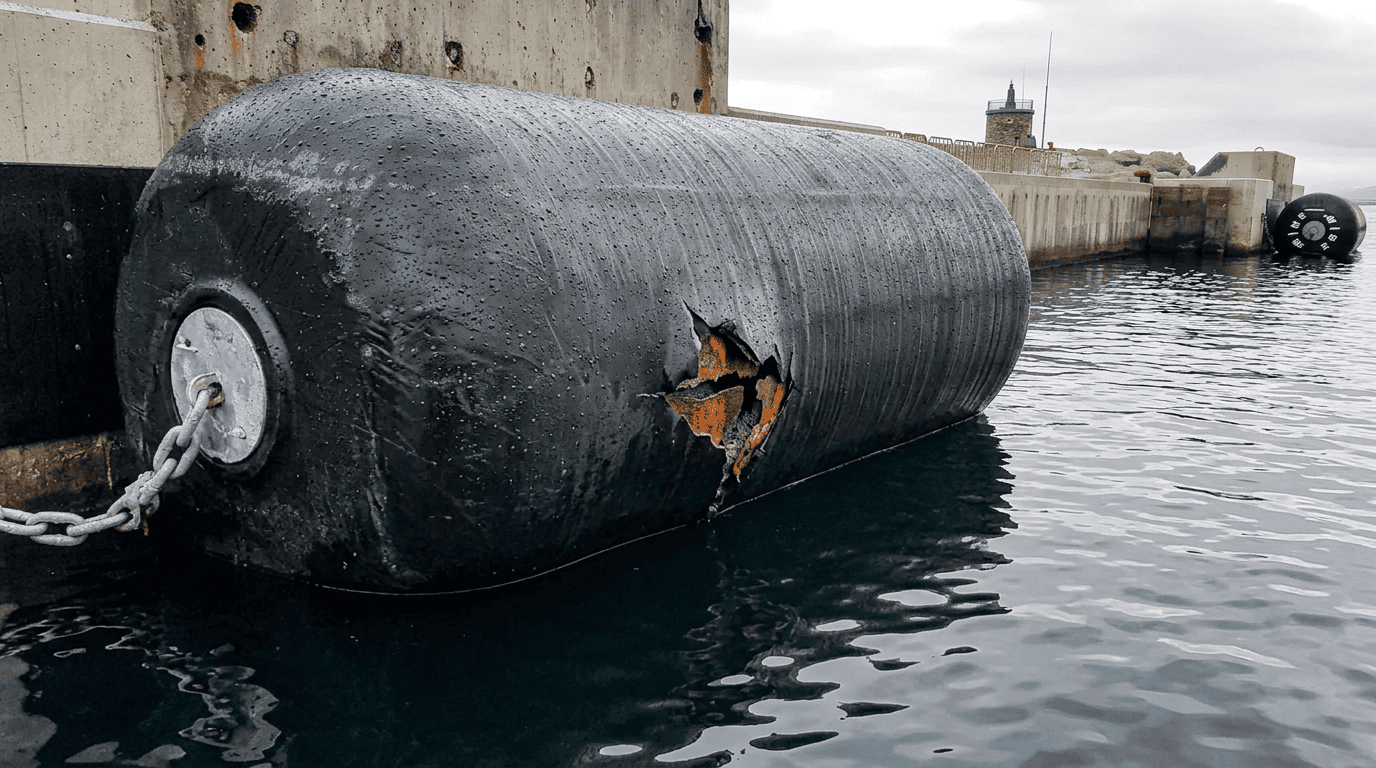
I recall a client whose pneumatic fender failed during a typhoon. One puncture, complete deflation, vessel damage exceeding $500,000. That incident converted them entirely to foam filled products.
The closed-cell structure is inherently redundant. Even if the outer layer is compromised, the foam itself provides buoyancy and impact absorption7. There is no single point of failure.
This reliability compounds over time. You do not need emergency repairs. You schedule maintenance during planned downtime. Your operations continue uninterrupted.
Maintenance Tips to Extend Fender Life
Neglect shortens fender life by 50% or more. Simple care extends it dramatically.
Clean fenders monthly, inspect quarterly, refresh coating every 3-5 years, and replace when compression recovery exceeds 5 seconds.
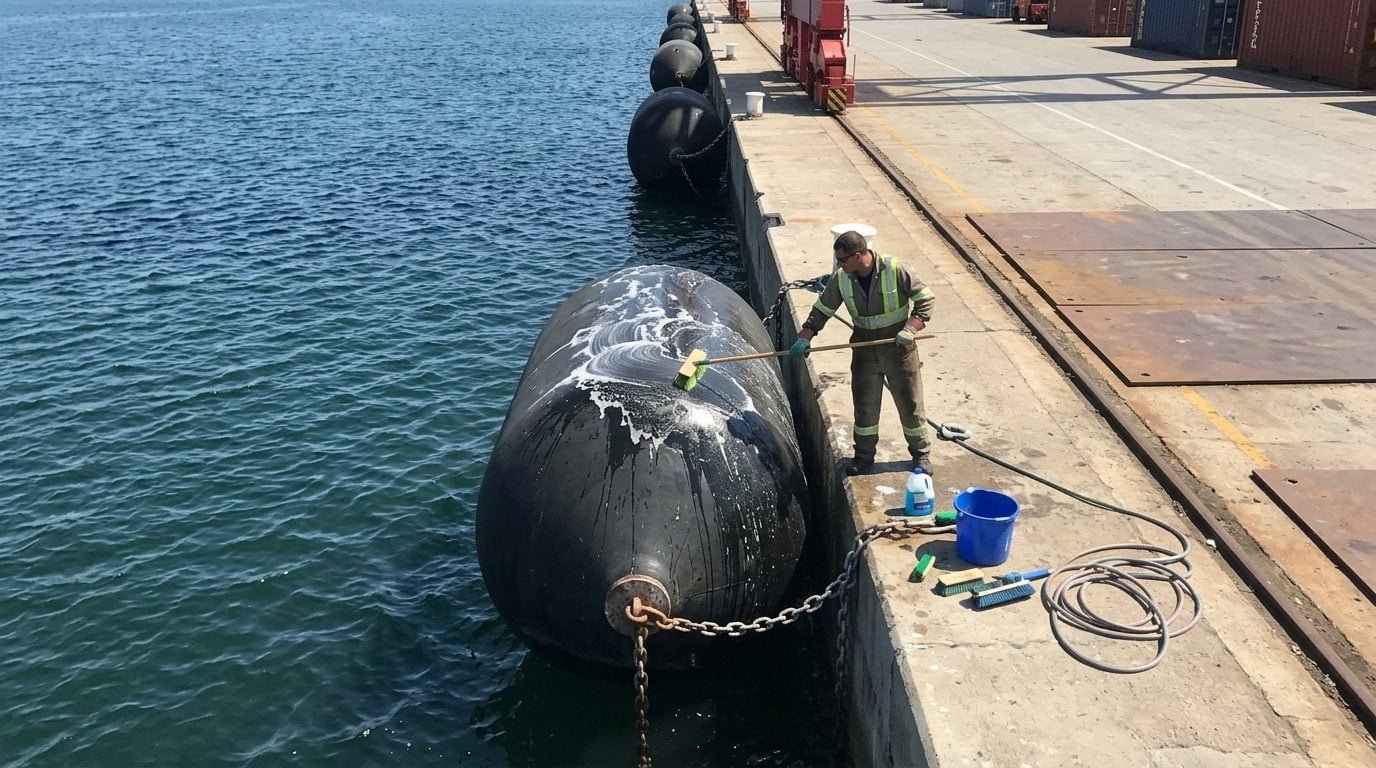
Monthly cleaning removes salt, algae, and pollutants that degrade the coating. Fresh water and a soft brush suffice. Avoid harsh chemicals—they attack the coating faster than salt water does.
Quarterly inspections catch problems early. Look for cracks, flattening, discoloration. Document with photos. Track changes over time.
Maintenance Schedule
| Frequency | Task | Time Required |
|---|---|---|
| Monthly | Rinse with fresh water | 5 minutes |
| Quarterly | Compression test, visual inspection | 15 minutes |
| Annually | Deep clean, coating assessment | 30 minutes |
| 3-5 years | Refresh UV coating | 2-3 hours |
The pattern is consistent: proactive maintenance costs 10% of reactive replacement. I have seen this across hundreds of installations.
Warranty Standards in the Marine Industry
Warranty terms reveal manufacturer confidence. Read them carefully.
Industry warranties range from 1-3 years on materials. Premium manufacturers offer 5+ years. Warranty length correlates with actual product lifespan.
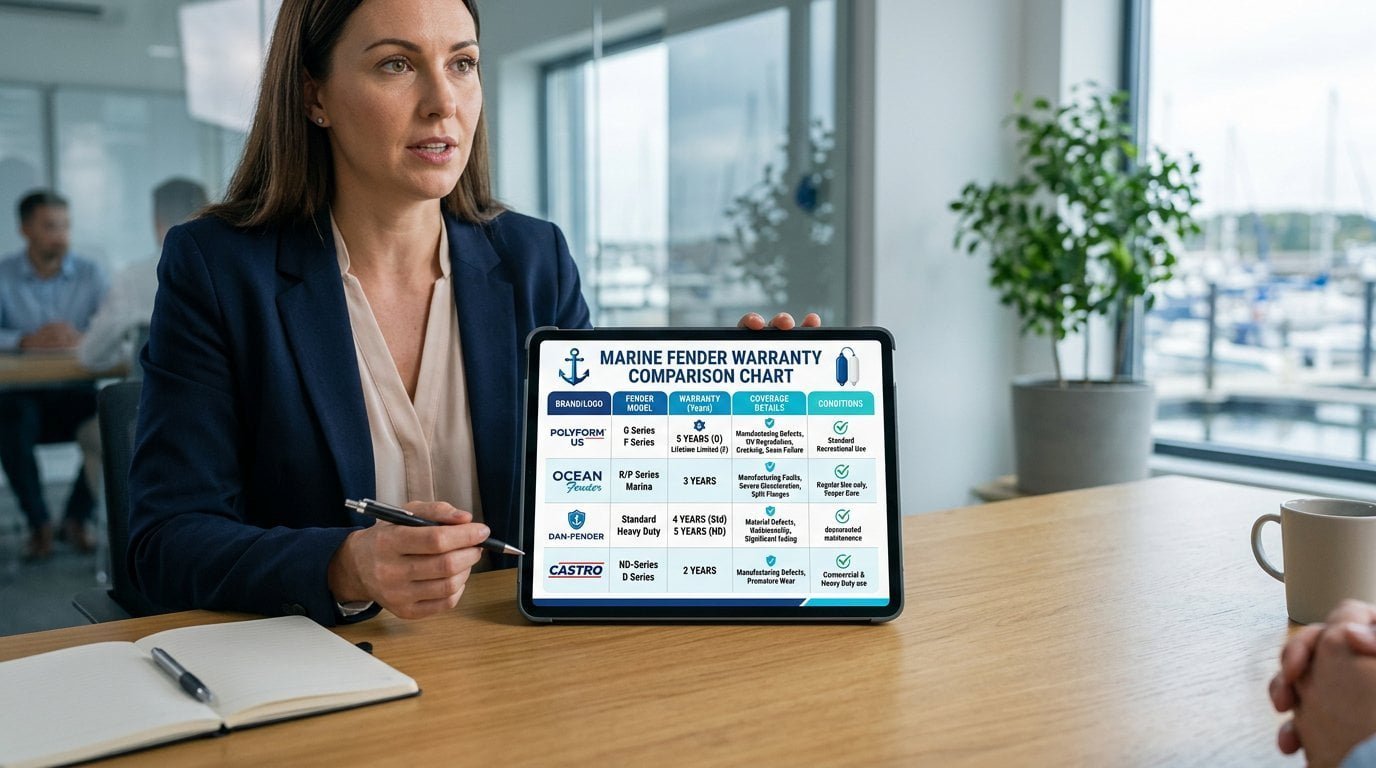
I have reviewed warranty documents from 20+ fender manufacturers. The pattern is unmistakable: economy brands offer 1-1.5 years. Premium brands stand behind their products for 5+ years.
Pay attention to what is covered. Some warranties cover only manufacturing defects. Others include UV degradation and compression loss. The best cover both coating and core integrity.
Warranty claims require documentation. Keep inspection records. Photograph damage. Manufacturers honor warranties for customers who maintain proper records.
The warranty reflects engineering confidence. A 5+ years warranty means the manufacturer has tested their foam density, coating thickness, and compression cycles extensively. They expect the product to last.
Recycling and Disposal of Old Foam Fenders
Fenders reach end-of-life. Disposal matters for environmental compliance8.
Foam fenders cannot go to regular landfill. Contact specialized recyclers or marine waste facilities. Some manufacturers offer take-back programs.
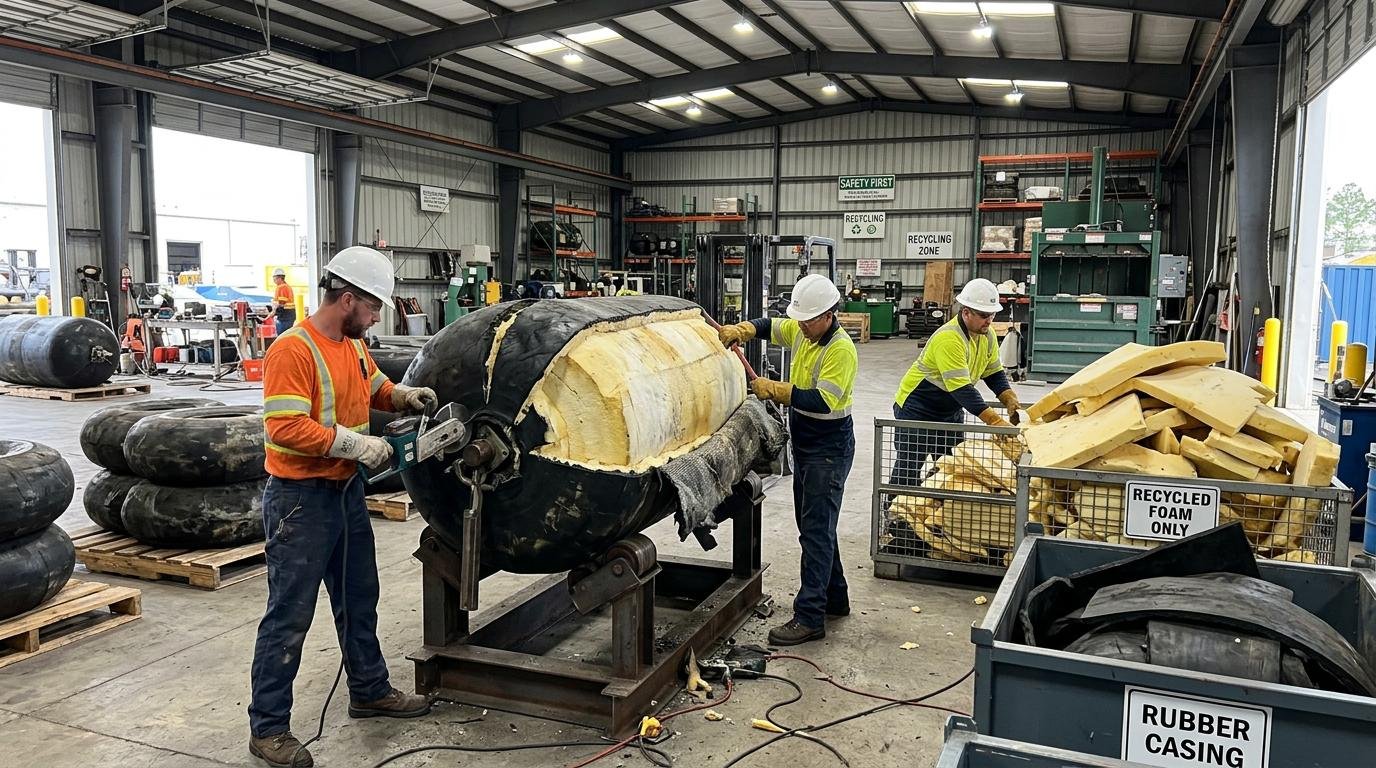
I always advise clients to plan disposal at purchase time. Some manufacturers operate take-back programs. They separate the coating from the foam core and recycle each component.
Local marine waste facilities accept old fenders. Fees vary by weight and size.
The foam core presents the challenge. Closed-cell foam does not decompose. Some recyclers process it into filler material for construction applications. This market is growing as environmental regulations tighten.
Consider donation for usable fenders. Boat clubs and sailing schools accept fenders with cosmetic damage. This extends useful life and keeps materials out of landfills.
Conclusion
Quality foam filled fenders deliver 10-20 years of reliable protection. Choose premium polyurethane cores, invest in UV coating, maintain regularly. Jettyguard offers high-performance foam filled fenders engineered for maximum longevity. Contact Jettyguard expert for more
Explore the advantages of foam filled fenders for superior protection and longevity. ↩
Discover the effects of UV exposure on fender materials and how to protect them. ↩
Discover how polyurethane cores enhance fender durability and performance. ↩
Understand the importance of the compression-recovery cycle for fender longevity. ↩
Find out how to identify and prevent permanent deformation in your fenders. ↩
Explore the benefits of coated foam fenders for extended service life. ↩
Explore the mechanics of impact absorption in foam fenders for vessel protection. ↩
Understand the environmental compliance requirements for disposing of foam fenders. ↩