Skip to content
Port / Vessel Protection Systems
info@jettyguard.comFoam fenders · Pneumatic fenders · Mooring hardware

Category Archive

Foam-filled fender

Browse all articles in this category.

types maine marine fenders jettyguard
2026-09-09 | Yifeng Qin

Types of Marine Fenders: How to Compare the Main Families

Specifying a marine fender without understanding which family fits your operating conditions leads to wasted time and unsuitable offers. Marine fenders are classified by mounting method, contact geometry, and operating medium. The main families include pneumatic, foam-filled, hydro-pneumatic, fixed rubber systems, extruded profiles, tugboat protection, rollers, and vessel-attached collars. Each family has distinct application boundaries. […]


Flat editorial illustration of a cargo vessel approaching a commercial berth with two simplified harbour tugs nearby
2026-09-08 | Yifeng Qin

What Is Berthing in Shipping? Process and Fender Inputs

Berth, berthing, mooring, docking, anchoring. Tender documents mix these words, and the wrong one sends a fender enquiry to the wrong engineering team. Berthing is the controlled movement of a vessel to its assigned berth, up to the point where it is secured alongside. The berth is the wharf space itself. Mooring, docking and anchoring […]

Two tanker vessels positioned alongside each other at sea during a ship-to-ship transfer operation, showing both decks and the vessel-to-vessel interface from an elevated wide angle
2026-09-07 | Yifeng Qin

What Is Ship-to-Ship Transfer? How the Process Works and Where Fenders Fit

You need to transfer cargo between vessels, but you don’t know whether you need an operation plan or a fender quotation first. Ship-to-ship transfer is a planned vessel-to-vessel cargo operation requiring compatibility review, operational coordination, and equipment planning. Fender selection is one project-specific part of that planning, not the operation itself. If you have an […]

EVA Foam Fender: Why Core Material Decides Service Life
2026-07-21 | Yifeng Qin

EVA Foam Fender: Why Core Material Decides Service Life

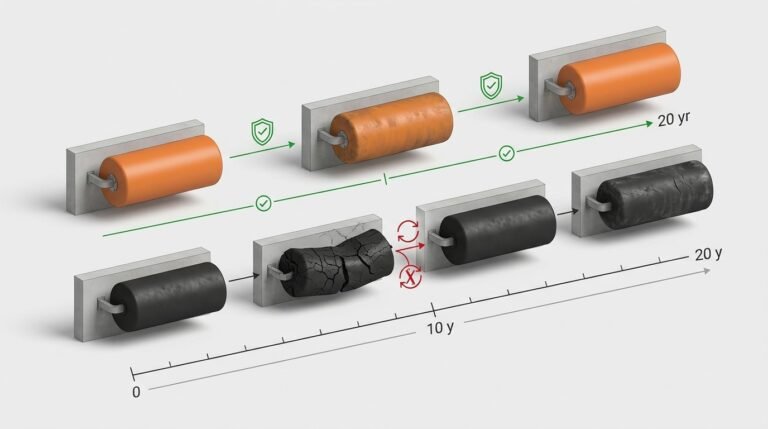
Two foam-filled fenders can look identical on the quay and carry the same size on the drawing. After repeated service, one may still rebound while another takes a permanent set. Core material is one important reason, but many quotations do not define it clearly. An EVA foam fender uses an ethylene-vinyl acetate closed-cell core rather […]

Foam Filled Fender vs Rubber Fender: Which to Choose?
2026-07-18 | Yifeng Qin

Foam Filled Fender vs Rubber Fender: Which to Choose?

Most buyers ask us the same thing before a berth project: foam or rubber? Both absorb berthing energy, but they behave very differently in service, cost, and maintenance. In a foam filled fender vs rubber fender decision, foam wins on low reaction force, near-zero maintenance, and a 20-plus year service life. Rubber suits high-tonnage permanent […]

SPUA Coating for Foam Filled Fenders: Durability & Repair
2026-06-22 | Yifeng Qin

SPUA Coating for Foam Filled Fenders: Durability & Repair

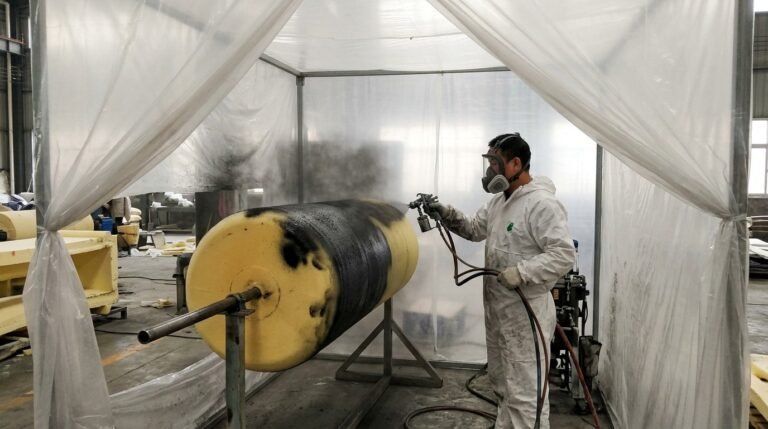
Buyers ask me about EVA foam density and reaction force curves. Almost nobody asks about the skin. That is a mistake. On a foam filled fender, the coating decides how many years you keep using it before you cut it open and look inside. SPUA coating (Spray PolyUrea Application) is a fast-curing, two-component elastomeric skin […]

Foam vs Pneumatic Fenders for STS: Selection Guide
2026-06-13 | Yifeng Qin

Foam vs Pneumatic Fenders for STS: Selection Guide

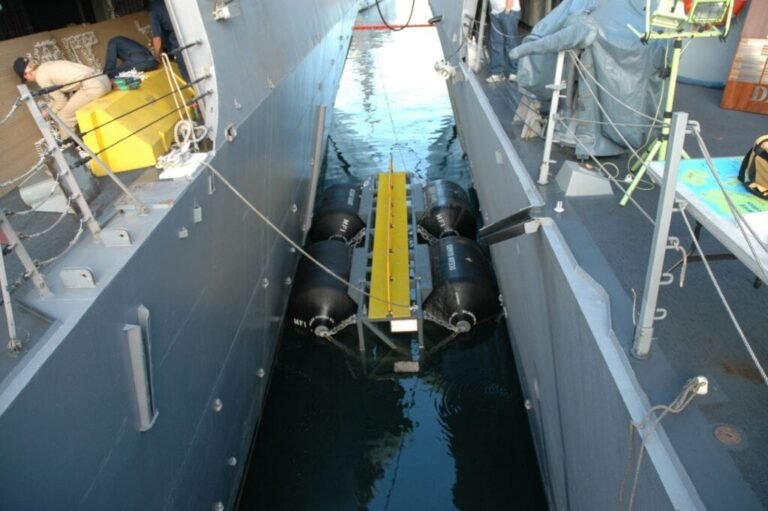
STS fender selection comes down to service life, certification route, and maintenance reality. Consultants often default to ISO 17357 pneumatic fenders for oil and gas STS because the route is familiar. For owner-operated infrastructure deployed for 15 years or more, foam-filled fenders can give lower total cost and steadier service because they do not depend […]

How to Choose a Foam Filled Fender: Buyer’s Guide
2026-06-04 | Yifeng Qin

How to Choose a Foam Filled Fender: Buyer’s Guide

Most buyers start with fender size. That is the wrong starting point. The right starting point is the application — what vessels berth here, how fast, at what angle, and under what sea conditions. To choose a foam filled fender, identify the application type first, then calculate berthing energy from vessel DWT and approach speed. […]

Foam filled fender compressing under vessel contact
2026-03-24 | Yifeng Qin

What is a Commercial Foam Filled Marine Fender?

The foam filled marine fender1 represents the pinnacle of modern berth protection, combining advanced materials with high-performance engineering. These fenders utilize a closed-cell polyethylene foam core2 and a tough polyurethane skin3 to provide superior energy absorption without the risk of deflation or bursting common in traditional pneumatic systems. Modern maritime operations demand more than just […]

How Can We Best Protect Offshore Oil and Gas Platforms?
2026-03-22 | Yifeng Qin

How Can We Best Protect Offshore Oil and Gas Platforms?

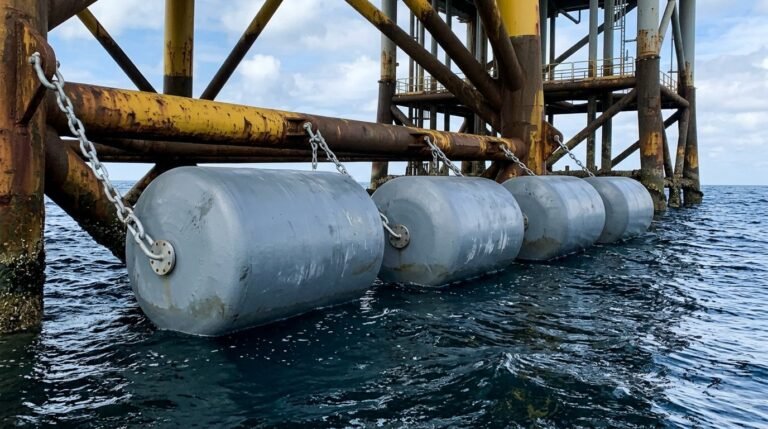
Offshore platforms face relentless battering from harsh seas and massive supply vessels1. Without proper protection, catastrophic structural damage is inevitable, costing millions in downtime. Foam fenders2 provide the ultimate defense for offshore oil and gas platforms. Their closed-cell EVA core3 and thick polyurea skin4 deliver unmatched energy absorption, keeping both the platform and supply vessels […]

Page 1 of 2