Choosing the wrong foam fender ruins your marine operations. You lose money on fast wear or waste budget on over-engineering. Which style truly fits your project?
The choice depends entirely on your vessel type and berthing frequency. Sling-type fenders suit flat-sided ships like luxury cruisers. Chain and tire net fenders are built for brutal, high-frequency, heavy-duty applications like busy sludge transfer terminals.
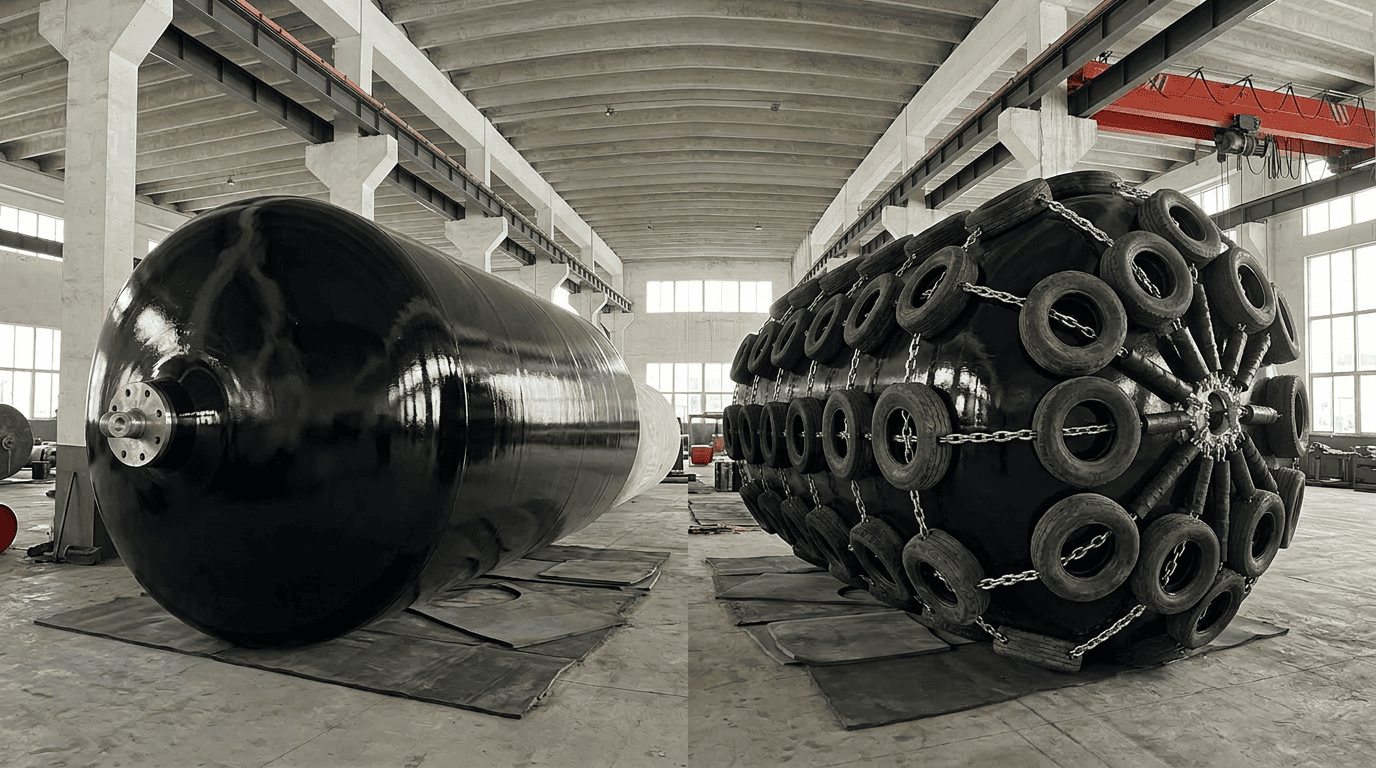
Let me walk you through exactly how to match the right foam fender1 to your specific marine environment.
Advantages of Sling-Type Fenders in Marine Operations
Heavy equipment slows down your crew and complicates installation. Sling-type fenders eliminate the bulky external net to solve this exact problem.
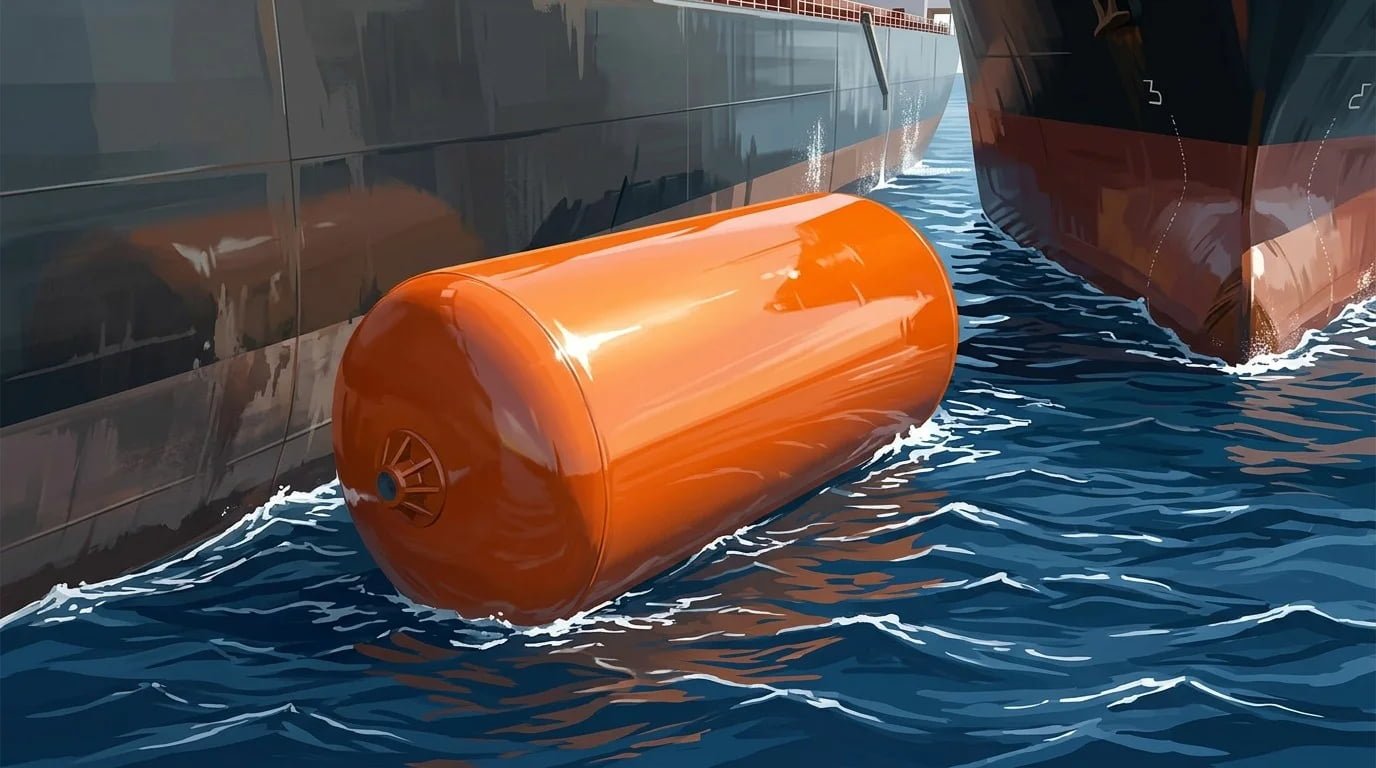
Sling-type fenders lack an external chain and tire net. This makes them significantly lighter and much easier to handle. Your installation crew can deploy them faster, reducing project costs and downtime for boat builders and project managers.
The Power of Lightweighting
At Jettyguard, we make light work of protection. Sling-type fenders perfectly represent this mission. They offer massive energy absorption without the dead weight of steel chains.
Perfect for Luxury Vessels
I always recommend netless fenders for cruise ships. These vessels have smooth, painted hulls. A chain net could scratch their expensive surfaces. The smooth polyurethane skin of a sling fender leaves zero marks.
EPC and Boat Builder Benefits
Project managers appreciate the quick installation. You do not need massive cranes to position a sling fender. Boat builders also prefer them for protecting newly built hulls during crucial sea trials.
Cost-Effective Operations
Without the complex net system, the initial purchase price is often lower. Shipping costs drop significantly because of the reduced weight. Oversea distributors can easily fit more units into a single container.
Streamlined Storage
When not in use, sling fenders are incredibly easy to store. Their smooth profile means they do not get tangled. You can stack them neatly in your dockyard without wrestling with heavy, rusty chains.
When to Choose a Chain and Tire Net Upgrade
Flat hulls are easy to protect. Rough, uneven barges will tear up a standard sling fender in weeks, leaving your infrastructure exposed.
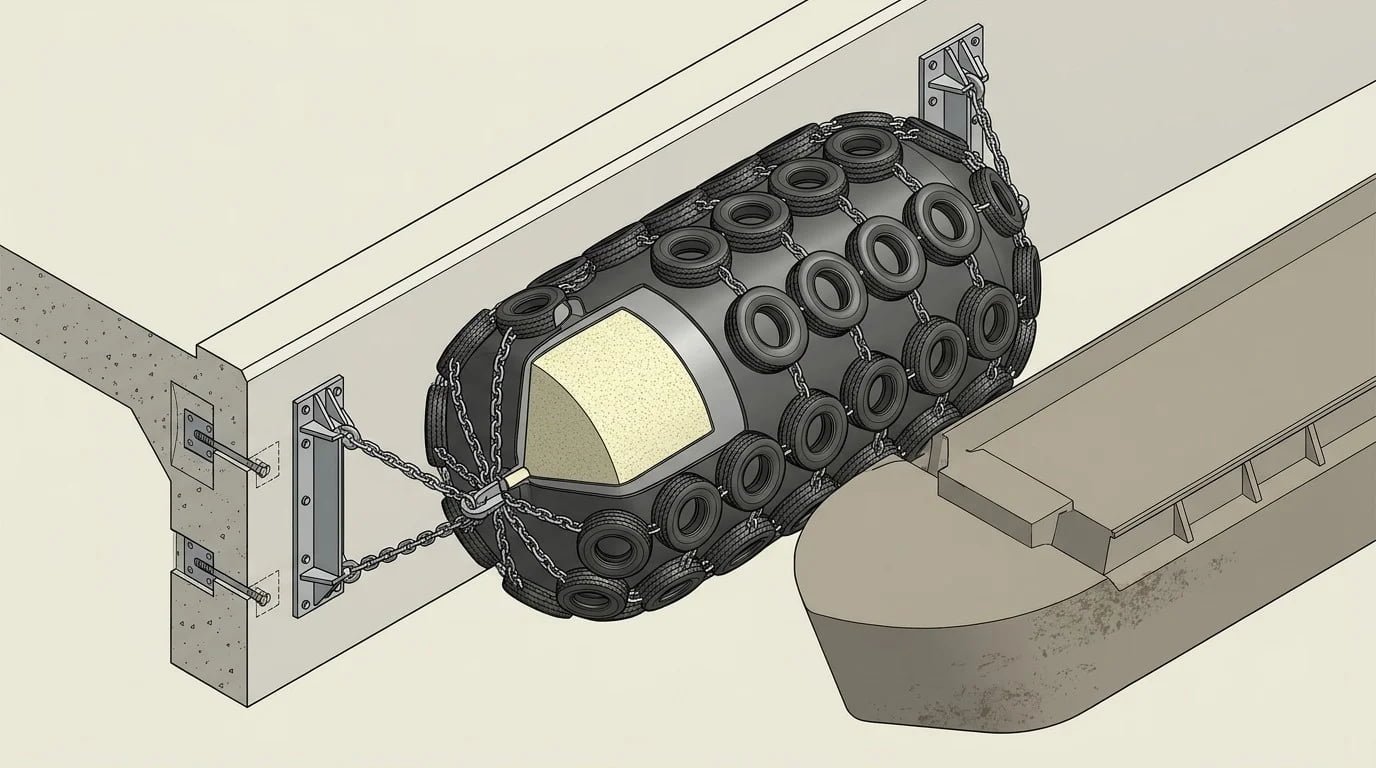
You must choose a chain and tire net when vessels have rough hulls or protrusions. The net acts as a sacrificial layer. It absorbs the harsh abrasive forces that would otherwise damage the core polyurethane coating.
Combating Abrasive Wear
Smooth fenders are great, but the marine world is often harsh. Barges and service vessels rarely have pristine hulls. They feature rough weld seams, sharp metal edges, and heavy rust patches.
The Sacrificial Barrier
A chain and tire net provides a tough, sacrificial barrier. When a rough barge rubs against the fender, the tires take all the friction. The expensive foam core remains completely safe inside.
Ideal for Mixed Traffic
Many ports handle different types of vessels every day. If you cannot predict the hull quality of incoming ships, the net acts as an insurance policy. It guarantees the fender survives unexpected sharp impacts.
Distributor Perspectives
Oversea distributors know that harsh environments demand robust solutions. Selling a naked fender to a scrap metal terminal will result in complaints. I always tell my partners to match the armor to the threat level.
Comparing Net Materials
Not all nets are equal. We often use aircraft tires because they offer superior structural integrity. They handle compression and sheer forces much better than standard commercial truck tires.
Heavy-Duty Applications Requiring Extreme Protection
High-frequency berthing operations create immense stress. Standard fenders simply cannot survive constant daily impacts from heavy industrial barges.
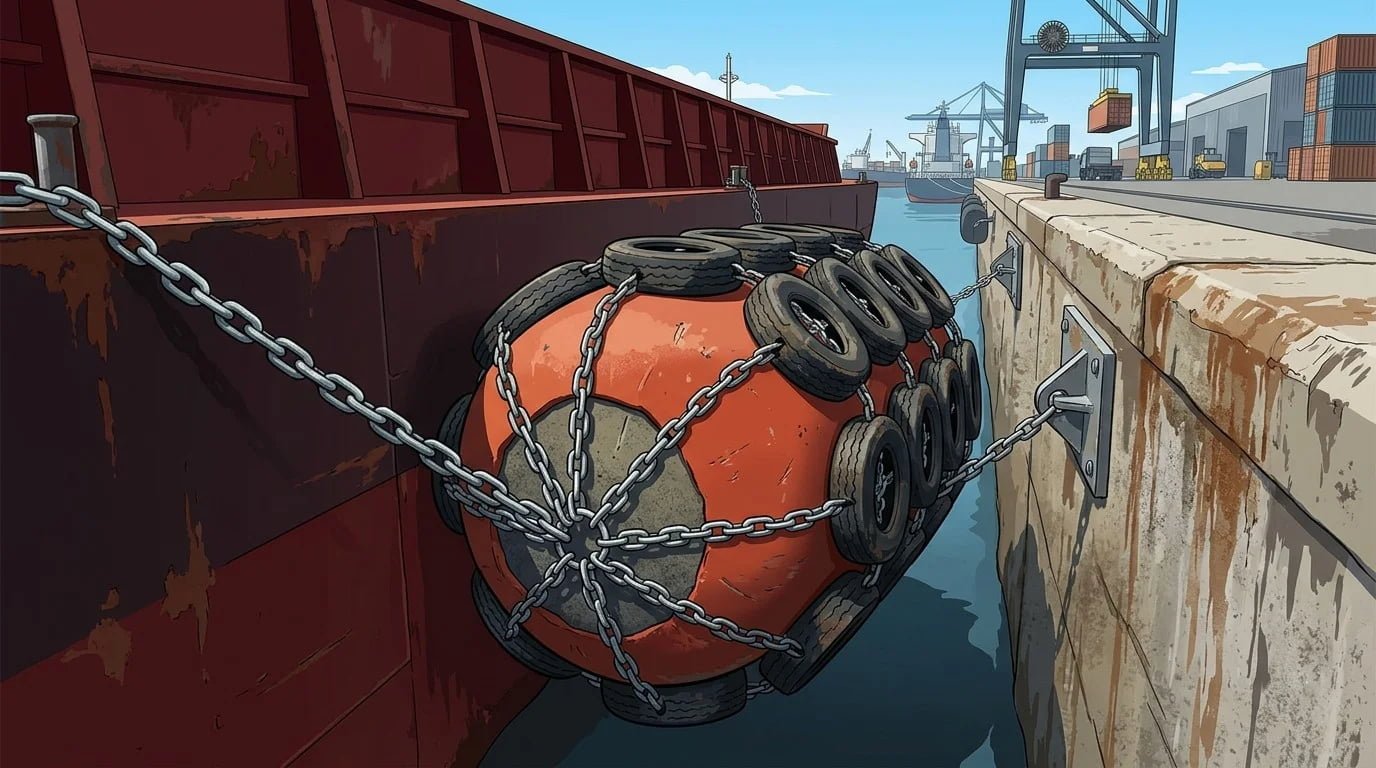
Heavy-duty sites like water treatment sludge terminals demand maximum protection. For frequent barge berthing, I always recommend a high-strength chain tire net. We often thicken the SPUA spray layer to guarantee long-term survival under brutal conditions.
The Sludge Terminal Project
I recently supplied fenders for a water pollution treatment plant. They needed a sludge transfer terminal protected. The conditions were absolutely brutal, with heavy barges berthing multiple times a day.
Designing for High Frequency
Frequent berthing means constant wear and tear. A standard sling fender would never survive this high-frequency traffic. The industrial barges come in hard, and they come in fast.
Upgrading the Armor
For this project, we designed a heavy-duty chain and tire net. But we did not stop there. I instructed our factory to significantly thicken the SPUA polyurea spray layer on the fender core.
Maximum Reliability for Mining
Procurement leaders in mining operations face similar challenges. Bulk carriers and ore barges destroy weak equipment. A reinforced net combined with an extra-thick SPUA skin guarantees the reliability your operations demand.
Protection Levels Matrix
| Application | Vessel Type | Berthing Frequency | Recommended Fender |
|---|---|---|---|
| Cruise Terminal | Passenger Ships | Low to Medium | Sling-Type |
| Sludge Transfer | Work Barges | Extremely High | Heavy-Duty Net |
| Ore Loading | Bulk Carriers | High | Heavy-Duty Net |
Maintenance Differences Between Sling and Net Designs
Maintenance budgets often spiral out of control. Picking a fender without understanding its upkeep requirements will drain your annual operating funds.
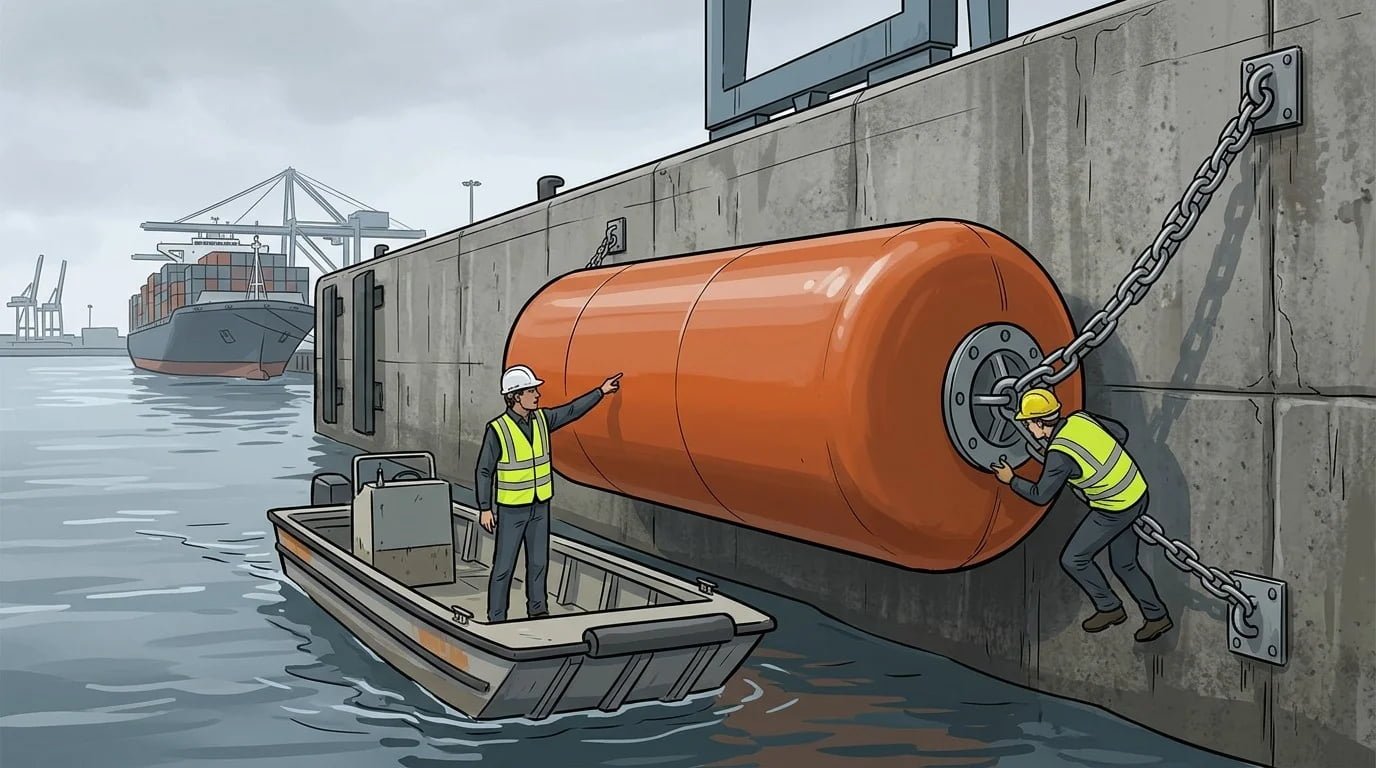
Sling fenders require minimal maintenance, needing only simple visual inspections. Net fenders demand regular checks of the chains, shackles, and tires. However, replacing a worn tire net is much cheaper than replacing a completely shredded sling fender.
Inspecting Sling Fenders
Sling fenders are beautifully simple to maintain. Your crew only needs to perform routine visual checks. They look for deep cuts or gouges in the polyurethane skin. If the skin is intact, the fender is ready.
Repairing Minor Damage
If a sling fender gets scratched, repairs are straightforward. We can supply polyurea repair kits. Your maintenance team can patch small tears on-site, restoring the fender's structural integrity in just a few hours.
Managing Net Maintenance
Net fenders require a much more proactive maintenance routine. Saltwater corrodes steel over time. You must regularly inspect the galvanized chains, shackles, and swivels for signs of severe rust or structural weakness.
The Cost of Replacement
Replacing parts is exactly where the net design shines. If a barge shreds the external tires, you simply replace the net. The core fender remains perfectly fine, saving you from buying a whole new unit.
Long-Term Value
Both designs offer excellent long-term value if chosen correctly. Match the maintenance schedule to your crew's capabilities. A neglected net fender becomes dangerous, while a properly maintained one lasts for decades.
Conclusion
At Jettyguard, we make light work of protection. Whether you need a sleek sling-type fender or a heavy-duty chained net, we engineer solutions for your environment. Upgrade your marine safety today and experience the difference high-performance materials can make.
Explore expert insights to ensure you select the most effective foam fender for marine safety, enhancing performance and reducing costs. ↩