Are you hesitating to upgrade your vessel's protection because you're unsure if the upfront cost of foam collars translates to real value?
Yes, boat foam collars are worth the investment for most commercial and heavy-duty applications. While the initial price tag is higher than traditional air-filled fenders, their puncture-proof durability1, zero maintenance requirements2, and superior shock absorption3 mean they pay for themselves by eliminating replacement costs and preventing expensive hull repairs over their 10+ year lifespan.
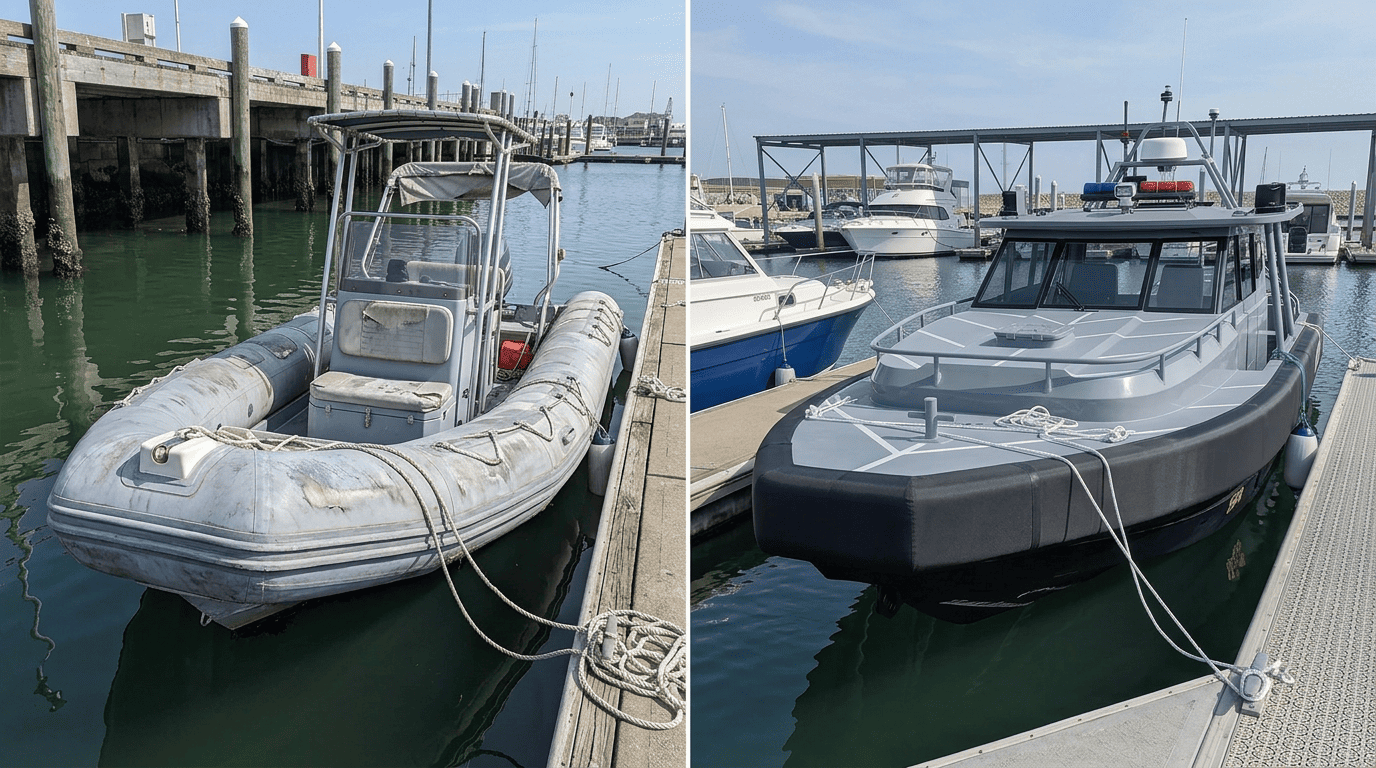
Let's look past the sticker price and break down the real numbers behind foam collar system4s to see where your money actually goes.
Breakdown of DIY foam collar kit prices vs. professional installation
You might be tempted to cut corners with a DIY kit, but have you considered the risk of a botched installation ruining your investment?
DIY foam collar kits typically cost between $2,500 and $5,000 depending on vessel size, whereas professional installation can range from $6,000 to over $10,000. The extra cost for professional service covers custom fitting, specialized tools, and labor guarantees, ensuring the collar bonds correctly to your hull for maximum durability.
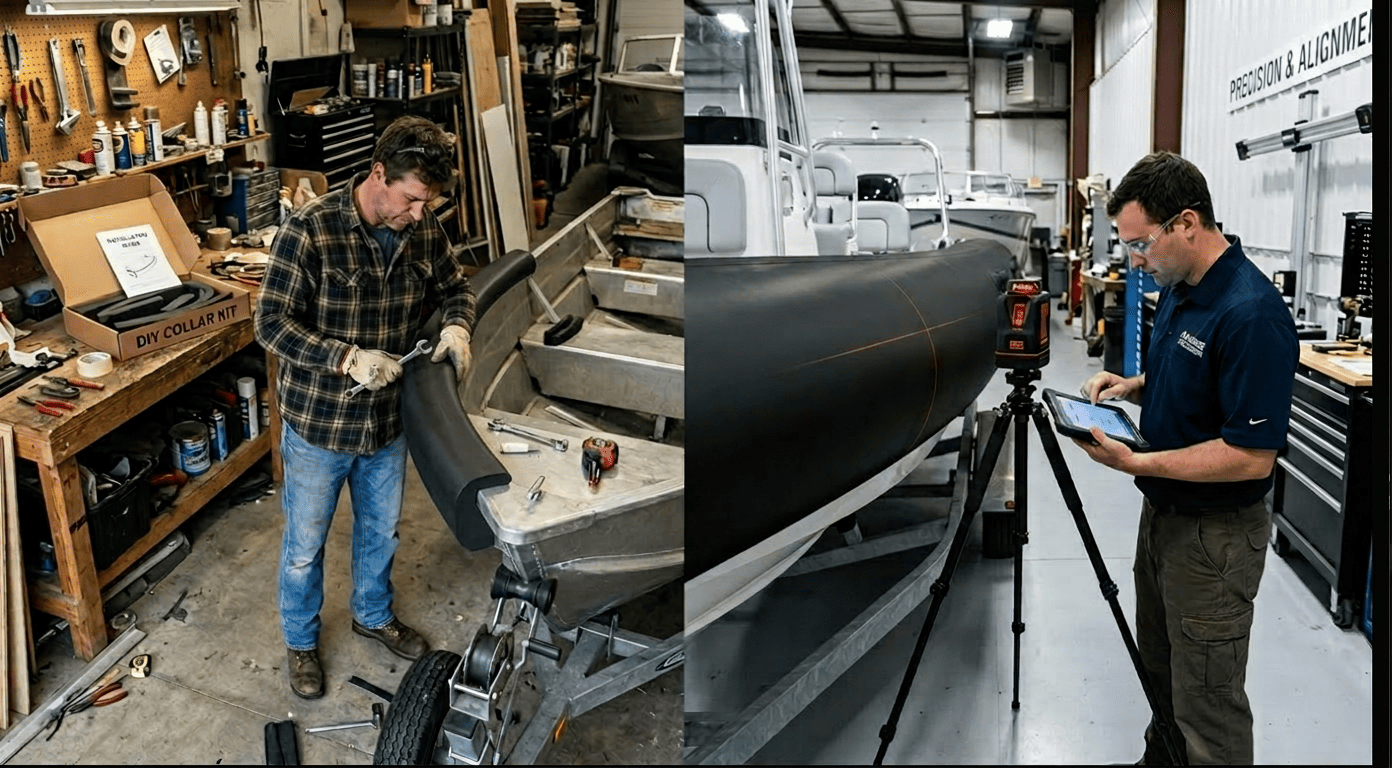
When you look at the price difference, it is easy to lean towards doing it yourself. However, we need to dive deeper into what you are actually paying for.
The True Cost of DIY
Buying a kit seems cheaper upfront. You get the foam segments and a skin kit. But you are also taking on the responsibility of shaping, gluing, and sealing. If you mess up the adhesive mix or the temperature isn't right during curing, the collar can delaminate. I have seen clients spend $3,000 on a kit only to have it fail in six months because they missed a step in the surface preparation. You need to grind the hull, clean it with acetone multiple times, and apply the primer within a strict window. If the humidity is too high that day, your bond strength is compromised. It’s not just about bolting it on; it’s about chemical bonding that has to withstand tons of shear force.
Professional Installation Value
Professional installers don't just bolt things on. They assess your hull's geometry to ensure a perfect fit.
| Cost Component | DIY Kit | Local Boatyard (Generalist) | Professional Specialist |
|---|---|---|---|
| Materials | Included (Generic sizing) | Retail Price + Markup | Included (Custom cut) |
| Labor | $0 (Your time: 40+ hours) | High ($100-$150/hr) | Included (Fixed Quote) |
| Tools | Extra ($200-$500) | Included | Included |
| Warranty | Parts only | Labor Only (Limited) | Parts & Labor (Comprehensive) |
For a workboat that runs 24/7, the downtime caused by a failed DIY install costs far more than the savings. A professional team uses vacuum bagging techniques5 to ensure even pressure during curing, something very hard to replicate in a driveway. If you have a skilled crew and a dry dock, DIY works. If not, professional installation is safer.
Material costs: PE foam vs. EVA foam pricing
Is saving money on cheaper foam materials worth the compromise in performance and longevity?
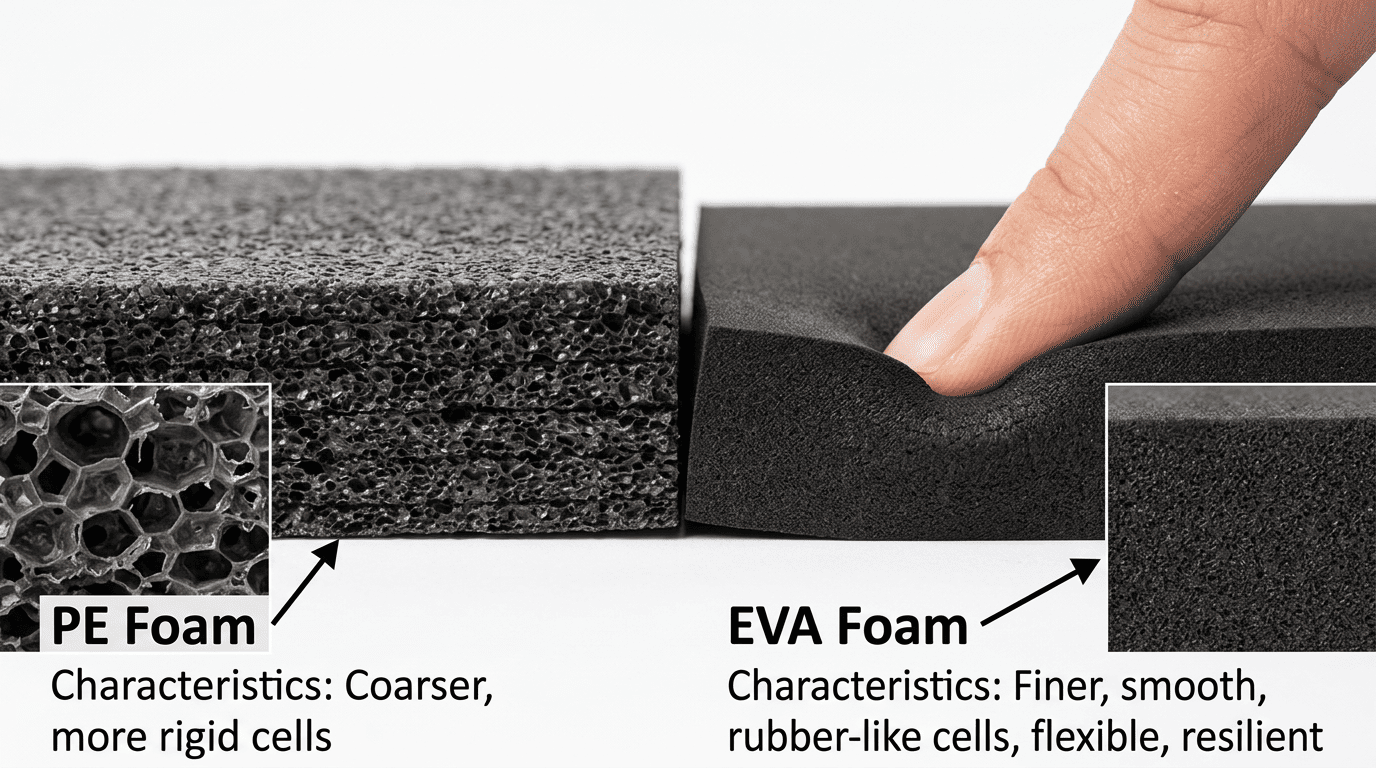
PE (Polyethylene) foam is significantly cheaper than EVA (Ethylene-vinyl acetate) foam6, often costing 30-40% less. However, PE foam has lower energy absorption and resilience7 compared to EVA foam. While PE is budget-friendly, EVA offers superior memory and impact recovery, making it the better choice for high-impact applications.
Choosing the right core material is critical because once the collar is sealed, you can't change it.
Understanding the Trade-offs
I often explain to my clients that you get what you pay for with foam.
- PE Foam: This is a closed-cell foam that is rigid and lightweight. It is great for static buoyancy or light-duty fendering. The price advantage is real. If your budget is tight and impacts are infrequent, PE is a viable option. However, its energy absorption and resilience are worse than EVA foam. It doesn't bounce back as well after a heavy hit. If you compress PE foam beyond its yield point, it stays compressed. This "permanent set" means your fender loses effectiveness over time.
- EVA Foam: This is the premium standard. It has a high cross-linking density, which gives it incredible elasticity. When a pilot boat slams into a ship side, EVA compresses and recovers almost instantly. It acts like a memory foam mattress but for 50-ton impacts.
Cost vs. Performance Matrix
| Feature | PE Foam | EVA Foam |
|---|---|---|
| Cost | Low | High |
| Resilience | Moderate | Excellent |
| Heat Resistance | Lower | Higher |
| Typical Use | Pleasure craft, light duty | Pilot boats, military, tugs |
If you are outfitting a patrol boat that docks five times a day, the initial savings of PE will be wiped out when you have to replace the deformed collar in two years. EVA is an investment in longevity.
Hidden costs: Adhesives, shipping, and labor
Did you budget for the invisible expenses that can inflate your total project cost by 20% or more?
Beyond the collar itself, you must account for specialized marine adhesives, which can cost upwards of $500, and bulky freight shipping that can add $1,000 to your bill. Labor is another major factor; whether it is your own crew's time or hired contractors, preparing the hull and installing the system is a labor-intensive process.
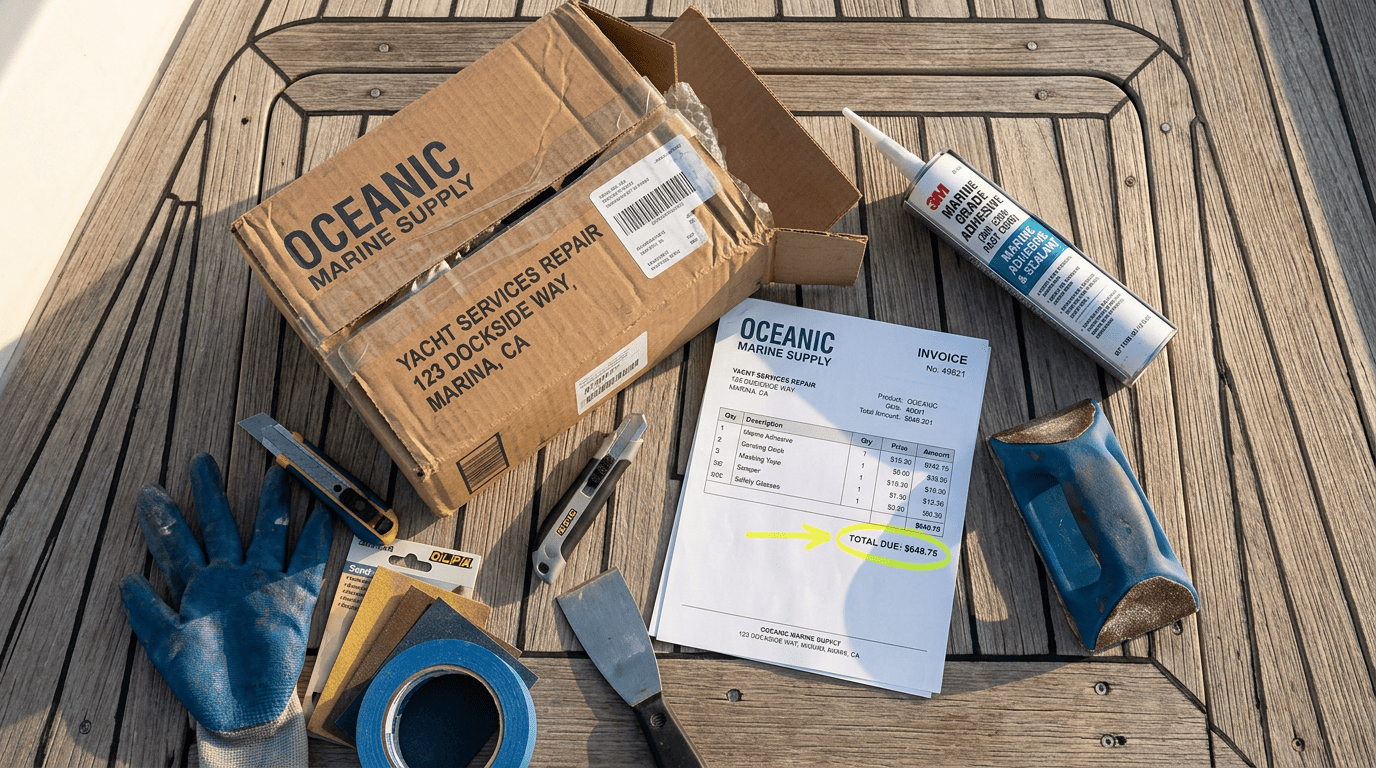
It is frustrating to get a quote for a collar and then realize you are thousands over budget because of these "extras."
The Adhesive Factor
You cannot just use any glue. You need industrial-grade structural adhesives, often two-part methacrylates like Plexus or specialized polyurethane sealants like Sikaflex 292i8. These are not cheap, and you need cases of them, not just a few tubes. They have shelf lives and specific storage requirements. I remember a project where the client forgot to order the specific primer for their aluminum hull—overnight shipping that hazardous material cost them triple the price of the primer itself because it couldn't go on a standard flight.
Shipping Volume
Foam collars are light but huge. They "cube out" shipping containers.
- Freight: Shipping a 40-foot container of foam is expensive not because of weight, but volume. You are paying for air.
- Handling: You need a forklift or a crane to unload these sections. They are awkward to handle by hand.
- Storage: Do you have a clean, dry place to store them before install? If they sit out in the rain before sealing, moisture can affect the bond.
Labor Hours
Don't underestimate the prep work. Removing old fenders, grinding the hull down to bare metal, masking, and cleaning takes time. It is dirty, dusty work. If you are paying a boatyard $120 an hour, a 3-day install adds nearly $3,000 to the bill. Always ask for a "landed cost" estimate that includes delivery and consumables so you aren't surprised.
Comparing the cost of foam collars to replacing inflatable tubes
Why keep patching expensive inflatable tubes when a foam collar could solve the problem permanently?
Replacing a RIB's inflatable tubeset typically costs between $5,000 and $15,000, similar to the cost of a foam collar retrofit. However, foam collars eliminate the recurring costs of patch kits, pump maintenance, and downtime due to punctures, offering a far better return on investment over time.
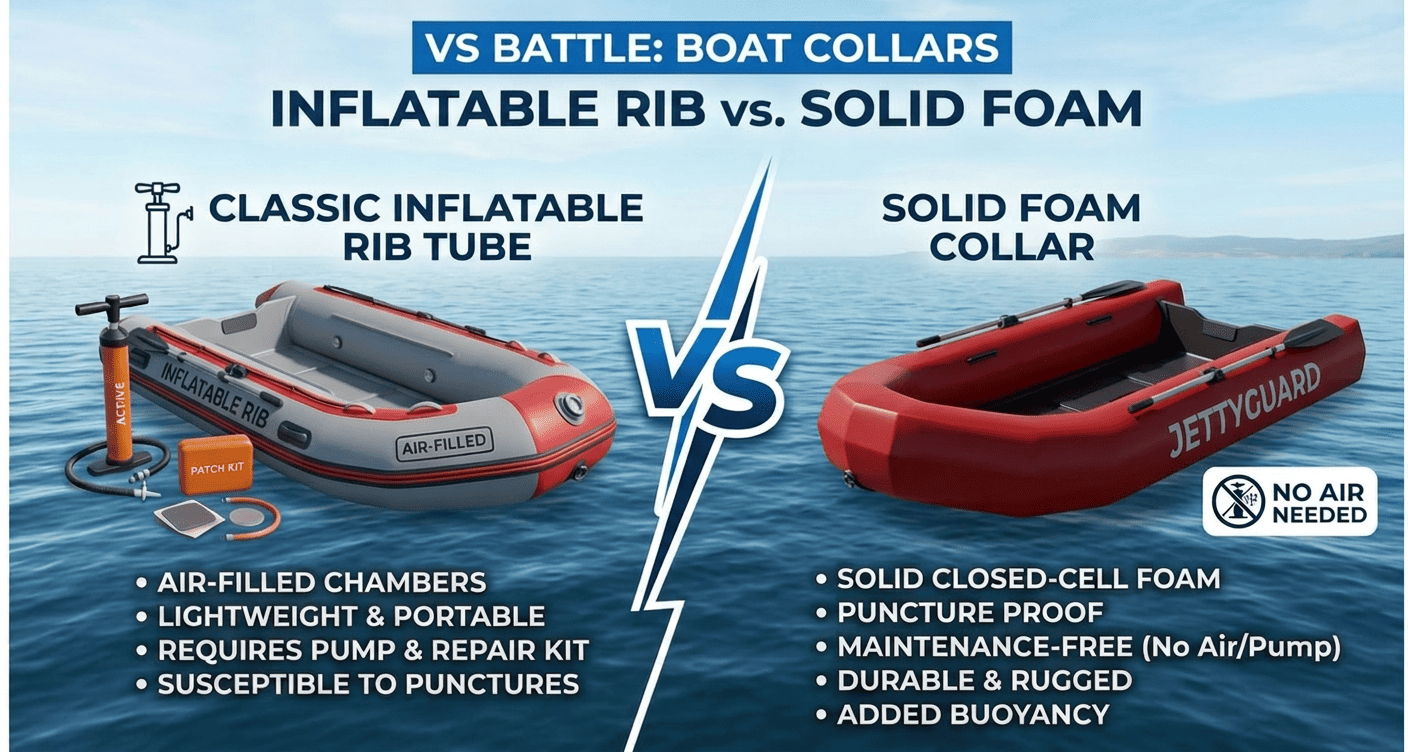
This is the most common comparison I see. RIB owners get tired of air leaks.
The Lifecycle Reality
Inflatable tubes are great for weight saving, but they are fragile. One sharp barnacle or a protruding bolt on a dock, and you are flat. Repairing a Hypalon tube correctly requires specific humidity and temperature conditions, often meaning the boat has to be hauled out.
- Retubing: You are looking at a complete replacement every 5-7 years for Hypalon, less for PVC. The UV degradation9 eventually makes the fabric brittle.
- Foam Retrofit: A solid foam collar can last 10-15 years easily. Even if you cut the skin, it doesn't sink. It keeps working. You can literally drive it with a chunk missing and it still protects the hull.
Operational Readiness
For commercial operators, the cost isn't just the tube—it's the downtime. If a patrol boat has a flat tube, it is out of service.
| Comparison Point | Inflatable Tube | Foam Collar |
|---|---|---|
| Puncture Risk | High | None |
| Maintenance | Regular (pressure checks, patches) | Zero (wash down only) |
| Space | Takes up deck space | Can be D-shape (more deck space) |
While the upfront check you write might be the same, the foam collar buys you peace of mind and operational certainty that air tubes cannot match. You stop worrying about sharp objects.
Long-term savings on fender replacements and hull repairs
Are you tired of constantly buying new fenders and painting over scratches on your hull?
Investing in a foam collar system can save you thousands of dollars over a decade by acting as a permanent, full-length bumper. It prevents hull abrasion and impact damage that typically requires expensive gel coat or aluminum repairs, and it eliminates the need to purchase and replace disposable hanging fenders.
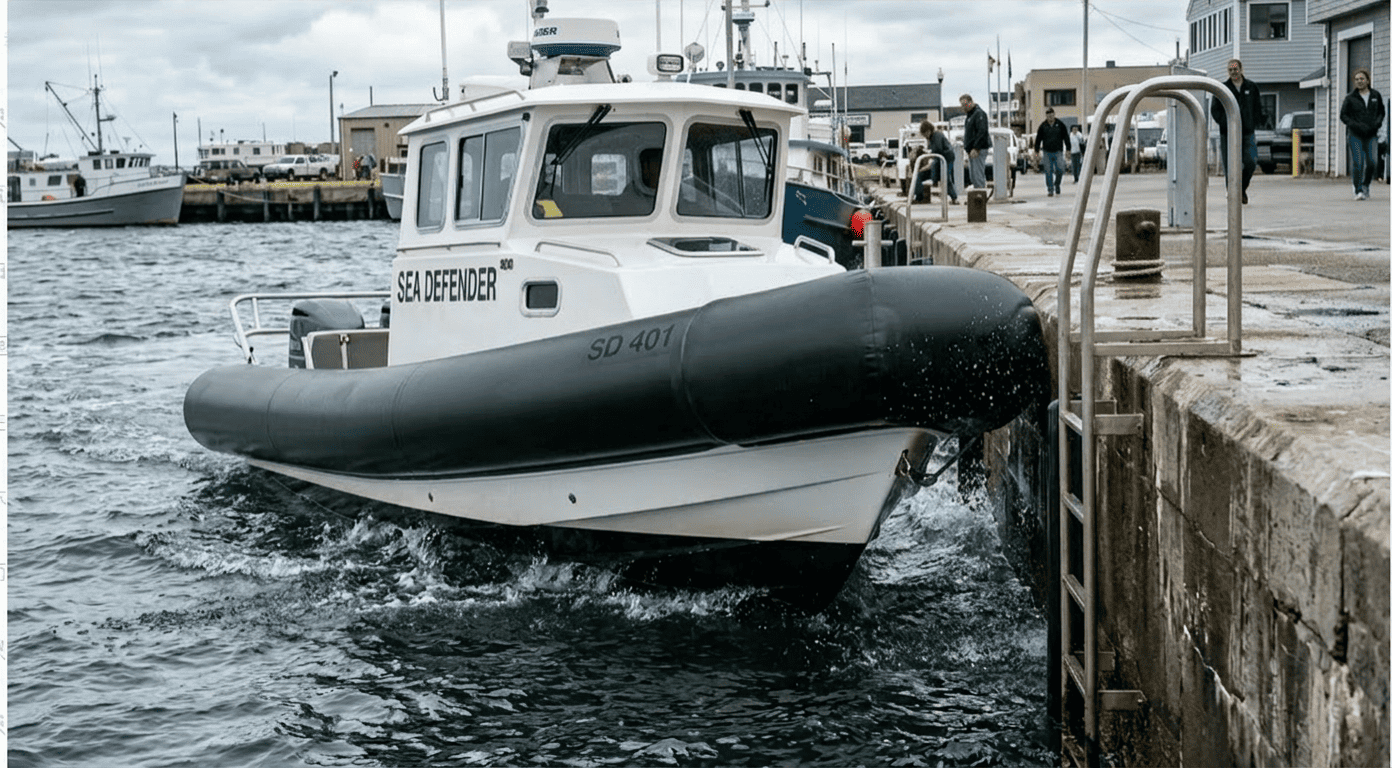
Think of a foam collar as a permanent insurance policy for your hull.
Reducing Hull Maintenance
Every time a standard fender slips or pops up, your hull grinds against the dock. Over time, this wears down gel coat and dents aluminum.
- Gel Coat Repair: A professional repair can cost $500 for a small area. If water gets into those scratches, you can get osmosis blistering, which is a major repair.
- Structural Damage: Repeated impacts can weaken the hull-to-deck joint. A foam collar absorbs this energy evenly along the entire length of the boat, not just at point loads. It distributes the force, protecting the structural integrity of your vessel.
Eliminating Consumables
How many fenders have you lost or popped in the last five years?
- Hanging Fenders: Good quality ones cost $100-$300 each. You need at least 4. They degrade in UV and need replacing every few years.
- The Math: Over 10 years, you might spend $2,000 just on disposable fenders. When you add the saved hull repair costs (potentially $5,000+) and the saved fender costs ($2,000), the foam collar (costing maybe $6,000) starts to look like it was free. It pays for itself in avoided costs.
Conclusion
While foam collars have a higher initial cost, their longevity and superior protection make them a financially sound choice. At Jettyguard, we specialize in engineering high-performance foam collar systems10 tailored to your vessel's needs. Contact us today to discuss how our custom foam solutions can protect your investment and reduce your long-term maintenance costs.
Explore this to understand how puncture-proof durability saves boats from constant repair and replacement costs. ↩
See how maintenance-free protection cuts ongoing costs and boosts operational efficiency. ↩
Learn how advanced shock absorption protects your hull and enhances safety during heavy impacts. ↩
Learn how integrated foam collars provide complete hull protection and long-term savings. ↩
Learn how these professional methods create stronger, longer-lasting adhesion for foam collars. ↩
Understand how EVA foam’s elasticity and resilience provide superior hull protection under stress. ↩
Find out why investing in high-resilience materials prevents deformation and maintains protection. ↩
Discover how these advanced sealants prevent leaks and uphold structural integrity in harsh conditions. ↩
Find insights into how sunlight damages materials, and how foam collars overcome those weaknesses. ↩
Discover engineering innovations that deliver premium safety and maintenance-free durability for your boat. ↩