
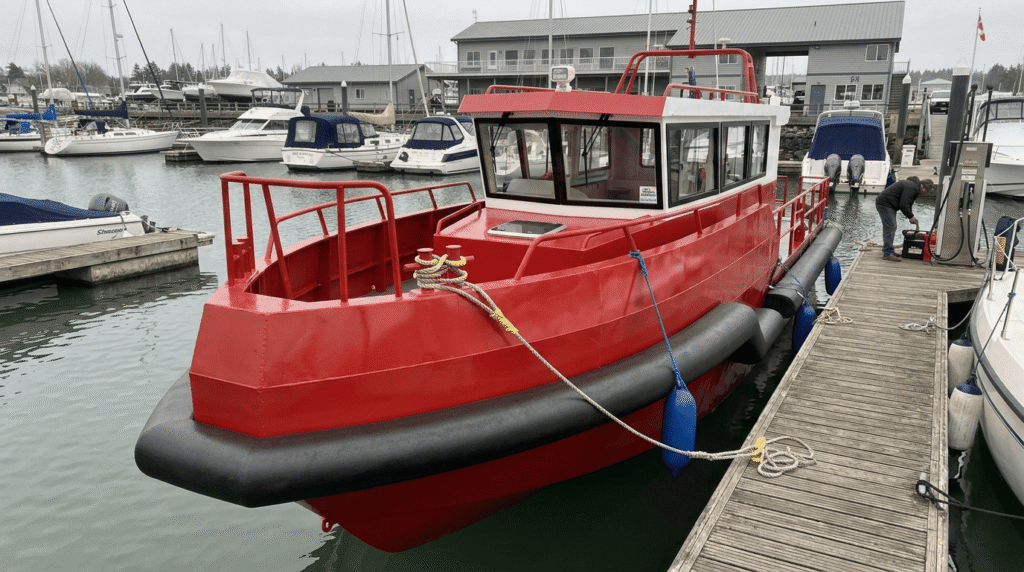
Collar selection runs into constraints that are already fixed: hull shape, deck edge fittings, weight allowance and how the boat is used alongside. Those constraints narrow the field before material preference enters the discussion.
There are three boat collar types: inflatable tubes, solid-foam collars, and hybrid systems that pair a foam element with an air chamber. Inflatable tubes favour low weight and field repair. Solid-foam collars favour repeated hard contact and low maintenance. Hybrid designs vary, so judge each on its actual construction.
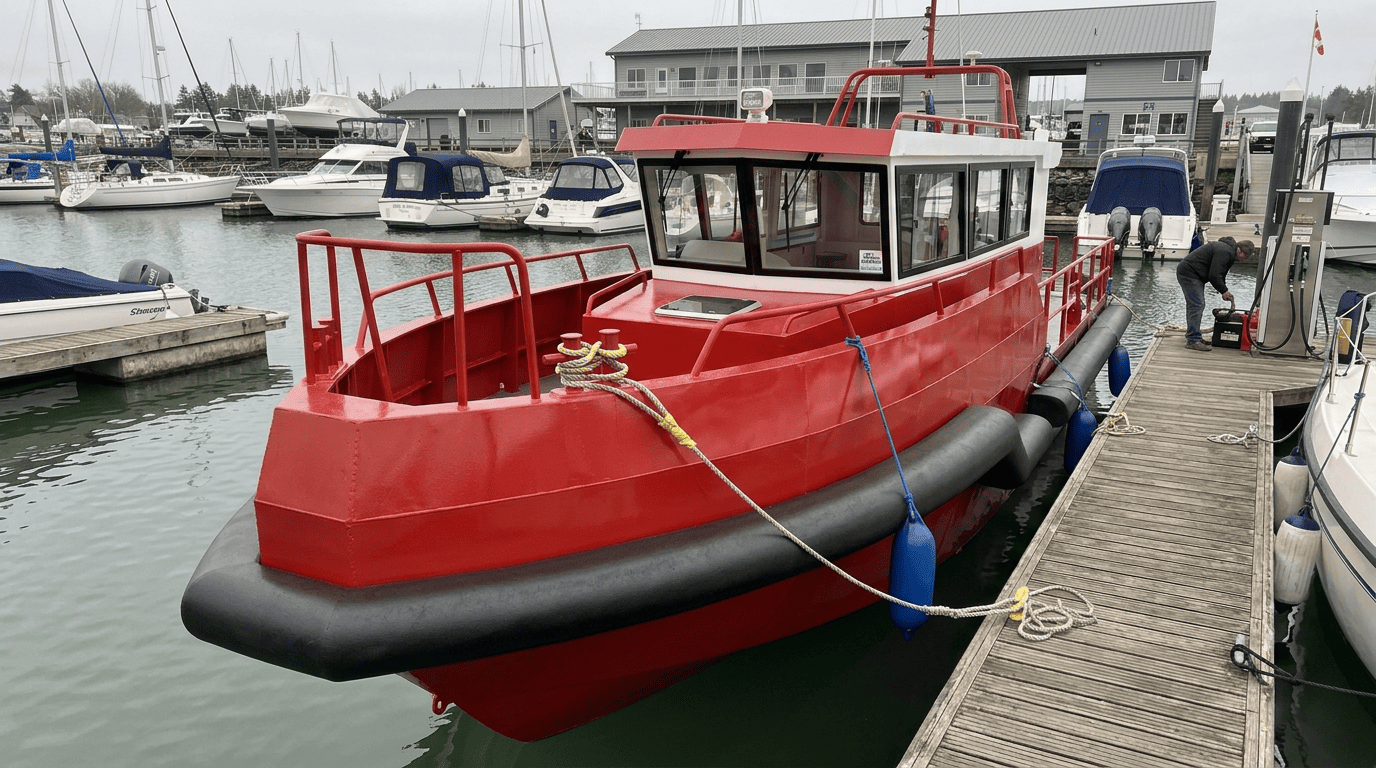
This Guide compares the three system types and the questions behind choosing one. Specification of a made-to-hull system — geometry, attachment detail and drawings — sits on the solid foam boat collar systems page.
What is a boat collar?
A boat collar is a buoyant tube or shaped section fitted along the outside of a hull, usually running from the bow to the stern quarter. It gives side protection, added reserve buoyancy and a softer contact face during boarding, towing and alongside work.
On a RIB the collar is part of the original design. On an aluminium or GRP workboat it is often added at build or fitted later as a retrofit. Both routes are common, and they raise different engineering questions.
A collar changes how a boat behaves alongside. It does not change stability approvals, freeboard or damage-survival status. Extra reserve buoyancy is useful, but collar choice and vessel-level safety are separate assessments.
Inflatable, solid-foam and hybrid collar types
Inflatable collars
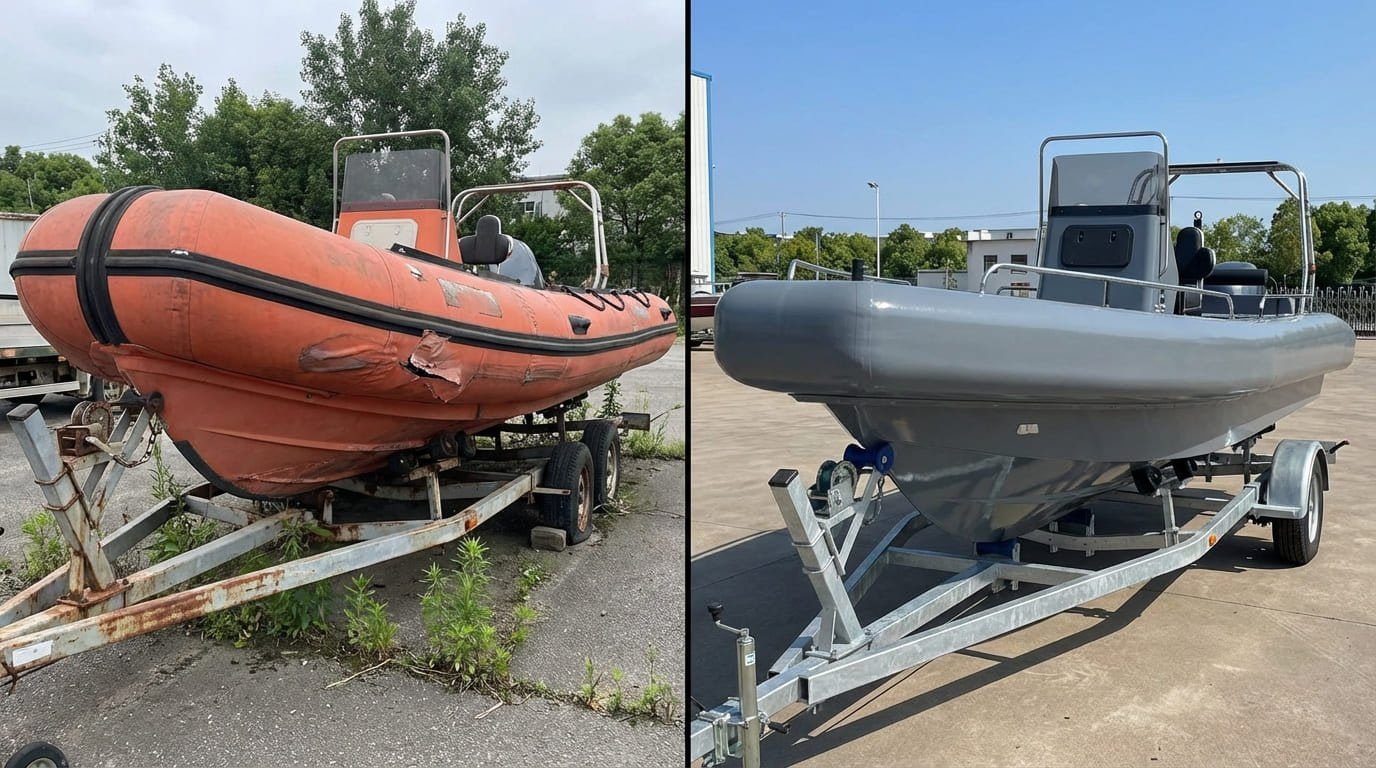
An inflatable boat collar is a coated fabric tube, commonly CSM/Hypalon or PVC, held in shape by air. Pressure follows the design specification for the tube rather than being varied at will, and the tube can be deflated for transport or storage.
Puncture and abrasion are the main failure modes. Field repair is possible in many cases. Where the tube is built with more than one chamber, a damaged chamber can often be isolated while the others hold shape. Fabric, seams and valves all age under UV and heat.
Solid-foam collars
A solid foam collar uses a closed-cell foam core with a protective outer skin, commonly a sprayed polyurea (SPUA) coating. There is no air chamber, so there is no pressure to hold and no valve to service.
Cuts and scuffs do not deflate the section, and damage is normally addressed by repairing the coating rather than patching a bladder. Weight is higher than a comparable inflatable tube, and the shape is fixed once the part is made.
Construction detail, geometry options and the engineering inputs behind a made-to-hull system are covered on the custom solid-foam collar pillar page.
Hybrid collars
Hybrid boat collars combine a foam element with an inflatable chamber. Arrangements differ from design to design: which element carries the contact face, how the chamber is retained, and how the parts are joined are all decisions made by the individual supplier.
That variation is the point to hold on to. A hybrid has to be evaluated from its actual construction, not from the category name. Foam, bladder, fabric and fixings each add an interface, and each interface needs its own inspection routine.
How the three boat collar types compare
| Factor | Inflatable collar | Solid-foam collar | Hybrid collar |
|---|---|---|---|
| Buoyancy source | Air in sealed chambers | Closed-cell foam core | Foam plus air chamber |
| Puncture behaviour | Affected chamber loses pressure | No pressure to lose | Depends on which element is cut |
| Routine maintenance | Pressure checks, valves, seams | Coating inspection and repair | Both sets of checks |
| Weight | Generally the lightest of the three | Generally the heaviest for a comparable section | Depends on the design |
| Shape after build | Set by the tube supplied; can be deflated | Fixed at manufacture | Depends on the design |
| Field repair | Fabric patch repair, subject to damage and access | Coating repair, often specialist | Varies by construction |
| Removal for transport | Often deflate and stow, depending on mounting | Depends on the attachment method | Depends on the design |
| Typical selection driver | Weight, portability, cost of entry | Contact frequency, downtime cost | Mixed duty, existing tube |
| Data needed to quote | Tube diameter, chamber layout, fabric | Hull profile, geometry, attachment method | Both, plus interface detail |
No column wins outright. The right answer follows how the boat is used, who maintains it and what an out-of-service day costs.
Which vessels and operating profiles suit each type?
Duty cycle decides more than vessel class. Leisure RIBs, dive boats and tenders that see moderate contact are commonly fitted with inflatable collars, because weight affects planing performance and trailer limits and a patch repair is often available locally.
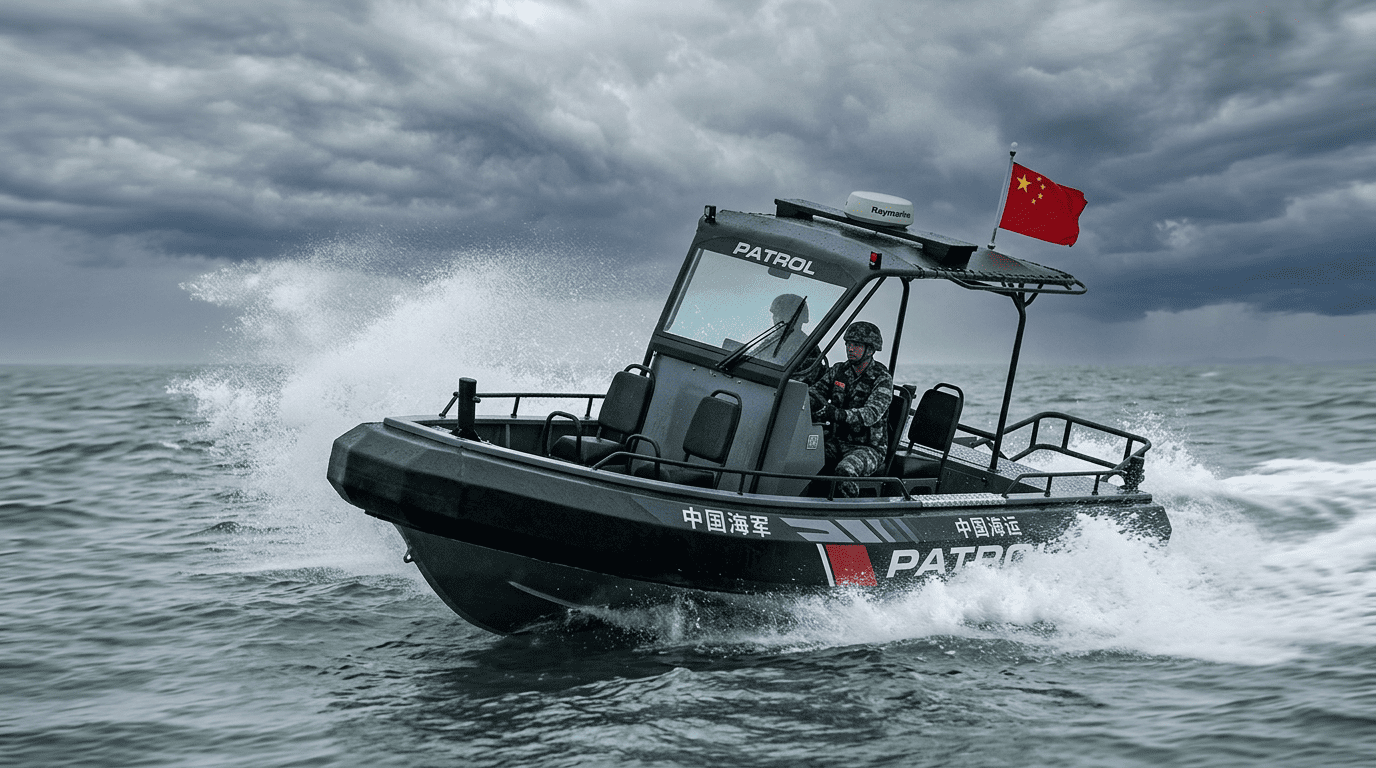
Workboats, pilot craft, patrol boats and crew transfer boats frequently sit at the other end of the range. Where contact against steel, concrete or another hull is routine, puncture risk and pressure management tend to outweigh weight. No vessel class settles the choice on its own.
Repair logistics are worth checking rather than assuming. Whether a repair needs the boat lifted, dried out or taken to a yard depends on the damage, its position relative to the waterline and the construction involved. Ask what a typical repair looks like for your boat.
Fleet economics matter as much as duty. If a boat is one of many and downtime is absorbed easily, a repairable tube is reasonable. If a single vessel covers a service window, low-maintenance construction usually earns its weight.
Hybrids tend to appear in two situations: an existing inflatable boat that needs better puncture tolerance without a full rebuild, or a mixed-duty vessel where part of the collar takes heavy contact and part does not.
One boundary worth keeping clear. Collars protect the hull side of the interface. Large floating berth-side units are a separate product family, covered under foam-filled marine fenders.
Retrofit and installation constraints
Retrofitting may be possible, and it needs a hull-specific assessment. Hull material, hull condition, existing coating, deck edge geometry, rubbing strake position and access to the inside of the hull all shape what can be fitted and how it is held on.
Attachment methods include adhesive bonding, mechanical fixings, bolted rails, and combinations of these. Which one applies depends on the hull and the collar construction. Confirm the method with the boat builder or the collar supplier before ordering — there is no single fixing that suits every hull.
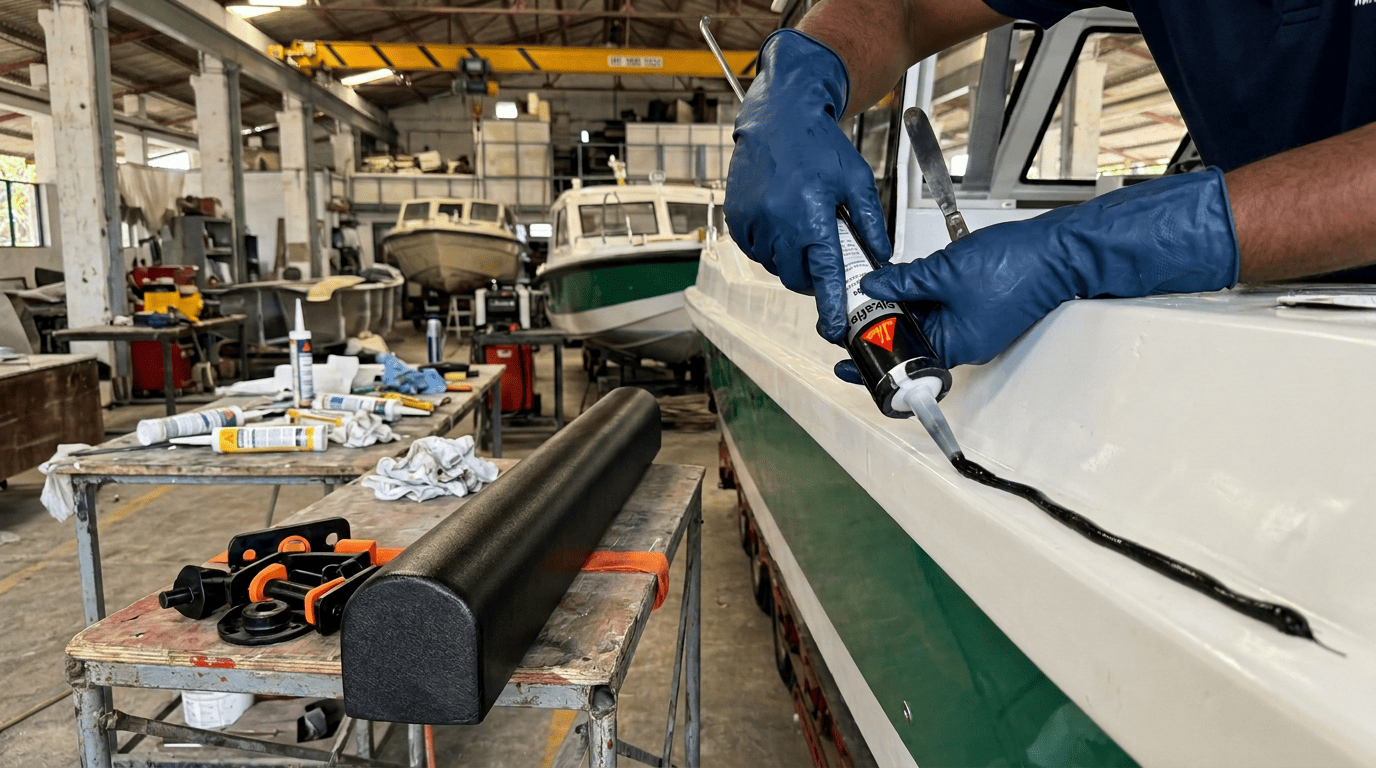
Practical points to settle before work starts:
- Whether the hull needs the boat lifted, and for how long
- Condition of the existing paint or coating at the bond or fixing line
- Clearance for cleats, fuel fills, rails, ladders and sea-water fittings
- Whether the collar covers or obstructs any inspection point
- Who is qualified to do the work, and where — yard, supplier or on site
- How a damaged section is removed and replaced later
Weight and its position also matter. Added mass along the sheer line changes trim and, on smaller craft, handling. Ask the builder or a naval architect to confirm the effect before committing to a heavier system.
What information is needed before selection?
Collect this before any technical discussion. It shortens the process and prevents a quote built on assumptions:
- Vessel type, length, beam and hull material
- Current collar or fender arrangement, and why it is being changed
- Hull profile drawings, or a plan to take physical templates
- Operating profile: alongside frequency, contact surfaces, sea state
- Sun exposure, water temperature and typical operating region
- Weight allowance and any stability or freeboard constraints
- Maintenance capability available to the crew or operator
- Colour, branding and non-slip requirements
- Any class, flag or owner-specified requirement that applies to the vessel
Hull geometry is the item that most often stalls a project. A custom collar follows the hull line, so drawings or templates decide what can actually be made.
Cost drivers and lifecycle questions
Purchase price is only part of it. These drivers move the total, and they differ by system type:
- Collar length, section size and number of segments
- Hull geometry complexity and the number of curves to follow
- Attachment method and any hull preparation needed
- Coating specification, colour and finish requirements
- Yard time, lifting and days out of service during fitting
- Freight and packing, which scale with volume for rigid sections
Lifecycle questions to put to any supplier: what routine inspection is expected, what a typical repair involves, who can perform it in your region, what spares or coating materials are needed, and how a damaged section is replaced. Ask for these in writing.
Treat service-life figures with care. Real life depends on exposure, contact frequency and maintenance, so a number quoted without those conditions tells you little. Ask what the figure assumes.
Frequently Asked Questions
Is a solid-foam collar always better than an inflatable one?
No. Solid foam removes pressure management and puncture-related deflation, but it is heavier and cannot be deflated or reshaped after manufacture. On weight-sensitive craft with light contact duty, a well-maintained inflatable tube remains a sound choice.
Does a boat collar make a vessel unsinkable?
No. A collar can add reserve buoyancy and side protection, and that is worth having. It does not make a vessel unsinkable, and it does not change stability or damage-survival assessments. Those stay with the vessel's own design and approvals.
Can a collar be retrofitted to an existing aluminium or GRP hull?
Often yes, and it is a common project. The answer depends on hull condition, coating, deck edge geometry, fittings along the sheer line, and access. Confirm the attachment method for your specific hull with the builder or supplier before ordering.
How much weight does a solid-foam collar add?
It depends on section size, collar length and coating thickness, so any figure quoted without those inputs is not usable. Ask for a calculated weight against your hull profile, and have the effect on trim and stability checked.
How should a hybrid collar be evaluated?
On its construction, not its category. Ask which element takes the contact face, how the air chamber is retained, how the parts are joined, and what each interface needs at inspection. Hybrid arrangements differ between suppliers, so compare the build rather than the label.
Next step
Choosing between boat collar types is a duty-cycle decision, not a materials preference. Specifying a custom solid-foam system? Start with the foam boat collar specification page, then send vessel type, hull material, collar length and operating profile through our technical contact page.