
Tubes rarely fail at a convenient moment. The boat is booked, the tube is soft again, and the decision lands on your desk.
Local repair or a full conventional retube is the direct rib tube replacement route. A custom solid foam collar retrofit is the alternative where punctures, pressure checks and lost dispatch time cost more than minimum weight. Foam adds materially more weight, so draft, payload, trim, stability and attachment loads need calculation first.
This guide is written for the people who carry the consequence of the choice: fleet and technical managers, patrol, rescue, pilot, port-service and crew-transfer operators, boatbuilders, refit yards, and government, defense and port procurement teams. Four routes are open, and only one of them is a JettyGuard product.
Start with a diagnosis, not a quote
A tube that keeps going soft is a symptom. The condition behind it decides the purchase, and it is found with the boat rather than on a call to a supplier.
Look at the fabric first. One puncture, one scuffed cone or a single weeping valve is local damage on material that still has life left. Chalky and tacky PVC, Hypalon worn thin along the full length, or seams lifting in more than one place points to ageing across the whole tube.
Check the interface next. Tubes sit on a glued bond, a bolted hull flange or a slide-on track. Soft or delaminating flange laminate, stripped threaded inserts, or a bond letting go along its length is structural work in its own right. A new tube over a failed interface will not hold.
Then look at the platform underneath. A sound hull, a solid transom and a dry deck justify spending money on the topsides. A hull that is tired, wet in the core, or already repaired more than once should reshape the shortlist before any tube price enters it.
Finish with duty. A patrol, pilot, rescue, hire-fleet or port-service RIB that meets pontoons, steel and rock every shift lives in a different risk band from a boat used a few weekends a season. High utilization changes the arithmetic, because each repair also costs a dispatch slot.
Four routes for RIB tube replacement
With the diagnosis in hand, four options are genuinely on the table.
1. Local repair. A patch, a seam repair or a valve swap is the quickest and cheapest fix for isolated damage on fabric that is otherwise sound. Where ageing runs through the whole tube, one patch tends to lead to the next, and the boat keeps coming off the roster to receive them.
2. Full conventional retube. New PVC or Hypalon tubes in place of the old set is the direct rib retubing answer. The boat keeps its original configuration and layout. Replacement weight and the resulting handling depend on the fabric grade and build method, so treat them as similar rather than identical.
What comes back with the new tubes is the old routine: pressure checks, UV care, and the same exposure to punctures and seam failure. JettyGuard does not carry out conventional PVC or Hypalon retubing. That work belongs with a retubing specialist.
3. Replace the vessel. Where the hull, transom or deck are worn out too, inflatable boat retubing puts good money into a platform that is running out. A newer boat costs the most capital and returns a fresh hull, with warranty and service history set by what you buy.
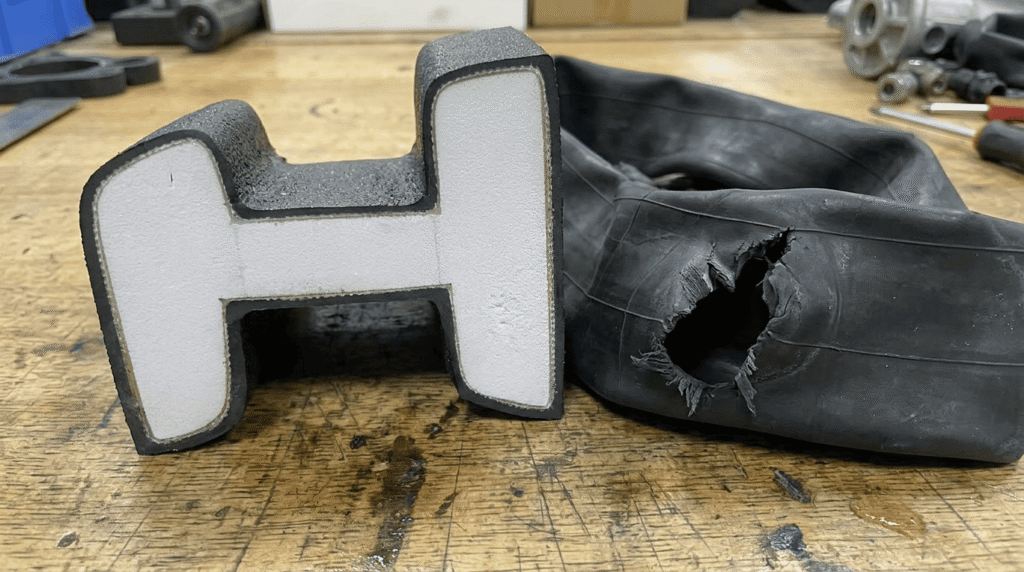
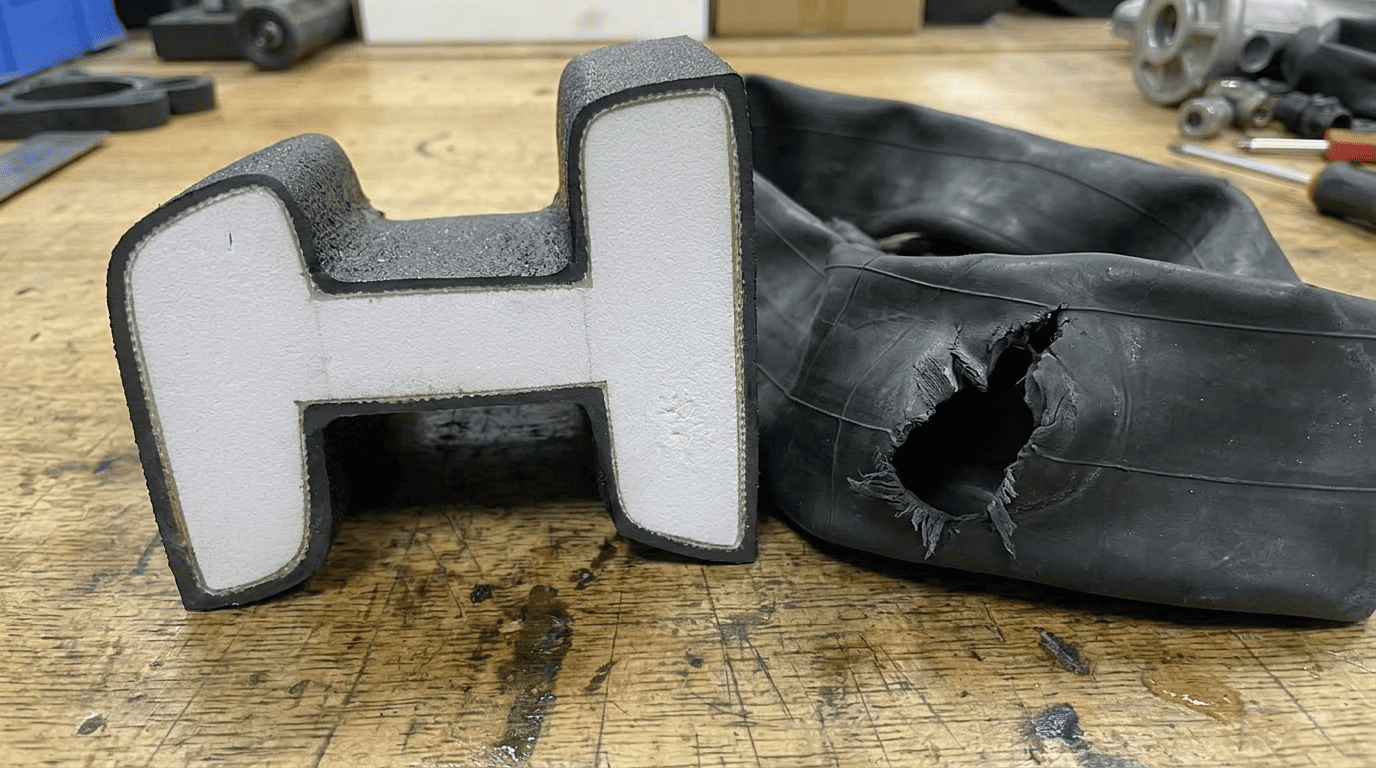
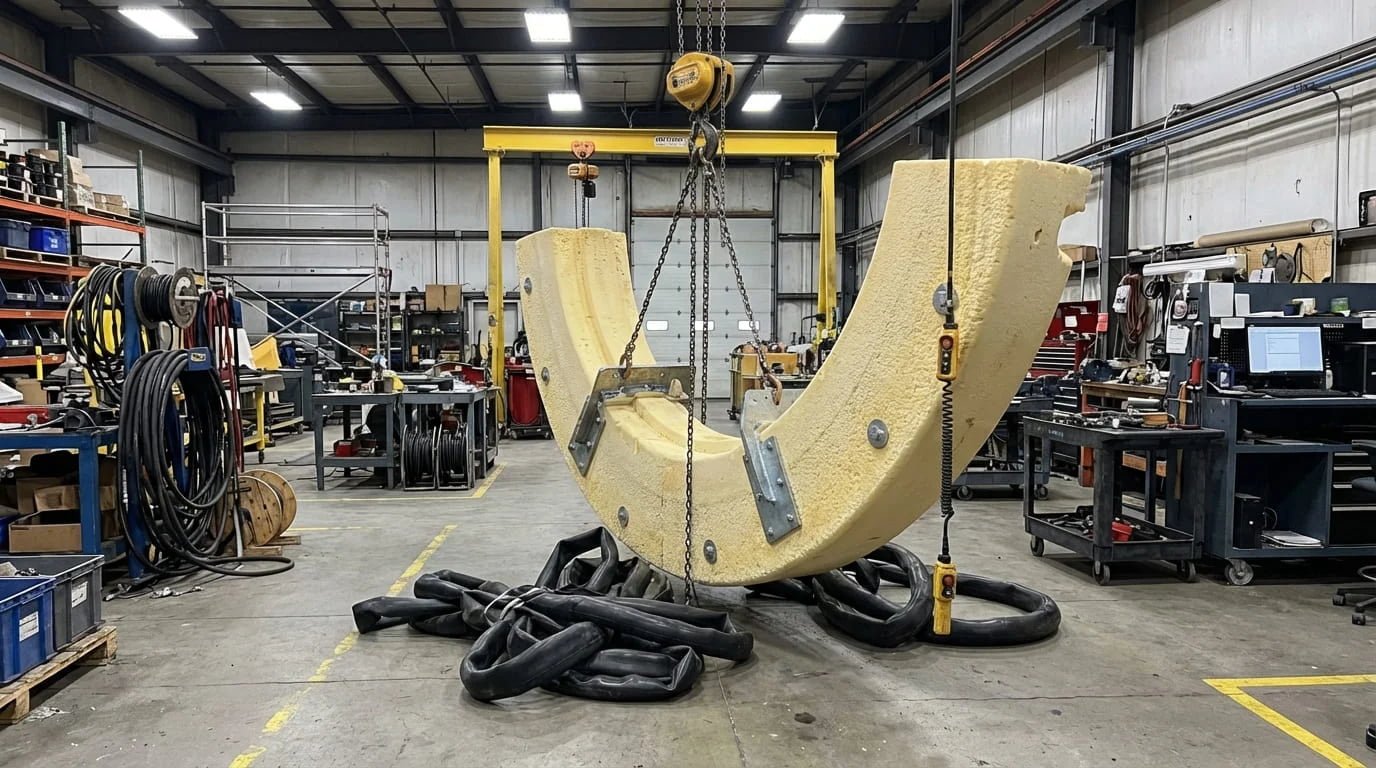
4. Custom solid foam collar retrofit. Closed-cell foam collars in a tough polyurea skin take the place of the inflatable tubes, carried on a revised attachment system. A solid foam collar holds no air, so it cannot deflate the way a tube can.
Be precise about what that buys. In the vessel assessment the collar counts as protective fendering, not as the buoyancy unit the original inflatable tube was designed to provide. It is materially heavier, so displacement, draft and available payload all have to be recalculated before approval. This is a custom engineering build, not a kit.
| Route | Initial scope | Downtime | Puncture / deflation exposure | Ongoing maintenance | Weight vs original | Custom engineering | Best fit |
|---|---|---|---|---|---|---|---|
| Local repair | Patch, valve or single seam | Shortest | Stays high across the rest of an ageing tube | Comes back quickly | Unchanged | None | Isolated damage on sound fabric; boat needed back on duty at once |
| Full retube | New PVC/Hypalon tube set, strip and refit | Moderate | As before | Pressure checks, UV care, patches over time | Close to original; varies with fabric and build | Little, where existing fittings can be reused | Operators who need close to original weight and layout and can plan the boat out of service |
| Replace vessel | New or newer boat | Longest, driven by sourcing | Set by the new boat | Set by the new boat | Not comparable | Not applicable | Tired hull or end-of-life platform that retubing cannot rescue |
| Solid foam retrofit | Custom collars, revised attachment | Longer lead for a custom build | Holds no air, so no deflation from air loss; counted as protective fendering, not as the buoyancy unit; skin damage still needs inspection and repair | Cleaning and inspection; no pressure routine | Materially heavier; added displacement raises draft and cuts payload | Required, specific to the hull | Sound hull in high-contact, puncture-heavy duty where calculation confirms draft, payload, trim, stability, performance and attachment loads stay acceptable |
What actually drives the cost
No honest single figure exists for rib tube replacement cost. The spread between a valve repair and a custom retrofit is too wide for an average to mean anything, so work from the drivers instead.
On a conventional retube, the budget moves with the fabric specification and build method — PVC or Hypalon grade, cloth weight, reinforcement — plus tube length and diameter, the number of cones and chambers, and the attachment type. Hull prep adds cost wherever the flange needs rebuilding, old adhesive needs stripping, or inserts need replacing.
Labor rates vary by region, and moving a hull or a finished tube set is often a real line item.
A foam retrofit has a different cost shape. Each set is a one-off build for one hull rather than a repeat of a catalogue size, so the budget covers a geometry and attachment review, the weight and displacement assessment, custom design work, foam density and skin specification, and manufacture to that vessel.
The invoice is only part of the number. Days out of service, the effect on fleet availability, repeat patches across a season, minutes spent on pressure checks before every launch, and the cost of a boat that is not ready when the slot is fixed all belong in the comparison.
A lightly used boat chasing minimum weight and top speed rarely justifies changing system. A workboat, tender or hire fleet taking daily contact damage is where the calculation earns its keep. Either way, a retrofit is not the fast route back onto the water this week.
Is a solid foam retrofit right for your vessel?
There is no eligibility list of boat types. In principle any vessel can be evaluated for a foam collar conversion. The open question is whether the result still works for how the boat is operated once the numbers are run. Physical feasibility is not approval.
Weight leads the assessment. A solid foam collar is materially heavier than the inflatable tube it replaces. That extra mass raises displacement and draft and cuts the payload left for crew, fuel, gear, passengers or cargo. It also sits high and outboard along the hull sides, so trim and stability come into the calculation as well.
Performance follows the same weight. Acceleration, time to plane, top speed and fuel burn can all shift, and the direction depends on hull form and collar profile, which is why they get calculated instead of assumed. For a boat whose job is fast transit or long range, that trade-off has to be set against removing air-pressure failures.
Attachment loads come next. The collar and its mounting carry the static weight of the foam system plus the berthing and impact loads the fender absorbs, and pass it into the hull.
An existing flange or track may be usable as it stands, may need modification, or may need a redesigned attachment. That is a structural question, not a fitting exercise.
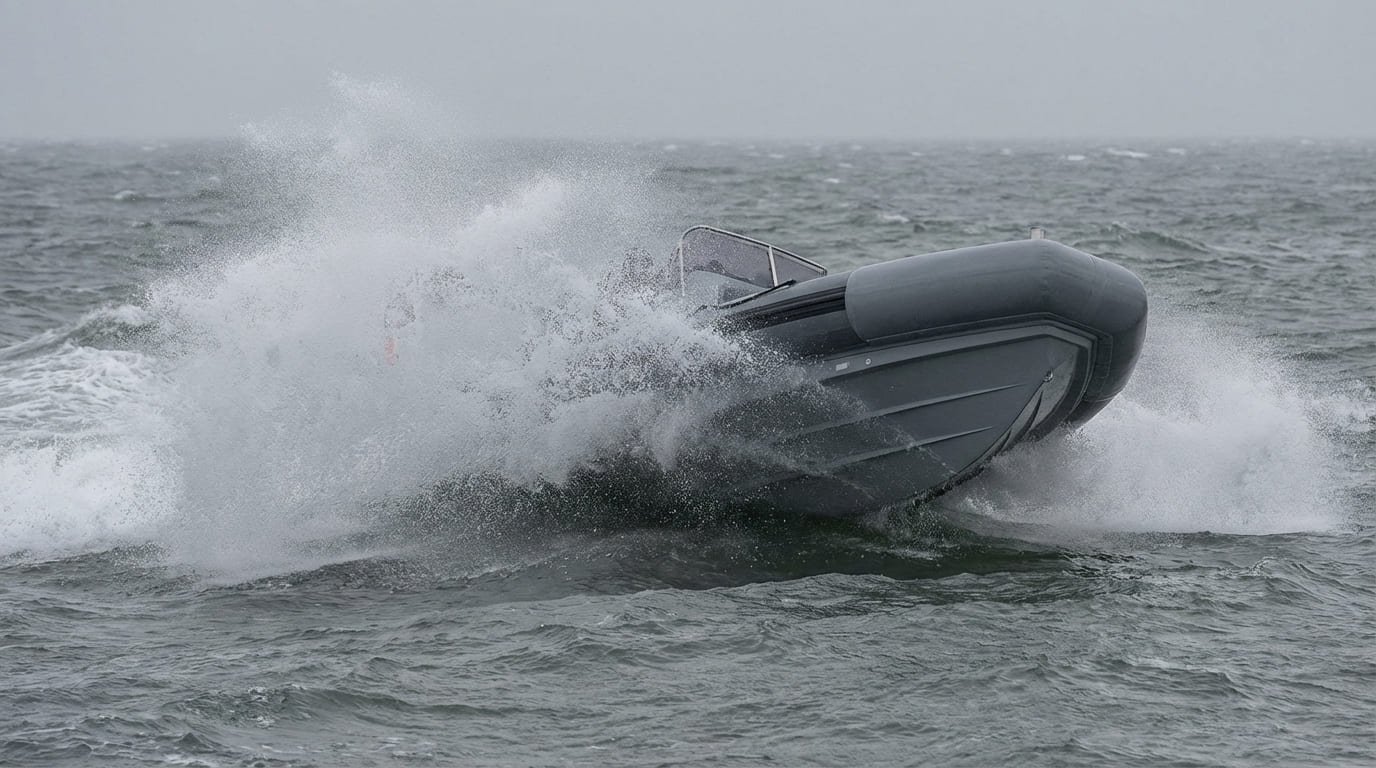
Be blunt about duty, because it decides the answer more often than the specification does. Foam earns its place where abrasion, punctures and repeated contact are normal working conditions and dispatch readiness outranks weight — pilot and crew-transfer boats, patrol and rescue RIBs, port-service and work vessels, hire fleets, tenders.
Where every kilogram costs speed and range, or the hull is already degraded, the same calculation sends you back to a retube or a newer boat.
Read "low maintenance" correctly as well. Removing the pressure routine and the risk of sudden deflation is real, and immunity to damage is not. A hard impact or poor handling can damage any collar or fender system. Skin damage still needs inspection and repair to keep water and further wear out.
Feasibility review and how a project runs
The retrofit is specific to one hull and the weight effect has to be worked out, so a project starts with information rather than assumptions. For an engineering assessment, send what you can of the following:
- Vessel make and model.
- Hull drawings or accurate dimensions — LOA, beam, chine and rubbing-strake shape, current tube profile and diameter.
- Current displacement or lightship figures where you hold them.
- Design draft and typical working payload.
- Close-up and wide photos of the tube attachment and hull flange.
- Engine and propulsion setup, with your speed and performance priorities.
- Operating environment and duty cycle.
- Delivery location.
Nothing is lost if the file is incomplete on day one. Send what exists and the technical team will name what is missing.
From there a project moves in defined stages: a preliminary review of the file; a geometry, attachment and weight review, which may call for more photos or a local measurement; a proposal covering scope, collar profile, estimated weight and its effect on draft and payload, and delivery; manufacture to the agreed design; delivery; then installation guidance or coordination where agreed.
No universal fit and no standard bolt-on conversion is promised, because neither would survive contact with a real hull. The JettyGuard guide to solid foam boat collars covers the construction and material background in more depth.
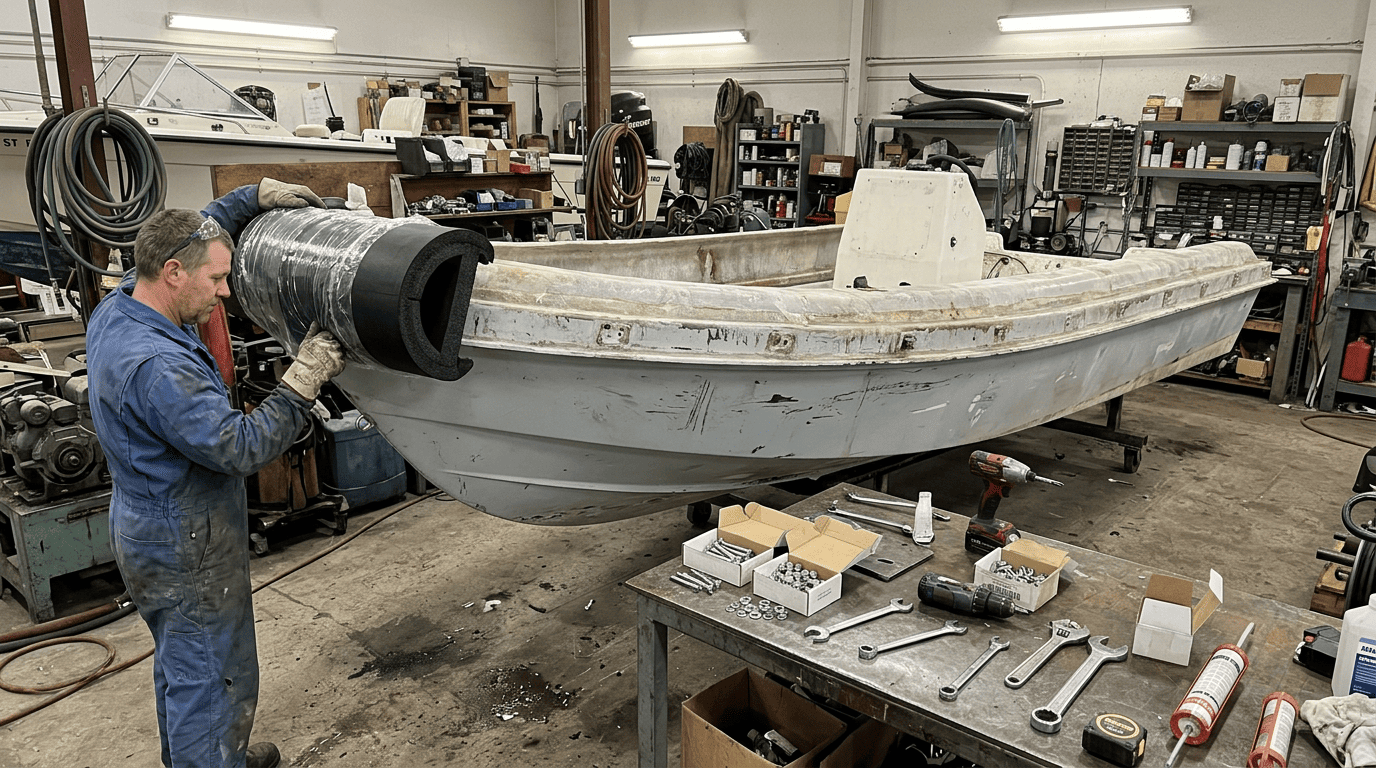
Installation responsibility gets settled before manufacture. Most projects ship with installation guidance for the operator's own boatyard or refit yard. Where JettyGuard coordinates installation directly, the proposal defines that scope rather than leaving it to be assumed.
Frequently asked questions
How do you choose between repair, retube and a foam retrofit?
Judge the fabric and the hull first. Isolated damage on sound fabric is a repair. Widespread ageing over a sound hull points to a full retube or a retrofit review, while a tired hull points to a different boat.
Then add the operational test: if leaks and pressure checks are costing real dispatch time, a foam retrofit is worth an engineering look.
Does JettyGuard carry out conventional PVC or Hypalon retubing?
No. JettyGuard assesses and manufactures custom solid foam collar retrofits for suitable projects after an engineering review. Where a like-for-like retube is the right answer, that work sits with a retubing specialist, and the review will say so.
How does a foam collar affect draft and payload?
It adds materially more weight than the inflatable tube it replaces, which raises displacement and draft and reduces available payload. Weight sitting high and outboard can affect trim and stability too. The effect is calculated for each vessel and duty before the job is recommended.
Can any RIB be converted to solid foam collars?
In principle any vessel can be evaluated, and that is not the same as approval. A conversion may be physically possible yet unattractive once the resulting draft, payload, trim, stability, performance and attachment loads are checked against the intended duty. The calculation decides, not the boat type.
Who installs the collars?
Most sets are supplied with installation guidance for the operator's own boatyard or refit yard. Where JettyGuard coordinates installation, that scope, logistics and any local measurement or survey are written into the proposal, so technical and procurement teams know the split of responsibility before manufacture starts.
Sound hull, failing tubes? A rib boat tube replacement does not have to mean another inflatable set. JettyGuard manufactures custom solid foam collar systems engineered to each hull after review. Send drawings or dimensions, photos, duty profile and delivery location for a plain answer on whether a retrofit is worth evaluating.