Imagine berthing a massive ship and using a whale carcass to cushion the impact. It sounds like a maritime myth, but before modern technology took over, sailors used whatever nature provided. Today, we rely on sophisticated engineering, but the journey from organic buffers to high-pressure pneumatic systems is a fascinating story of innovation.
Yokohama fenders evolved from primitive solutions like wooden logs and whale carcasses to become the global standard for marine protection1. Invented in 1958 by the Yokohama Rubber Company2, these pneumatic fenders3 utilize compressed air4 to absorb energy, solving the weight and cost issues of solid rubber while revolutionizing ship-to-ship transfers.
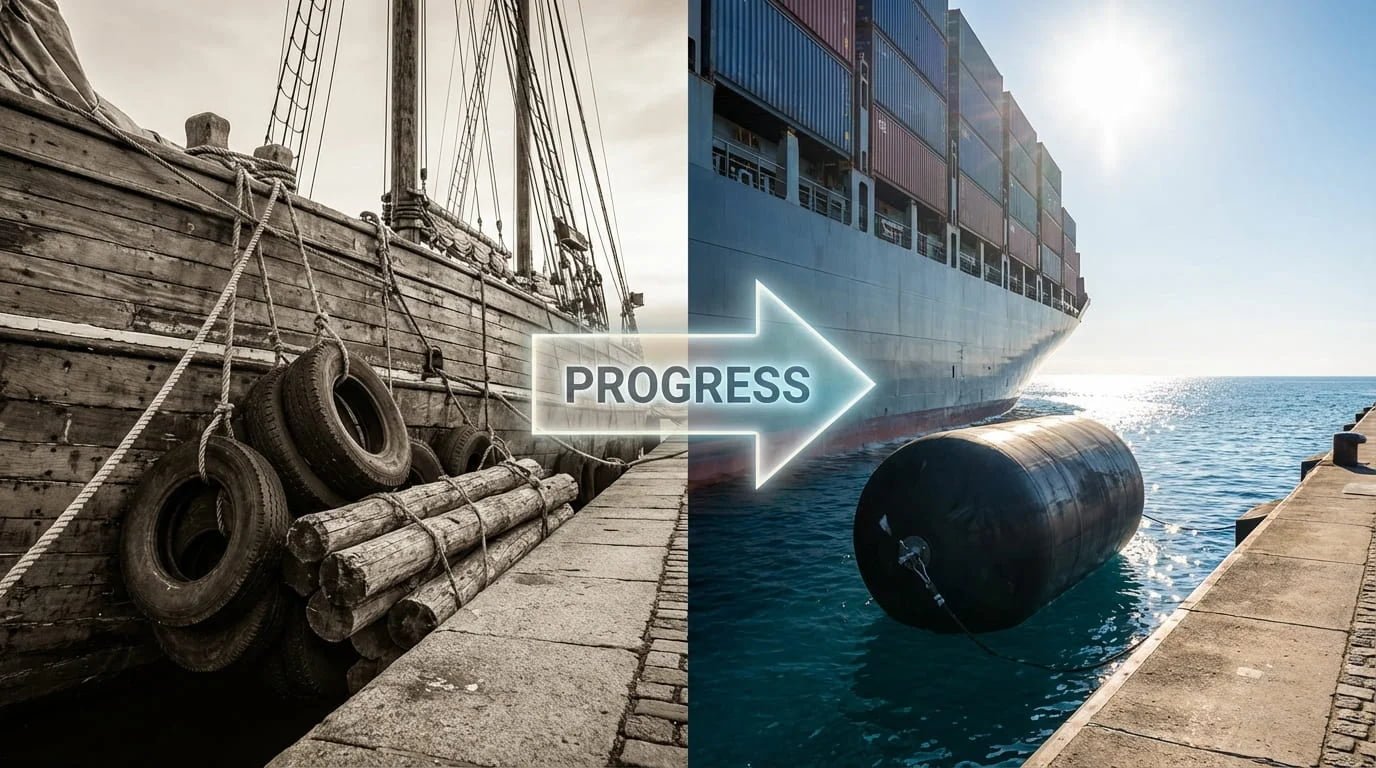
It is hard to believe how far we have come in just a few decades. The leap from using simple, readily available materials to designing ISO-certified safety equipment changed the shipping industry forever. Let's dive into how this transformation happened.
The Pre-1958 Era: From Nature to Necessity?
Before the mid-20th century, protecting a ship's hull was a messy business. Sailors and port operators had to be creative with the materials they had on hand. In many parts of the world, this meant using wooden logs, bundles of rope, or even old tires.
But the most surprising historical fact is the use of whale carcasses5. In the whaling era, it was not uncommon for vessels to use the blubber-filled bodies of whales as makeshift fenders during operations at sea. While effective in absorbing shock due to their mass and compressibility, you can imagine the downsides. The smell was unbearable, the environmental impact was devastating, and they obviously were not a sustainable solution.
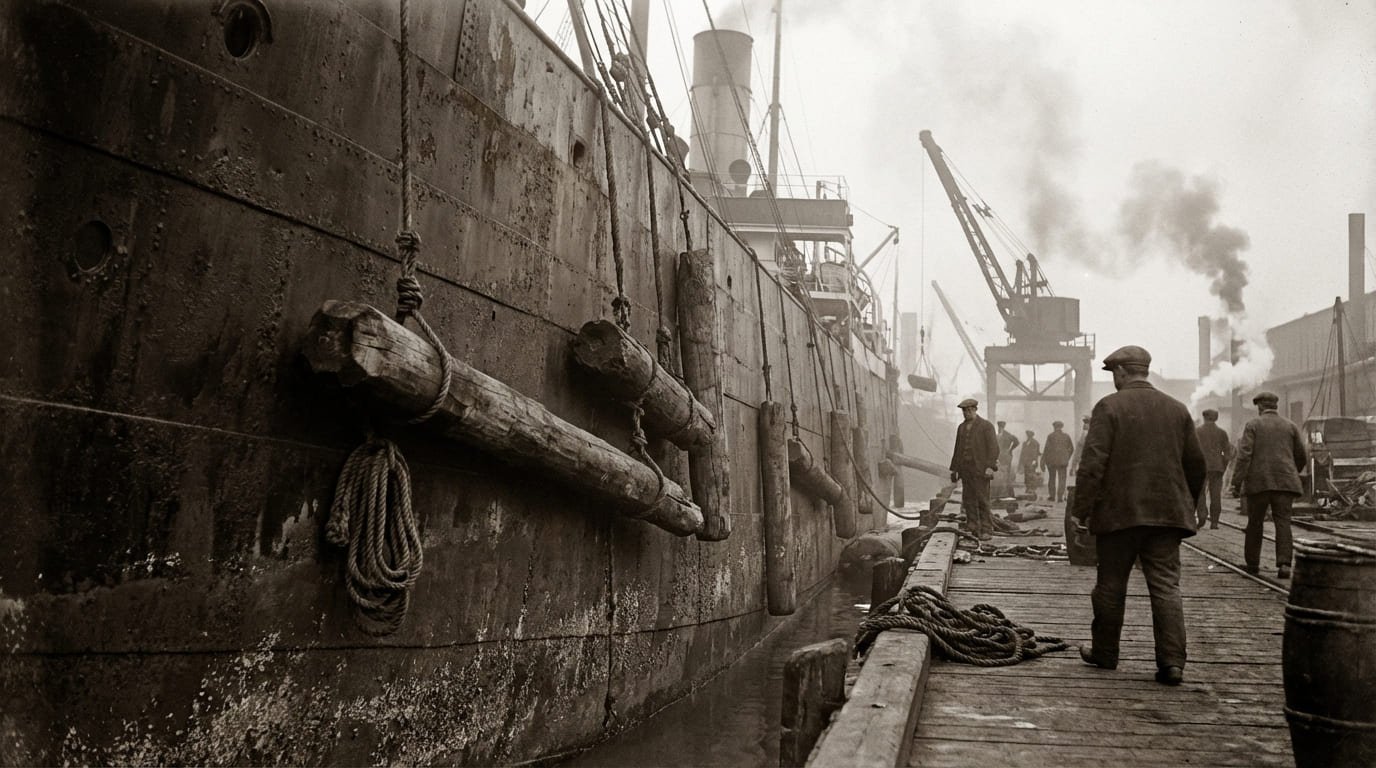
As ships grew larger and steel hulls became the norm, these organic and primitive methods were no longer sufficient. Wooden fenders would splinter and break under the weight of modern tankers. Old tires, while better, lacked the energy absorption6 capacity needed for heavy berthing. The industry was desperate for a consistent, reliable, and manufactured solution that didn't rot or smell.
The 1958 Breakthrough: Solving the Rubber Problem?
By the 1950s, the need for a better fender was clear. Solid rubber fenders existed, but they had a major problem: weight. To absorb the energy of a large vessel, a solid rubber fender had to be enormous. This made them incredibly heavy, expensive to ship, and difficult to install.
In 1958, the Yokohama Rubber Company in Japan came up with a brilliant solution. Instead of relying on the elasticity of rubber alone, why not use the elasticity of air? They developed the first pneumatic rubber fender. By filling a rubber shell with compressed air, they created a fender that was lightweight, floated on water, and had an incredible high energy absorption to reaction force ratio.
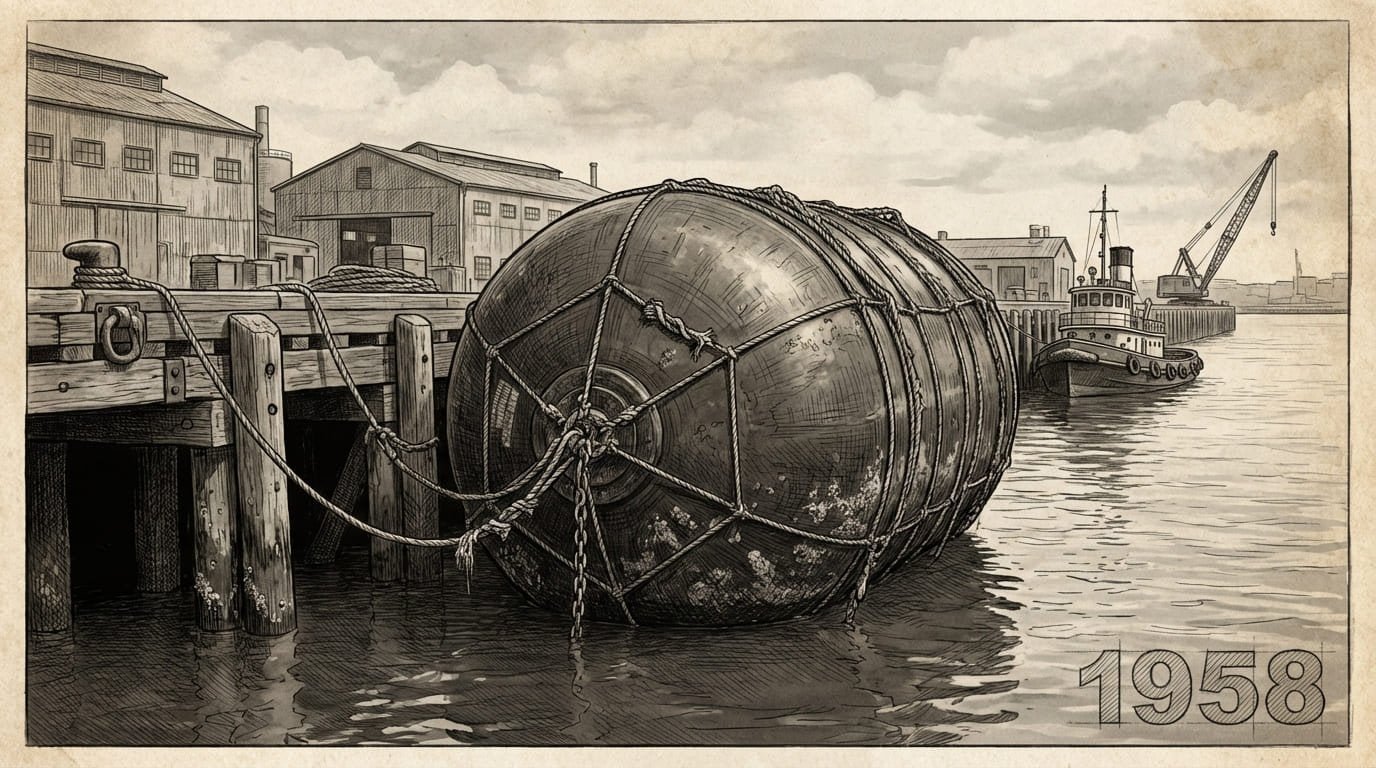
This invention changed everything. Suddenly, fenders could be easily transported and deployed. They could float alongside a ship, rising and falling with the tide, which was perfect for ports with large tidal variations. The use of air reduced the amount of rubber needed, making the fenders more cost-effective to produce than their solid counterparts. This 1958 breakthrough laid the foundation for modern port safety7.
Design Evolution: The Rise of the Chain & Tire Net?
The first pneumatic fenders3 were essentially large rubber balloons. While effective, the harsh marine environment is unforgiving. Sharp protrusions on docks, rough ship hulls, and the constant friction of berthing began to take a toll on the fender bodies.
To solve this, engineers introduced the "Chain and Tire Net8" (CTN). This is a protective mesh made of heavy-duty chains and used tires (or rubber sleeves) that wraps around the fender body. It acts like a suit of armor, protecting the expensive pneumatic chamber from cuts, abrasion, and punctures.
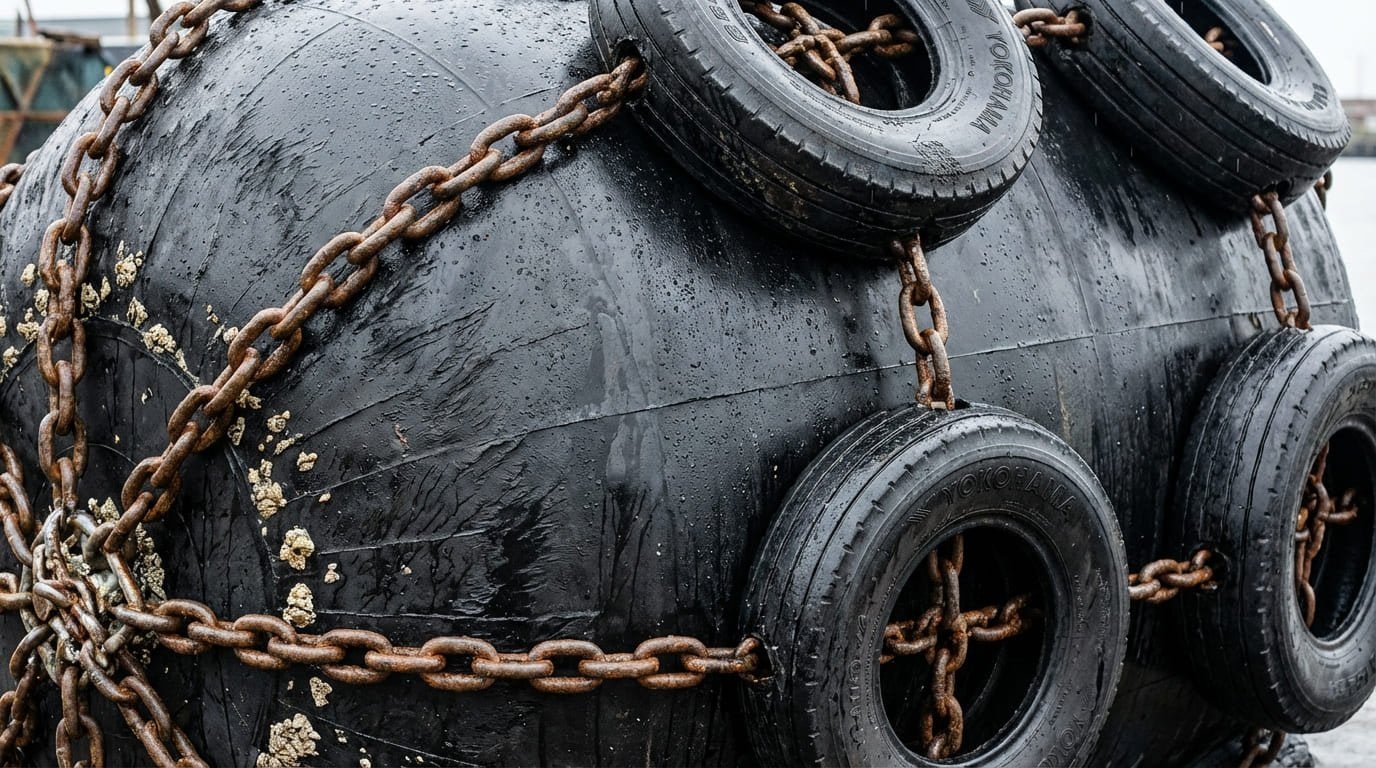
The CTN design significantly extended the lifespan of the fenders. It became the standard for large-scale operations, especially for Ship-to-Ship (STS) transfers9 where two moving vessels interact in open water. The net also provides additional energy absorption and helps distribute the load more evenly across the fender body. Today, while "sling type" (netless) fenders are still used for smaller vessels or naval applications, the Chain and Tire Net remains the iconic look of a heavy-duty Yokohama fender.
Standardization: The ISO 17357 Era?
As pneumatic fenders3 became popular, a new problem emerged: quality inconsistency. Manufacturers around the world started making their own versions, but not all were created equal. Some would burst under pressure, while others would fail prematurely due to poor rubber quality.
To ensure safety, the International Organization for Standardization (ISO) stepped in. They established ISO 17357, a rigorous standard that specifies the material, performance, and testing requirements for high-pressure floating pneumatic rubber fenders. The current standard, ISO 17357-1:2014, is the bible for our industry.
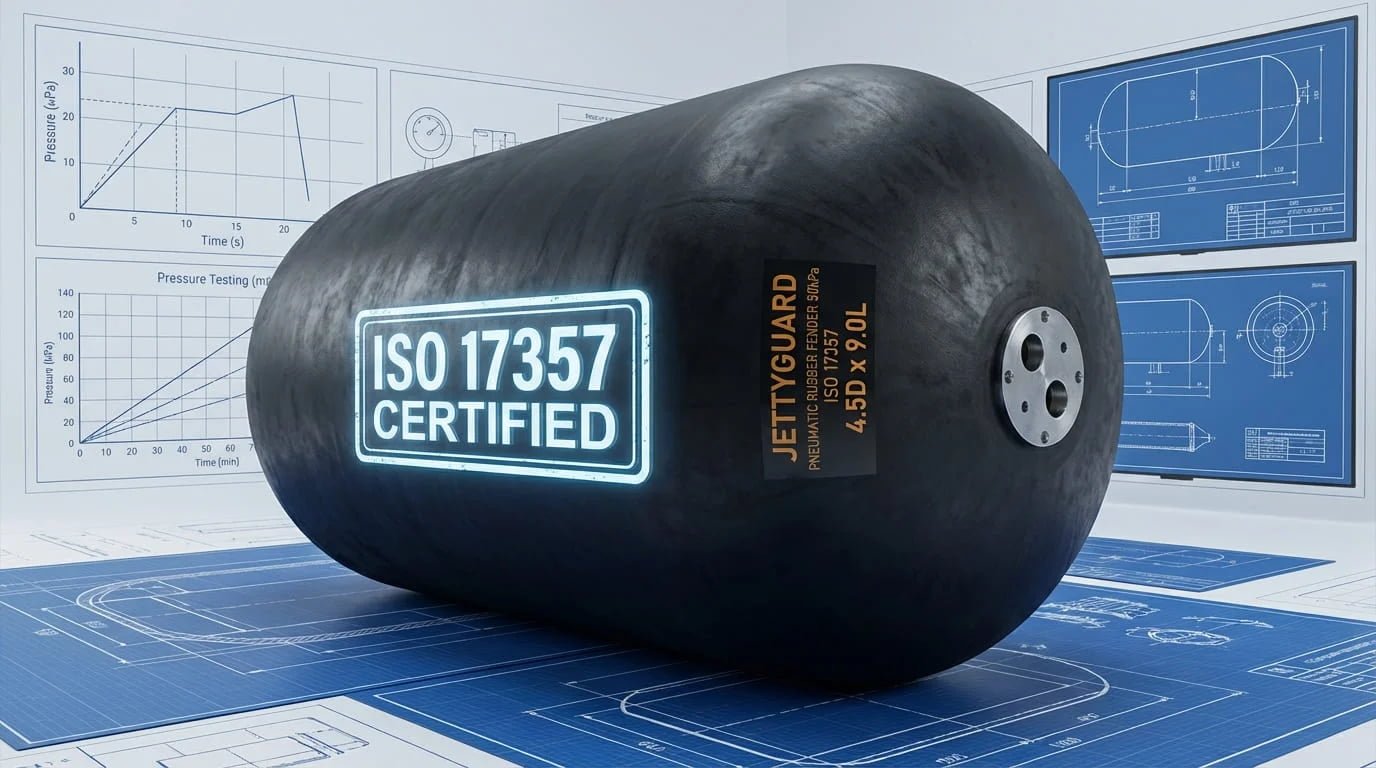
This standardization meant that port operators and ship captains could finally trust the equipment. It mandated strict testing for durability, pressure retention, and material strength. When you see "ISO 17357" stamped on a fender today, you know it has passed stringent tests to ensure it won't fail when you need it most. It turned a proprietary product into a globally trusted safety commodity.
Modern Technology: Winding vs. Molded?
Today, the evolution continues not just in design, but in how we manufacture these giants. One of the most critical discussions I have with my clients is choosing between the two main production methods: Handmade Winding and Molded Technology.
I have seen many projects where the choice of manufacturing process made or broke the deadline. Handmade winding technology is incredibly versatile. It allows us to create fenders of almost any non-standard size without needing expensive molds. This process significantly reduces production time. For urgent projects where every day counts, winding is often the savior, offering a faster delivery that can keep a project on schedule.
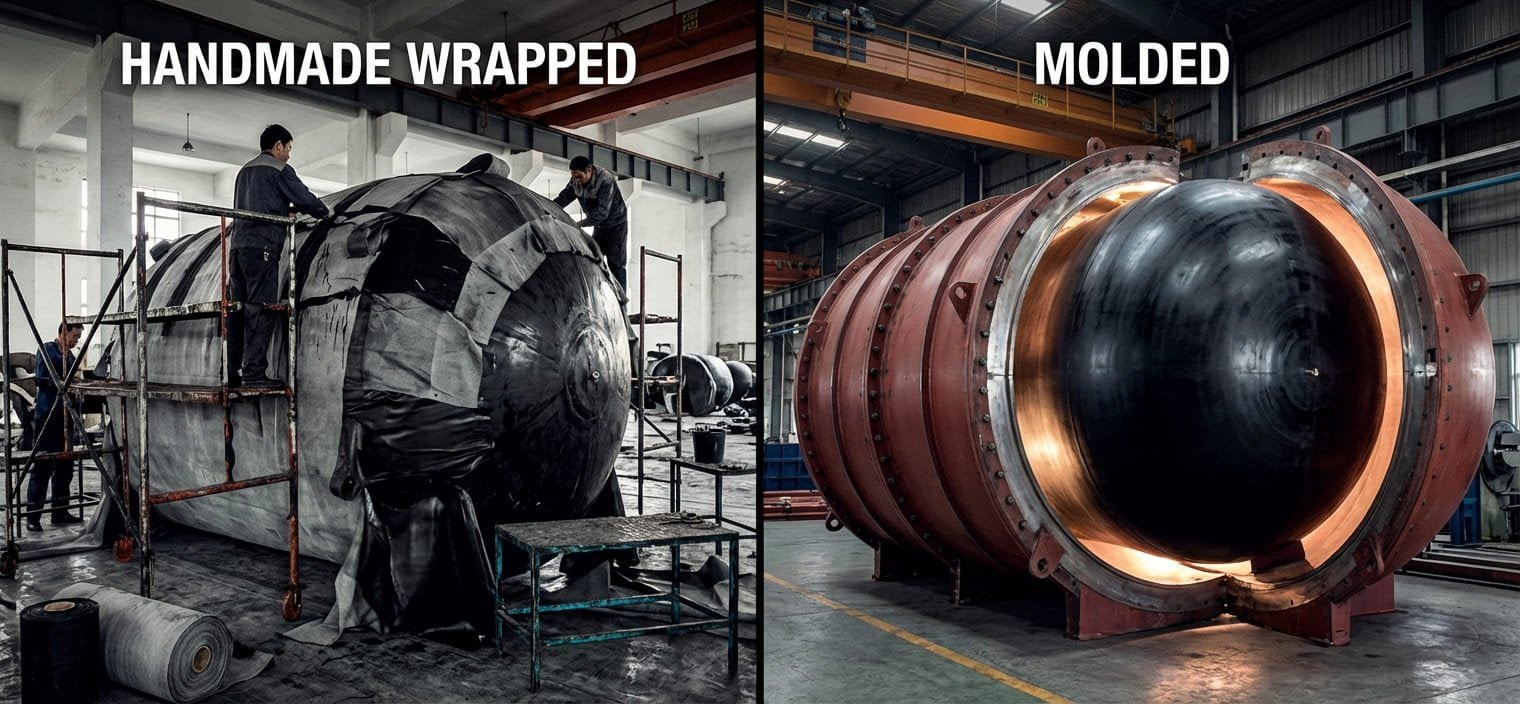
However, there is a trade-off. Due to the nature of the manual process, the stability and consistency of a wound fender are inherently lower than that of a molded one. A mold ensures that every inch of the rubber is cured under the exact same pressure and temperature, creating a uniform, dense structure.
That is why I always give my clients this advice: If your project involves large-scale Ship-to-Ship (STS) transfers or protects high-value assets, and if the budget allows, always choose the Molded Technology. The superior stability and reliability of a molded fender provide that extra layer of assurance that is critical when you are moving millions of dollars of cargo at sea. While winding offers speed and flexibility, molding offers peace of mind.
Conclusion
From the days of foul-smelling whale carcasses to the precision engineering of ISO 17357 molded fenders, the history of Yokohama fenders is a testament to maritime innovation. We have moved from simply trying to soften the blow to scientifically engineering safety. As ships get larger and operations more complex, understanding this history helps us appreciate the technology that keeps our global supply chain afloat.
Investigate the evolution of fender systems and their critical role in safeguarding ships, docks, and offshore platforms globally. ↩
Find out how Yokohama’s 1958 invention reshaped maritime safety and set global standards in port and vessel protection. ↩
Explore this link to understand how pneumatic fenders use compressed air for superior energy absorption and safety in modern maritime operations. ↩
Learn how the elasticity of air replaced heavy rubber to achieve superior energy absorption and buoyancy for marine fenders. ↩
Explore how whaling-era sailors used whale carcasses to protect ships, revealing a fascinating yet grim chapter of maritime history. ↩
Learn the physics behind air-filled fenders and why their balance between flexibility and strength protects ships during impact. ↩
Explore how innovations in fender design prevent costly port incidents and keep cargo operations secure amid demanding conditions. ↩
Uncover how the CTN design protects pneumatic fenders, extending their life and improving performance during ship-to-ship transfers. ↩
Explore how fender technology minimizes risk when large vessels operate side by side during offshore bunkering or cargo transfer. ↩