Every berth impacts your hull. Most fenders fail to absorb energy properly, transferring destructive forces directly to your boat. I've seen the damage.
Energy absorbing boat fenders1 convert kinetic energy from impacts into potential energy through foam compression2, then release it slowly with minimal reaction force. This protects lightweight hulls from stress damage during berthing.
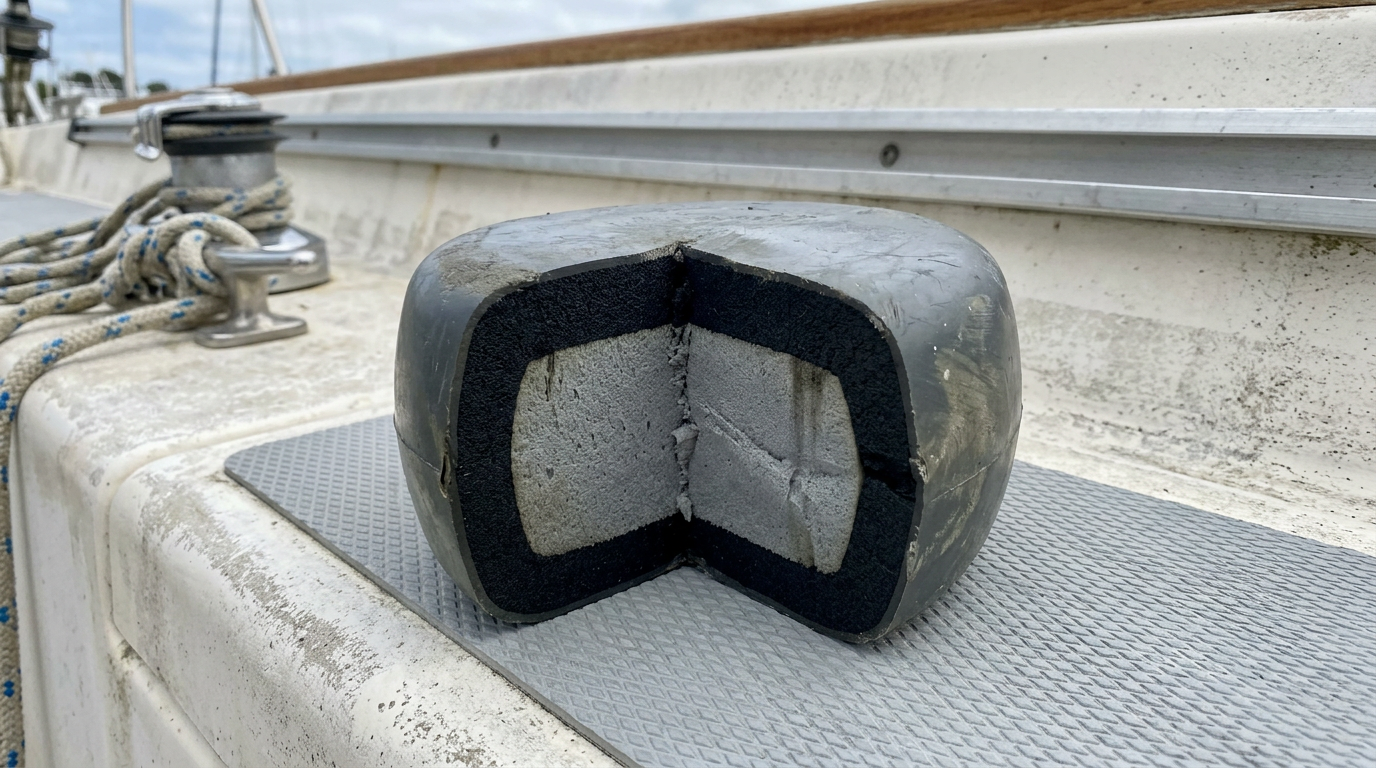
Understanding the physics behind these fenders transforms how you protect your vessel. Let me walk you through the science that keeps your hull safe.
How Fenders Convert Kinetic Energy into Potential Energy
Your boat carries kinetic energy while moving. Without proper absorption, that energy destroys hulls on impact. I've studied this transformation closely.
Kinetic energy converts to potential energy when foam cells compress elastically, storing impact force as deformation energy that releases gradually rather than transferring to the hull.
When your boat approaches a dock, it carries kinetic energy proportional to its mass and velocity squared. The moment contact occurs, this energy must go somewhere. Quality foam fenders intercept this transfer through their closed-cell structure. Each tiny air pocket within the foam acts like a microscopic spring, compressing under load and storing the impact energy as elastic potential energy.
The magic lies in the foam's density and cell structure. Higher density foams absorb more energy per unit volume but generate higher reaction forces. I've found that medium-density closed-cell foams strike the optimal balance for recreational boats3. The nylon reinforcement layer prevents over-compression, while the SPUA coating4 ensures the foam maintains its structural integrity through thousands of compression cycles. This engineered system transforms what would be a catastrophic energy transfer into a controlled, manageable process.
Understanding Reaction Force: Protecting Your Hull from Stress
Reaction force crushes hulls silently. Many boat owners ignore this until cracks appear. I cannot emphasize this enough.
Reaction force is the pushback from a compressed fender. Low reaction force means less stress on your hull, critical for lightweight boats with thin laminate structures.
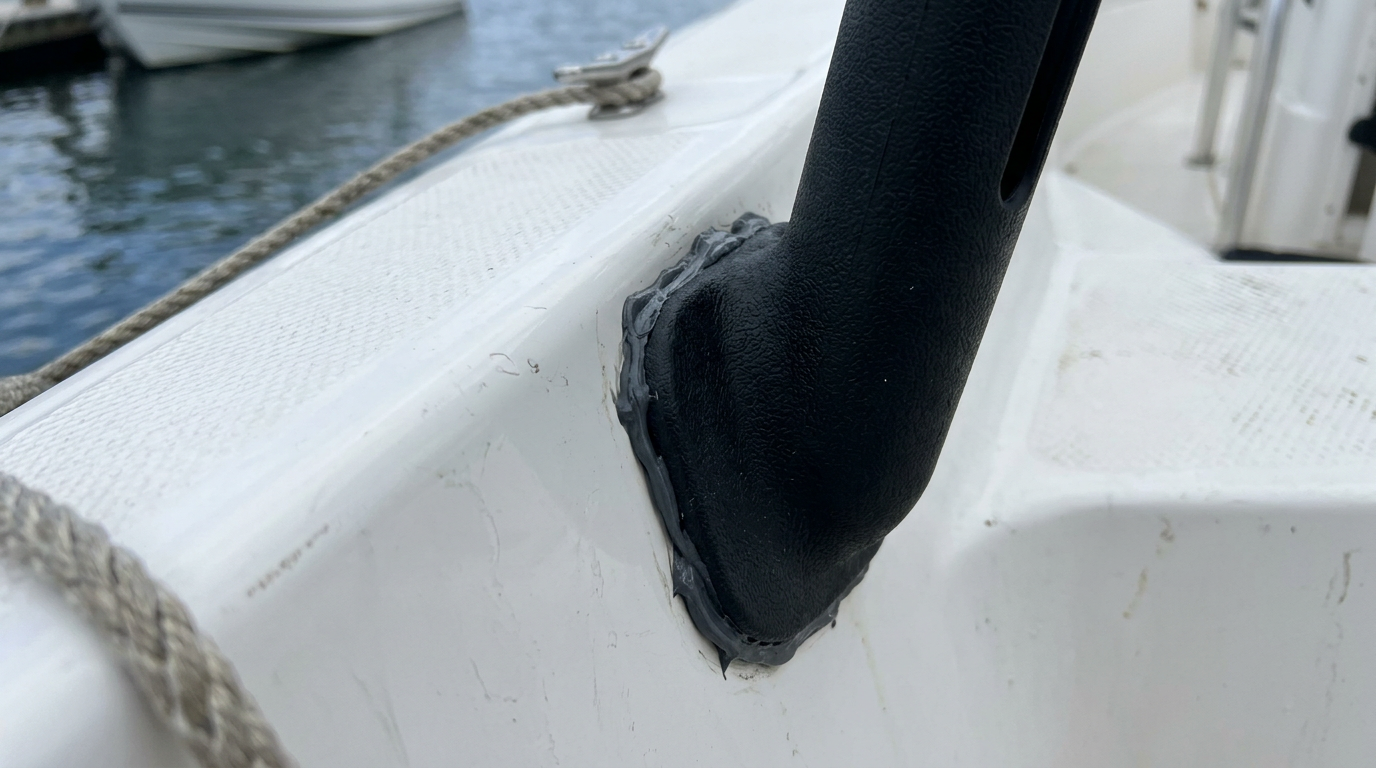
The physics here is straightforward but often misunderstood. When a fender compresses, it pushes back with equal force against both the dock and your hull. This reaction force travels through your hull's laminate, potentially exceeding design limits. Lightweight recreational boats often have hull pressures rated between 50-100 kPa, far lower than commercial vessels.
I've calculated safe berthing scenarios repeatedly. A 2-ton boat at 0.3 meters per second generates approximately 90 joules of kinetic energy. If your fender system produces 5 kN of reaction force during compression, that force concentrates on small contact patches, easily exceeding hull pressure limits5. This is why low reaction force fenders matter enormously. The nylon reinforcement and thick SPUA coating I recommend distribute this force across larger areas, reducing point loading that causes gelcoat cracks and delamination.
Hysteresis in Marine Fenders: Why It Matters
Hysteresis determines energy dissipation. Poor hysteresis means your boat bounces dangerously. Most manufacturers never discuss this.
Hysteresis is the energy lost as heat during compression-release cycles. High hysteresis foams absorb more impact energy without rebounding, preventing dangerous boat bounce at the dock.
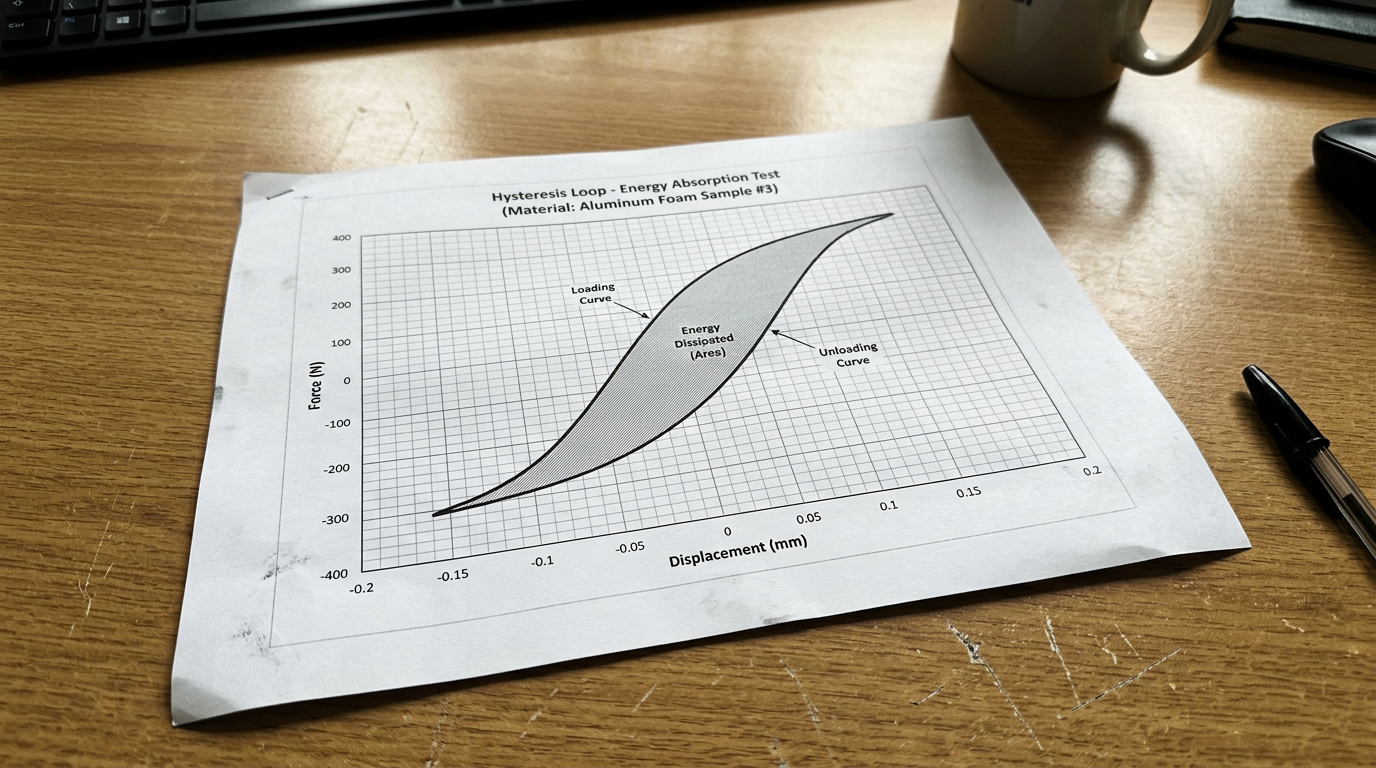
The hysteresis loop reveals everything about fender performance. When foam compresses, it follows one path on the force-deflection curve. When it releases, it follows a different, lower path. The area between these curves represents energy converted to heat rather than returned as rebound. This is precisely what you want in a marine fender.
Low-quality foams exhibit minimal hysteresis, meaning they return most stored energy as rebound. Your boat bounces off the dock, potentially striking repeatedly. Premium closed-cell foams with proper formulation show substantial hysteresis, dissipating 40-60% of impact energy as heat. The SPUA coating contributes here too, adding viscoelastic damping to the system. I've tested fenders with varying hysteresis characteristics, and the difference in dock behavior is dramatic. Boats equipped with high-hysteresis fenders settle calmly after initial contact, while others dance dangerously in the slip.
Shear Force vs. Compression: Handling Angular Impacts
Compression gets all the attention. Shear force destroys fenders silently. This distinction saved my clients from costly replacements.
Shear forces occur during angled impacts, sliding across foam surfaces rather than compressing directly. These forces are more likely to damage foam fenders than direct compression in real-world berthing.

Real-world berthing rarely produces perfect perpendicular impacts. Boats approach docks at angles, creating shear forces that slide across fender surfaces. These forces stress the foam differently than compression, potentially causing internal delamination and surface tearing. The foam cells experience lateral stress they weren't primarily designed to handle.
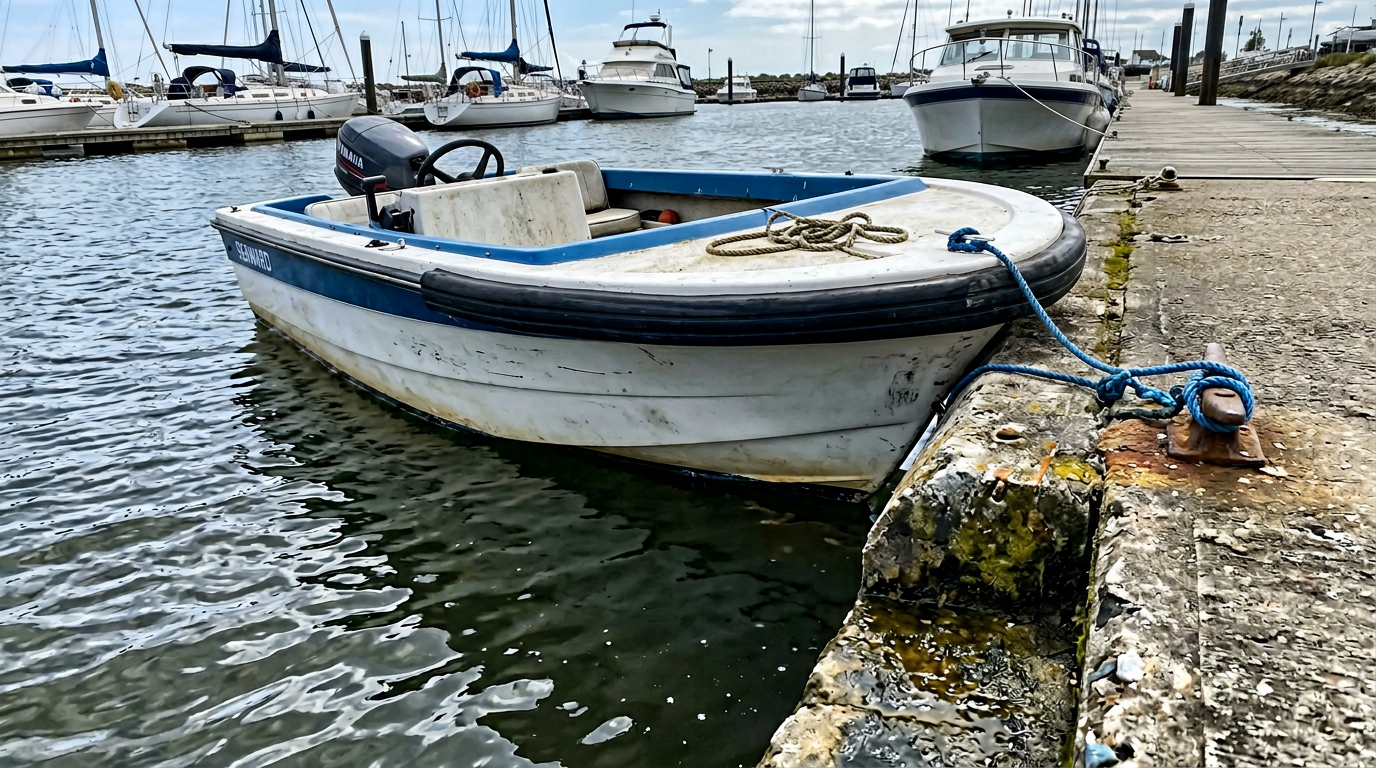
This is precisely why the nylon reinforcement layer and thick SPUA coating are non-negotiable additions. Shear force is the most likely factor to damage foam fenders besides puncture. Recreational boat handling lacks the precision of large commercial vessels, resulting in frequent angled contacts and multiple collisions during a single berthing. I've seen unprotected foam fenders shred after one season in busy marinas. The nylon layer provides tensile strength that resists shear deformation, while the SPUA coating creates a sacrificial surface that absorbs abrasion. Planning for these multi-collision scenarios upfront prevents premature fender failure and protects your investment.
The Physics of Closed-Cell Foam Compression
Not all foams perform equally. Open-cell foams absorb water and fail. The cell structure determines everything.
Closed-cell foam contains isolated air pockets that compress independently, providing consistent energy absorption without water absorption that degrades performance over time.
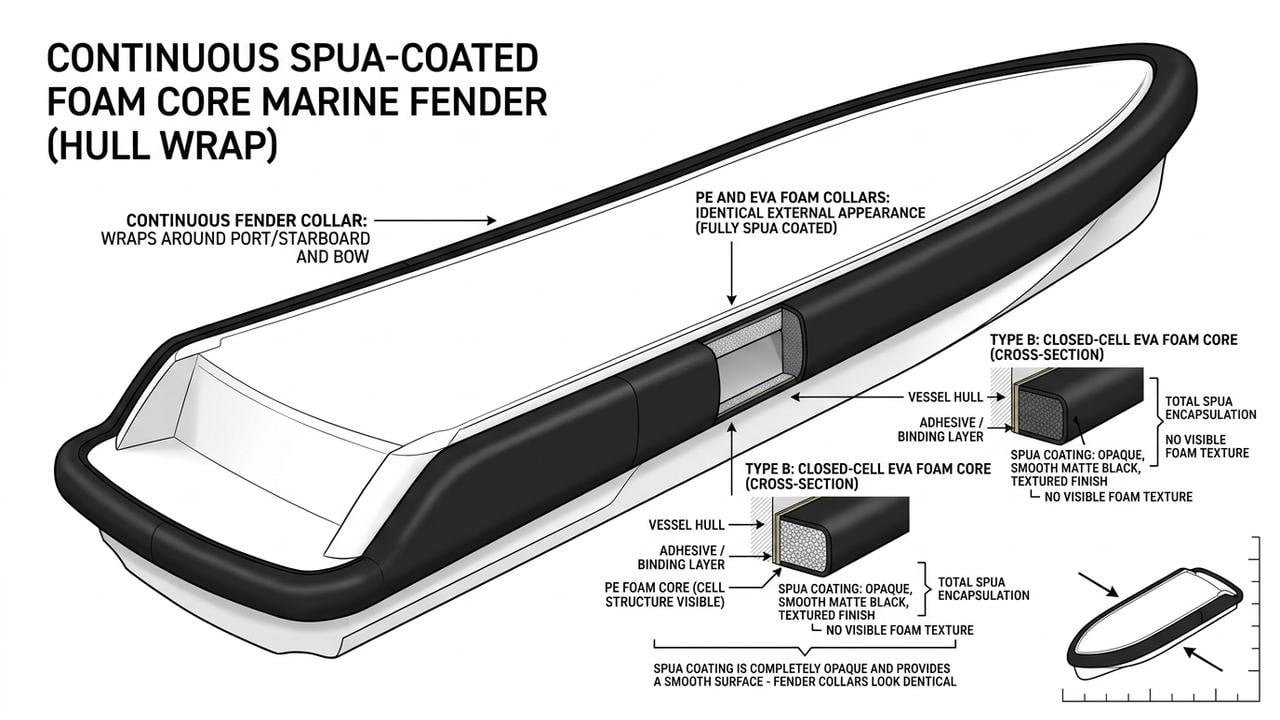
The closed-cell structure creates thousands of independent compression chambers. Each cell behaves like a tiny pneumatic spring, compressing under load and resisting deformation through air pressure. This isolation prevents water migration through the foam matrix, crucial for marine environments. Open-cell foams, by contrast, wick water like sponges, adding weight and reducing compressibility.
Under compression, these cells deform elastically up to a critical point. Beyond this threshold, cell walls begin to collapse permanently, reducing the foam's energy absorption capacity. The nylon reinforcement layer prevents this over-compression by limiting maximum deflection. I've specified foam densities between 30-50 kg/m³ for most recreational applications, balancing energy absorption with acceptable reaction forces. The SPUA coating adds another dimension, creating a weather-resistant barrier that protects the foam from UV degradation, fuel spills, and salt spray that would otherwise compromise cell integrity.
Hull Pressure Limits: Calculating Safe Berthing Velocities
Hull pressure limits are not suggestions. Exceeding them causes structural damage. I've calculated the margins.
Safe berthing velocity depends on hull pressure limits, fender reaction force, and contact area. Most recreational boats should not exceed 0.2-0.3 m/s when approaching docks.

The calculation starts with your hull's design pressure. Most fiberglass recreational boats rate between 50-100 kPa maximum contact pressure. Divide your fender's reaction force by the contact area to find actual pressure. A 3 kN reaction force over a 0.05 m² contact patch generates 60 kPa, safely within limits. The same force over 0.02 m² exceeds 150 kPa, risking damage.
Velocity compounds this dramatically. Doubling approach speed quadruples kinetic energy. I recommend 0.2 m/s as a maximum for routine berthing with standard fender arrangements. This allows the fender system to absorb energy without generating excessive reaction forces. Heavier boats require slower speeds or additional fender coverage. The nylon-reinforced fenders I specify maintain larger contact areas under load, distributing force more evenly across the hull surface. This simple calculation, performed before each boating season, prevents thousands in structural repairs.
Why Low Reaction Force is Critical for Lightweight Hulls
Lightweight hulls demand different protection. What works for ships destroys recreational boats. I've witnessed this failure repeatedly.
Lightweight hulls have lower structural tolerance for reaction forces. Low reaction force fenders prevent gelcoat cracking6, core compression, and laminate delamination in thin-hulled recreational boats.

Modern recreational boats prioritize weight reduction for performance and fuel efficiency. This means thinner laminates, lighter core materials, and reduced structural margins. A 25-foot sport cruiser might have hull thickness under 10mm, compared to 50mm+ on commercial vessels. These thin hulls cannot tolerate the reaction forces that larger ships handle routinely.
The consequences of excessive reaction force manifest gradually. Gelcoat spider cracks appear first, cosmetic but indicating stress. Core compression follows, creating soft spots that compromise structural integrity. Eventually, laminate delamination occurs, requiring expensive repairs. I've specified low reaction force fenders for hundreds of lightweight vessels, and the difference in long-term hull condition is unmistakable. The combination of optimized foam density, nylon reinforcement preventing over-compression, and thick SPUA coating distributing contact forces creates a protection system matched to these vessels' actual structural capabilities.
Conclusion
Energy absorption science protects your investment. Understanding these principles transforms your berthing safety7. Your hull deserves this protection.
Jettyguard fenders deliver proven energy absorption with minimal reaction forces. Closed-cell foam, nylon reinforcement, and thick SPUA coatings protect lightweight hulls where conventional fenders fail.
Explore how these fenders protect your boat by converting kinetic energy into potential energy, ensuring safety during berthing. ↩
Learn about foam compression and its importance in absorbing impact energy to safeguard your hull. ↩
Learn about the specific fender requirements for recreational boats to ensure optimal protection. ↩
Learn about SPUA coating's role in enhancing fender durability and performance in marine environments. ↩
Explore the critical hull pressure limits to prevent structural damage during berthing. ↩
Discover the causes of gelcoat cracking and how proper fender selection can prevent it. ↩
Discover essential tips for ensuring safe berthing practices to protect your vessel. ↩