Imagine your multi-million dollar vessel approaching a quay in rough seas, and the only thing standing between safety and disaster is a black rubber cylinder.
A Yokohama fender, also known as a pneumatic fender, is a floating marine bumper that uses compressed air to absorb impact energy. It serves as a critical protective buffer during ship-to-ship (STS) transfers1 and ship-to-dock operations, ensuring the safety of both vessels and port infrastructure.
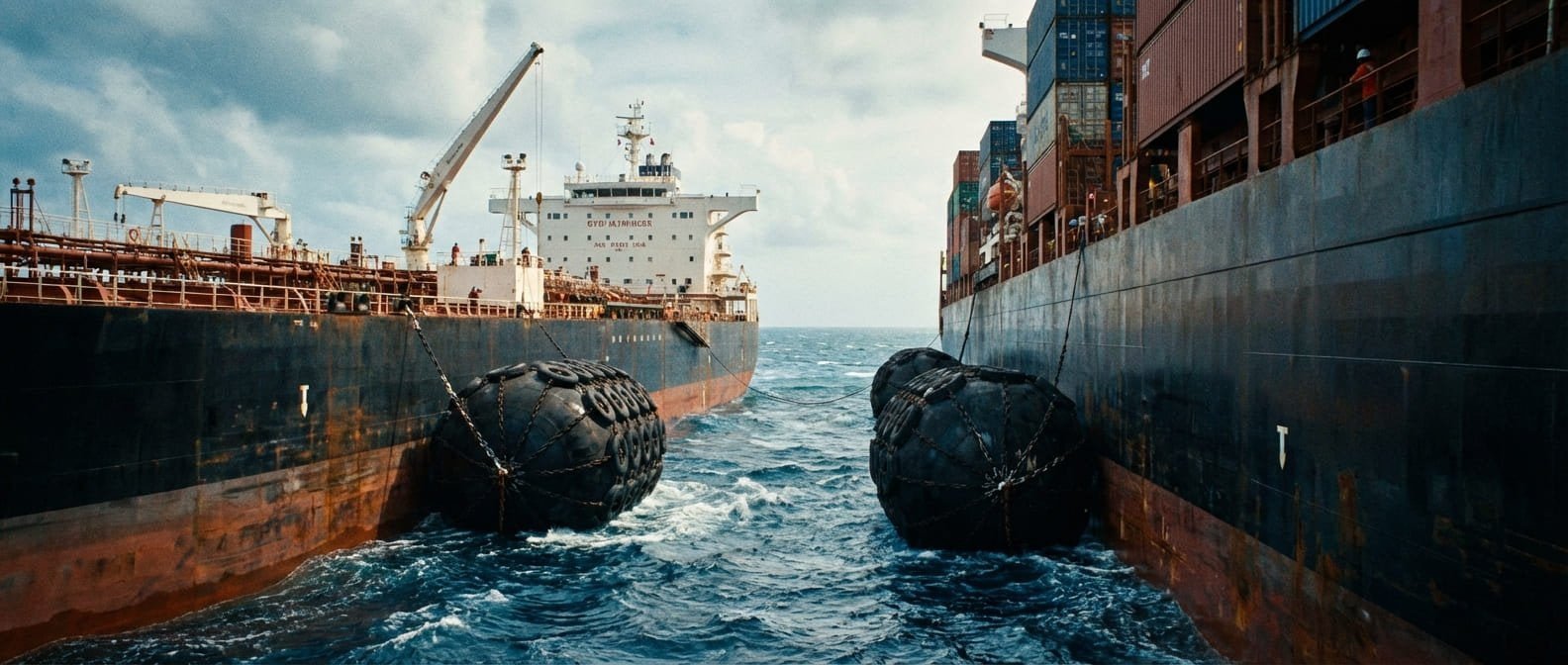
Many marine professionals view fenders as simple commodities, buying the cheapest option and hanging it up without a second thought. I have seen this approach lead to costly hull damage and operational downtime that far exceeds the initial savings. In this guide, I will share the insights I have gained from years in the industry to help you make informed decisions that protect your assets and your bottom line.
How do Yokohama Fenders work? Understanding the Pneumatic Principle
The concept is deceptively simple, but the engineering behind it is what saves ships from crushing impacts.
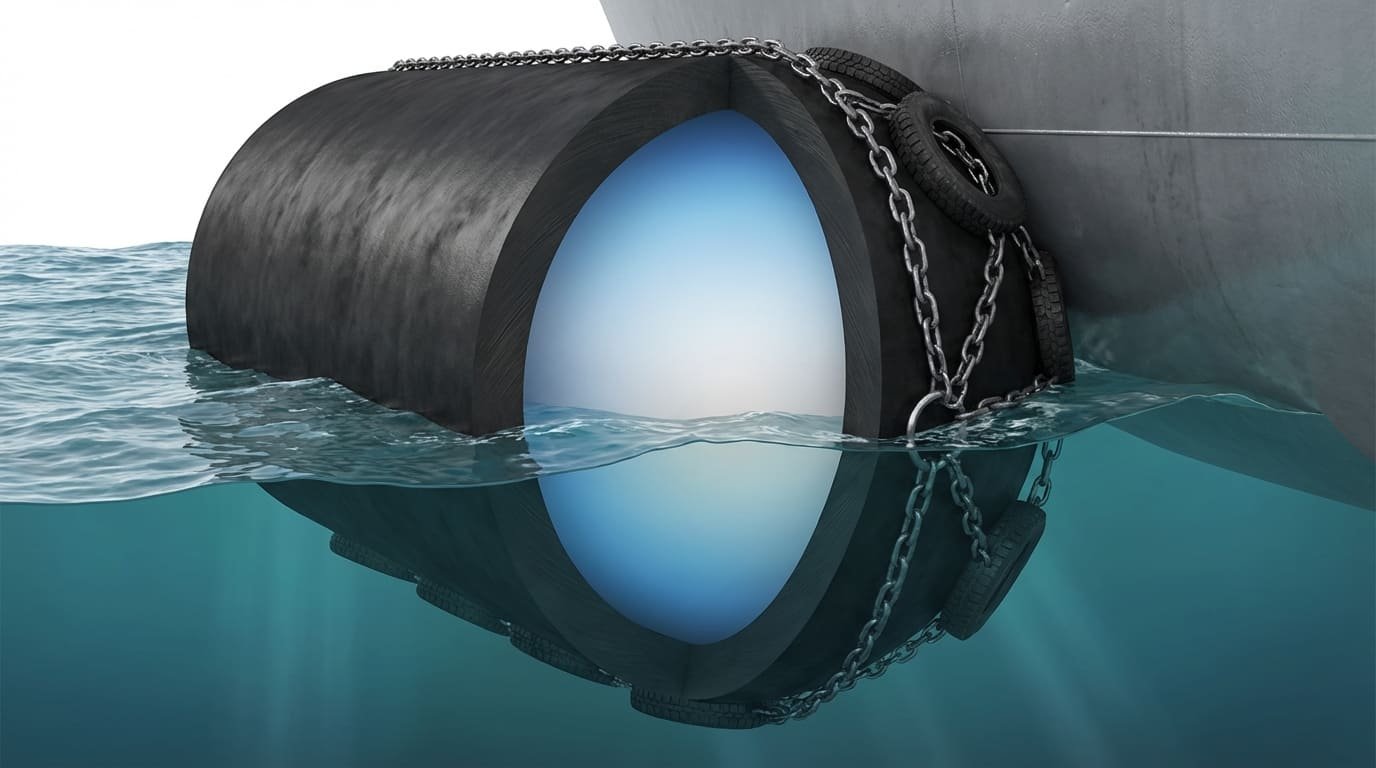
Yokohama fenders operate on the principle of air compression2. Unlike solid rubber fenders3 that rely on the elasticity of the rubber itself, pneumatic fenders use the elasticity of the compressed air inside. When a ship strikes the fender, the air inside is compressed, allowing the fender to deform and absorb the kinetic energy. This reaction is progressive; as the fender compresses more, the reaction force increases, but it does so smoothly, avoiding the sharp shock loads that can damage a ship's hull.
This "air cushion" effect is why Yokohama fenders are preferred for operations involving sensitive hulls, such as LNG carriers, or in open sea conditions where wave action causes significant motion. The fender floats on the water, rising and falling with the tide, which ensures it is always in the correct position to protect the ship at the water line. I often explain to clients that they are not just buying a piece of rubber; they are buying a dynamic energy absorption system that adapts to the environment.
Key Types: Chain and Tire Net (CTN) vs. Sling Type Fenders
Choosing the right external configuration is just as important as selecting the right size fender.
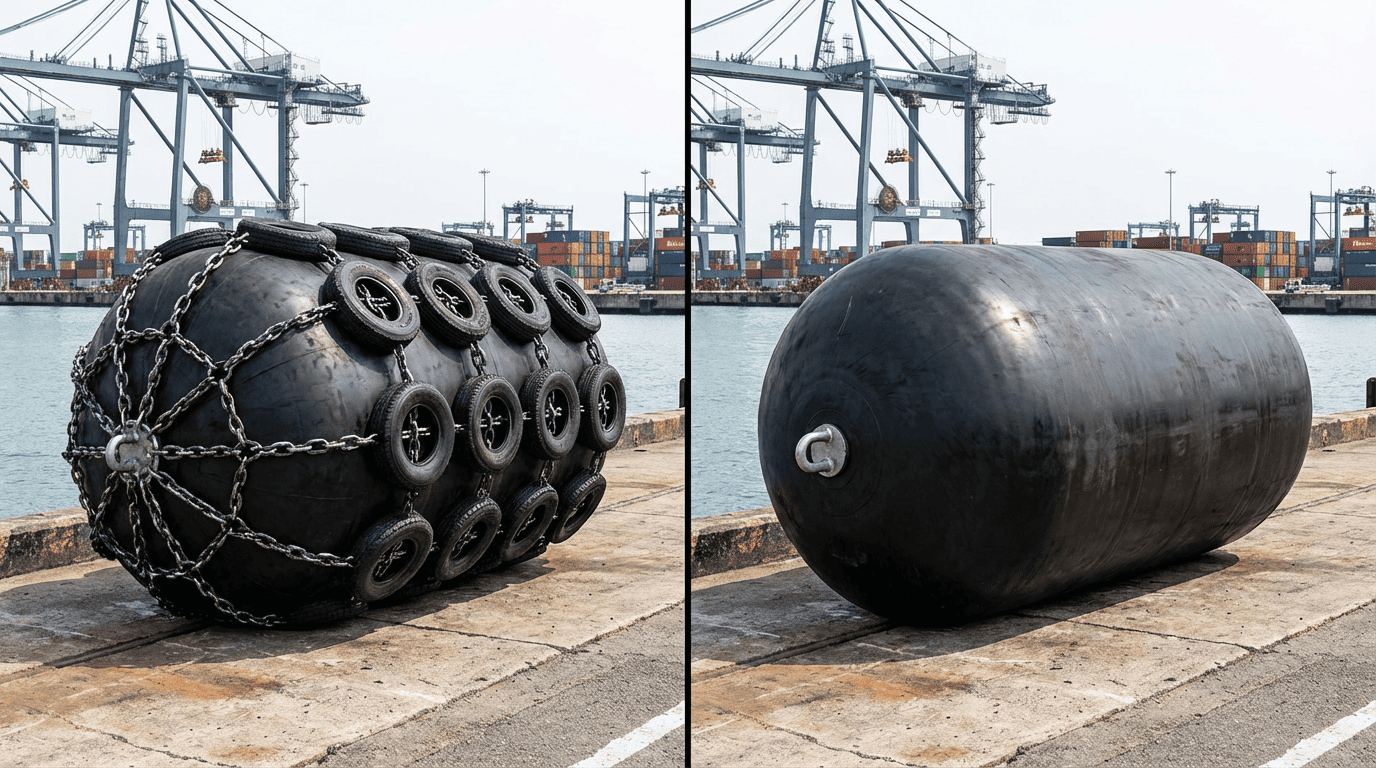
The Chain and Tire Net (CTN) type4 is the heavy-duty workhorse of the industry. It features a cage of chains, tires, and rubber sleeves that covers the fender body. This net protects the fender from cuts and abrasions caused by sharp hull protrusions or rough quay walls. I always recommend CTN fenders for Ship-to-Ship (STS) operations or when docking at older ports where the infrastructure might be uneven. The extra layer of protection significantly extends the fender's life in these harsh environments.
On the other hand, the Sling type is a naked fender with lifting eyes on each end. It lacks the protective net, making it lighter and easier to handle. Sling type fenders5 are ideal for applications where the risk of abrasion is low, such as with double-hulled vessels or smooth concrete wharves. They are also cheaper and have lower maintenance requirements since there is no net to repair. However, I advise caution; if your operational environment changes to something more abrasive, a Sling type fender can be compromised much faster than a CTN type.
Molded vs. Hand-Wrapped: The Hidden Quality Factor
This is the insider knowledge that most suppliers will not volunteer, but it makes a massive difference to your long-term costs.
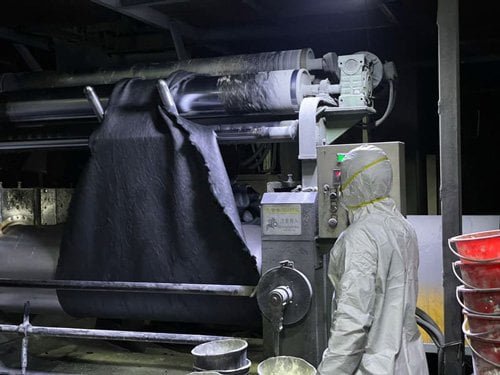
In the fender manufacturing world, there are two primary production methods: the mold winding process and the hand-wrapping process. Visually, they might look similar to the untrained eye, but the performance gap is significant. The mold winding process involves winding rubber layers onto a mold under high tension and curing it as a single unit. This creates a fender with consistent wall thickness and superior structural integrity. The hand-wrapping process is exactly what it sounds like—layers are applied manually.
Here is the reality I share with my clients: Molded fenders typically cost about 20% more than hand-wrapped ones. However, their stability and lifespan are often double. A high-quality molded fender can last 10-15 years, whereas a hand-wrapped one might only give you 6-10 years. If you have a generous budget and are looking for a long-term asset that you don't have to worry about for a decade, I strongly suggest choosing the mold winding process. It is an investment in peace of mind.
Conversely, if your budget is tight and a 6-10 year lifespan is acceptable for your project's horizon, the hand-wrapped option is a valid choice. But you must be aware of what you are buying. Do not let a supplier sell you a hand-wrapped fender at a molded fender price. Knowing the difference gives you the power to negotiate and select the right tool for your financial strategy.
Why Marine Professionals Choose Yokohama Fenders Over Solid Alternatives
The shift towards pneumatic fenders is driven by the need for versatility and hull protection.
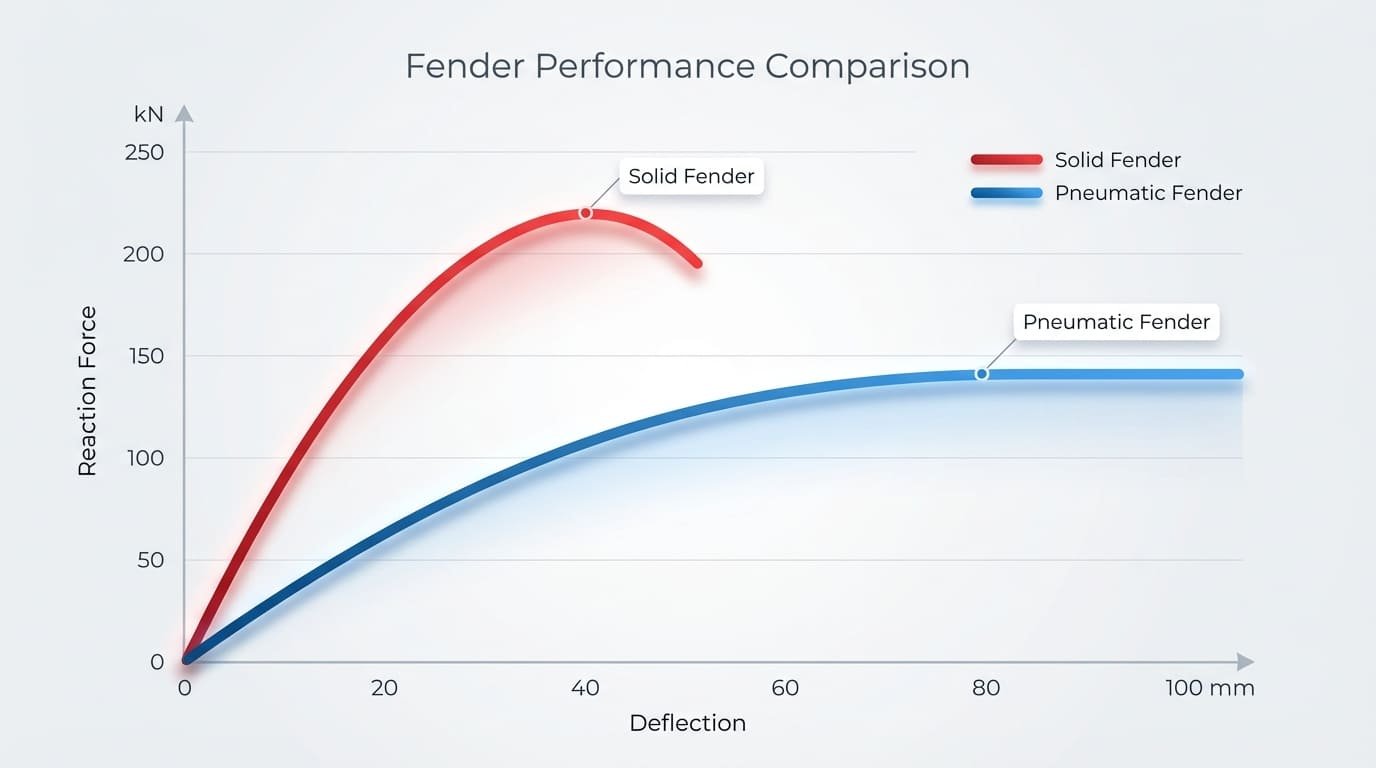
Solid rubber fenders are excellent for fixed berths, but they have limitations. They are heavy, difficult to install on existing structures without major modification, and they create high reaction forces that can damage the hulls of smaller or lighter vessels. Yokohama fenders solve these problems. Because they float, they can be deployed almost anywhere—on a quay, between two ships, or even as temporary protection for a construction barge.
The low reaction force is a key selling point. When a solid fender is compressed, the force pushing back against the ship rises sharply. A pneumatic fender's reaction force increases more gradually. This "softness" is crucial for operations like lightering, where two ships are moored side-by-side in open water. The fenders absorb the energy of the ships moving independently in the waves without transmitting damaging loads to the mooring lines or the ships' structures. I have seen operations that would be impossible with solid fenders proceed safely because pneumatic units were deployed.
Primary Applications: From Ship-to-Ship (STS) Transfers to Offshore Mooring
Understanding where these fenders excel helps you plan your operations more effectively.
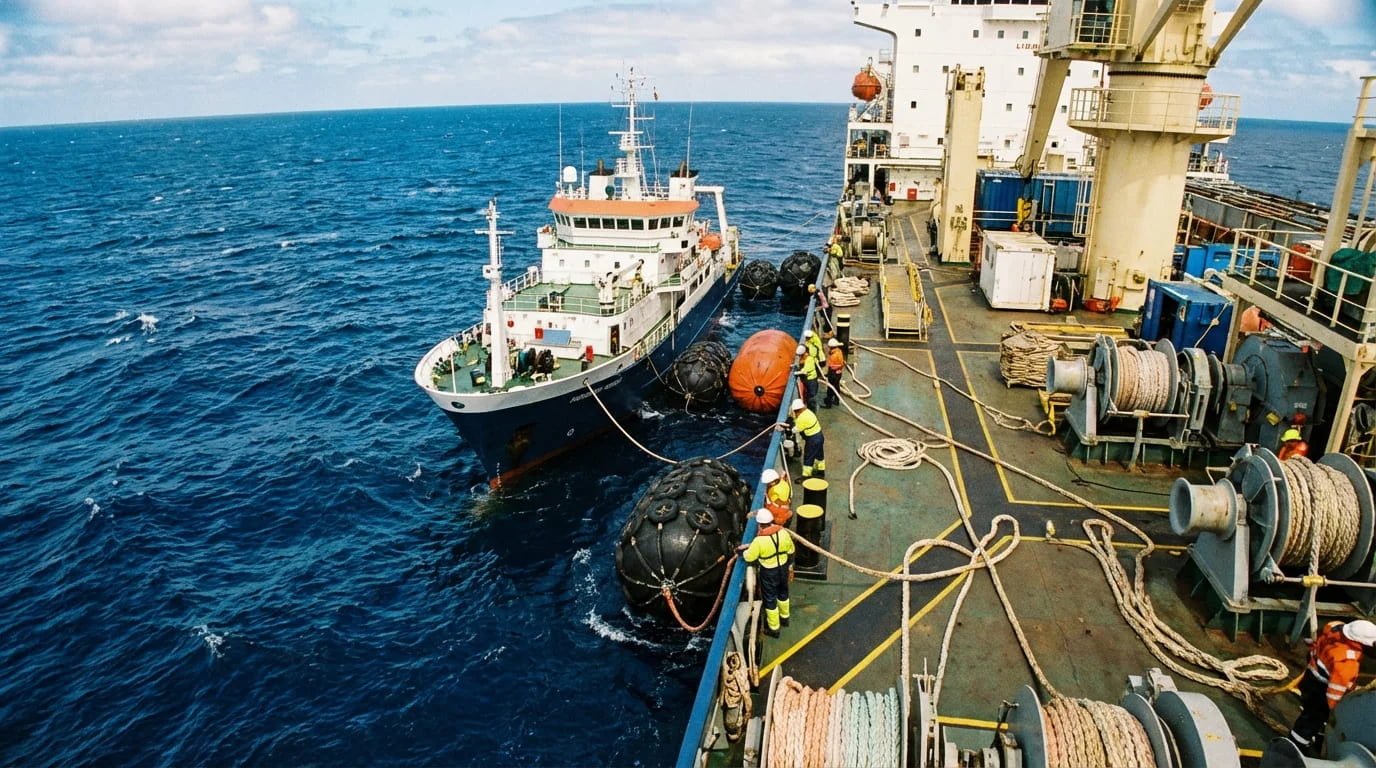
Ship-to-Ship (STS) transfers are the most iconic application. Whether it is transferring oil, gas, or bulk cargo, STS operations require fenders that can separate two moving vessels while absorbing significant energy. Yokohama fenders are the industry standard here because they are lightweight enough to be carried on board the mother vessel and deployed quickly when the daughter vessel approaches.
Beyond STS, they are vital for ports with large tidal variations. Fixed fenders might end up too high or too low at extreme tides, leaving parts of the ship or quay exposed. Floating pneumatic fenders rise and fall with the water level, ensuring continuous protection. They are also widely used for temporary berthing6. If a port needs to accommodate a vessel larger than its design capacity for a one-off call, deploying a few large Yokohama fenders can upgrade the berth's energy absorption capability instantly without any civil engineering work.
Installation Guide: Best Practices for Safe Deployment
Installing a floating fender seems easy, but getting it right prevents accidents.
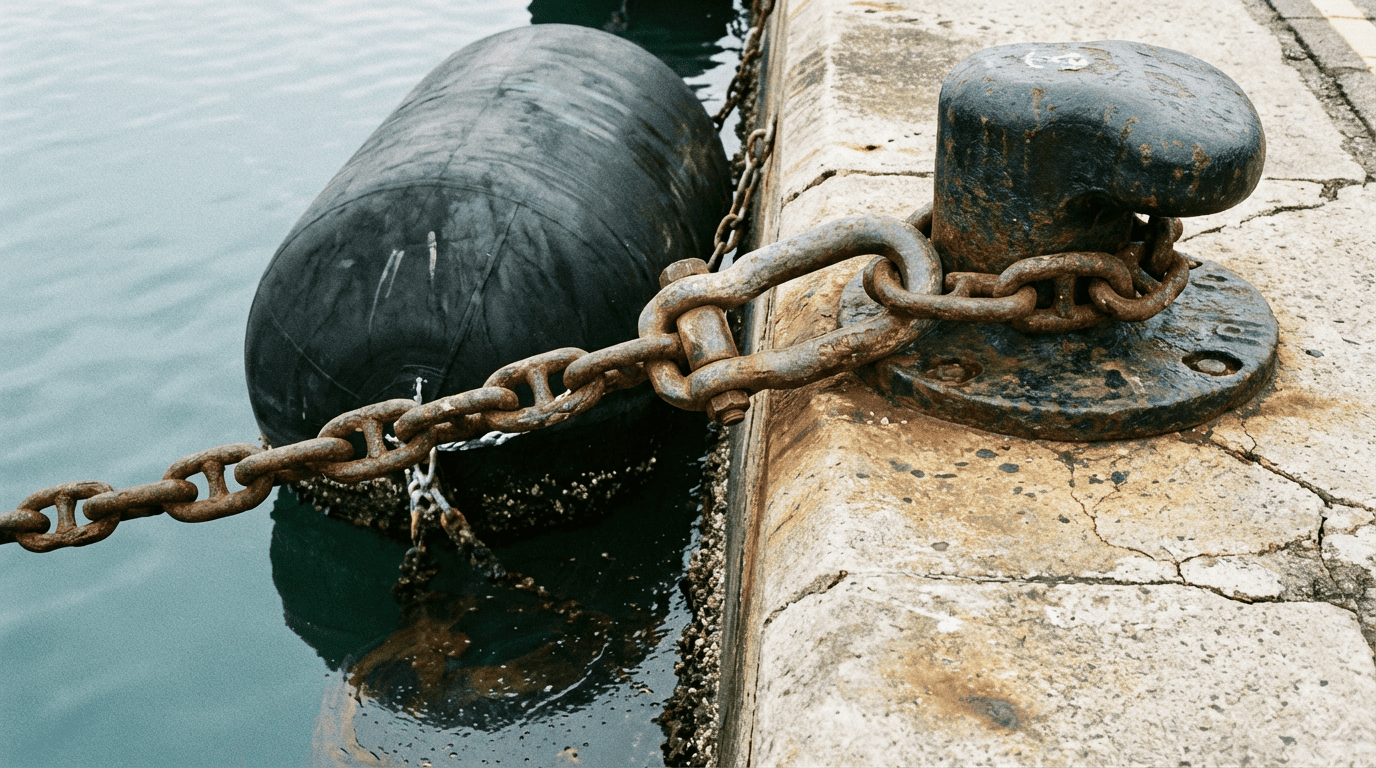
The beauty of a Yokohama fender is that it requires no bolts or concrete work on the quay face. It is typically moored using a chain or guy rope connected to a bollard or padeye on the deck. The key is to ensure the fender is free to float and rotate. If you tie it too tight, you restrict its movement, which can cause it to get trapped under the quay or twisted during compression.
I always advise using a swivel in the mooring chain to prevent it from twisting as the fender rolls. Also, ensure the quay face is smooth. Even with a Chain and Tire Net, a jagged concrete edge can eventually puncture the fender body. If the quay is rough, we might install a secondary "fender board7" or rubber sheet on the wall itself. For ship-to-ship operations, the fenders are usually suspended from the primary vessel's davits and lowered to the water line just before the secondary vessel arrives. Speed and safety in deployment are critical, so regular drills with the crew are essential.
Maintenance and Inspection: Ensuring a 10-15 Year Lifespan
Neglecting maintenance is the fastest way to turn a 15-year asset into a 5-year scrap item.
I see this scenario constantly: a client buys a high-quality fender, hangs it up, and ignores it until it fails. Then they call me, frustrated. The truth is, Yokohama fender maintenance is often overlooked. Many users only think to check the manufacturer's manual after a problem occurs. This reactive approach significantly discounts the lifespan of the fender.
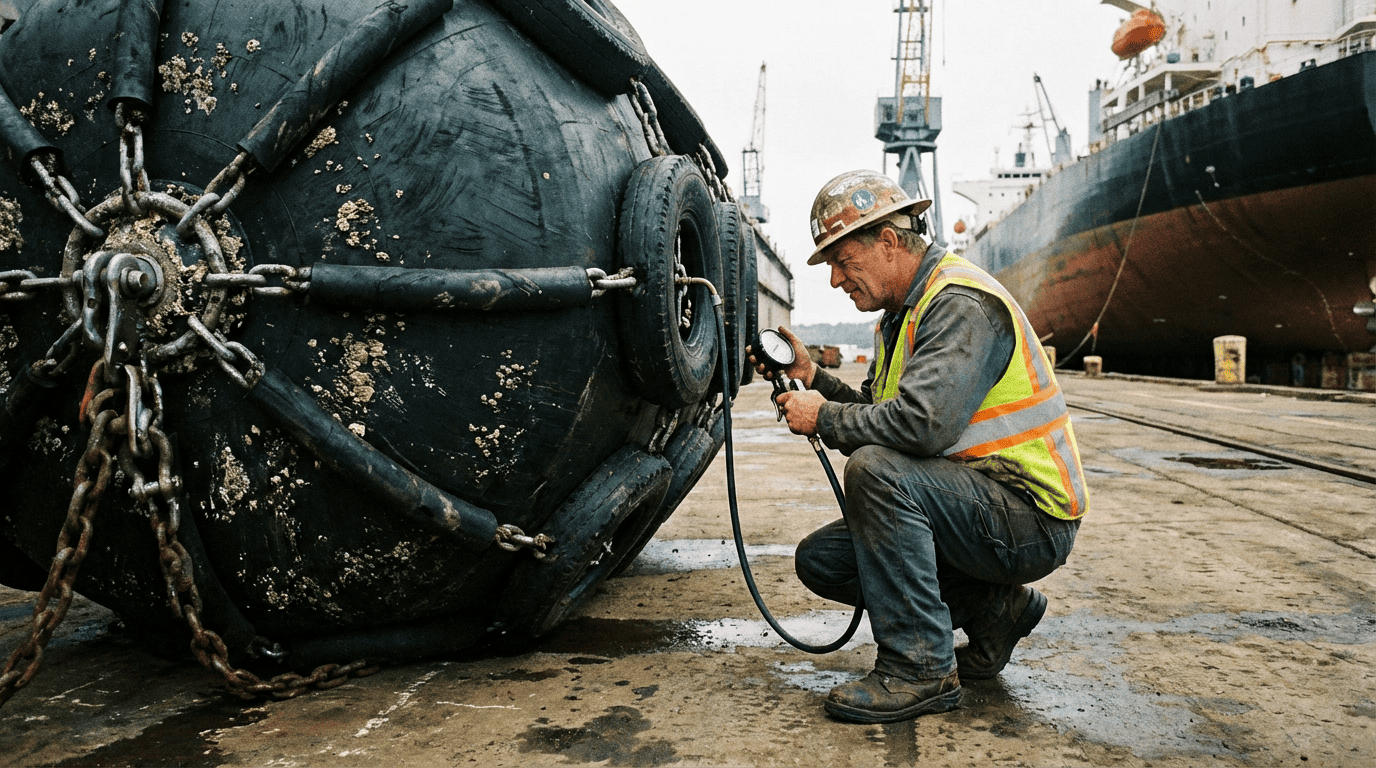
A proactive maintenance schedule is simple but vital. You need to check the internal air pressure8 regularly. If the pressure drops, the fender's energy absorption capacity drops with it, putting your ship at risk. You also need to inspect the Chain and Tire Net. Shackles wear out, chains rust, and tires degrade. Replacing a few shackles9 is cheap; replacing a punctured fender body because a broken chain cut into it is expensive.
There is another critical point about lifespan claims. You will often encounter hand-wrapped fender manufacturers who promise a design life of over 10 years. What you do not know is that this claim is usually based on "limited operating conditions" or low-frequency usage. If your operation involves high-frequency berthing, that hand-wrapped fender will not last a decade. In such high-cycle environments, you must conduct a proper assessment. You may need to upgrade to a molded fender or specify a heavier-duty Chain and Tire Net configuration. Do not just accept the "10-year" label; ask "10 years under what conditions?"
Understanding ISO 17357: The Gold Standard for Pneumatic Fender Quality
This standard is your protection against substandard equipment.
ISO 17357 is the international standard that governs the design, manufacturing, and testing of high-pressure pneumatic rubber fenders. It specifies the material requirements, dimensions, and performance testing procedures. When you buy a fender, you should insist that it is ISO 17357 certified10.
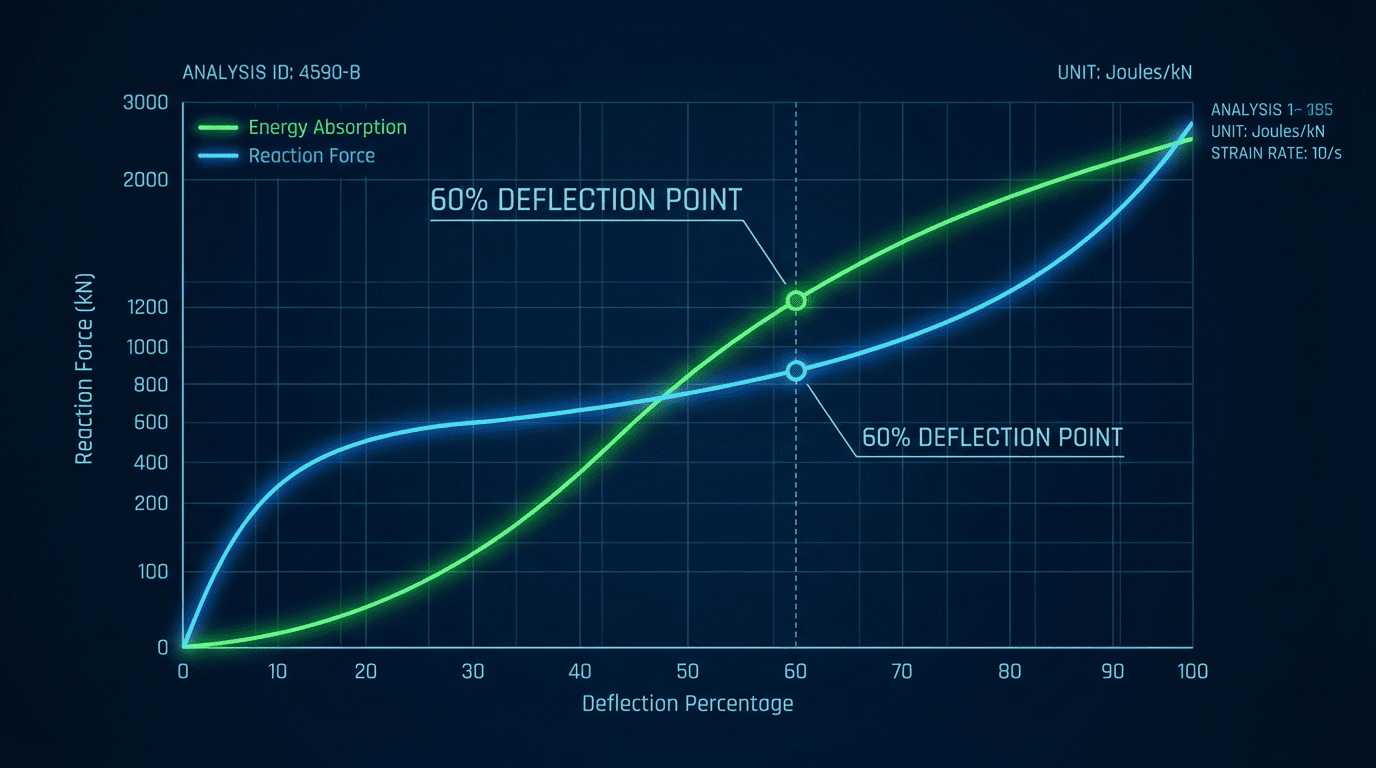
But be careful. Some suppliers will say their fenders are "manufactured in accordance with ISO 17357," which is not the same as being certified. A true certification involves third-party testing where the fender is compressed to 60% deflection to verify its energy absorption and reaction force. It also includes material tests for the rubber's tensile strength and resistance to aging. I always tell my clients to ask for the actual test certificates, not just a brochure claim. This ensures you are getting a product that will perform as predicted when a 100,000-ton vessel is bearing down on it.

Performance Under Pressure: Energy Absorption and Low Reaction Force
The data on the spec sheet translates directly to the safety of your vessel.
The two most important numbers for any fender are Energy Absorption (EA) and Reaction Force (RF). Energy Absorption is how much kinetic energy the fender can handle before it bottoms out. Reaction Force is the pressure the fender exerts back onto the ship's hull. The goal is always to maximize EA while minimizing RF.
Yokohama fenders excel at this ratio. At 60% deflection, they provide a massive amount of energy absorption. However, because of the air compression characteristics, the reaction force remains relatively low compared to solid fenders. This is why they are safe for thin-hulled vessels or military ships. When selecting a fender, do not just look at the size. Look at the performance curve. A 3.3m x 6.5m fender from one manufacturer might have different performance characteristics than the same size from another, depending on the initial internal pressure11 (usually 50kPa or 80kPa). Understanding these curves ensures you select a fender that can handle your vessel's berthing energy without exceeding the hull's allowable pressure.
Conclusion
A Yokohama fender is more than just a floating bumper; it is a sophisticated piece of engineering that protects the most valuable assets in the marine industry. Whether you choose a molded fender for its 15-year longevity or a hand-wrapped one for a cost-effective medium-term solution, the key is understanding what you are buying and maintaining it properly. By paying attention to the details—from manufacturing process to regular pressure checks—you ensure that your operations remain safe, efficient, and profitable for years to come.
Explore how these fenders prevent damage during fluid cargo operations between large vessels. ↩
Learning how air compression dissipates impact energy helps you understand why pneumatic fenders protect ships more effectively. ↩
Seeing the differences highlights the versatility and reduced reaction forces of Yokohama fenders. ↩
Learn how CTN nets provide superior durability and protection in demanding ship-to-ship environments. ↩
Find out why Sling type fenders are ideal for smooth wharves and low-abrasion scenarios. ↩
Exploring this concept reveals cost-effective ways to upgrade port capacity instantly. ↩
Learn how adding a fender board can prevent punctures and extend the life of your investment. ↩
Proper air pressure checks maintain energy absorption performance and protect your vessel. ↩
Find maintenance tips that prevent costly damage caused by worn or rusty shackles. ↩
Learn how this certification guarantees tested safety and performance for pneumatic fenders. ↩
Uncover why selecting the right pressure level ensures optimal energy absorption and hull safety. ↩