Choosing between Yokohama type and Foam-filled fenders isn't just about price—it's about understanding failure risks that most manufacturers won't tell you.
Yokohama (pneumatic) fenders excel in deep-sea ship-to-ship operations due to their superior elasticity1 and lower transport costs, while foam-filled fenders offer unmatched durability for harsh dockside environments since they cannot deflate. The better choice depends entirely on your specific shear force2 risks and maintenance capabilities.
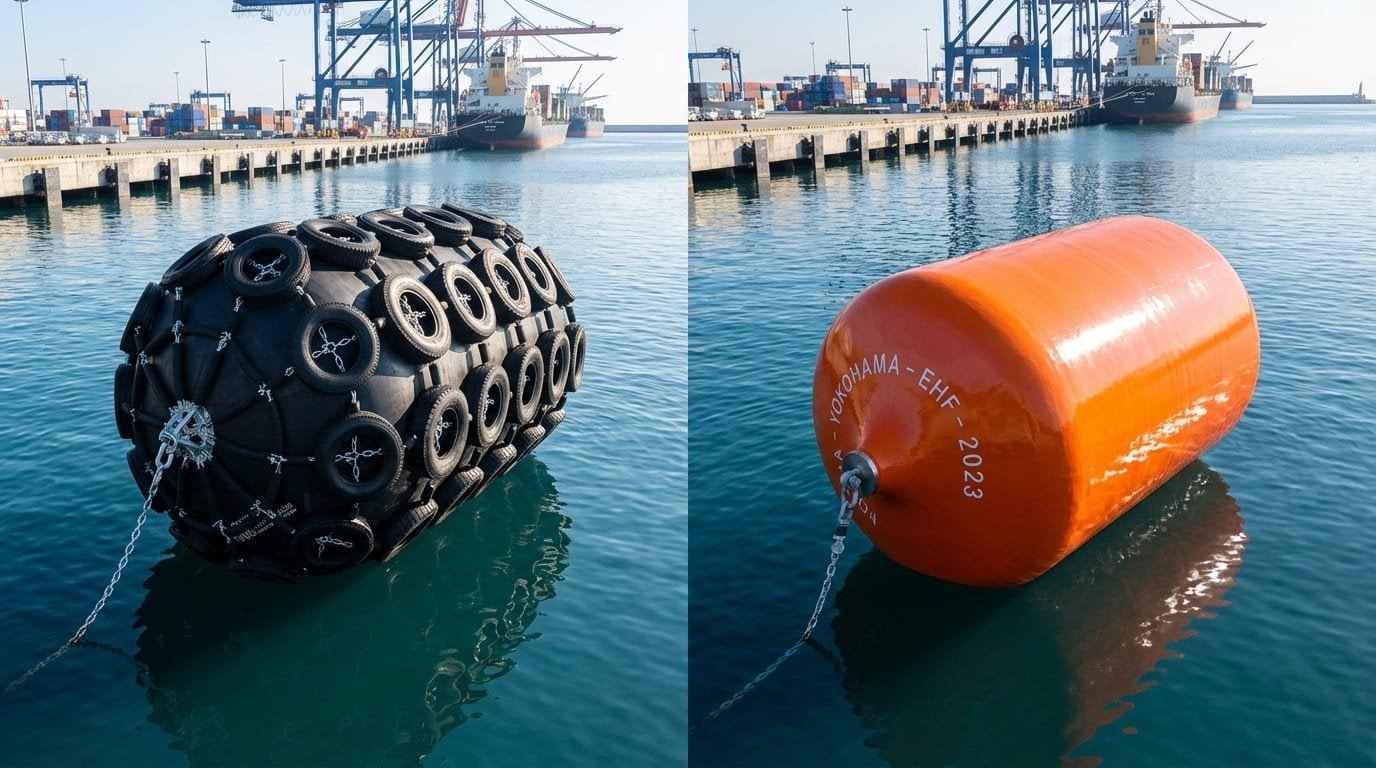
I've seen too many projects where a procurement manager simply looked at the energy absorption datasheet and picked the cheaper option, only to face a catastrophic failure six months later. Whether you are outfitting a busy commercial port or a mining terminal, understanding the nuanced engineering differences—especially the hidden weaknesses in manufacturing—is the only way to protect your investment.
The Core Difference: Compressed Air vs. Closed-Cell Foam?
Most people think a fender is just a bumper, but the engineering inside dictates how it reacts when a 50,000 DWT vessel slams into it.
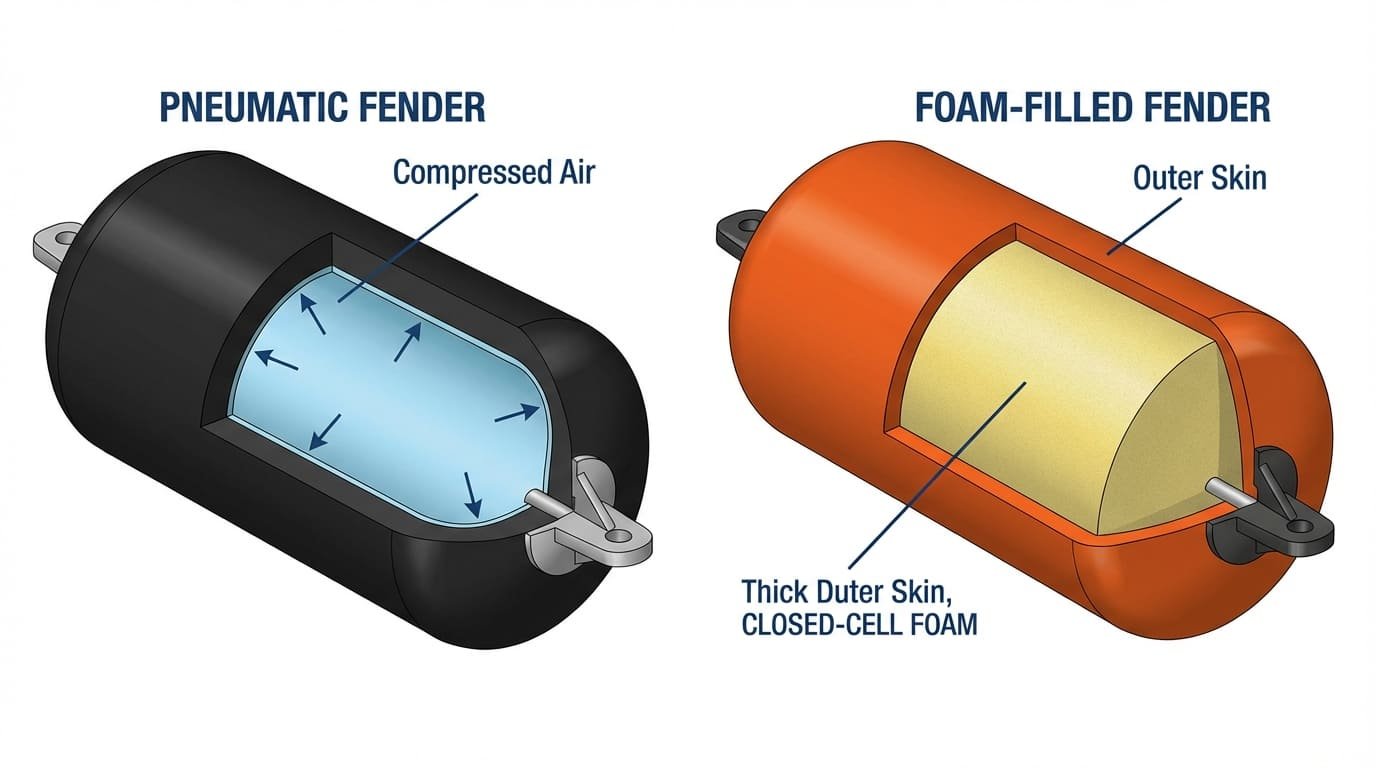
The fundamental difference lies in the reaction medium. Yokohama fenders use compressed air (usually at 50kPa or 80kPa) to absorb energy. This makes them incredibly lively and elastic. Foam-filled fenders, on the other hand, rely on a closed-cell EVA foam core3 wrapped in a nylon reinforced layer and coated with a tough polyurea (SPUA) skin4. This solid core means they are heavier and behave more like a "dead" weight that absorbs energy without the same level of rebound as a pneumatic fender.
Construction Breakdown
- Pneumatic: Rubber layers + Cord layers + Air. High maintenance (pressure checks), low weight.
- Foam: EVA Foam + Nylon + Polyurea Skin. Low maintenance, higher weight, zero deflation risk.
In my early days trading fenders, I noticed that clients loved pneumatic fenders for their ease of handling, but they often underestimated the "toughness" required for permanent installations where sharp protrusions are a risk.
Performance Battle: Energy Absorption & Hull Pressure at Angles?
When a ship comes in at a sharp angle, which fender keeps the hull safe?
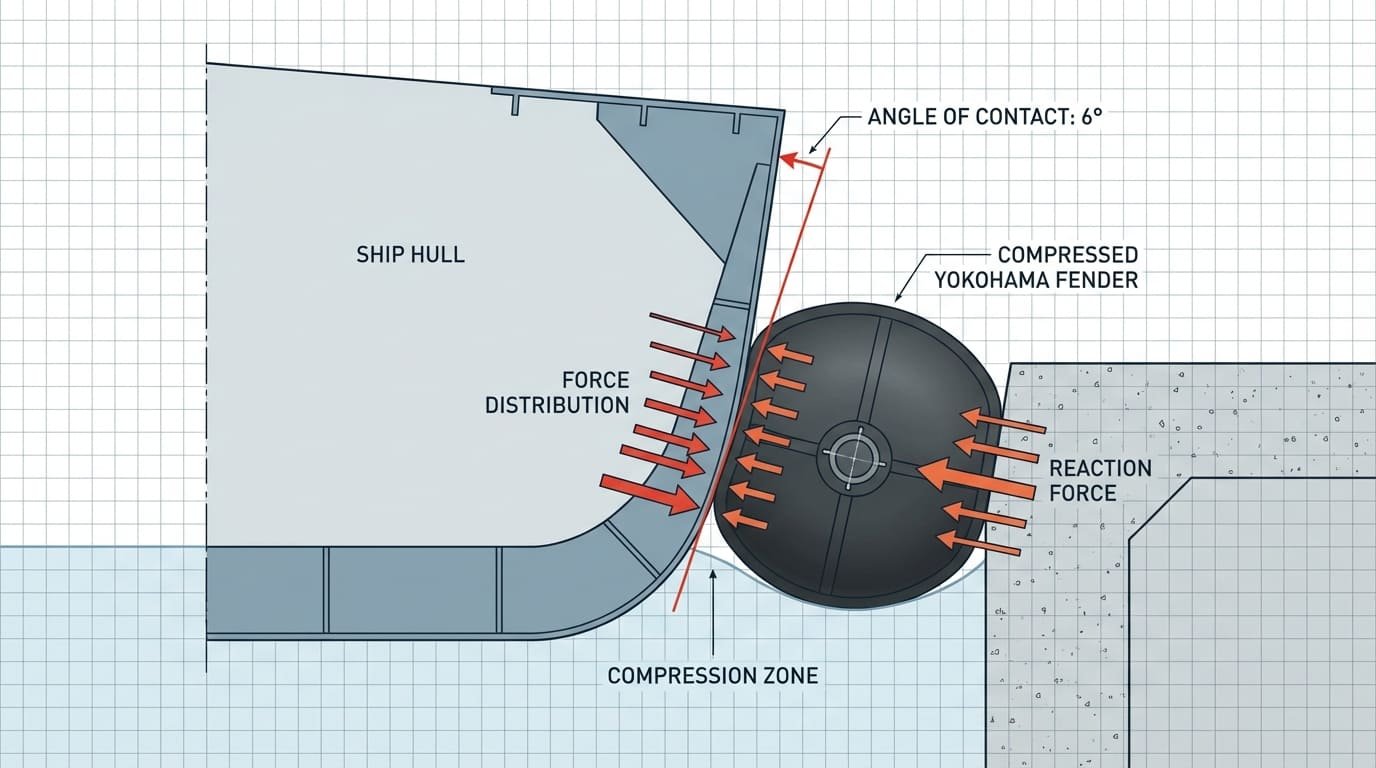
Pneumatic fenders are famous for maintaining consistent pressure distribution. Because air flows freely inside, the internal pressure remains uniform even when the contact is angled. Foam fenders are different. Because the foam core is solid, it doesn't redistribute pressure as fluidly as air. However, high-quality foam fenders are designed to compensate for this with a thicker skin and denser foam grades.
The Angle Factor
- Pneumatic: Excellent performance at inclined berthing (up to 15 degrees) because air is fluid.
- Foam: Performance drops slightly at high angles unless specifically designed with a lower density foam core to allow more compression.
For ship-to-ship (STS) transfers in open water, pneumatic is almost always the king. The rolling motion of two ships requires the high elasticity that only air can provide.
The Hidden Weakness: Why Do Flange Connections Fail?
Why do some "indestructible" foam fenders tear apart while others last 15 years?
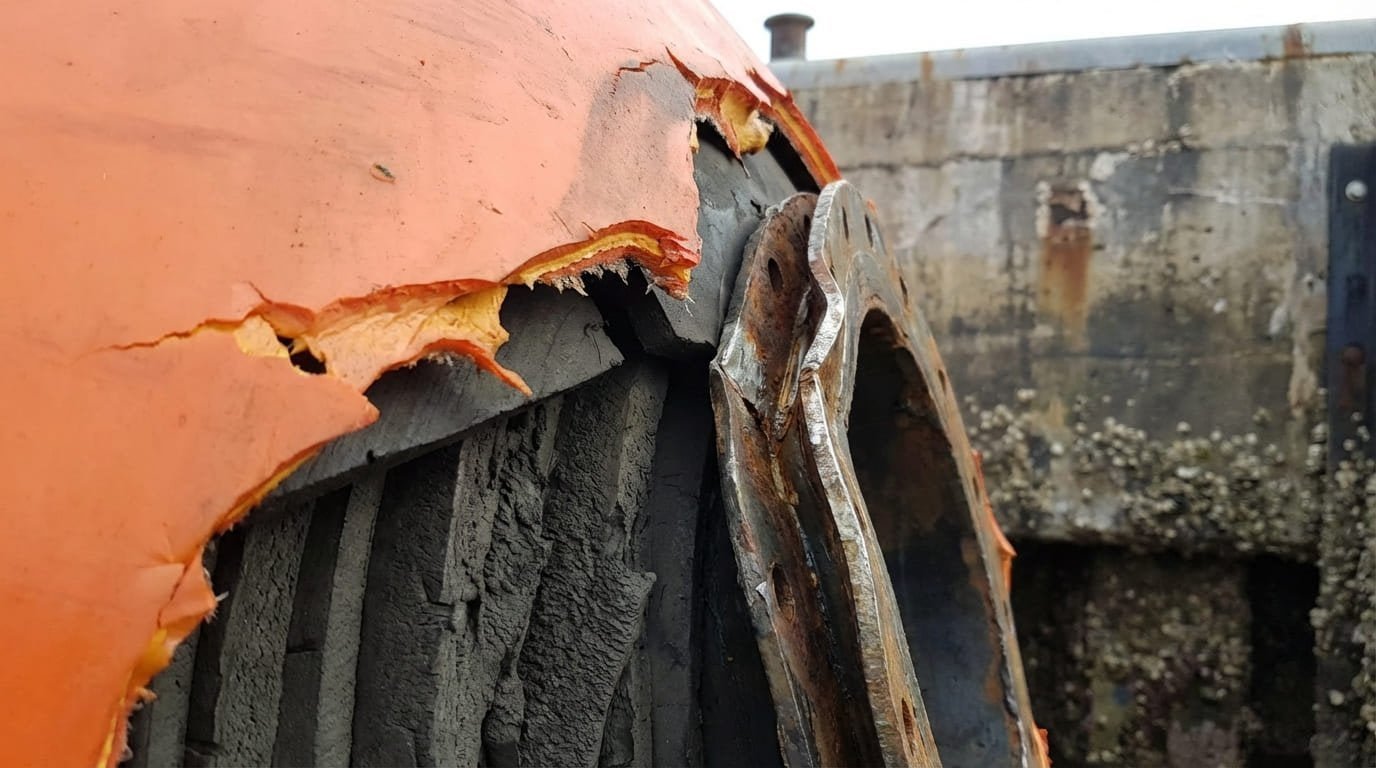
This is the most critical insight I can share with you, something you won't find in a standard brochure. Theoretically, foam-filled fenders are superior because of their closed-cell EVA foam, nylon reinforcement, and 10mm SPUA coating. They should be invincible. But the market ignores a fatal flaw: the manufacturing process at the flange connection5.
The Shear Force Problem
Many manufacturers use poor techniques to connect the foam body, nylon net, and polyurea skin to the metal flange at the ends. When a vessel moves sideways along the berth (shear force), it pulls the fender body away from the flange.
- Hand-Wrapped Flaws: Just like in some hand-wrapped pneumatic fenders6, if the connection isn't integrated perfectly, the layers separate.
- The Result: The fender tears at the flange. It won't deflate like a pneumatic fender, but its structural integrity is gone. The lifespan drops dramatically.
I have visited factories where the "reinforcement" at the flange was barely attached. At Jettyguard, we focus on this specific junction point because we know that shear force, not compression, is the silent killer of foam fenders.
Durability & Maintenance: The "Puncture Risk" Factor?
Is the fear of a popped fender blown out of proportion, or is it a real operational nightmare?
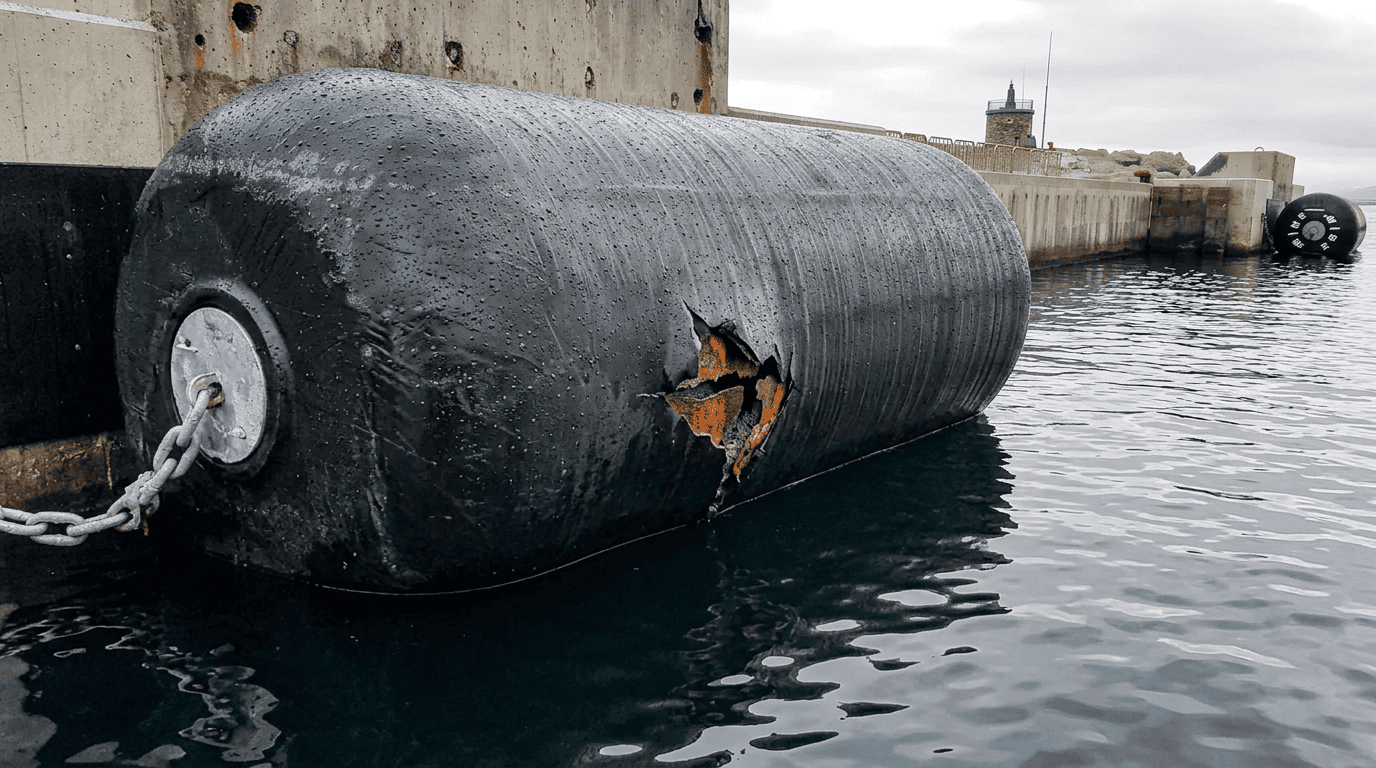
If you puncture a Yokohama fender, it’s game over. It loses all energy absorption capability instantly. This is why they are risky for wharves with old, damaged piles or sharp protrusions. Foam fenders are "unsinkable." You can literally drill a hole through them, and they will still work because the closed-cell foam doesn't absorb water.
Maintenance Reality
- Pneumatic: Requires regular checks for air pressure and chain net condition. If you ignore them, they fail.
- Foam: Virtually maintenance-free. You just need to inspect the skin for cuts and the flange bolts for corrosion.
For remote locations where maintenance crews are scarce (like some mining terminals in Western Australia), the "fit and forget" nature of foam fenders is worth the extra cost.
Cost Comparison: Upfront Investment vs. Long-Term Value?
Are you buying a product for today's budget or for the next decade of operations?
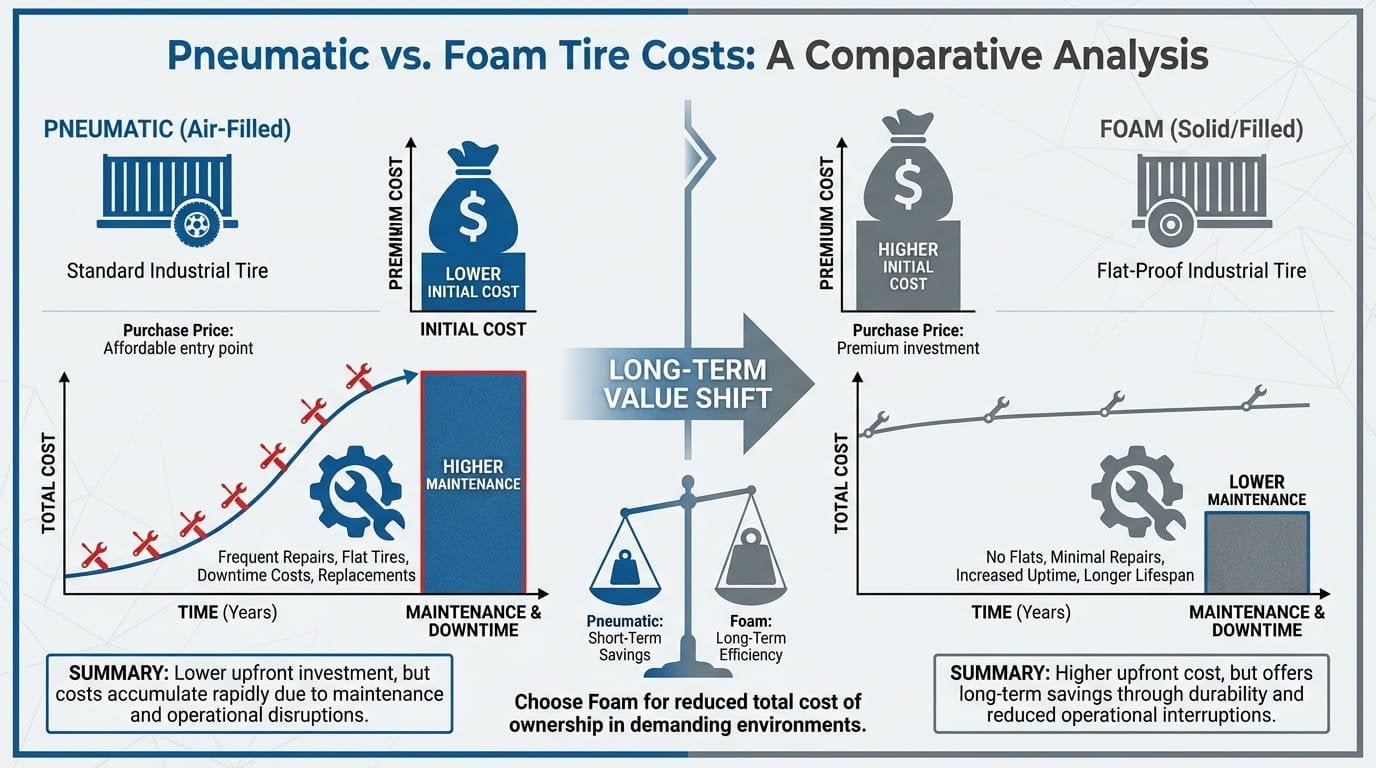
Pneumatic fenders are generally cheaper to buy and much cheaper to ship because they can be deflated. You can fit multiple large pneumatic fenders in a standard container. Foam fenders are solid—you pay to ship "air" (volume). A large foam fender might require a flat rack or break bulk shipping, which is expensive.
The Total Cost of Ownership (TCO)
- Purchase Price: Pneumatic is ~30-40% cheaper.
- Shipping: Pneumatic is significantly cheaper (deflated).
- Lifespan: Foam can last longer if the flange is built right (see my point above). If the flange tears, the TCO of foam becomes terrible.
If you are a distributor like Tommy, you need to explain to your client that the shipping cost of foam fenders might exceed the product cost itself for large sizes.
Conclusion
If you need lightweight, easy-to-ship protection for STS operations, go with Yokohama. If you need a rugged, zero-maintenance solution for a rough dock, choose Foam—but only if you verify the flange manufacturing quality first.
Elasticity plays a critical role in fender performance. Learning about it helps you choose a fender that absorbs energy efficiently and safely. ↩
Knowing the impact of shear force helps you prevent premature fender failure and costly repair disruptions. ↩
Understanding EVA foam construction helps you see why foam fenders resist puncture and water absorption—a key advantage for dockside safety. ↩
Discovering the benefits of SPUA coatings highlights how they protect fenders from UV, abrasion, and chemical damage over time. ↩
Exploring flange design helps identify manufacturing standards that prevent tearing and extend equipment life. ↩
Understanding hand-wrapping techniques reveals potential weaknesses in product integrity and long-term performance. ↩