Port / Vessel Protection Systems
info@jettyguard.comFoam fenders · Pneumatic fenders · Mooring hardware
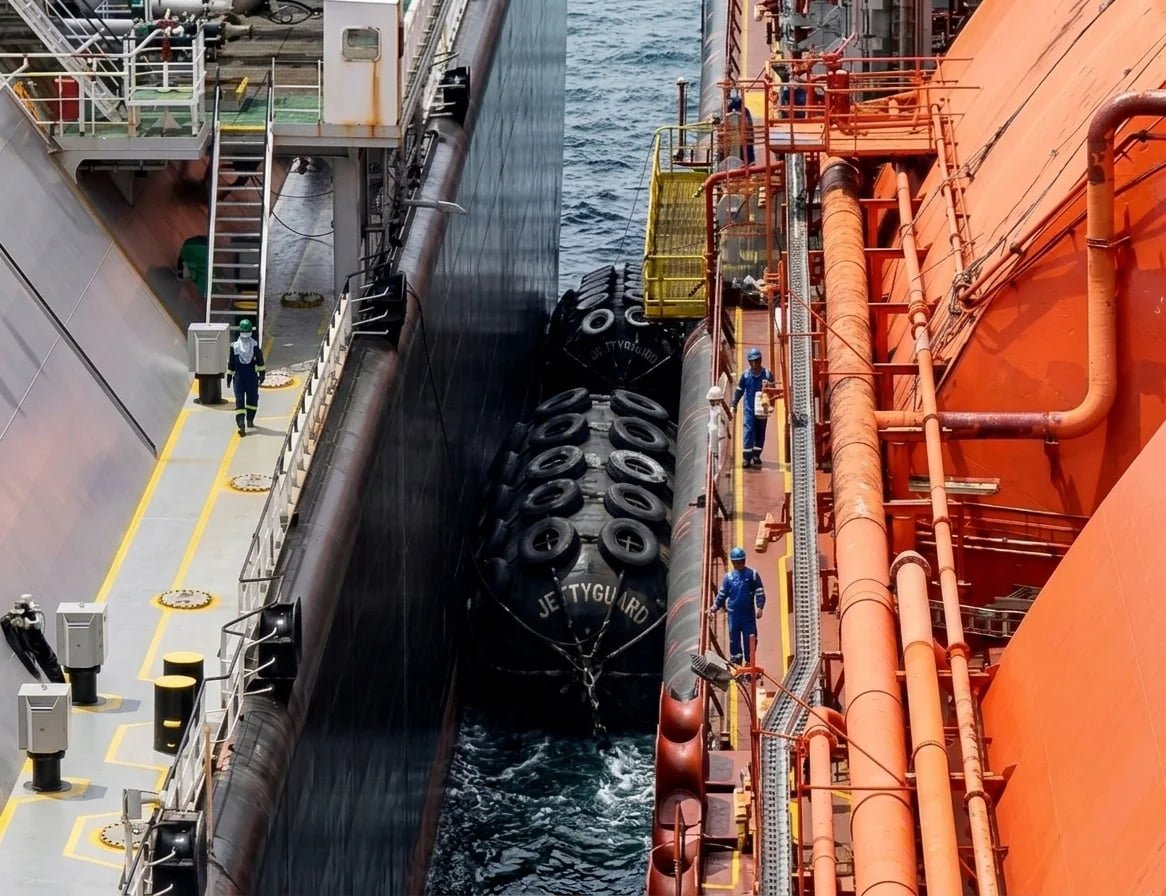
Pneumatic Fenders · LNG & FSRU
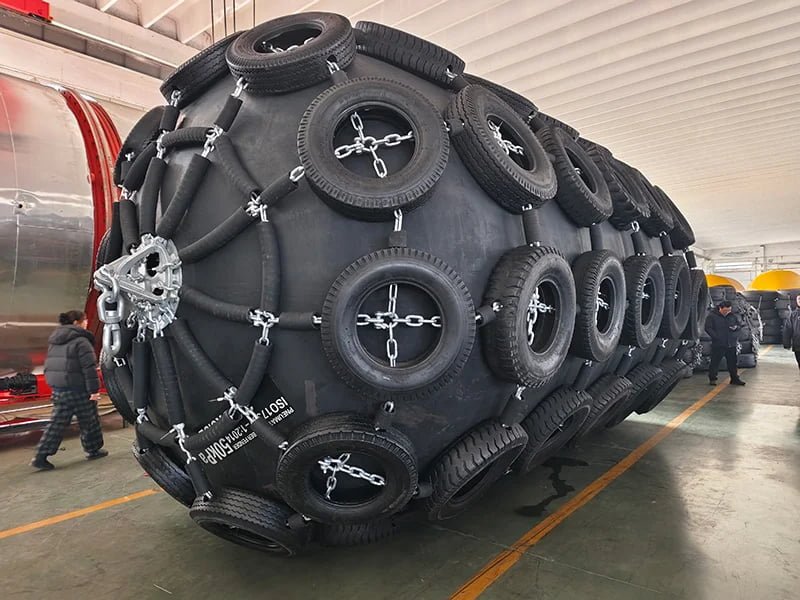
ISO 17357-certified pneumatic fenders for LNG carrier berthing, FSRU mooring, and STS transfer -- supplied with chain-tire net rigging and third-party inspection available.
Size chart available upon request
What type of fender is used for FSRU berthing and LNG terminals?
Pneumatic fenders -- also known as Yokohama-type fenders -- are the standard fender type for FSRU berthing and LNG terminal operations. Typical sizes range from 2500×5500 mm to 4500×9000 mm, depending on vessel class and berthing energy. For LNG and FSRU applications, the fender should comply with ISO 17357-1:2014 and be selected based on project-specific energy calculation.
Definition
An FSRU (Floating Storage and Regasification Unit) fender system is the set of pneumatic fenders, rigging hardware, and mooring equipment used to safely absorb berthing energy during LNG carrier approach and maintain vessel separation during STS transfer operations.
Unlike standard port fenders, FSRU fender systems must account for two floating hulls in relative motion, restricted hull pressure limits on LNG carrier hull sections, and extended contact duration during gas transfer. Selection basis follows SIGTTO and OCIMF guidelines rather than standard port berthing assumptions.
Applications
Different LNG and floating terminal applications create different berthing loads, hull pressure limits, and rigging requirements. The four scenarios below show where pneumatic fenders are most commonly specified.
Application A
LNG import and export terminals require fenders that can absorb berthing energy while keeping hull pressure within acceptable limits for the carrier and terminal structure. Pneumatic fenders are widely specified at fixed jetty structures because they combine high energy absorption with relatively low reaction force.
For standard LNG terminals receiving carriers in the 125,000-175,000 m³ range, 3300×6500 mm and 4500×9000 mm are among the most common specification points.
Relevant standard: PIANC MarCom Report No. 211 (2024), ISO 17357-1:2014
Request a Specification Review →Application B
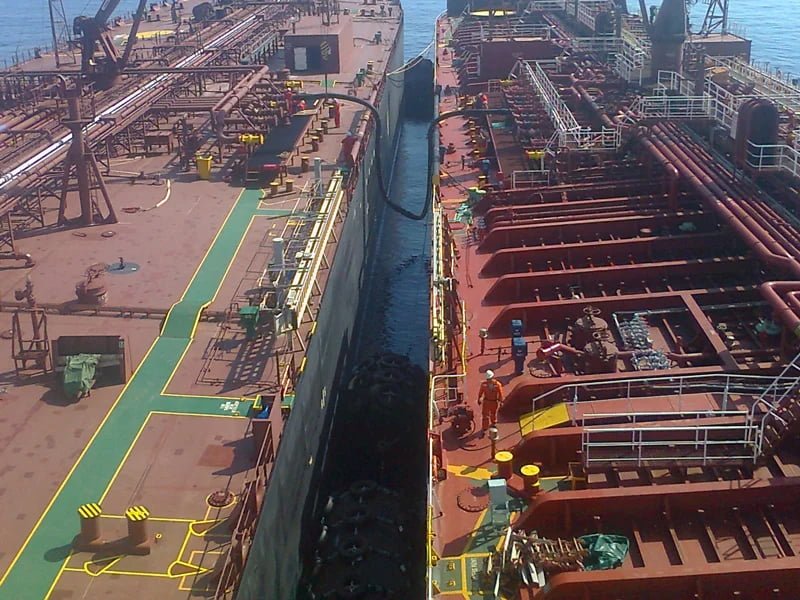
FSRU operations involve two floating bodies rather than a vessel approaching a fixed quay. This creates additional complexity because the fender system must accommodate relative motion, dynamic amplification, and changing freeboard conditions during side-by-side berthing.
In these applications, pneumatic fenders are typically suspended directly from the FSRU hull using chain-tire net rigging and sling arrangements configured to match vessel geometry and operating conditions.
Relevant standard: SIGTTO FSRU Mooring and Fender Guidelines, OCIMF Mooring Equipment Guidelines (4th edition)
Request a Specification Review →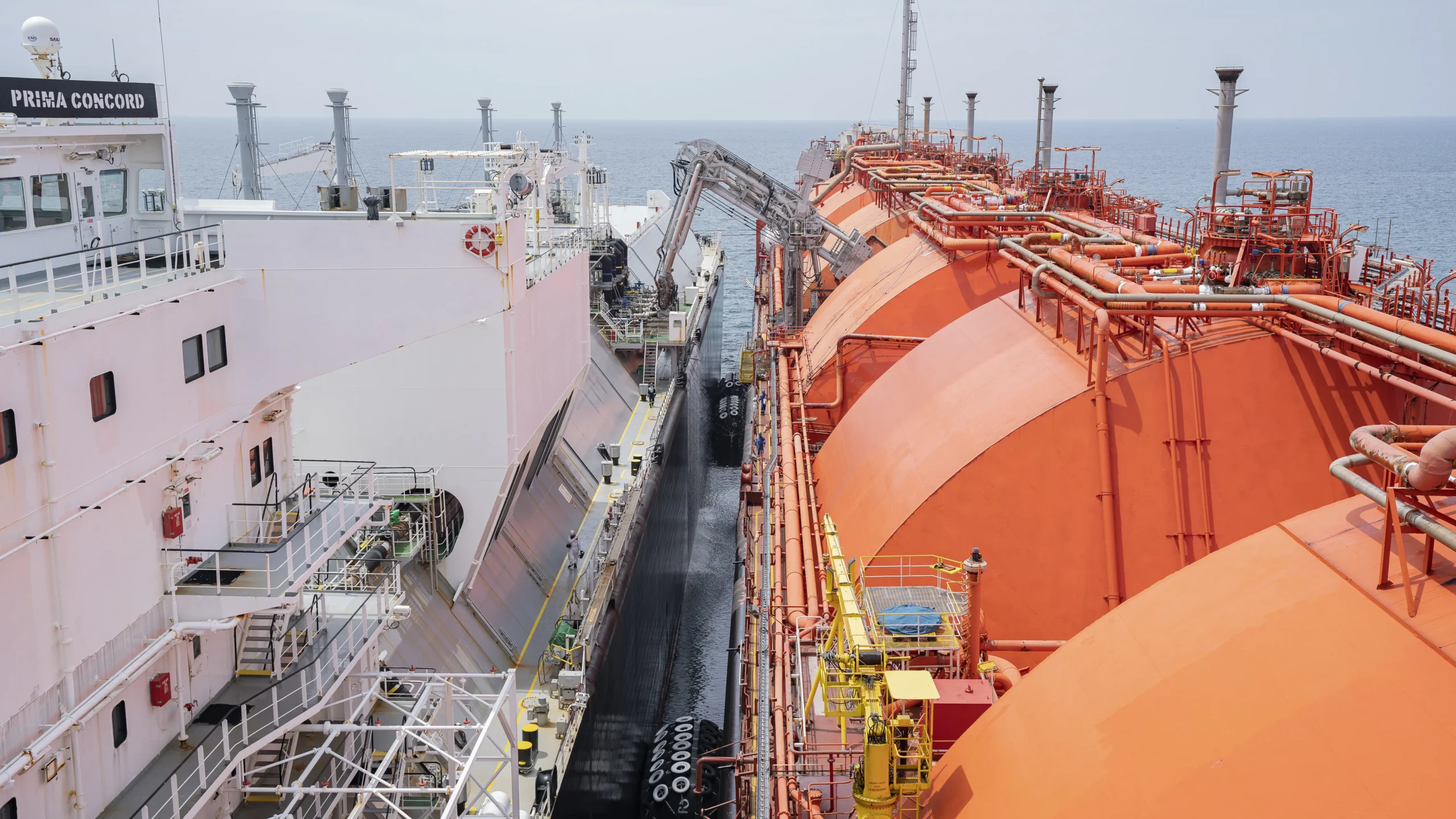
Application C
LNG STS transfer requires fenders that operate without support from a fixed structure. The fender must maintain separation between two vessels while working in floating, open-water, or offshore transfer conditions.
Pneumatic fenders are the standard choice for LNG STS operations because they provide self-floating performance, controlled reaction force, and compatibility with OCIMF transfer guidance.
See our Ship-to-Ship Transfer Fenders page for dedicated STS application guidance.
Relevant standard: OCIMF STS Transfer Guidelines, ISO 17357-1:2014
Request a Specification Review →Application D
Floating regasification units and small-scale LNG projects often operate with constrained berth geometry, shallow draft conditions, or limited infrastructure modification options. Pneumatic fenders are suitable here because they can be deployed and repositioned without major structural changes.
For smaller vessel classes or non-standard operating conditions, preliminary sizing should still be confirmed against vessel data, hull limits, and environmental exposure.
Request a Specification Review →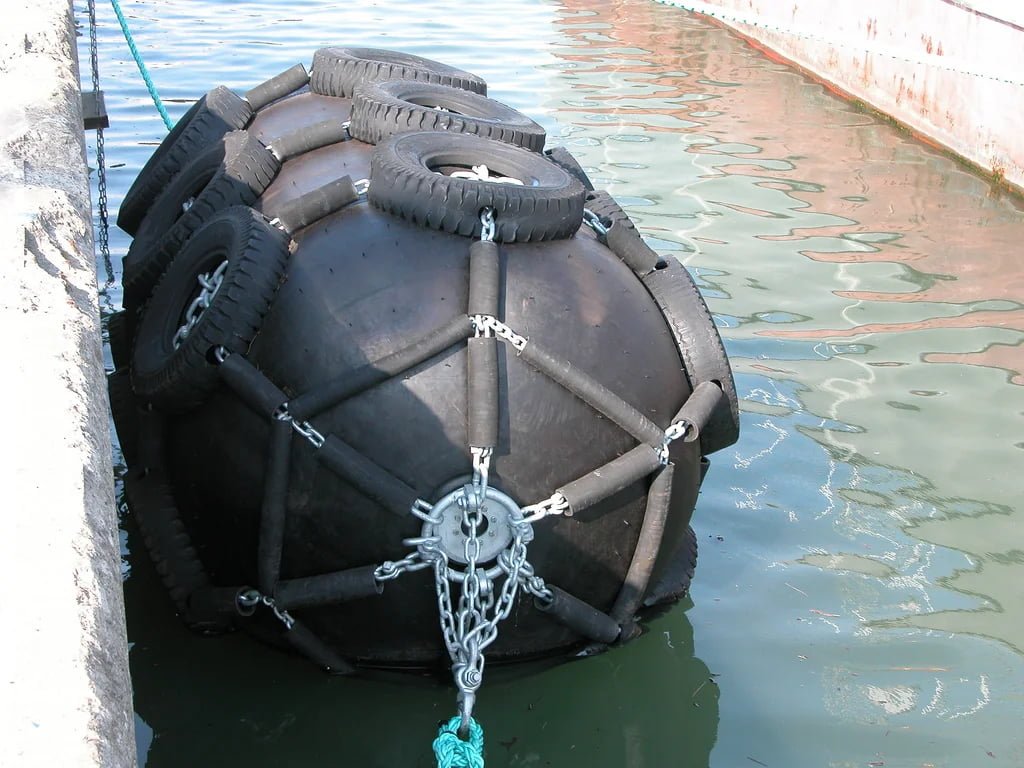
Technical Context
Most port fenders are selected for one vessel approaching a fixed quay. LNG terminal and FSRU berthing conditions are different because the fender system must handle higher interface sensitivity, stricter hull pressure limits, and longer exposure time.
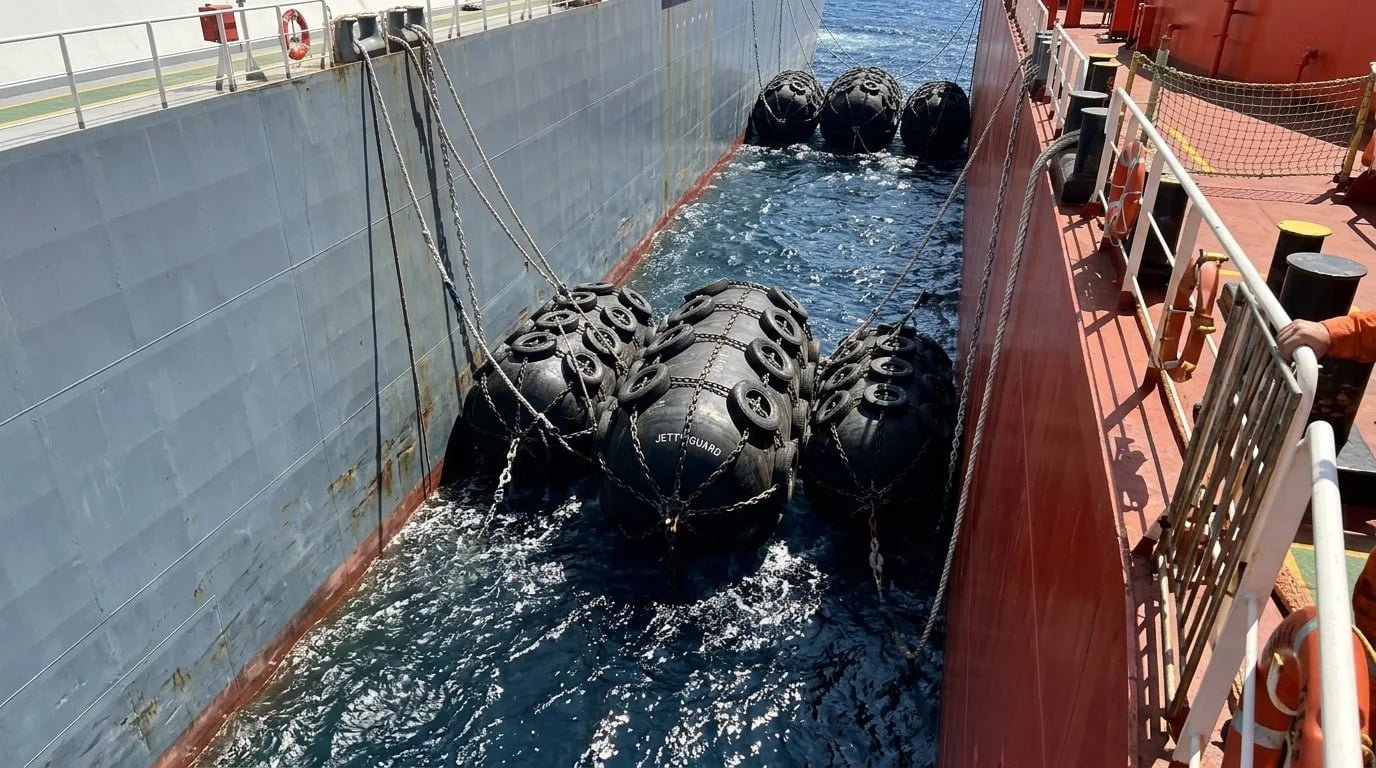
When an LNG carrier moors alongside an FSRU, both hulls respond to wind, wave, and current. The effective berthing energy must therefore account for relative motion, not just simple approach velocity.
In LNG operations, the vessel may remain alongside for many hours during transfer. The fender must perform not only at impact, but throughout the full operating window.
LNG carrier hull sections often require stricter contact pressure control than conventional marine berthing. Pneumatic fenders are favored because their reaction-force-to-energy ratio helps manage this requirement.
For FSRU and LNG-related operations, the specification basis often references SIGTTO, OCIMF, and PIANC design guidance rather than generic quay berthing assumptions.
Standard Size Range
The sizes below are among the most commonly specified pneumatic fender configurations for LNG carrier berthing, FSRU mooring, and related floating terminal applications.
| Fender Size (D×L mm) | Reaction Force (kN) | Energy Absorption (kJ) |
|---|---|---|
| 2500 × 5500 | 2,019 | 943 |
| 3300 × 6500 | 3,016 | 1,814 |
| 4500 × 9000 | 5,747 | 4,752 |
Certification: Third-party inspection can be arranged with Bureau Veritas, DNV GL, ABS, or Lloyd's Register depending on project requirements.
Type Comparison
Both pneumatic and foam-filled fenders are used in offshore and marine applications, but LNG and FSRU projects usually prioritize hull pressure control, floating deployment, and standards compatibility.
| Attribute | Pneumatic Fender | Foam-Filled Fender |
|---|---|---|
| Energy absorption mechanism | Compressed gas at rated deflection | Foam core compression |
| Buoyancy | Self-floating | Self-floating |
| Hull pressure at rated deflection | Lower | Moderate to higher |
| Suitability for FSRU berthing | Preferred | Limited use |
| Suitability for LNG STS transfer | Standard choice | Less common |
| Standard | ISO 17357-1:2014 | No equivalent ISO product standard |
| Maintenance requirement | Periodic pressure check | Lower routine maintenance |
| Typical LNG use case | Primary berthing fender | Secondary or supplementary role |
Conclusion: For FSRU berthing and LNG STS operations where SIGTTO or OCIMF compliance matters, pneumatic fenders are generally the primary specification choice.
Standards
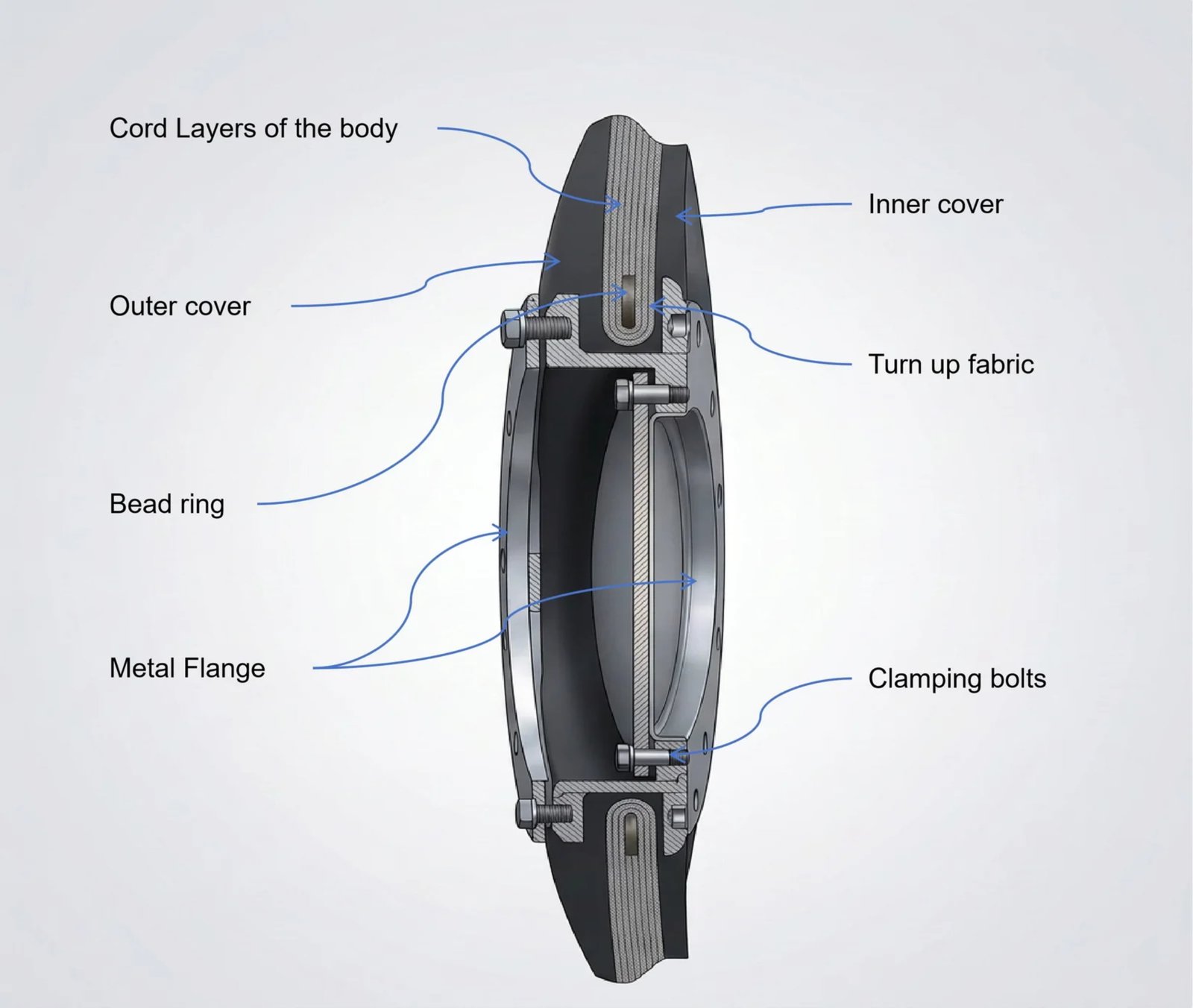
This is the main international product standard for pneumatic fenders. It specifies construction types (Type I net-type, Type II sling-type), initial pressure grades (Pneumatic 50 and Pneumatic 80), dimensional tolerances, material requirements, and performance testing criteria.
This is the current reference for fender design in LNG terminal and FSRU applications, including energy calculation logic and layout guidance.
This guidance is relevant where terminal or transfer operations are subject to OCIMF requirements, especially for marine transfer and offshore handling conditions.
This guidance is particularly relevant to FSRU side-by-side berthing, layout expectations, and operational inspection requirements.
Still referenced in many existing engineering documents and legacy specifications.
Third-party inspection and certification can be arranged to match project documentation requirements. Typical bodies include BV, DNV GL, ABS, and Lloyd's Register.
Supply Capability
Sizes from 1500×3000 mm to 4500×12000 mm are available across standard ISO 17357 configurations. Custom sizing can be reviewed where project conditions require it.
50 kPa is standard, with 80 kPa options available for higher-energy requirements.
Fenders can be supplied with chain-tire net rigging, shackles, swivels, and related hardware. See our Marine Rigging Gear page for accessory scope.
Available documentation can include material records, dimensional inspection, pressure testing, and performance testing arranged with third-party inspection bodies.
Standard sizes can often be supplied on shorter lead times, while certified project orders may require additional scheduling for inspection and documentation.
Frequently Asked Questions
The questions below reflect what engineers, procurement teams, and terminal project stakeholders commonly ask before finalizing a pneumatic fender specification.
For LNG carriers in the 125,000-145,000 m³ range, 3300×6500 mm and 4500×9000 mm are both common reference sizes. Final selection depends on approach velocity, berth condition, and project-specific energy calculation.
Yes. Pneumatic fenders are supplied in compliance with ISO 17357-1:2014, and third-party inspection can be arranged depending on the project requirement.
The number depends on vessel size, FSRU geometry, and layout basis. In many FSRU side-by-side configurations, four fenders per side is a common starting reference, but the final layout must be confirmed for the actual project.
This varies by vessel class and hull section, but LNG terminal specifications commonly work within a design range around 200-400 kPa depending on the interface area and project basis.
Type I is the net-type fender, fitted with a protection net (typically a chain-and-tire net) for high-abrasion berthing. Type II is the sling-type, used without a protection net. Both are covered by ISO 17357-1:2014 and specified at the same Pneumatic 50 or Pneumatic 80 initial pressure grade. For LNG, FSRU, and STS applications, the choice depends on abrasion exposure and mooring arrangement rather than energy performance.
Yes. The same basic pneumatic fender type can be used for both, but the rigging arrangement, deployment method, and operating basis differ between fixed terminal and STS conditions.
OCIMF vetting does not prescribe one single certification format, but in practice buyers usually require ISO 17357 compliance plus third-party inspection records that support the rated application.
Inquiry CTA
If you have a project specification, vessel class, or terminal type, share the details below. We will review your application and respond with a fender recommendation and commercial offer within two business days.
What to Send Us