Donut Fenders for Monopiles, Bridge Piers and Pile Berths
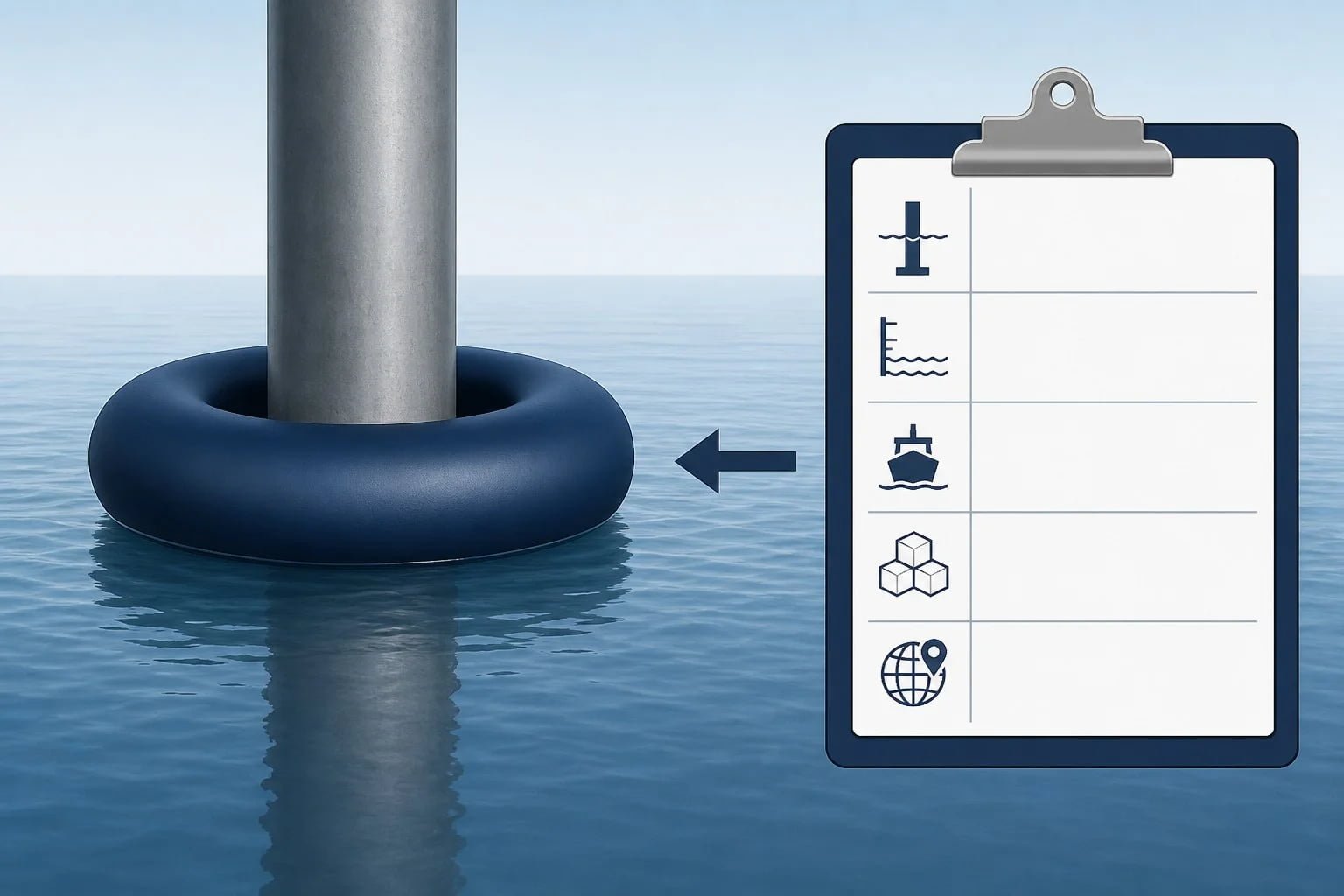
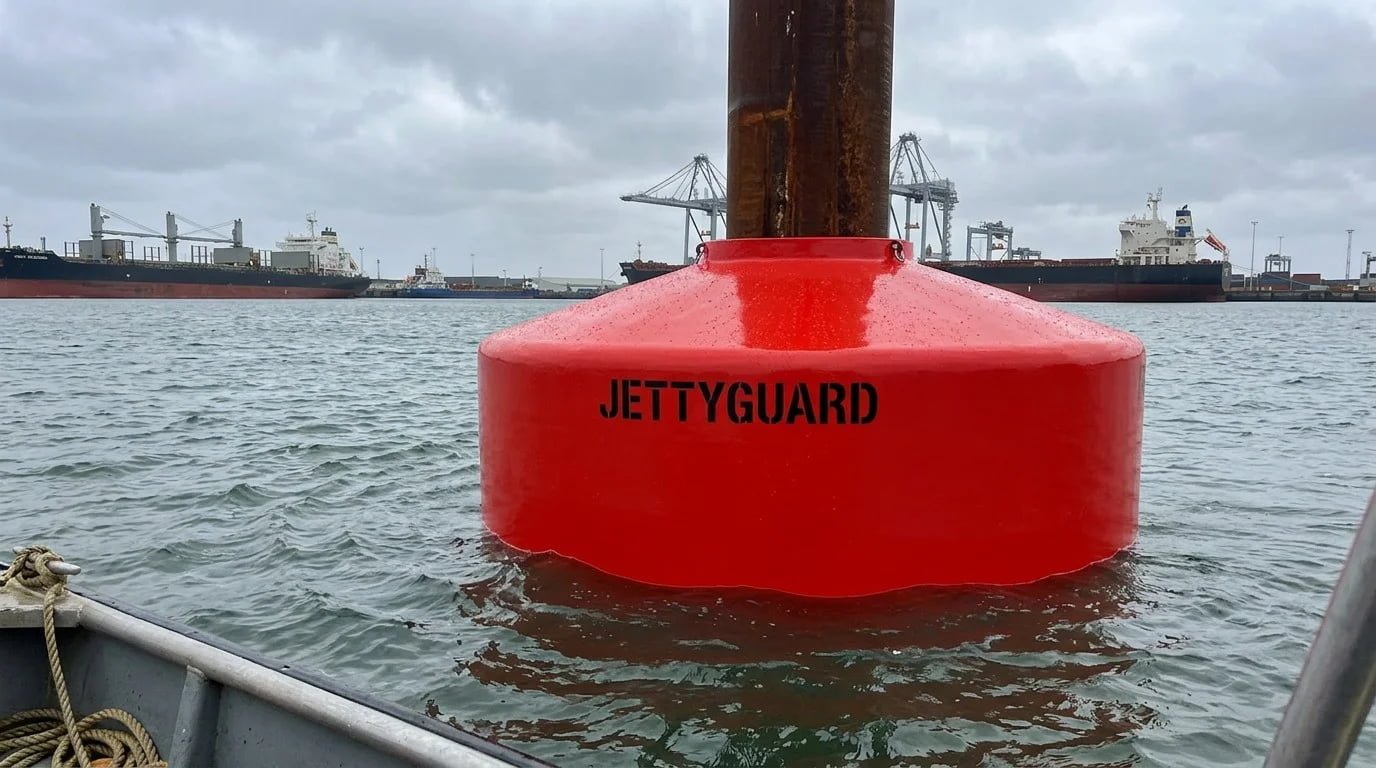
A donut fender is an annular foam-filled body configured around a pile, sized for your pile profile, water-level range and vessel contact zone. JettyGuard configures each ring from project data rather than a catalogue. Send whatever you have now — unknowns can be marked TBC.
Is a donut fender the right fit for your structure?
A donut fender suits structures where the contact point moves with the water level and vessels can approach a pile from more than one heading. Where the berthing face is fixed and flat, other foam-filled or rubber systems usually fit better.
Structure
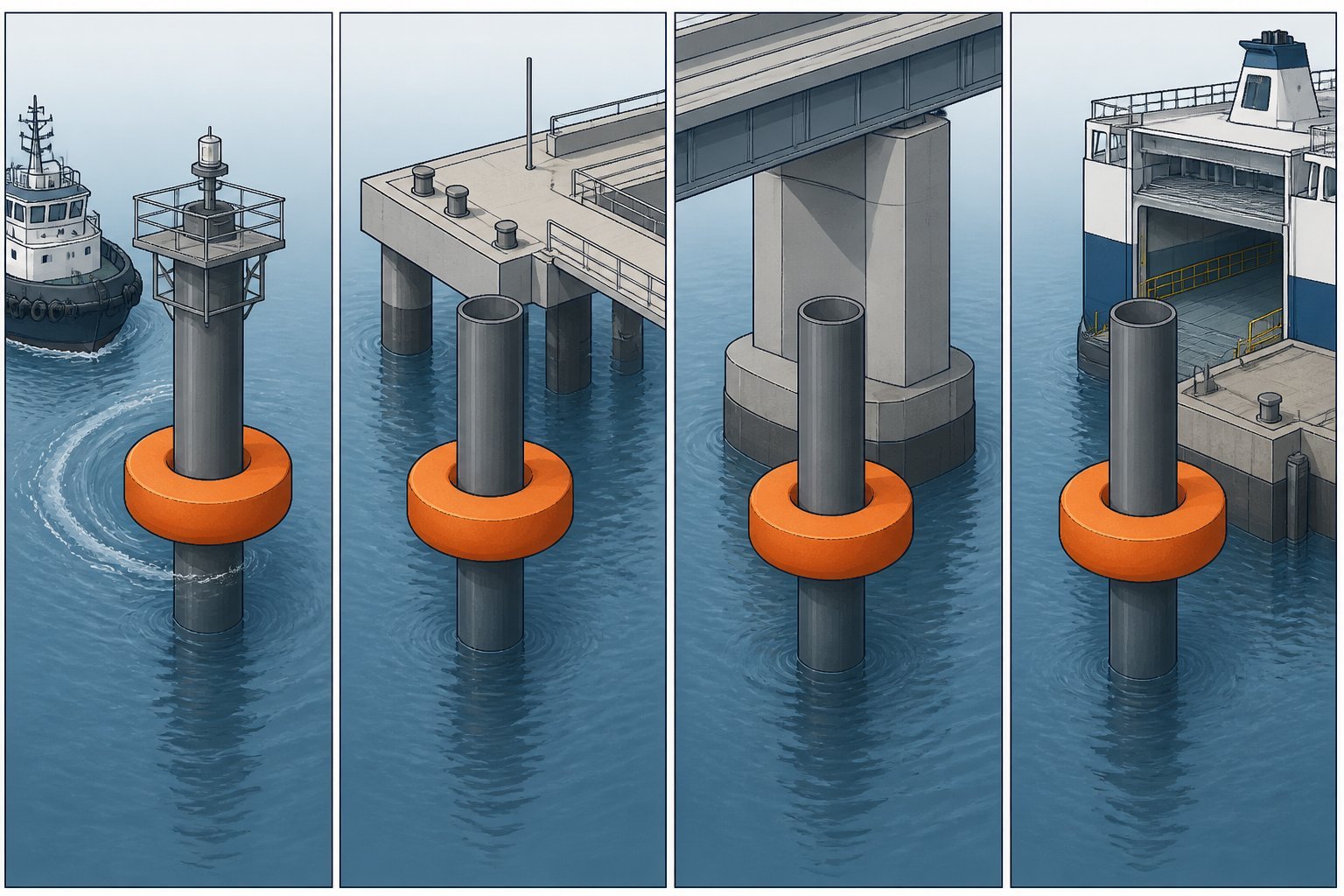
Contact follows the tide; approach heading varies
What we confirm before quotingPile profile, travel range, structural capacity
Repeated glancing contact along a guide line
What we confirm before quotingGuide geometry, contact zone, restraint arrangement
One element protects both pier and vessel
What we confirm before quotingPier geometry, craft and contact conditions, structural capacity
Frequent contact with limited maintenance access
What we confirm before quotingBerthing frequency, contact zone, wear and retention details
Coverage around the pile is never assumed to be complete. Adjacent structures, the usable contact zone, pile geometry and vessel approach all limit where the ring can actually be struck, and the offer states those limits instead of implying protection from every direction.
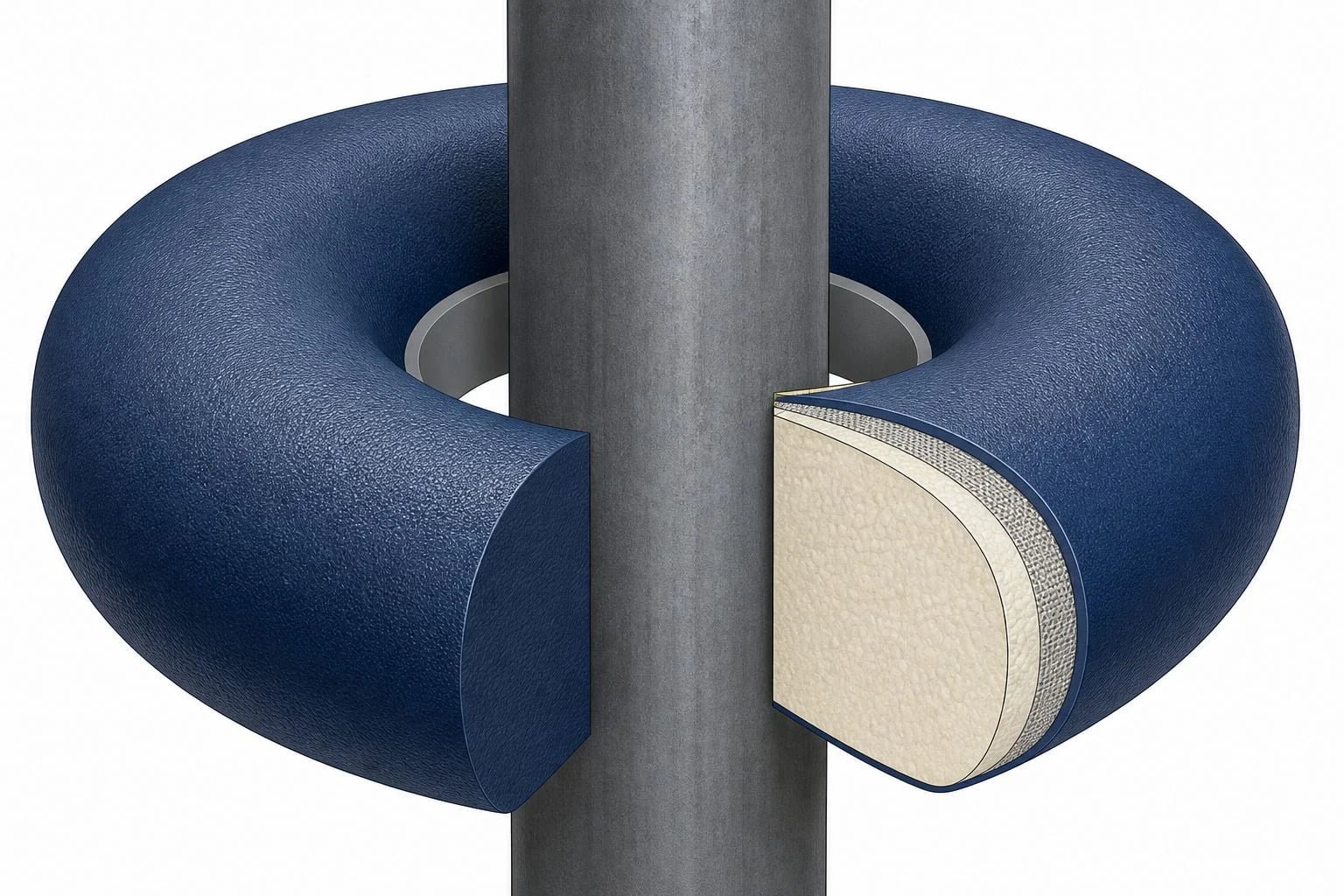
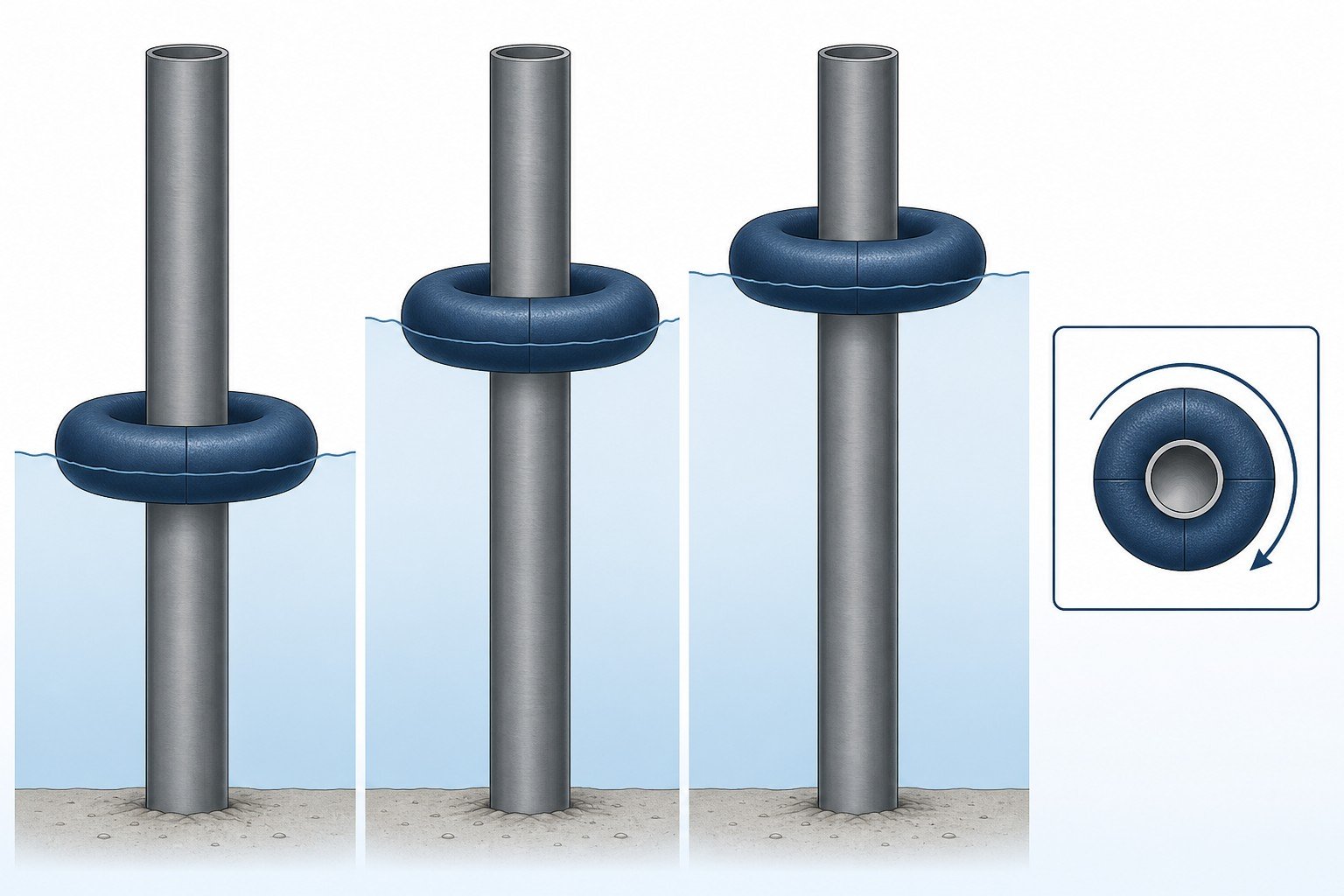
How the ring is configured around your pile
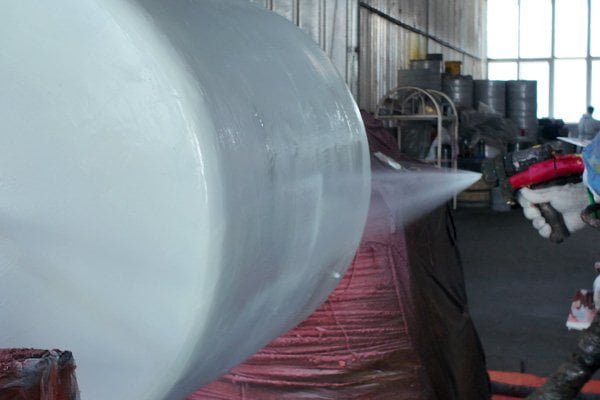
The body is a closed-cell foam core with reinforcement layers and a sprayed polyurea outer skin. It is built as a ring around the pile rather than fixed to a berthing face, so one element absorbs energy and transfers reaction into the pile itself.
The interface between ring and pile decides how the unit behaves. Depending on the arrangement you need, a donut can rotate around the pile and rise and fall with water level. Sleeve, bearing, wear and retention details are configuration-dependent, not fixed features of the product.
Travel limits, stoppers and any guide arrangement are worked out against your elevation band and the structural capacity available. Optional depth on tidal tracking and bearing behaviour sits in our donut foam fender guide.
What to send so the configuration can be checked
One data set drives feasibility, sizing and price. Send what exists today and mark the rest TBC; partial information is enough to open a review.
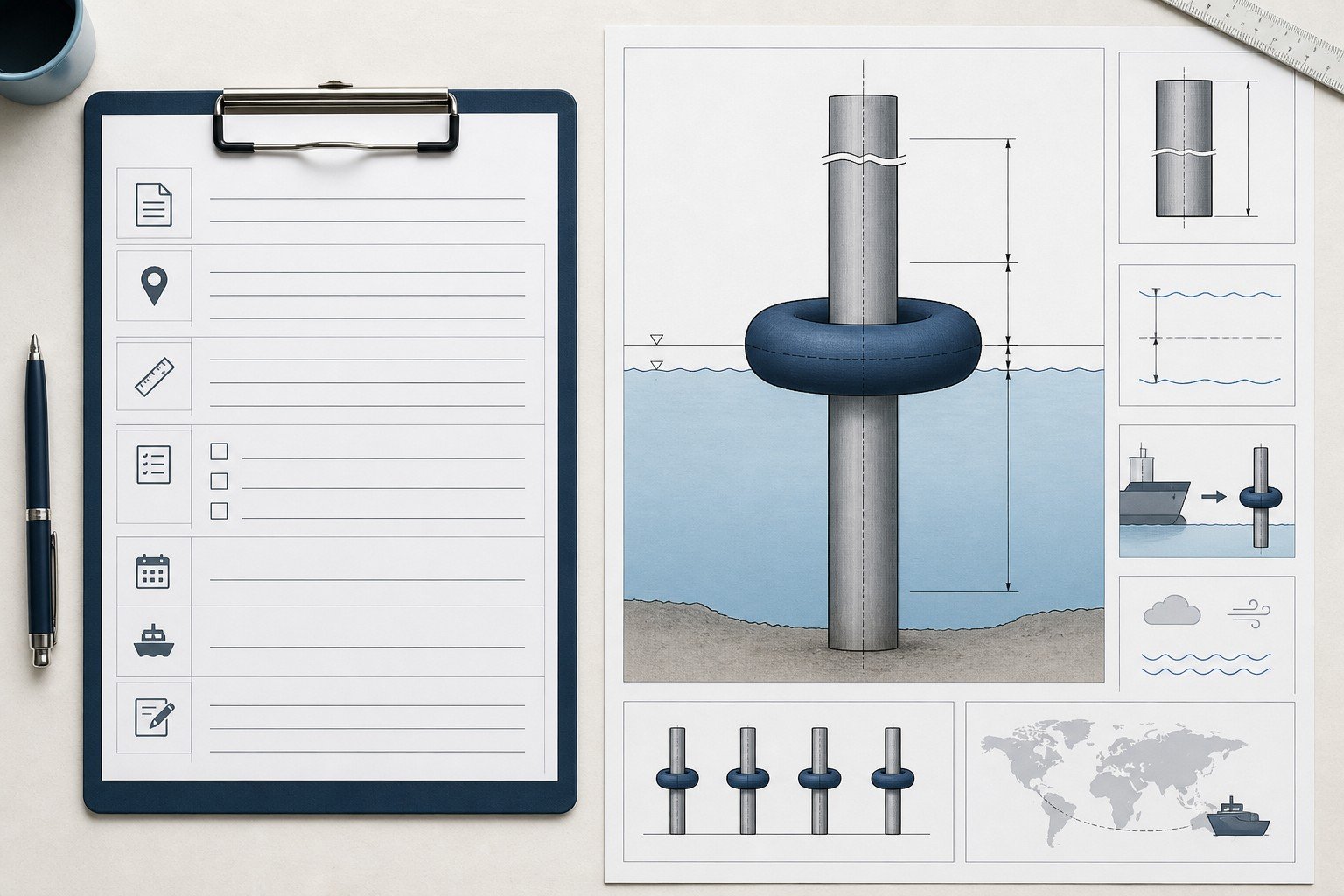
| Input | Why it matters |
|---|---|
| Pile outside diameter and profile, including tapers, flanges or brackets | Sets internal geometry and the sleeve or clearance concept |
| Tidal or movement range with reference levels | Defines the vertical band the ring must stay usable within |
| Vessel and contact geometry: sizes, approach headings, hull or belting contact | Sets the usable contact zone and body height |
| Design loads or required performance basis, and any standard you follow | Shows whether the intended arrangement is workable |
| Guide, bearing, restraint and mounting arrangement, existing or intended | Decides interface scope and who supplies which part |
| Site and installation conditions: access, marine plant, working window, existing fenders | Affects handling, retention and installation method |
| Quantity, delivery destination and documentation requirements | Needed for scope, packing and commercial terms |
What a donut fender offer covers
A reviewed offer states the basis it was built on, so engineering and procurement read the same scope.
Configuration basis
The pile data, elevation band, contact zone and load or performance basis actually used.
Open items
Every input still TBC, and what would change if it moves.
Arrangement and drawing scope
What will be issued for approval, and at which stage.
Calculation basis
The method and assumptions behind the proposed arrangement.
Body and interface scope
Foam core, reinforcement, polyurea skin, sleeve, bearing, wear and retention elements included or excluded.
Inspection and documentation
Tests, certificates and records that are agreed rather than assumed.
Packing, delivery and site guidance
Transport scope, plus any supervision or installation guidance priced separately.
From project data to a reviewed quotation
The review runs in sequence, which is why early partial data is more useful than complete data later.
- 01
You send the available pile, tide, vessel and commercial data, with unknowns marked TBC.
- 02
We check fit against your structure and list the inputs that still need confirmation.
- 03
We propose a configuration and, where the geometry allows more than one route, the trade-offs between them.
- 04
You receive a quotation stating the configuration basis, scope, exclusions and remaining open items.
- 05
On award, arrangement drawings and the agreed documentation scope are issued for approval.
Who builds the fender you are quoted
JettyGuard manufactures donut fenders within its foam-filled fender family. Forming the body, applying reinforcement layers, spraying the polyurea skin and assembling chain, sleeve and fitting arrangements are done in our own facility; foam raw material is purchased. That means the construction decisions behind your quotation are ours to answer for, not a third party's. The wider family and its other subtypes are covered on our foam filled fender page.
Before you send drawings
What pile diameter does a donut fender need?
There is no single required diameter. Feasibility is confirmed from the pile profile, the clearance and sleeve concept, the vertical travel the ring must follow, and the load or performance basis you are working to. Send the pile data you have and we will tell you what the geometry allows.
Can you send a standard donut fender size and performance table?
We confirm sizes and performance for your project after reviewing your inputs, rather than quoting a universal catalogue table. Dimensions and reaction follow your pile, contact zone and load basis, so a table written for other structures would not describe yours. Once your inputs arrive, the offer states the configuration and the basis behind it.
Can installation be included in the scope?
Site guidance, supervision and installation are scoped and priced separately when requested, not bundled by default. Tell us the access, marine plant and working window you expect, and the offer will show what is included, what is excluded, and what is quoted as an option.
Request a reviewed quotation
Send the pile, tide, vessel and interface data you have today. Anything still undecided can be marked TBC, and drawings can follow by email later. We review fit, name the missing inputs, and quote against a stated configuration basis.