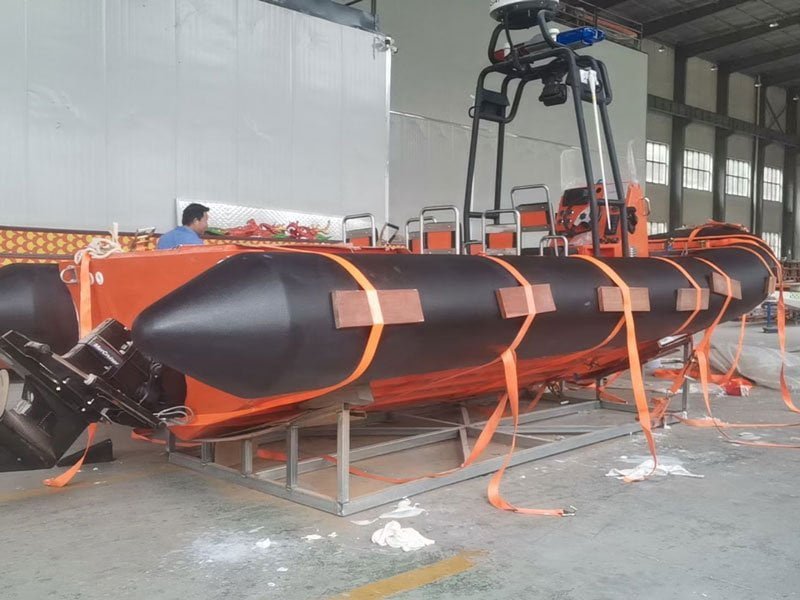
Custom Vessel Fendering
Solid Foam Boat Collar Systems for Workboats and Patrol Craft
Custom solid foam boat collar sections engineered from your hull geometry — not picked from a generic kit. Closed-cell foam core, SPUA outer skin, no inflatable chamber to lose pressure.
For definitions, collar types and general selection, see our boat collar types and selection guide.

A solid foam boat collar is a vessel-attached fendering system built around a closed-cell foam core and a spray polyurea (SPUA) outer skin, with no inflatable chamber to lose pressure. JettyGuard engineers each collar to the hull's section profile, total run and fixing interface for patrol, pilot, rescue and workboat applications. Send your section drawing to request a quote.
What is a solid foam boat collar?
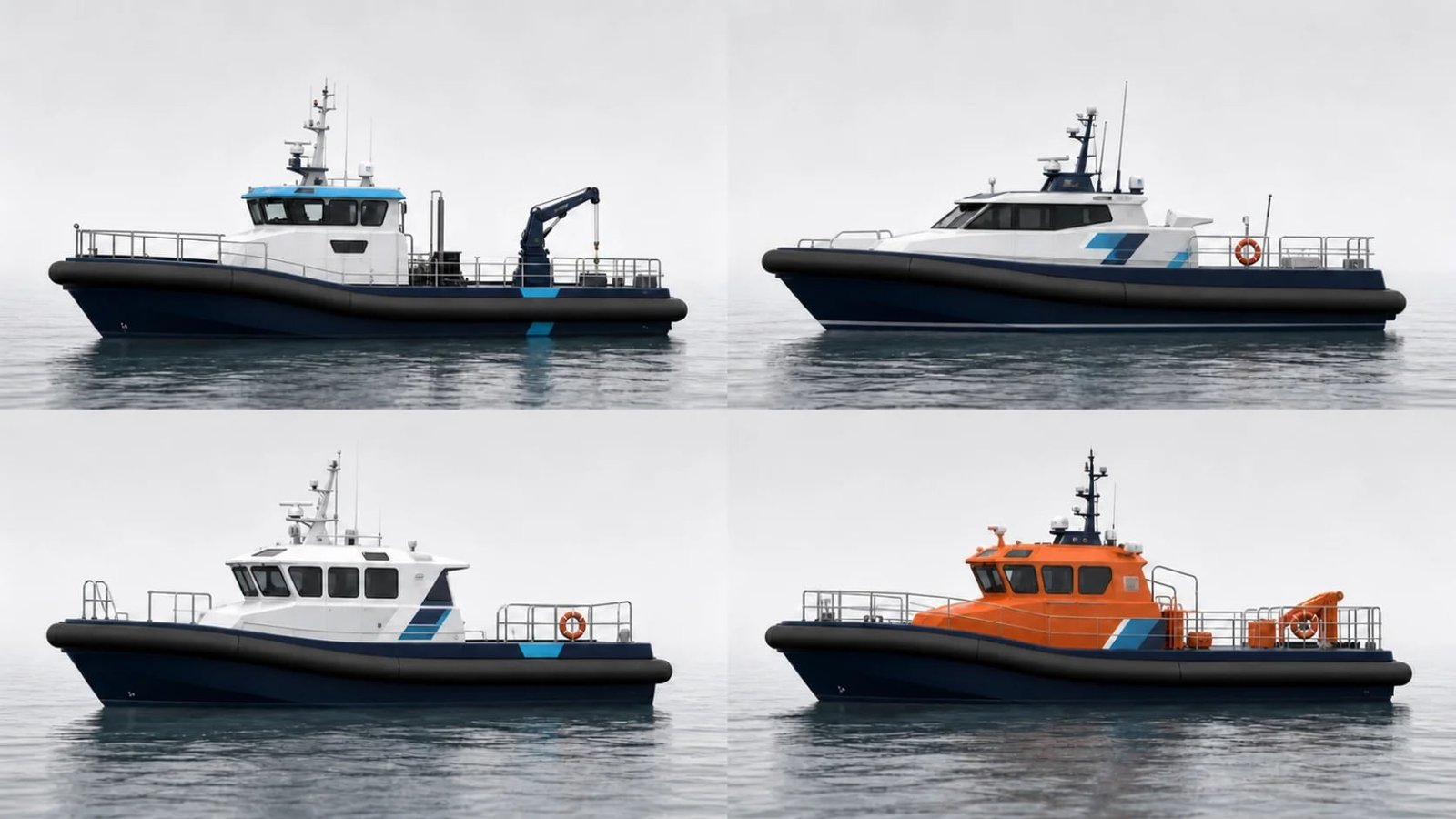
A solid foam boat collar is a continuous or segmented fendering system mounted along the hull side, bow or stern of a workboat or patrol craft. It absorbs contact energy during berthing, side-by-side transfers and close-quarters maneuvering, and protects the hull from abrasion and impact.
The defining difference from an inflatable RIB tube is structural: a solid foam collar has a closed-cell foam core and an SPUA outer coating, and contains no air chamber. There is no inflation pressure to check and no pressure-loss failure mode. The foam core provides the fendering section; the SPUA skin gives the outer wear surface.
This page is the commercial owner for custom vessel-attached solid foam collars. If you are comparing collar types generally — solid foam, inflatable and hybrid — start with the boat collar types and selection guide, then come back here to prepare a specification.
How a solid foam collar is built
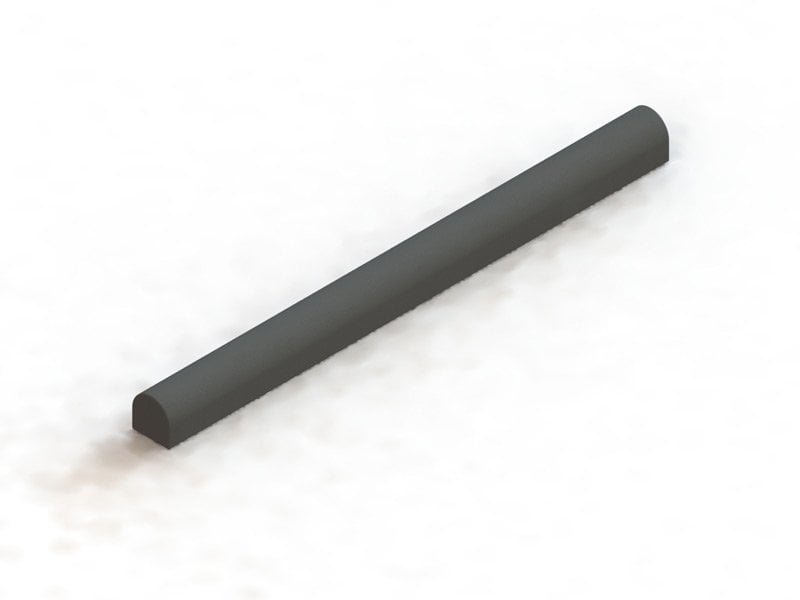
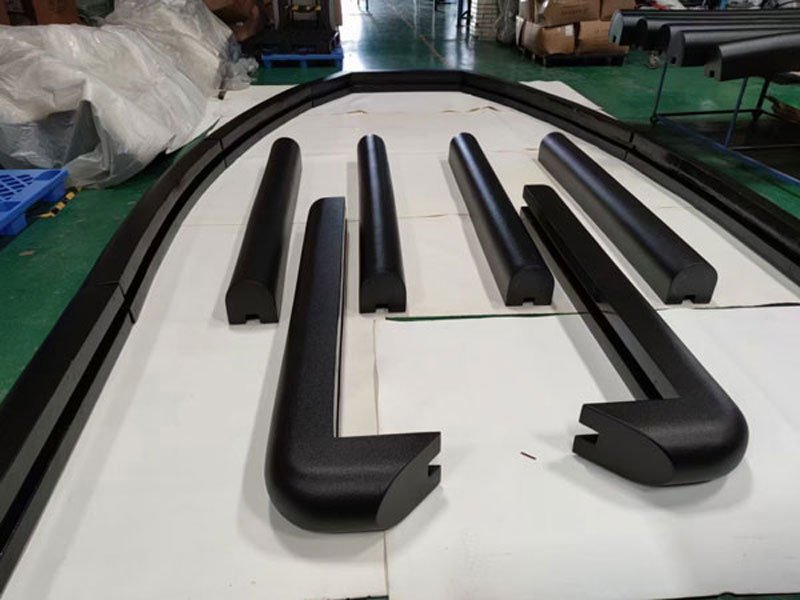
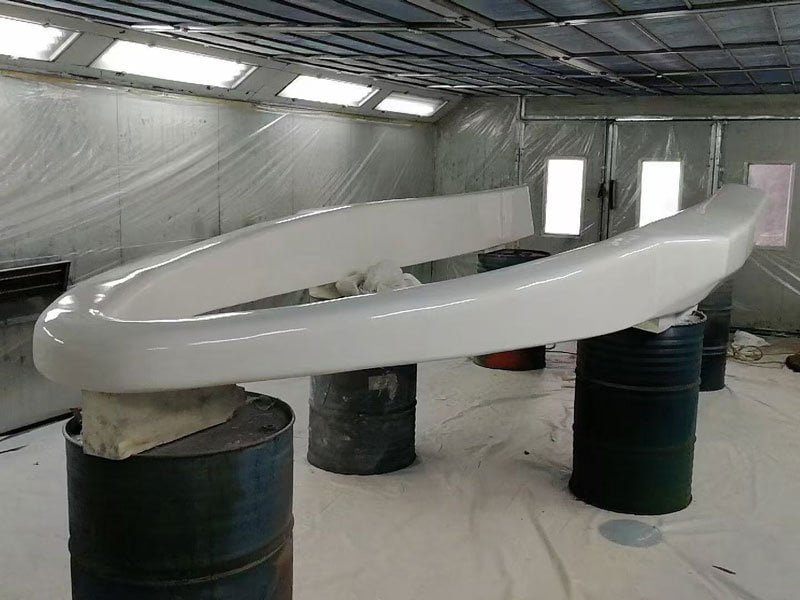
JettyGuard manufactures solid foam collar sections from a closed-cell foam core with a sprayed polyurea (SPUA) outer skin, adding a reinforcement layer only where the project specifies it. Each section is shaped to the project's required profile and coated as a finished fendering component.
| Component | Function |
|---|---|
| Closed-cell foam core | Forms the fendering section and provides the energy-absorbing body of the collar |
| Reinforcement layer (where specified) | Added only where the project's impact and loading conditions call for it |
| SPUA outer coating | Forms the sprayed polyurea outer skin over the shaped core |
| Fixing interface | Project-defined; matched to the hull structure and installation method |
| Segmentation joints | Planned around the hull layout and handling requirements |
There is no inflatable chamber and no bladder. The polymer type of the foam core, skin thickness, reinforcement arrangement and section dimensions are all defined per project against the operating conditions and hull data you provide — they are not drawn from a single universal spec.
Avoid confusing this with portable foam docking fenders. A boat collar is a hull-attached system built to a section profile. For portable or port-side units, see floating foam-filled fenders for ports and offshore operations.
Where solid foam collars are used
Solid foam collars are specified where operators want hull protection without managing an inflatable tube's pressure and air-retention. Common applications:
- Patrol and interceptors — hull-side and bow protection in high-use berthing and alongside operations
- Pilot boats — repeated contact with pilot ladders and ship sides
- Rescue and workboats — fendering for towing, transfer and alongside work
- Commercial RIB / RHIB platforms — solid foam replacement or new-build sections where no-air-chamber operation is preferred
- New-build and retrofit — sections engineered to a builder's hull, or assessed against an existing vessel being re-fendered
If your vessel is better served by an air-filled tube, that is a different product. The comparison in the next section explains where each construction fits.
Collar, sponson and D-section geometry
"Boat collar" covers several geometries. The right one depends on the hull, the contact direction and how the section will be fixed:
- Collar — a fendering run following the hull line, often wrapping the bow and running along the sides
- Sponson — a localized hull-side projection, commonly used for protection and stand-off along a specific length
- D-section and other project-defined profiles — cross-sectional shapes chosen to match the contact face, stand-off distance and fixing arrangement
We do not force every build into one profile. The section is defined from your hull and operating data, including whether the collar wraps, runs straight, or sits as separate sponsons. If you already have a section drawing, that is the fastest starting point.
Solid foam vs inflatable vs hybrid collars
The word "collar" is used loosely across the market for three structurally different systems. They are not interchangeable, and a quotation for one does not describe another.
| Feature | Solid foam collar | Inflatable tube | Hybrid |
|---|---|---|---|
| Core | Closed-cell foam | Pressurized air chamber | Air chamber with foam elements (arrangement varies) |
| Outer skin | SPUA coating | Fabric-reinforced elastomer (e.g. Hypalon/neoprene-type) | Fabric/elastomer with foam components |
| Pressure to maintain | None | Yes — checked and topped up | Varies with design |
| Pressure-loss failure mode | No deflation failure mode | Can deflate if damaged | Depends on which part is damaged |
| Section geometry | Defined by the shaped foam core | Defined by inflation and tube design | Defined by air chamber and foam arrangement |
| Typical selection context | Workboat, patrol, pilot, rescue; operators avoiding pressure management | RIB performance where inflatable tube characteristics are wanted | Specific load or buoyancy cases where both air and foam are intended |
JettyGuard supplies the solid foam construction described on this page. For air-based vessel fendering, see pneumatic marine fenders; for hull-side rub strakes and similar profiles, see rubber fender systems. We do not reduce all hybrids to a single construction — if your vessel uses a hybrid arrangement, send the section and we will confirm whether a solid foam replacement is appropriate.
Drawing-led RFQ
Have a section drawing or hull profile?
Send what you have. Undefined inputs can be marked TBC for engineering review.
Engineering inputs we need to quote
A solid foam collar cannot be quoted from total length alone. In recent inquiries we have seen a 60 m collar request for a patrol vessel where the referenced section drawing was missing, and a 500 m D-section request where cross-section and quantity still did not define how the collar would be segmented, fixed or skinned. Both are real examples of under-specified requests — not awarded or manufactured projects.
To give you a comparable quotation, send as many of the following as you can:
- Section profile and dimensions — a drawing is preferred; state the profile (e.g. D-section) and its dimensions
- Total run — the total collar length along the hull
- Segment length — how the run is split into handleable sections
- Fixing interface — how sections attach to the hull; this is project-defined, not universal
- Outer-skin and reinforcement requirements — coating and reinforcement expectations for the operating conditions
- Operating context — vessel type, typical contact conditions, new build or retrofit, and any inspection/documentation requirements
If an item is not yet defined, mark it TBC. A quotation that hides these gaps is not comparable to one that states them.
How custom sections are developed
- Send the hull data. Section drawing, total run and operating context start the review.
- We confirm the profile. Section geometry, segmentation and fixing interface are checked against the hull.
- We define the construction. Foam section, reinforcement where called for, and SPUA skin are set against the project conditions.
- We return a scope. The quotation states what is included and what remains TBC, so it can be compared fairly against other offers.
- Approved sections go to manufacture. Documentation and inspection points follow the agreed scope.
Where the section drawing is missing or the fixing interface is undefined, the scope stays open until those inputs are provided. This avoids the common problem of three "collar" quotations that actually describe three different products.
Hull interface and installation considerations
There is no single universal fixing method for a solid foam collar. The interface depends on the hull structure, whether the boat is new build or retrofit, access during installation, and how sections will be handled and replaced.
Points to confirm early:
- Hull structure and contact face — what the section bears against and how loads transfer
- Segmentation and joints — section lengths that fit the build sequence and access limits
- Fixing arrangement — defined against the hull, not assumed from a previous boat
- Retrofit access — existing vessels may have constraints that a new build does not
- Tolerances — confirmed against the actual hull, not only the drawing
We will ask for these rather than prescribe a one-size-fits-all adhesive or bolted method. If your installation is contractor-led, the fixing interface should be agreed between the installer, the builder and our engineering review before manufacture.
Project specification at a glance
The table below is a specification framework. Values are project-defined or to be confirmed — JettyGuard does not publish universal numbers for these parameters.
| Specification item | Status |
|---|---|
| Foam core polymer | Project-defined (confirm against operating requirements) |
| Section profile | Project-defined (e.g. D-section or per drawing) |
| Section dimensions | Project-defined (per supplied drawing) |
| Total run | Per project |
| Segment length | Per project / TBC |
| Reinforcement | Where specified by loading conditions |
| SPUA outer coating | Included; thickness per project scope |
| Fixing interface | Project-defined |
| Outer-skin finish | Per project |
| Inspection documents | Per agreed scope |
| Tolerances | Project-defined / TBC |
| Lead time, MOQ, price | Quoted per project — not published as universal figures |
A quotation is comparable only when the rows above are stated the same way across suppliers. If another offer leaves them blank, ask what construction it actually covers.
Manufacturing quality and documentation
Solid foam collars fall within JettyGuard's foam-core and SPUA manufacture, with a reinforcement layer included only where specified. Sections are shaped and coated to the agreed project scope. Documentation and inspection requirements must be agreed at quotation; they are supplied to the scope confirmed for the order, not promised as a universal package.
We do not claim class approval, a named performance standard, a fixed service life, or a universal warranty for this product unless project-specific evidence and an agreed scope support it. If your project requires such documents, list them in the RFQ and we will confirm what can be provided against the build.
Choosing between related fendering systems
This page owns vessel-attached solid foam collar systems. Adjacent products solve different problems:
- Portable or port-side foam units — floating foam-filled fenders for ports and offshore operations handle ship-to-ship and berthing contact at larger scale, not hull-attached collar runs.
- Inflatable vessel and ship fendering — pneumatic marine fenders use pressurized air chambers; a different failure mode and selection logic.
- Hull-side rubber profiles — rubber fender systems cover extruded rub rails and molded elements where rubber, rather than foam, is the contact body.
- General collar education — the boat collar types and selection guide covers definitions, types and evaluation questions before you specify.
If you are unsure which system your vessel needs, send the section and operating context; we will tell you if a solid foam collar is the right answer rather than quoting across the wrong category.
Frequently asked questions
What is a solid foam boat collar?
A vessel-attached fendering system with a closed-cell foam core and an SPUA outer skin, with no inflatable chamber. It is mounted along the hull to absorb contact during berthing and alongside operations.
How is a foam boat collar different from an inflatable RIB tube?
A foam collar uses a solid foam core and has no air pressure to maintain, so it has no deflation failure mode. An inflatable tube relies on a pressurized air chamber that must be checked and kept inflated. The two also differ in outer skin, section geometry and maintenance.
What information is needed to quote a custom foam collar?
At minimum: section profile and dimensions (a drawing is best), total run, preferred segment length, fixing interface, outer-skin and reinforcement requirements, and operating context including vessel type and new build versus retrofit.
Can a solid foam collar be fitted to an existing workboat?
A solid foam collar may be feasible for retrofit, subject to review of the hull structure, section geometry, access and fixing interface against the actual vessel rather than a new-build drawing. Send the hull details and we will confirm whether a retrofit scope is workable.
How are foam collar sections fixed to a hull?
There is no single universal method. The fixing arrangement is project-defined based on the hull structure, segmentation, access and installation sequence, and should be agreed before manufacture.
What section drawing is required for a boat collar RFQ?
A drawing showing the cross-section profile and dimensions, plus the total run along the hull. If the collar wraps the bow or uses separate sponsons, show those runs and any transitions. If no drawing exists, describe the profile and dimensions and we will advise what is missing.
How are solid foam, inflatable and hybrid collars different?
Solid foam uses a closed-cell foam core with no air chamber; inflatable collars use a pressurized air tube; hybrids combine an air chamber with foam elements in arrangements that vary by design. They have different failure modes and are selected for different operating conditions.
What affects foam boat collar price?
The section size, total run, segmentation, reinforcement and skin requirements, fixing interface, and documentation scope all affect price. A quote based only on total length is not comparable to one that defines the full construction.
Can the collar be supplied in segmented lengths?
Yes. Segmentation is planned around the hull layout, handling limits and build or installation sequence. Preferred segment length is one of the inputs requested at RFQ.
Project RFQ
Request a solid foam collar quotation
Send the hull section and required collar run, and we will confirm the profile, segmentation and fixing interface before quoting. If a section drawing is not available, provide the profile, dimensions and total run and mark unknown items as TBC.
Share the defined project inputs below. Mark unknown items TBC.
Drawing-led RFQ
Have a hull section or collar profile?
Send the section, total run, and operating context for review.
Get a Quote