
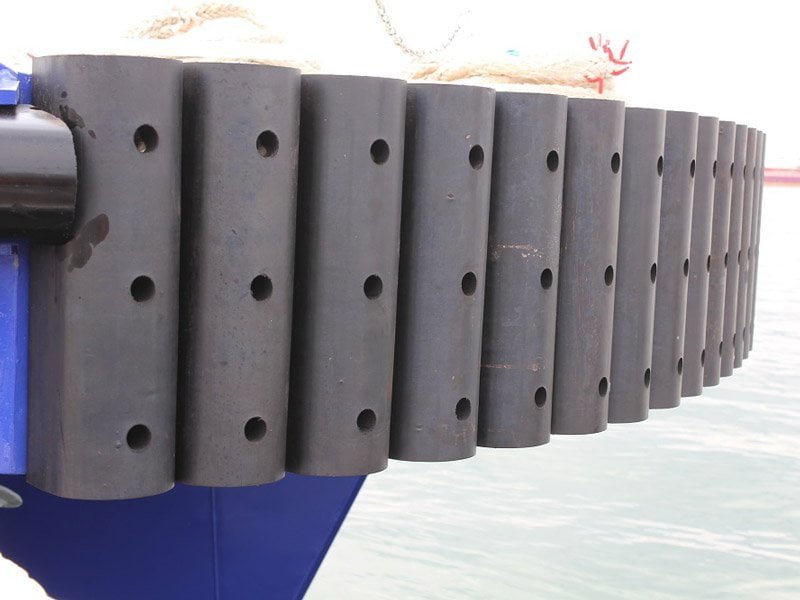
Continuous Marine Rubber Profiles
Extruded Rubber Fenders for Workboats, Tugs and Marine Structures
Running lengths of D-type and related marine rubber section for tugs, workboats, pontoon edges and small quay faces. Take a catalogue size in DD, DC, Delta or solid DS, or send the section you already run and we will work from that drawing.
- Sourcing Principle
- Standard profiles when they fit. Drawing-led manufacture when they do not.
- DD, DC, Delta and solid DS sections
- Cut length, drilling and fixing checked before pricing
- Quoted to your named discharge port
What Is an Extruded Rubber Fender?
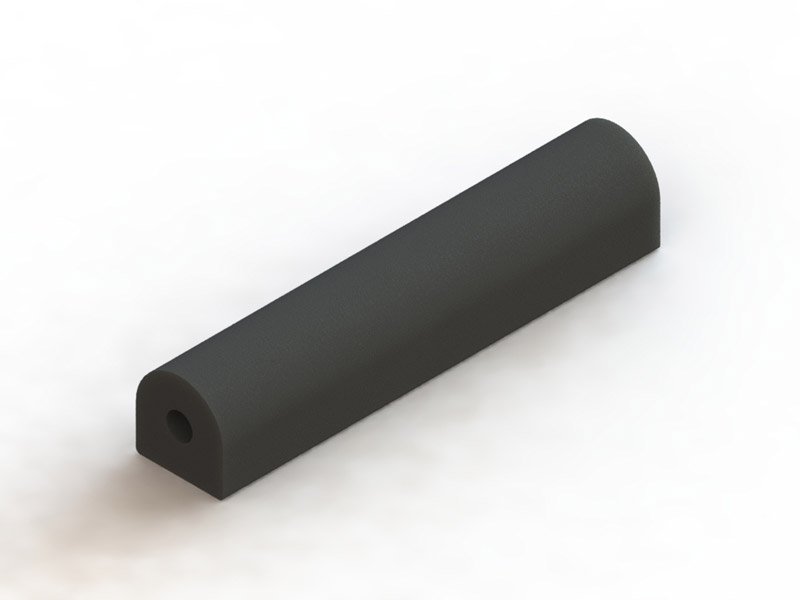
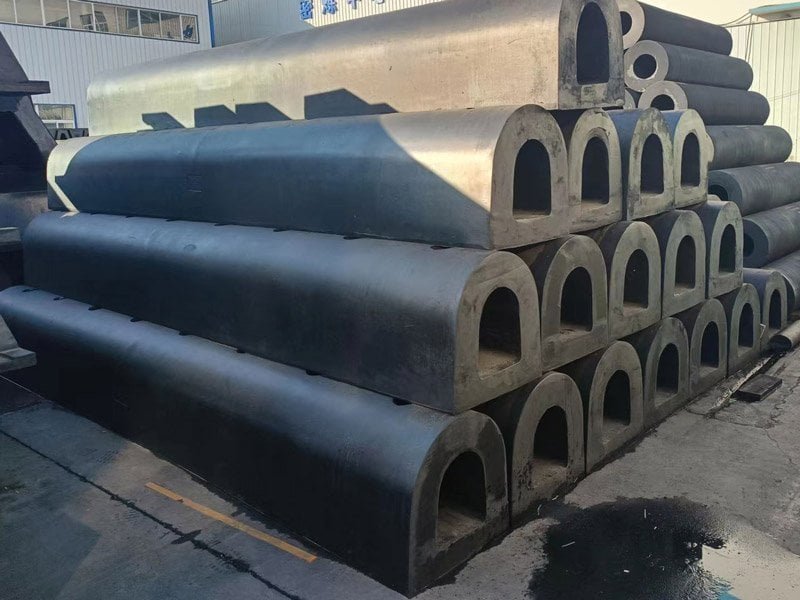
An extruded rubber fender is a rubber section of constant shape, supplied in continuous lengths and fixed along gunwales, pontoon edges and quay faces that take repeated contact. DD, DC, Delta and solid D sections cover most commercial work. JettyGuard manufactures these families and works to customer drawings when no catalogue section matches.
The rubber is pushed through a shaped die and vulcanised, which gives a marine rubber profile the same cross-section over its whole length. How that length is then held to the vessel or the structure is decided per project, from the backing detail upwards.
A continuous profile is selected primarily around contact geometry, section size and mounting detail along gunwales, pontoon edges and quay faces. Where a berth is specified around a defined berthing energy, reaction force and hull pressure, the selection belongs with discrete moulded elements: see our moulded rubber fender systems.
This is commercial fendering, not a leisure boat rub rail trim kit in vinyl, aluminium or stainless, and hull-side foam protection sits with solid foam collar systems.
Application Fit
Where Extruded Rubber Fenders Are Used
A continuous section earns its place where the contact line is long and the same edge takes the load again and again. Geometry and fixings are then settled against the actual installation.
Workboats and Tugs
Gunwale, bow and stern runs for pushing, coming alongside and working boat-to-boat.

Pontoons and Small Berths
Unbroken edge protection on pontoons, marina floats, small jetties and wharf faces.
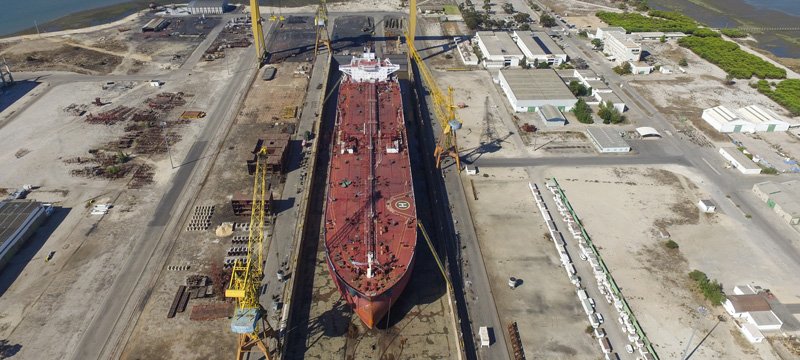
Shipyard and Marine Plant
Contact runs on barges, dry docks, landing stages and temporary marine structures.
Profile Selector
Choose a Profile Family
Work from three things: the cross-section you need, what sits behind it and how contact is made. Where nothing in the four families below is close, the section is manufactured to drawing, so send the existing profile.
Catalogue Data
Verified Dimensions and Mounting Data
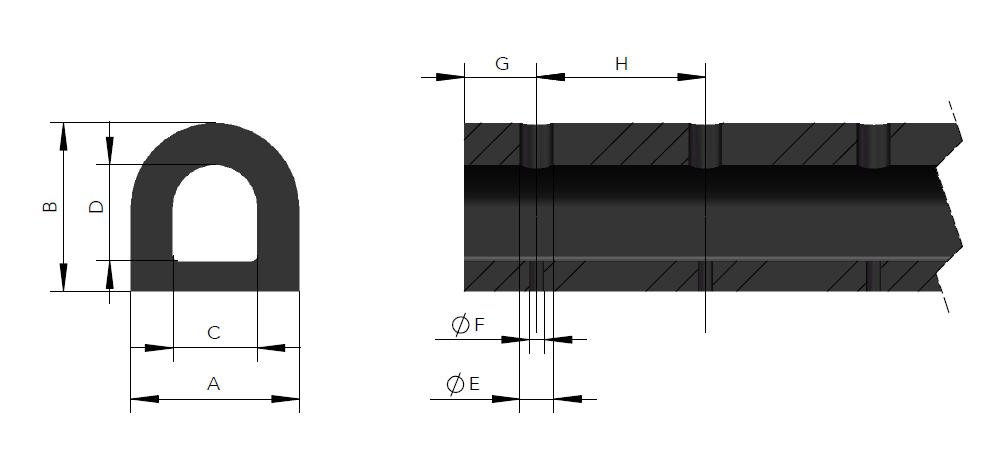
Every figure below is in millimetres, and each letter matches the same letter on that product's drawing. Read the tables next to the drawing, not on their own.
DD
DD Fender — JDD Series
| Type | A | B | C | D | E | F | G | H |
|---|---|---|---|---|---|---|---|---|
| JDD 200×200 | 200 | 200 | 100 | 100 | 62 | 30 | 100–150 | 325–460 |
| JDD 300×300 | 300 | 300 | 150 | 150 | 65 | 32 | 100–150 | 325–600 |
| JDD 400×400 | 400 | 400 | 200 | 200 | 87 | 39 | 150 | 425–460 |
| JDD 500×500 | 500 | 500 | 250 | 200 | 97 | 45 | 150 | 325–600 |
Taken in the same order as the rows, performance at 50% rated deflection is 207/8, 294/12, 383/20 and 451/31 kN/kNm. Performance tolerance ±10%.
DC
DC Fender — JDC Series
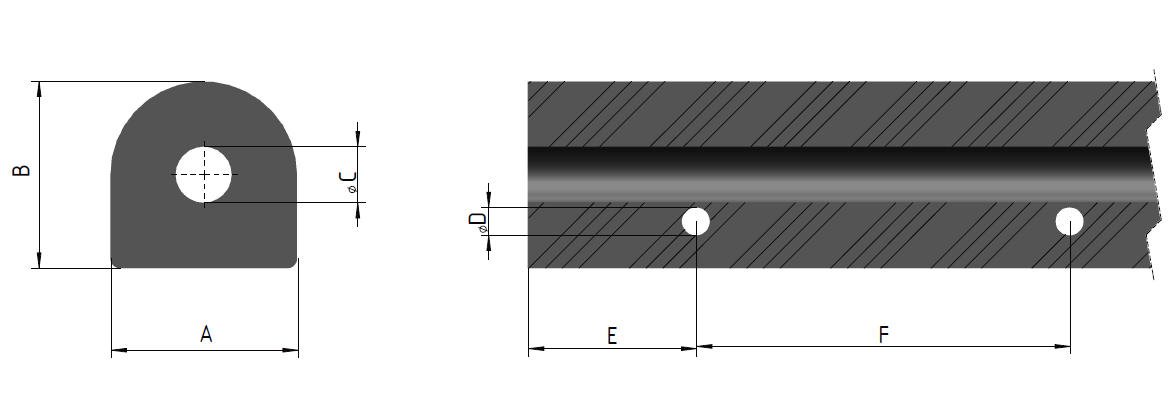
| A | B | C | D | E | F | Bolt |
|---|---|---|---|---|---|---|
| 100 | 100 | 30 | 15 | 90–130 | 200–300 | M12 |
| 150 | 150 | 65 | 20 | 110–150 | 250–350 | M16 |
| 200 | 200 | 75 | 25 | 130–180 | 300–400 | M20 |
| 250 | 250 | 100 | 30 | 140–200 | 350–450 | M24 |
| 300 | 300 | 125 | 30 | 140–200 | 350–450 | M24 |
| 350 | 350 | 150 | 35 | 140–200 | 350–450 | M30 |
| 400 | 400 | 200 | 35 | 140–200 | 350–450 | M30 |
| 500 | 500 | 250 | 35 | 140–200 | 350–450 | M36 |
Delta
Delta Fender
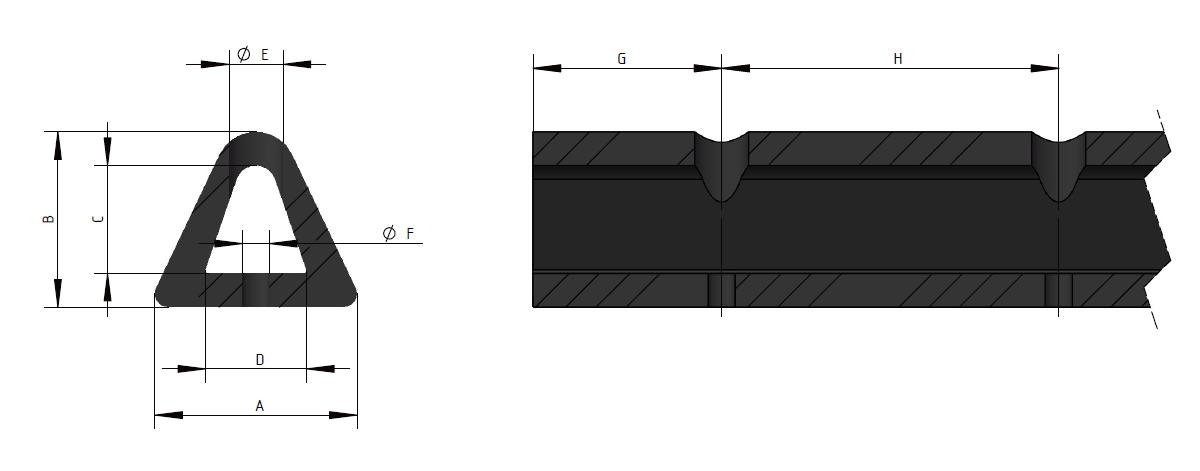
| A | B | C | D | E | F | G | H | Bar | Bolt |
|---|---|---|---|---|---|---|---|---|---|
| 60 | 50 | 40 | 30 | 20 | 10 | 70–110 | 150–250 | 15×3 | M8 |
| 80 | 75 | 45 | 40 | 30 | 15 | 90–130 | 200–300 | 35×5 | M12 |
| 110 | 100 | 65 | 68 | 30 | 15 | 90–130 | 200–300 | 40×5 | M12 |
| 150 | 130 | 80 | 75 | 40 | 20 | 110–150 | 250–300 | 60×8 | M16 |
Solid DS
Solid DS Fender
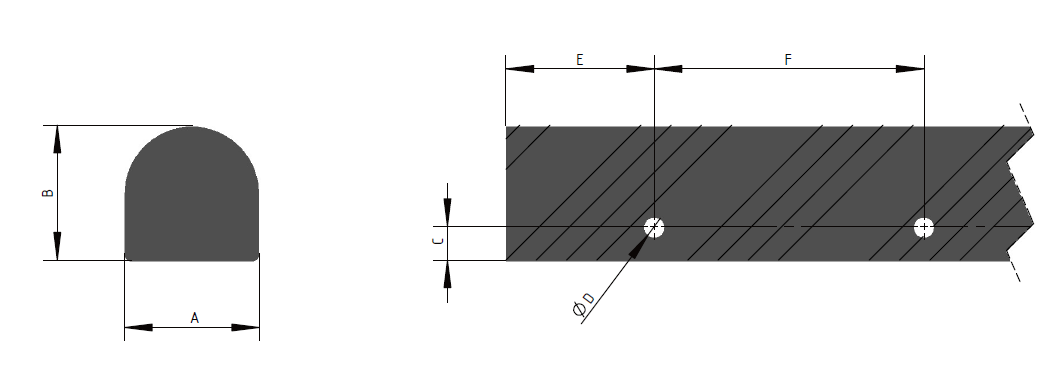
| A | B | C | D | E | F | Bolt |
|---|---|---|---|---|---|---|
| 100 | 100 | 25 | 15 | 90–130 | 200–300 | M12 |
| 150 | 150 | 30 | 20 | 110–150 | 250–350 | M16 |
| 200 | 200 | 45 | 25 | 130–180 | 300–400 | M20 |
| 250 | 250 | 50 | 30 | 140–200 | 350–450 | M24 |
| 300 | 300 | 60 | 30 | 140–200 | 350–450 | M24 |
| 350 | 350 | 70 | 35 | 140–200 | 350–450 | M30 |
| 400 | 400 | 80 | 35 | 140–200 | 350–450 | M30 |
Rubber grade, hardness, colour, how long a single length can run, minimum quantity, tooling terms and production time are not fixed numbers on this page. Each one is answered against your drawing, order quantity and destination.
Non-standard profile?
Send the cross-section before settling for the nearest catalogue size.
Geometry, fixing detail, pre-delivery preparation and what the quotation should cover all get looked at together.
Custom Review
From Profile Drawing to Defined Scope
- 01
Drawing and Inputs
Send a dimensioned section with the length you need, the quantity, what it bolts to and how it is held.
- 02
Feasibility and Preparation
We check whether the section can be extruded, what tooling it needs, and the drilling, cut lengths and end finishing involved.
- 03
Quotation and Delivery
The agreed profile, its preparation, the quantity and the destination are priced as a single scope.
Mounting Details Belong in the Quotation Scope
What the profile bolts to, the shape of its back, bolt centres, edge distance, whether the run is straight or follows a curve, the cut lengths and how reachable the fixings are on site — all of it changes the fixing arrangement, so all of it is worth stating early. On projects where the geometry or the site makes it worthwhile, on-site installation guidance can be arranged as a paid service, scoped against location, extent of work and duration.
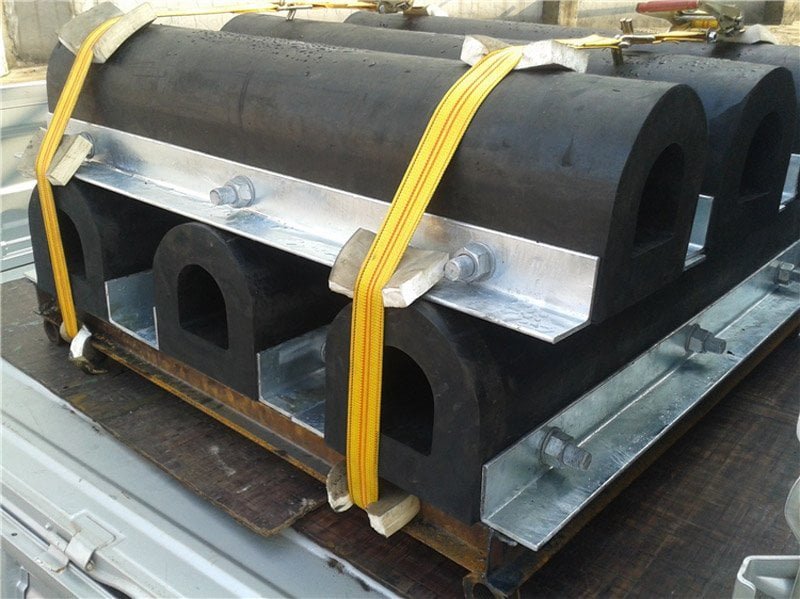
Extruded vs Moulded Rubber Fenders
Key differences and other options
| Point | Extruded Profile | Moulded Fender Element |
|---|---|---|
| Form | One continuous extruded length, such as a D profile run along the whole contact line, same section throughout | Discrete moulded unit, such as a moulded D tugboat fender, fitted as separate elements |
| Typical role | Rubbing strip that protects the edge and passes load into the structure | Absorbs energy at set berthing positions |
| Selection basis | Contact geometry, section size and mounting detail under repeated contact | Defined berthing energy, reaction force and hull pressure |
| Applications | Workboats, tugs, pontoons and small quays | Larger berths, jetties and terminals |
Project Supply
Why Source Extruded Fenders from JettyGuard
One Profile Family — Put DD, DC, Delta and solid DS side by side, then move to a drawing if no catalogue section fits.
- 01Drawing-led Review — A non-standard section gets a written feasibility and tooling answer instead of being pushed into the closest stock size.
- 02Preparation Before Delivery — Cut lengths, hole positions and fastening needs are agreed while the quotation is still being built.
- 03Direct Manufacture — JettyGuard manufactures extruded rubber fenders and rubber rub rails.
- 04CIF Delivery — Profile, preparation and freight can sit in one price against the port you name.
- 05Paid Site Guidance — Where the geometry or the site calls for it, on-site installation guidance can be quoted separately.
RFQ Checklist
Send whatever you have. Anything still open can be marked TBC.
| RFQ item | Project detail |
|---|---|
| Application | Application, and whether it is a new build or a replacement |
| Profile | Profile family, or a cross-section drawing |
| Dimensions | Section dimensions and required cut length |
| Quantity | Total quantity |
| Fixing | Drilling pattern and what the profile fixes to |
| Run | Straight run or curved run |
| Rubber | Rubber grade or colour, if your specification names one |
| Delivery | Destination port or country, and the date you need it |
FAQ
Extruded Rubber Fender Questions
What is an extruded rubber fender?
A rubber section of constant shape supplied in continuous lengths, fixed along a hull, pontoon edge or quay face to take repeated contact and abrasion.
What is the difference between DD and DC fenders?
Both share the same D-shaped outline. DD has a D-shaped bore, DC has a round one. Which suits you depends on how contact is made and how the section is fixed.
Which rubber fender profile suits a workboat?
DD, DC and solid D sections all see workboat and tug service. Choose against the hull drawing, the structure behind the fender and the length of run required.
Can an extruded rubber fender be made to our own drawing?
Yes. Send a dimensioned cross-section with the fixing detail. Feasibility, tooling, preparation and production time are all reviewed before we quote.
How are D type rubber fenders fixed to a hull or quay?
Usually by bolting the flat back down, or by clamping the section with a flat bar. The final arrangement is confirmed against your structure.
What details do you need to quote a rubber rub rail?
The application, the profile family or a drawing, cut length, quantity, fixing arrangement and destination. Anything still open can be marked TBC.
Can extruded rubber fenders follow a curved hull?
That depends on the radius, the size of the section and how joints are handled, so it is answered per project. Send the hull or structure drawing.
How do extruded and moulded rubber fenders differ?
An extruded fender is a continuous profile along a contact line. A moulded fender is a separate unit chosen around berthing energy, reaction force and hull pressure.
Request a Quote
Send the Profile, Length and Mounting Detail
We will settle the profile, any tooling or preparation it needs and the delivery scope, then issue a priced quotation.
No drawing to hand? Give the main dimensions and mark the rest TBC.