
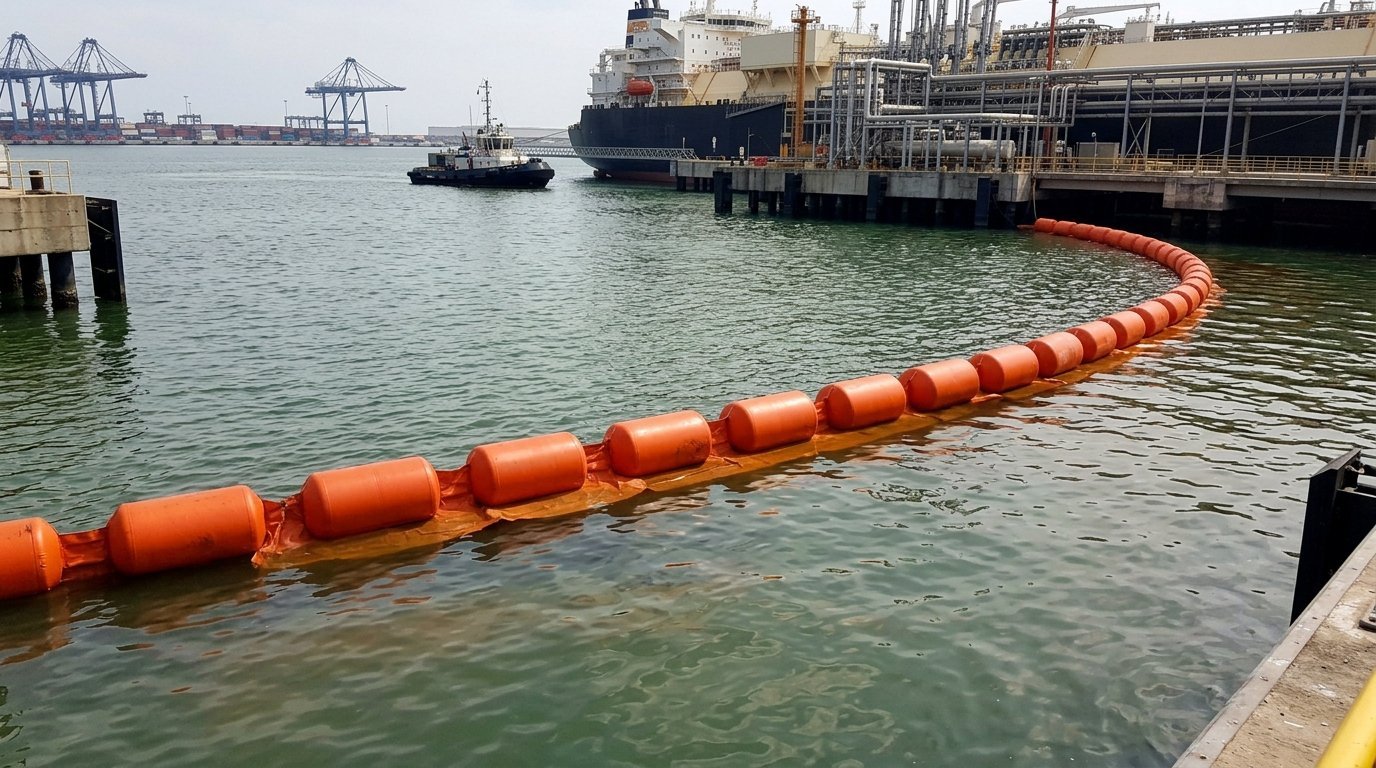
Marine Containment · Floating Boom
Floating Boom and Floating Barrier Systems for Ports, Shipyards and Surface Containment
Floating boom systems for debris, trash, weed, plastics, selected containment duties and safety zoning.
JettyGuard supplies floating booms built around upper foam flotation, short skirt/net/membrane options, high-visibility colour, modular connectors and project-specific anchoring accessories.
A floating boom is a surface-deployed marine barrier used to guide, contain or deflect floating debris, trash, weed, plastics and selected surface materials. It normally uses wider foam flotation, typically 300–600 mm, with a short skirt, net or membrane below the waterline, typically 0.3–1 m, so it remains visible, flexible and serviceable in open water.
Definition
What Is a Floating Boom?
A floating boom is a flexible barrier deployed on the water surface to intercept floating material and guide it toward a controlled area.
Common target materials include drift trash, bottles, plastic waste, aquatic weed, seaweed, light timber pieces, foam, leaves and other surface debris.
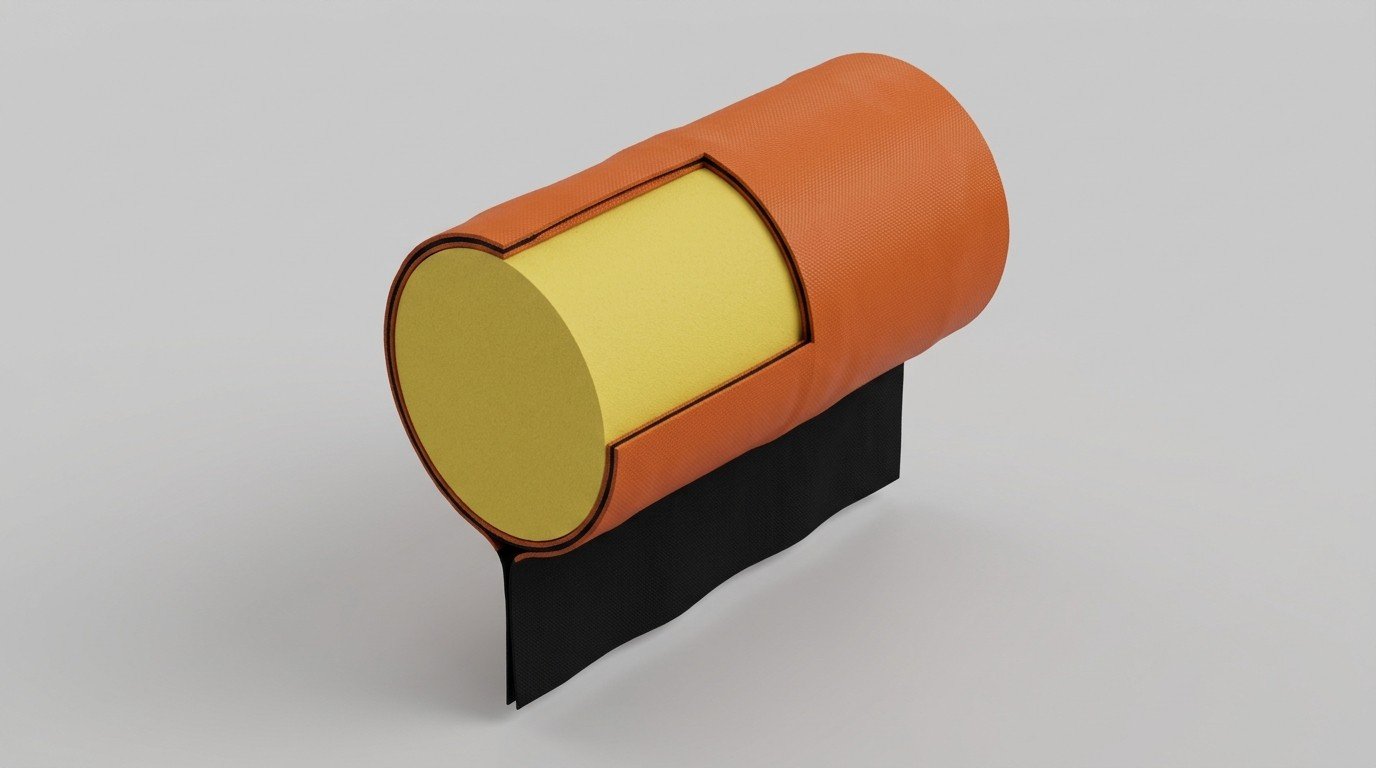
The boom body normally includes closed-cell foam flotation inside a coated fabric cover. Under the flotation, a short skirt, net or membrane hangs below the waterline.
Compared with a silt curtain, a floating boom usually uses wider flotation and a shorter skirt. Compared with a dedicated oil spill boom, it is normally selected more for debris interception, zoning, maintenance handling and general surface control.
Terminology
Floating Boom vs Floating Barrier
Many buyers search for “floating barrier” when they mean a floating boom. Both terms often refer to a surface barrier that floats on water and controls material movement.
Floating Boom
The manufactured barrier section: boom sections, flotation, lower barrier, connectors and end fittings.
Floating Barrier
The installed system: boom sections plus anchor points, end connections, access gaps, warning marking and site layout.
Debris / Trash / Safety Boom
Application language for trash, weed, plastic, selected surface containment or access restriction.
Product Anatomy
How a Floating Boom Is Built
A good floating boom works because each part supports the others. JettyGuard reviews the full boom line before quoting.
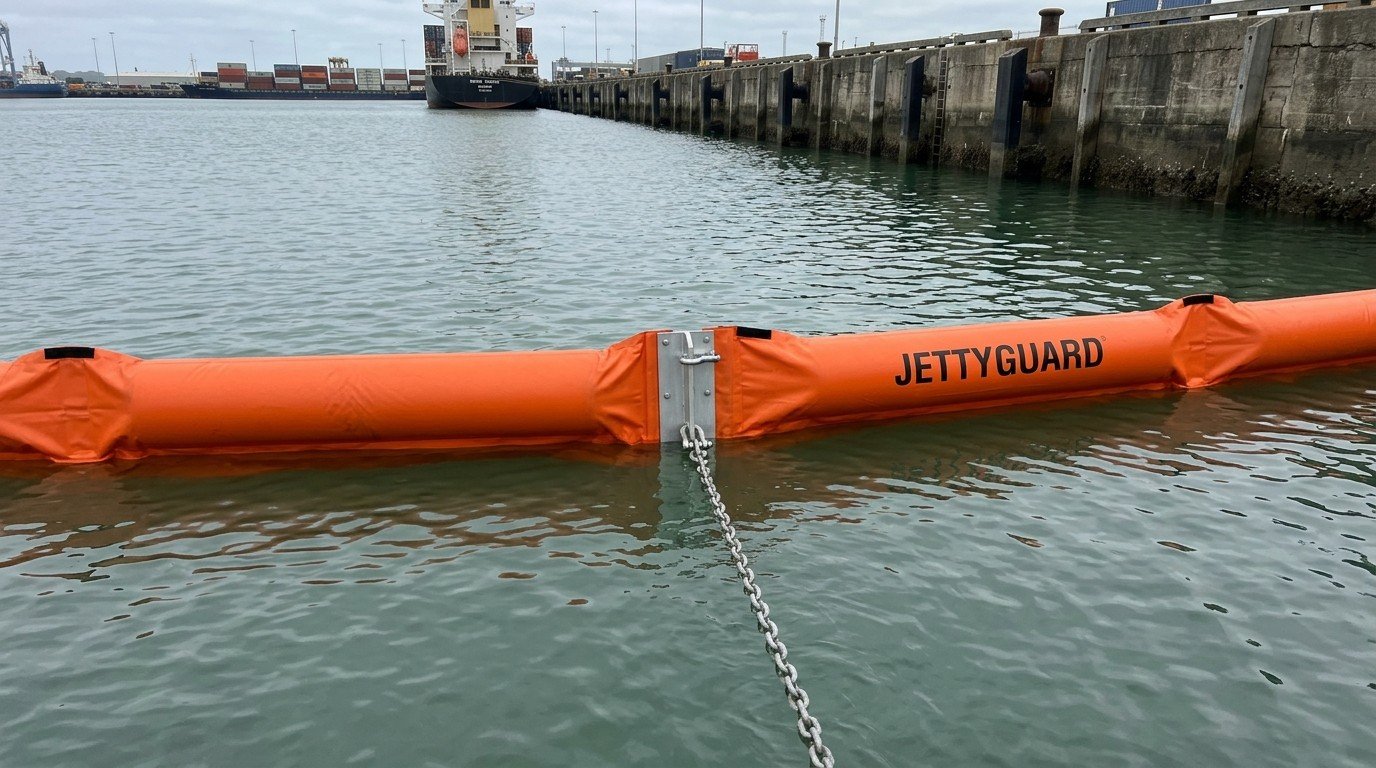
Foam flotation
Provides buoyancy and visible freeboard, typically in the 300–600 mm range.
Outer cover
Protects the foam and carries the high-visibility orange or yellow finish.
Skirt / net / membrane
Short lower barrier, typically 0.3–1 m, selected by debris type and current.
Connectors
Join boom modules into a continuous line and support replacement handling.
End fittings
Connect the boom to shore, pile, pontoon or anchor line.
Anchor system
Holds boom geometry under current, wind and debris load.
Applications
Main Applications for Floating Boom
Floating boom systems serve marine and inland water applications where surface debris, visibility and maintenance access matter.
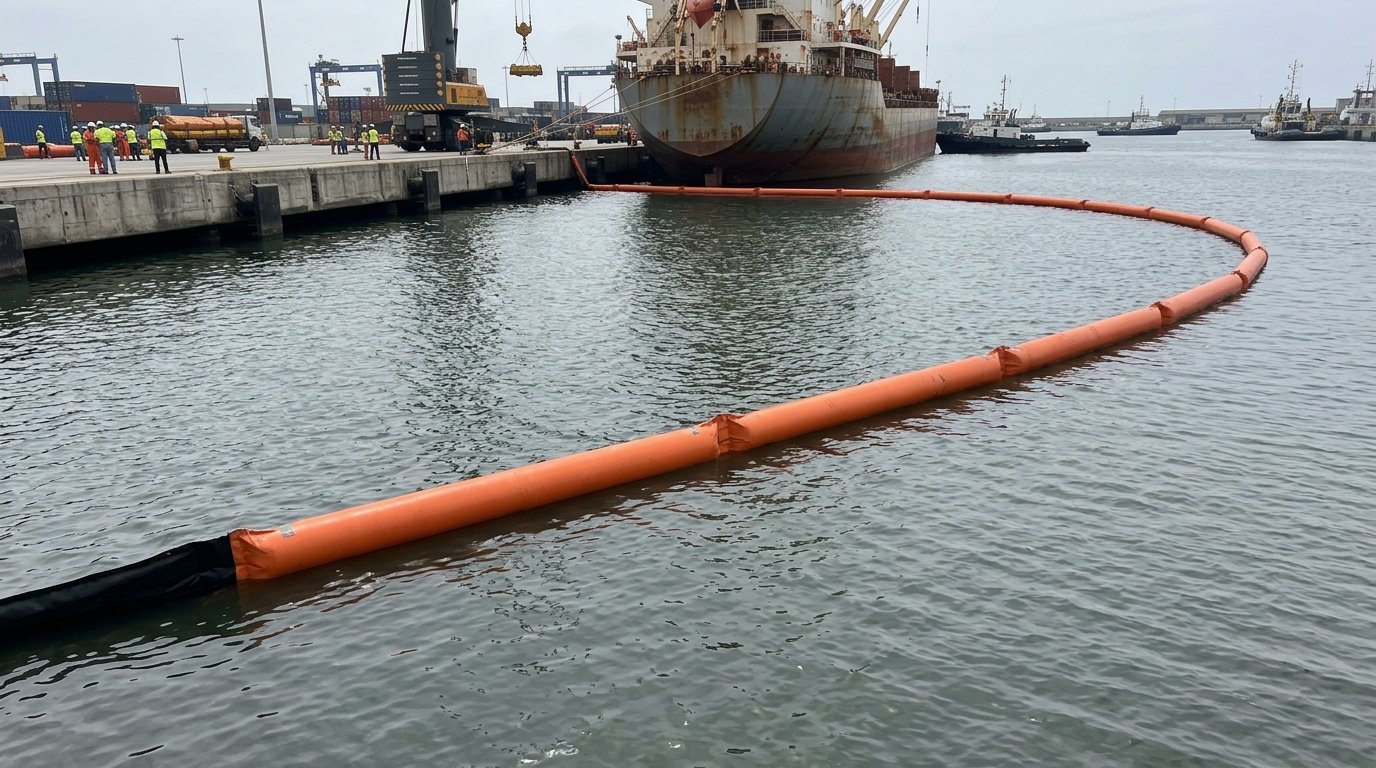
Port · Harbour
Port and Harbour Debris Control
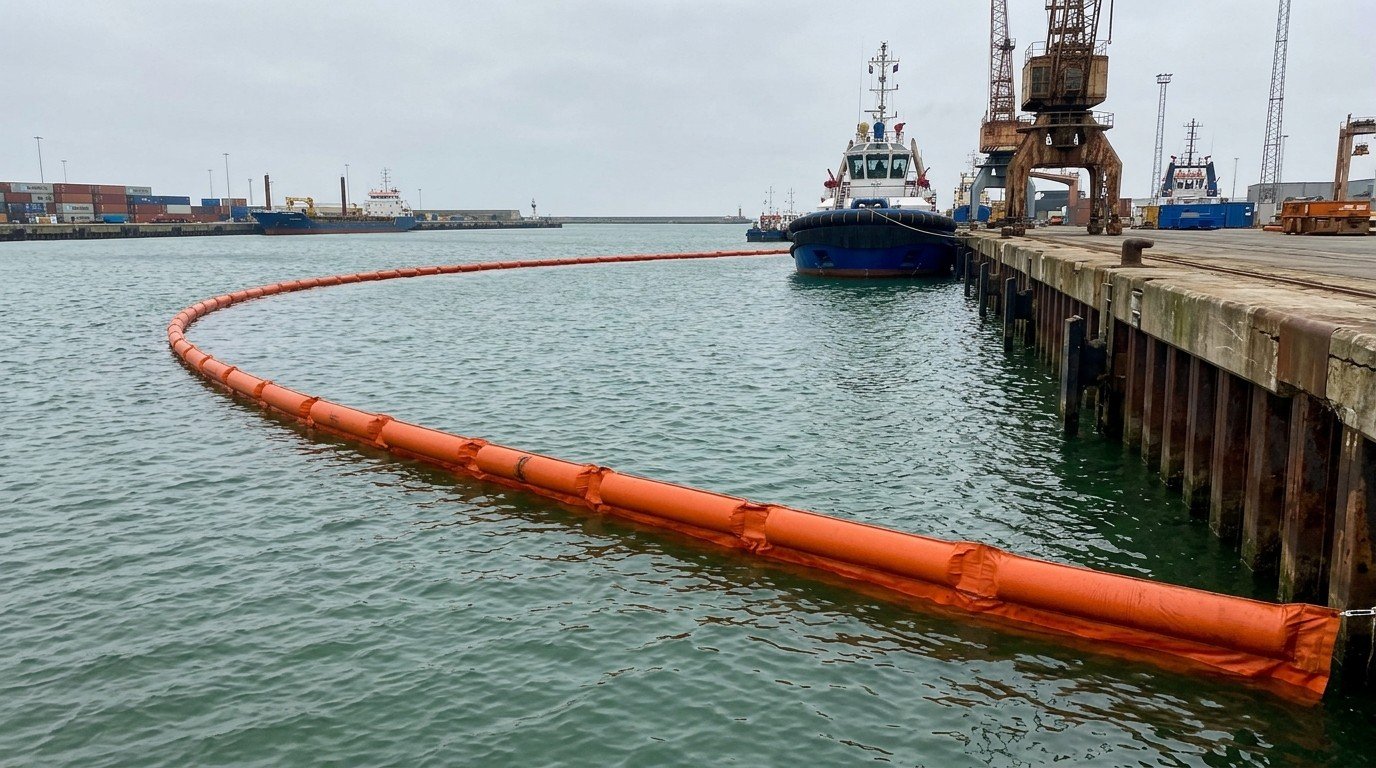
Ports use floating boom lines to stop drifting trash from entering berths, turning basins or service areas.
For busy harbours, JettyGuard focuses on modular replacement, safe connectors and clear end-fixing details.
Send port layout for review →Intake · Reservoir
Water Intake and Reservoir Protection
Power plants, desalination plants, pumping stations and reservoirs use floating debris boom systems to reduce trash and weed loading at intake screens.
The boom should guide material toward an accessible collection zone, not simply trap debris in front of the intake.
Review selection workflow →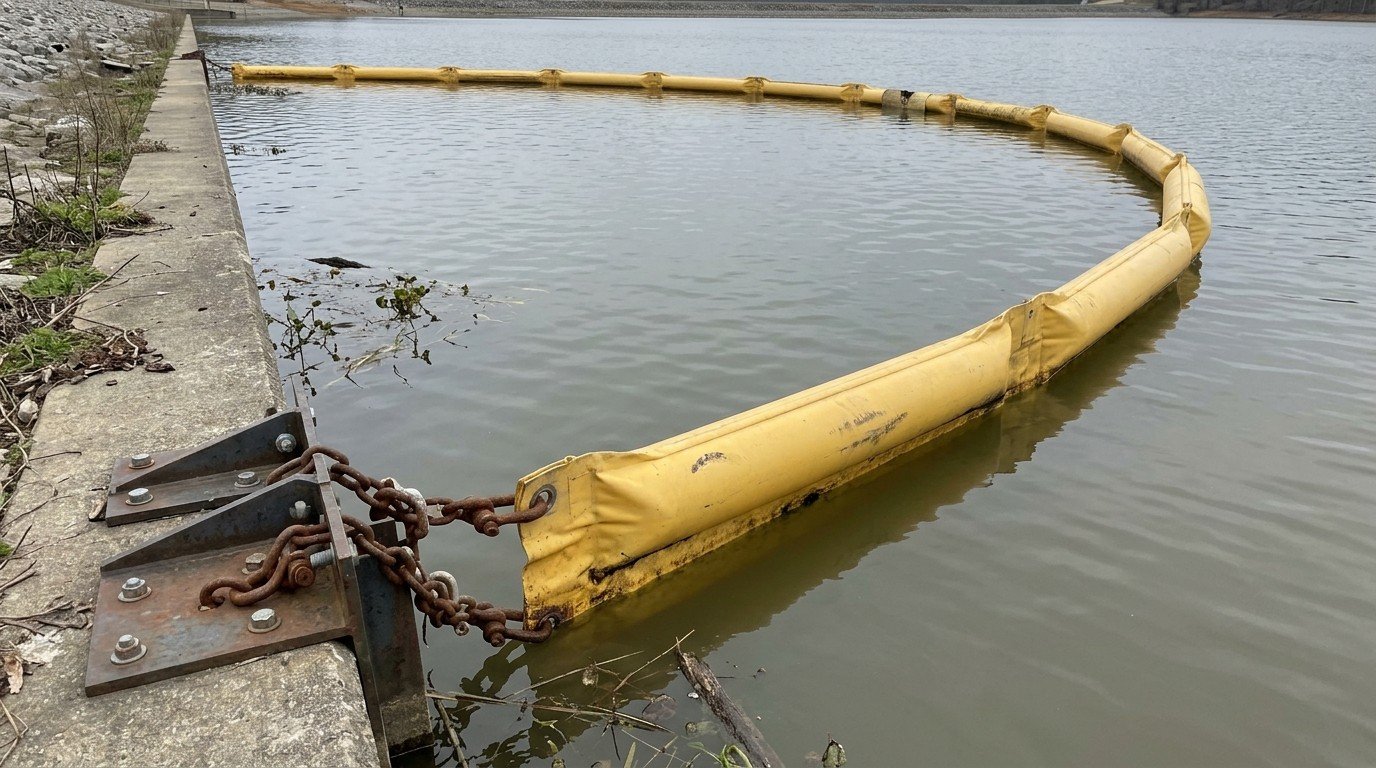
Marina and Yacht Basin
Visible barriers that help maintenance crews collect light trash and weed before it spreads between pontoons.
River and Canal Control
Deflection layouts near outlets, bridges or collection points for urban runoff debris and floating plastics.
Marine Work Zones
Temporary surface separation for shipyards, demolition near water, shoreline works or construction support.
Specification
Floating Boom Specification and Configuration Table
Final configuration depends on site drawings, water conditions, debris type and project requirements.
| Parameter | Typical Option / Range | Selection Consideration |
|---|---|---|
| Boom type | Floating debris boom / floating barrier / selected containment boom | Define target material first. |
| Flotation diameter or width | 300–600 mm | Larger flotation improves freeboard and reserve buoyancy. |
| Skirt / net / membrane depth | 0.3–1 m | Shorter than typical silt curtains; selected by debris type and current. |
| Colour | Orange or yellow | High visibility for marine crews and maintenance boats. |
| Section length | Project-specific modular lengths | Selected for transport, installation and replacement handling. |
| Connector and end fitting | Project-specific | Must match handling method, tension and fixing points. |
| Anchor layout | Site-specific | Designed around current, wind, water depth and seabed condition. |
JettyGuard does not recommend selecting only by flotation size. A 600 mm float with a poor anchor plan may perform worse than a correctly configured 400 mm boom with suitable connectors and maintenance access.
Specification Review
Not sure which floating barrier layout you need?
Send current, water depth, target debris and a layout sketch. We will mark the open points before quoting.
Selection Workflow
How to Select a Floating Boom
A floating boom should be selected from debris type, water environment, layout and maintenance access.
1. Target material
Trash, weed, plastics, foam or mixed floating debris.
2. Water environment
Current, wave, depth, tide, wind and seasonal changes.
3. Boom geometry
Flotation size, skirt depth, section length and connector type.
4. System layout
Blocking, deflection, enclosure, intake protection or temporary work zone.
5. Anchoring and access
Anchor points, workboat access and removable sections.
6. Transport and handling
Container loading, lifting and local installation equipment.
Installation
Installation, Anchoring and Accessories
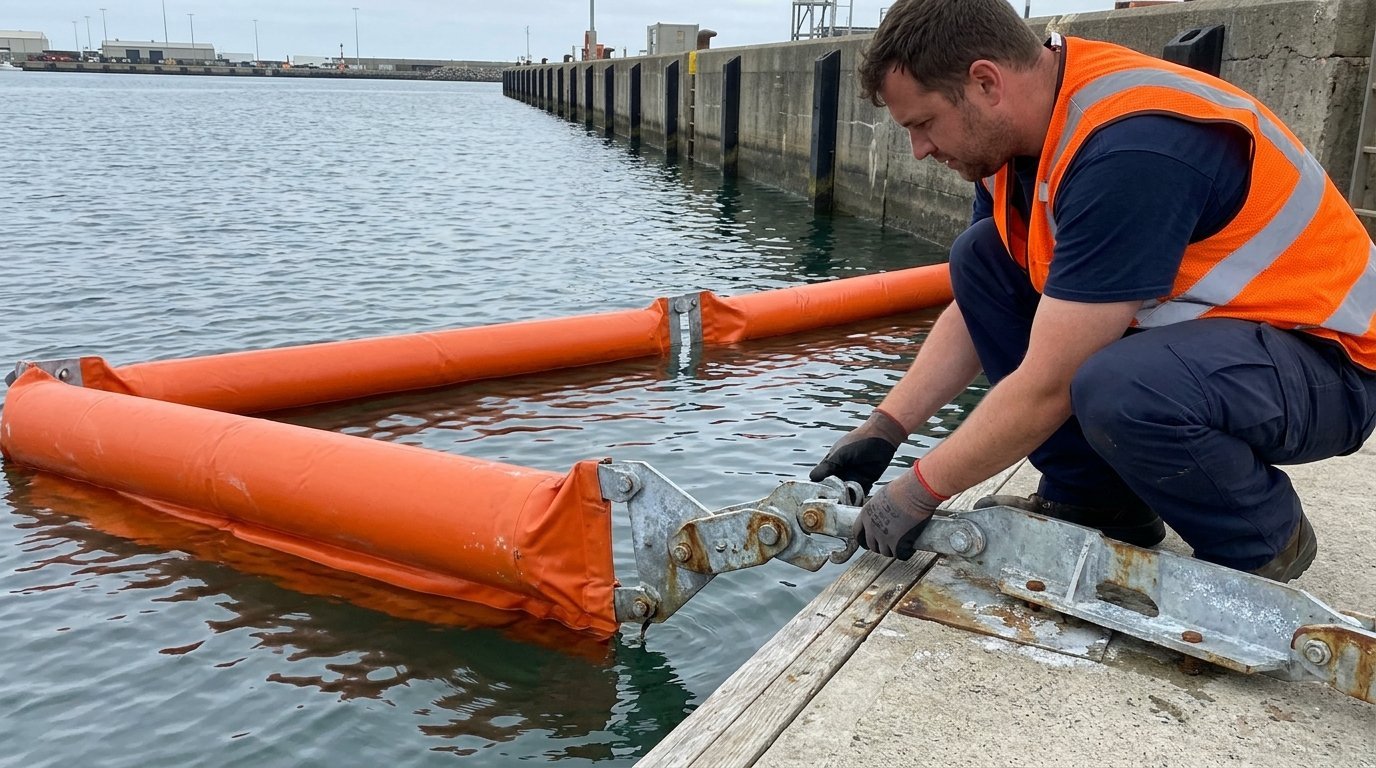
A floating boom installation includes boom sections, connectors, end fittings, anchor lines, mooring points and optional marking accessories.
Installation details depend on site conditions. A calm reservoir may use a different anchor layout from a tidal harbour.
A boom installed across a canal must also consider flood events and emergency release.
Plan the cleaning method before installation. A boom that captures debris effectively will create a collection load.
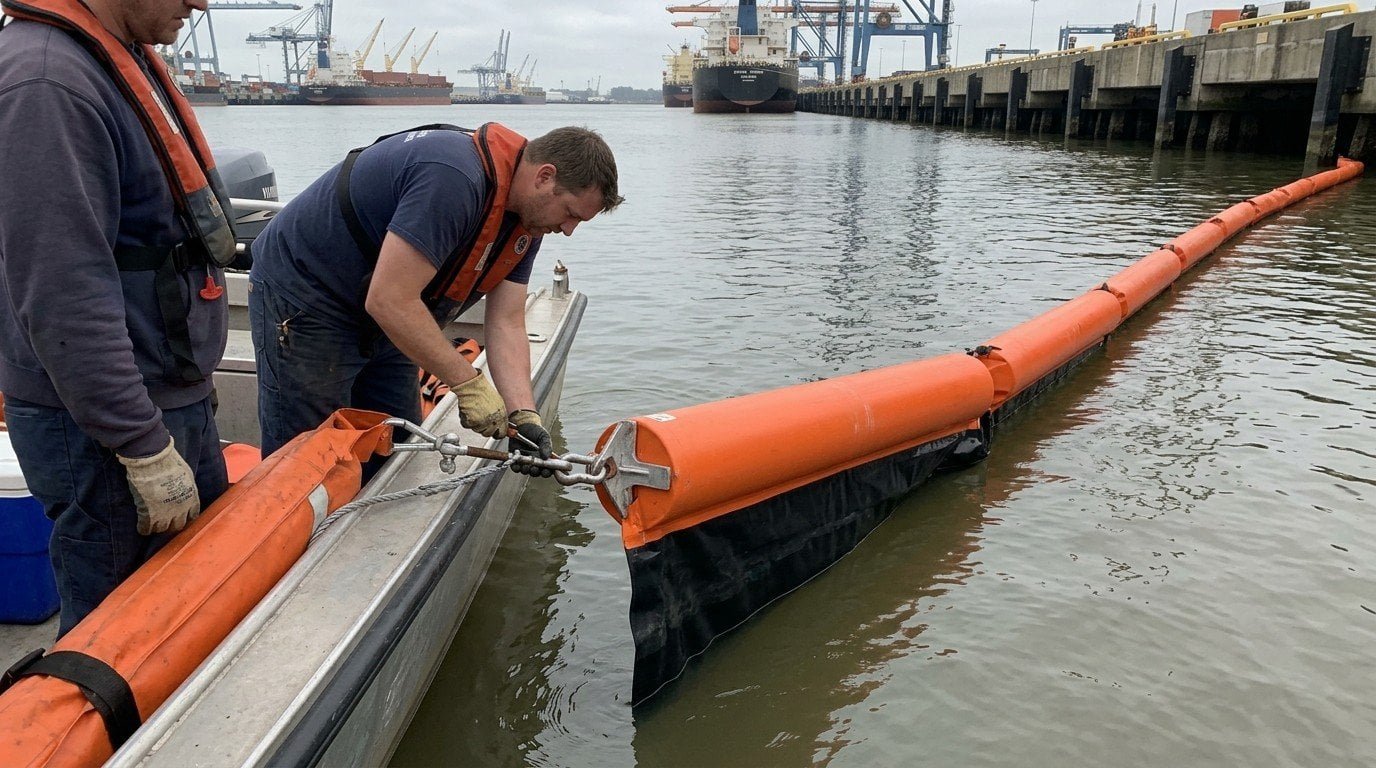
Accessories supplied on request
- Anchor lines
- Shackles
- End brackets
- Marker buoys
- Warning signs
- Repair kits
Product Comparison
Floating Boom vs Silt Curtain, Oil Boom, Log Boom and Safety Boom
Different floating barriers may look similar in photos, but they solve different problems.
| Product Type | Main Purpose | Typical Structure | When Not to Use |
|---|---|---|---|
| Floating boom | Floating debris, trash, weed, plastics and selected containment duties | Wide foam flotation with short skirt/net/membrane | Deep sediment control or certified oil spill response |
| Silt curtain | Suspended sediment control | Smaller flotation with deeper geotextile curtain | Main issue is surface trash and easy debris collection |
| Oil boom | Hydrocarbon containment and spill response | Specialized oil-resistant materials | Main issue is trash, weed or plastic debris control |
| Log boom | Heavy timber/log control | Heavy-duty chain, cable, timber/steel or robust flotation | Lightweight debris barrier for general marine trash |
| Safety boom | Exclusion zone or warning barrier | Highly visible floats, lines and signs | Physical debris interception is required |
JettyGuard’s floating boom is not an ice boom, not a heavy steel-cable log boom and not a rigid fixed fence. It is a flexible marine barrier for surface-deployed control of floating material.
Project References
Standards, Compliance and Documentation
Floating boom projects do not have one universal standard that replaces engineering judgment. Requirements usually come from the project specification, port authority, environmental permit, navigation rules, owner requirements and site safety plan.
Technical drawings
Layout recommendations, boom section drawings and connection details when required.
Material description
Datasheet support for flotation, cover, lower barrier, connector and accessory selection.
Inspection records
Manufacturing inspection, packing list and installation accessory list for project handover.
Manufacturing
Manufacturing and Supply by JettyGuard
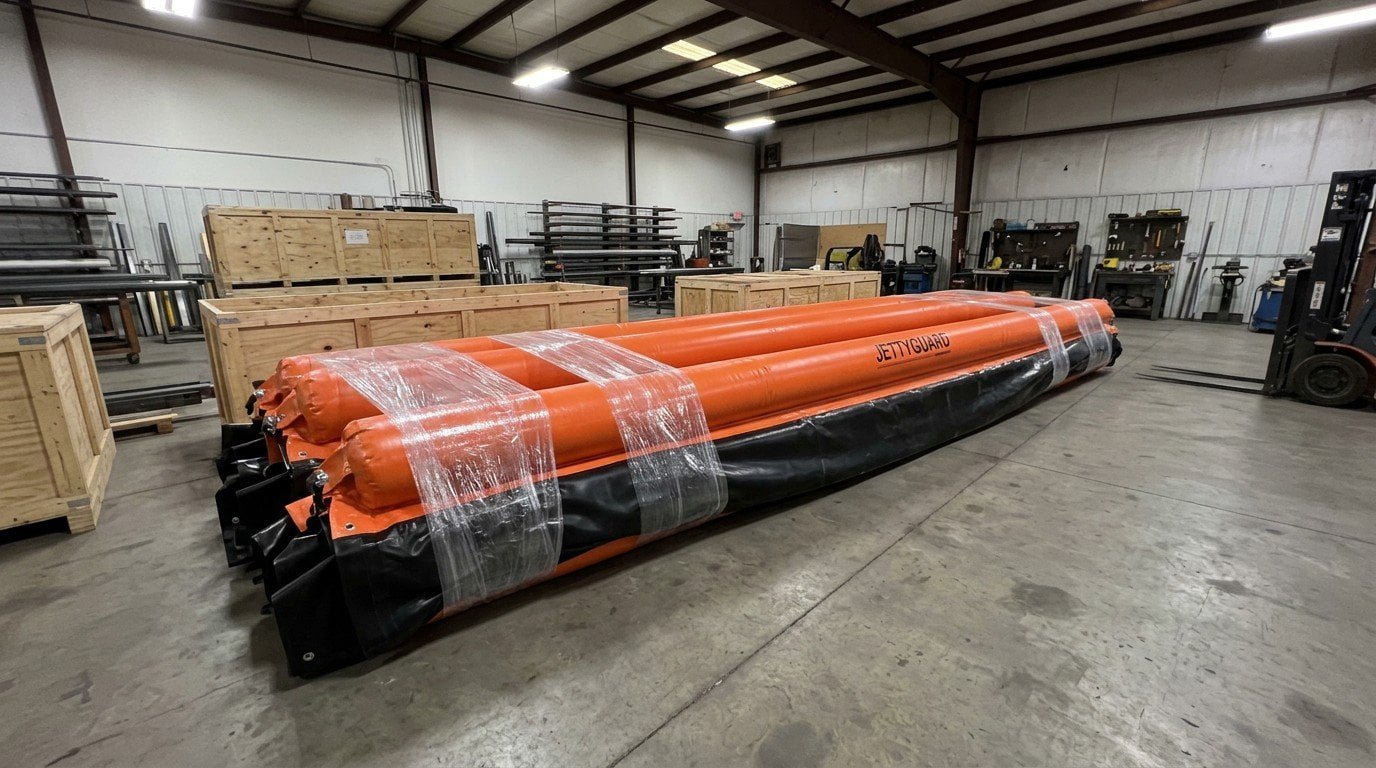
JettyGuard supplies marine protection products with a practical factory-first approach.
- 1. Review site conditions and target debris.
- 2. Confirm boom type, flotation size, lower barrier depth and colour.
- 3. Define connector, end fitting and accessory requirements.
- 4. Prepare technical drawing and quotation.
- 5. Pack by section number for easier site installation.
JettyGuard also supplies foam filled fenders, pneumatic fenders and other marine products.
Layout
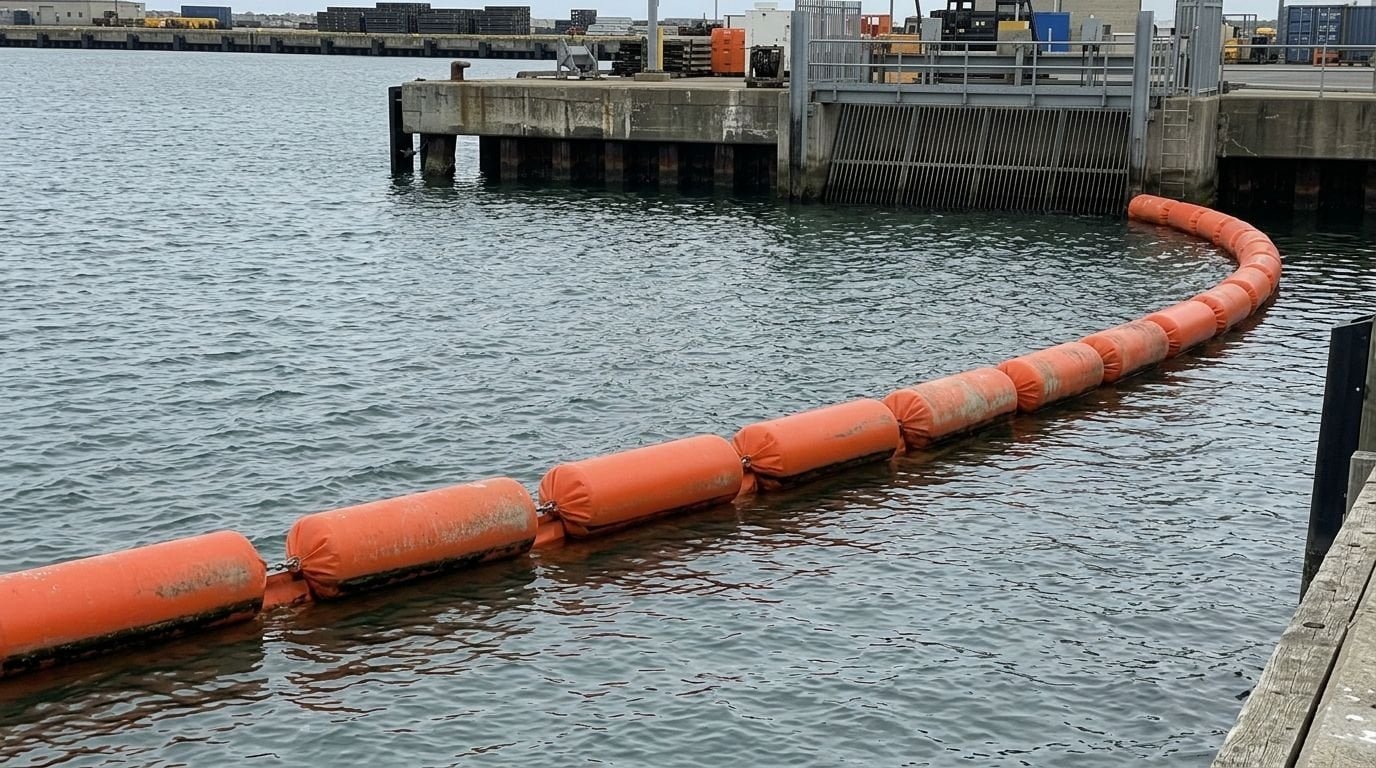
Floating Boom Layout Examples
The right layout depends on current direction, access and the required control function.
Straight blocking
Blocks floating material from entering a protected zone.
Deflection
Guides floating debris toward one side or collection point.
Enclosure
Encloses a marina corner, construction work zone or collection area.
Intake protection
Reduces debris load at screens and guides material to a collection point.
Maintenance
Maintenance and Inspection
A floating boom is exposed to UV, water movement, debris impact, abrasion and handling loads.
- Flotation body condition and freeboard
- Fabric cover wear, cuts or abrasion
- Skirt, net or membrane damage
- Connector pins, plates, ropes or shackles
- Anchor line tension and chafe points
- End fittings and shore connections
- Debris accumulation and cleaning frequency
- Visibility colour, reflective tape and warning signs
RFQ Checklist
What to Send for a Floating Boom Quote
To quote accurately, JettyGuard needs more than a total length.
| RFQ Item | What to Provide |
|---|---|
| Project location | Port, marina, river, reservoir, intake, construction site or other |
| Main purpose | Trash control, weed control, plastic debris, selected containment, work zone separation |
| Total boom length | Straight length, layout drawing or estimated coverage |
| Water conditions | Current, wave, tide, wind exposure and water depth |
| Target debris | Size, type and expected volume |
| Accessories required | Anchors, ropes, shackles, markers, signs, repair kit, spare connectors |
| Delivery requirement | Destination port, deadline, packing limitations and documentation needs |
FAQ
Floating Boom FAQ
Answers for procurement teams, environmental contractors and port engineers specifying floating barriers.
What is a floating boom used for?⌄
A floating boom is used to control floating debris, trash, weed, plastics and selected surface materials on water.
Is a floating boom the same as a floating barrier?⌄
In many projects, yes. Floating boom usually refers to the manufactured modular product, while floating barrier may describe the complete installed system.
What is the difference between a floating boom and a silt curtain?⌄
A floating boom normally has wider foam flotation and a shorter skirt. A silt curtain is designed for suspended sediment control and usually uses a deeper curtain.
Can a floating boom stop oil?⌄
A standard debris floating boom should not be treated as a certified oil spill boom. The project should define oil-spill requirements clearly.
How deep is the skirt on a floating boom?⌄
For floating debris control, the skirt, net or membrane is usually short, commonly 0.3–1 m.
What information does JettyGuard need for a quote?⌄
We need project location, boom length, target debris, water conditions, layout type, fixing points, accessory list, delivery destination and documentation needs.
Request a Quote
Configure your floating boom.
Send us your boom length, site condition, debris type and layout sketch. We will recommend a practical floating boom configuration with flotation, skirt/net depth, connectors, anchors and accessories.
- Best input: current, depth, target debris, layout sketch and required date.
- If incomplete: send the available site drawing first.
- Package supply: combine with fenders or other JettyGuard marine products.
Send Your RFQ
We review every floating boom RFQ against site conditions before quoting.
RFQ Review
Need floating boom pricing?
Send current, debris type, layout and required length.
Submit RFQ