

Marine Containment · Silt Curtain
Silt Curtain | Type I, II & III Turbidity Barriers for Dredging and Marine Construction
Silt curtains engineered to your site — not picked from a catalogue.
Type I, II and III configurations, built in metric panels at our Chongqing factory. Send current, water depth, tide range, wave climate and work method; JettyGuard will size the curtain to the project.
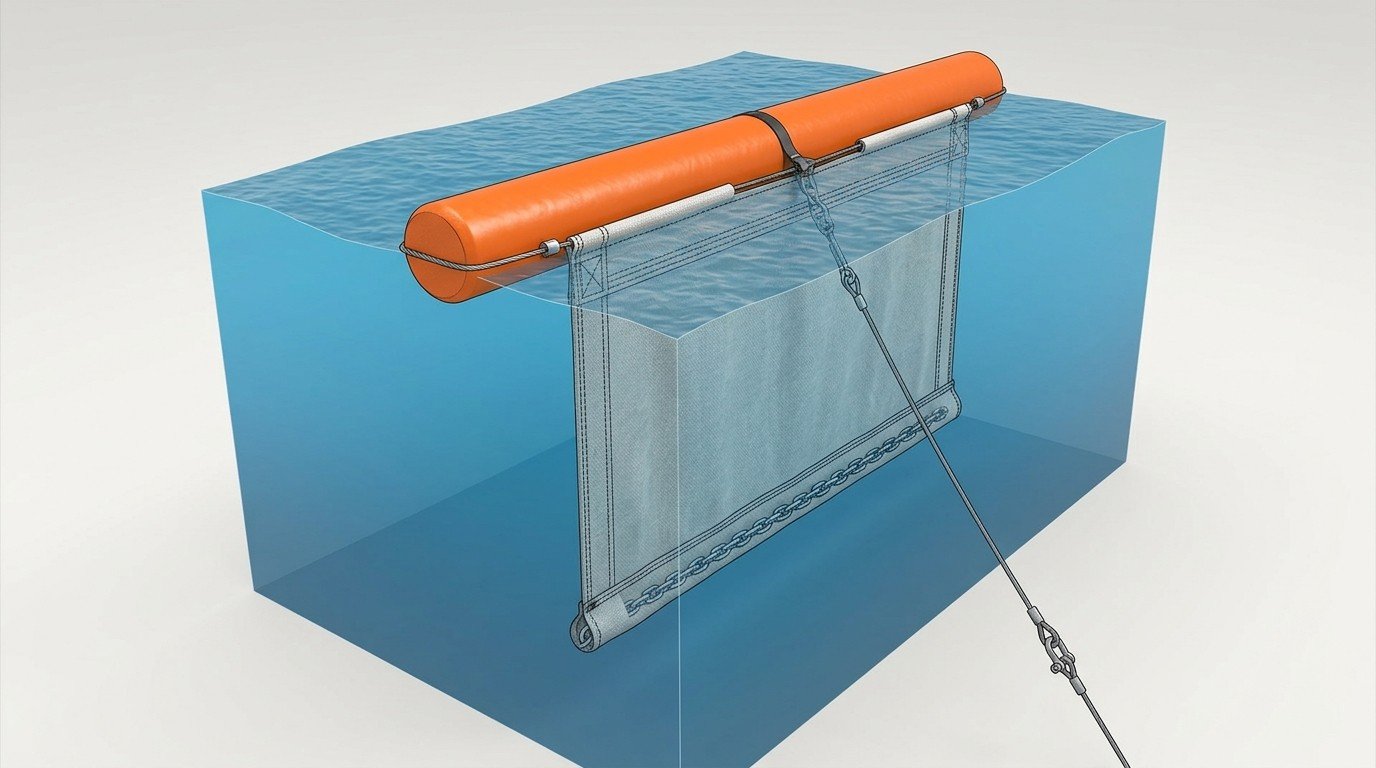
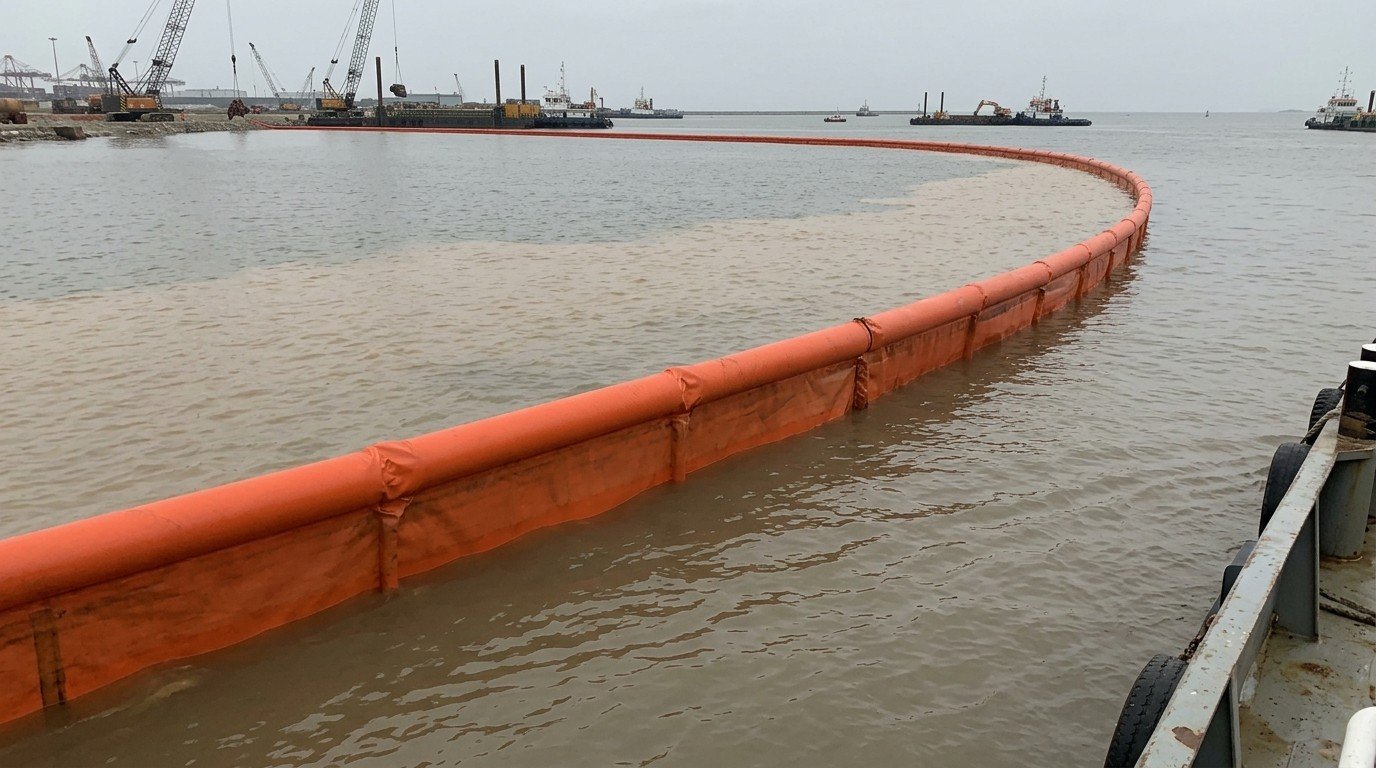
A silt curtain — also called a turbidity barrier — is a floating geotextile screen that contains suspended sediment during dredging, reclamation and marine construction. It has top flotation, a fabric skirt, ballast chain, tension cable and end connectors. JettyGuard supplies Type I, II and III configurations sized to your site.
Definition
What Is a Silt Curtain?
A silt curtain is the standard environmental-control product on dredging and marine construction projects.
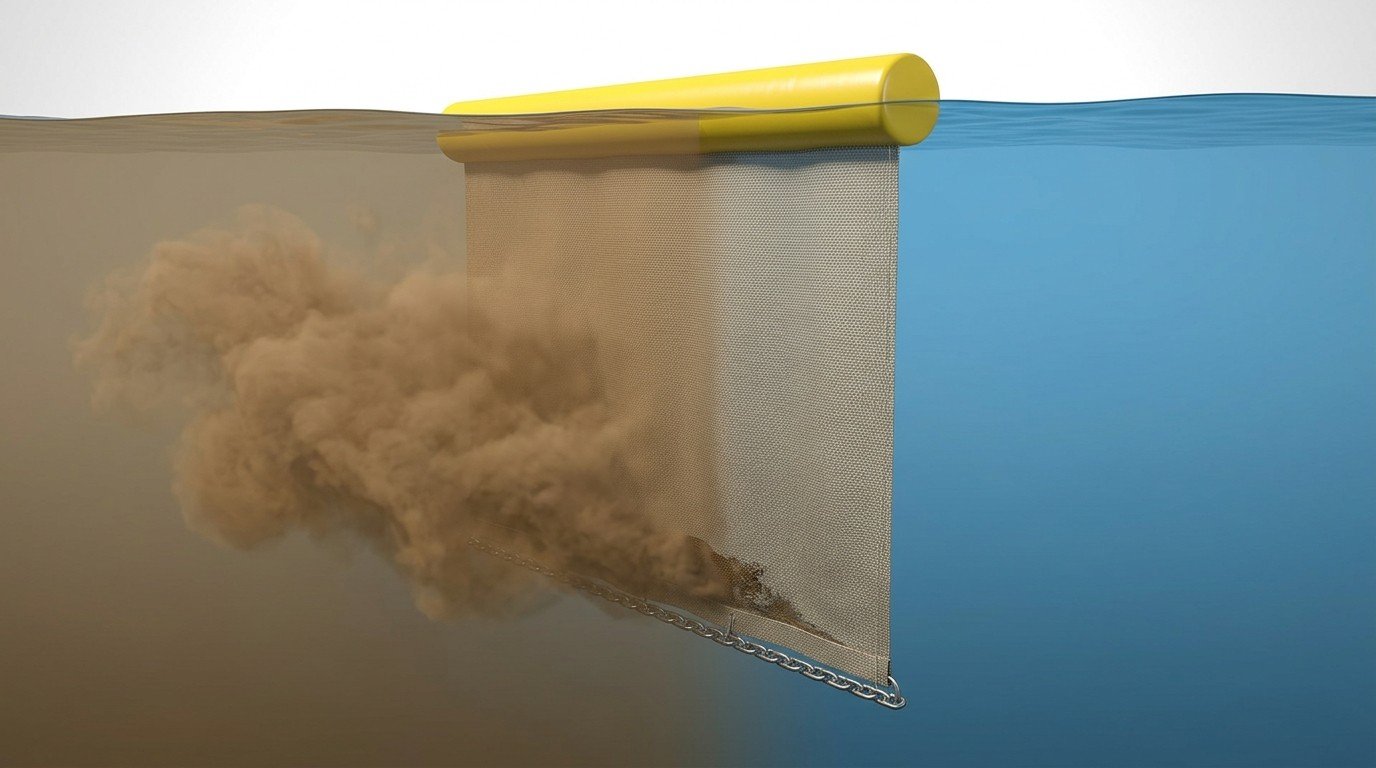
It is a passive containment barrier used to limit the spread of suspended sediment — the cloudy plume — generated when you disturb the seabed.
The terms silt curtain, turbidity barrier and turbidity curtain describe the same product. A land-based silt fence is a different product for a different application.
A silt curtain is not a debris boom or an oil containment boom. Those catch what floats. A silt curtain catches what sinks slowly: fine silt and clay particles in the water column.
Product Anatomy
How a Silt Curtain Is Built
Every silt curtain is built from six core components. What changes between Type I, II and III is the specification of each component.
Top flotation
Closed-cell foam log sealed inside a PVC-coated sleeve for buoyancy and visible freeboard.
Geotextile skirt
Vertical fabric panel sized from site depth, current and sediment plume behaviour.
Ballast chain
Galvanised chain in the bottom hem keeps the skirt vertical against current.
Tension cable
Wire rope or synthetic equivalent carries load when current pushes the curtain.
End connectors
Aluminium or galvanised-steel connectors join panels into a continuous run.
Anchor system
Anchor lines, weights or stakes and spacing plan are sized together with the curtain.
JettyGuard uses the same closed-cell foam grade we use in our foam-filled fender cores — saturation-resistant, UV-stable and consistent in density.
Type Selection
Type I, Type II, Type III — Which Silt Curtain for Which Site
Type I is for calm protected water. Type II is for mild current, wind and wave. Type III is for moderate current, wind and wave.
| Parameter | Type I | Type II | Type III |
|---|---|---|---|
| Site conditions | Calm protected water | Mild current, wind and wave | Moderate current, wind and wave |
| Peak current, not mean current | Below 0.1 m/s | 0.1–0.5 m/s | 0.5–1.5 m/s |
| Flotation | Light foam log | Standard foam log | Heavy-duty foam log |
| Skirt fabric | Lightweight PVC-coated polyester | Medium-weight PVC-coated polyester | Heavy-weight reinforced PVC-coated polyester |
| Typical use | Pond remediation, freshwater intakes | Harbour dredging, reclamation, piling | Tidal dredging, river works, exposed harbour reclamation |
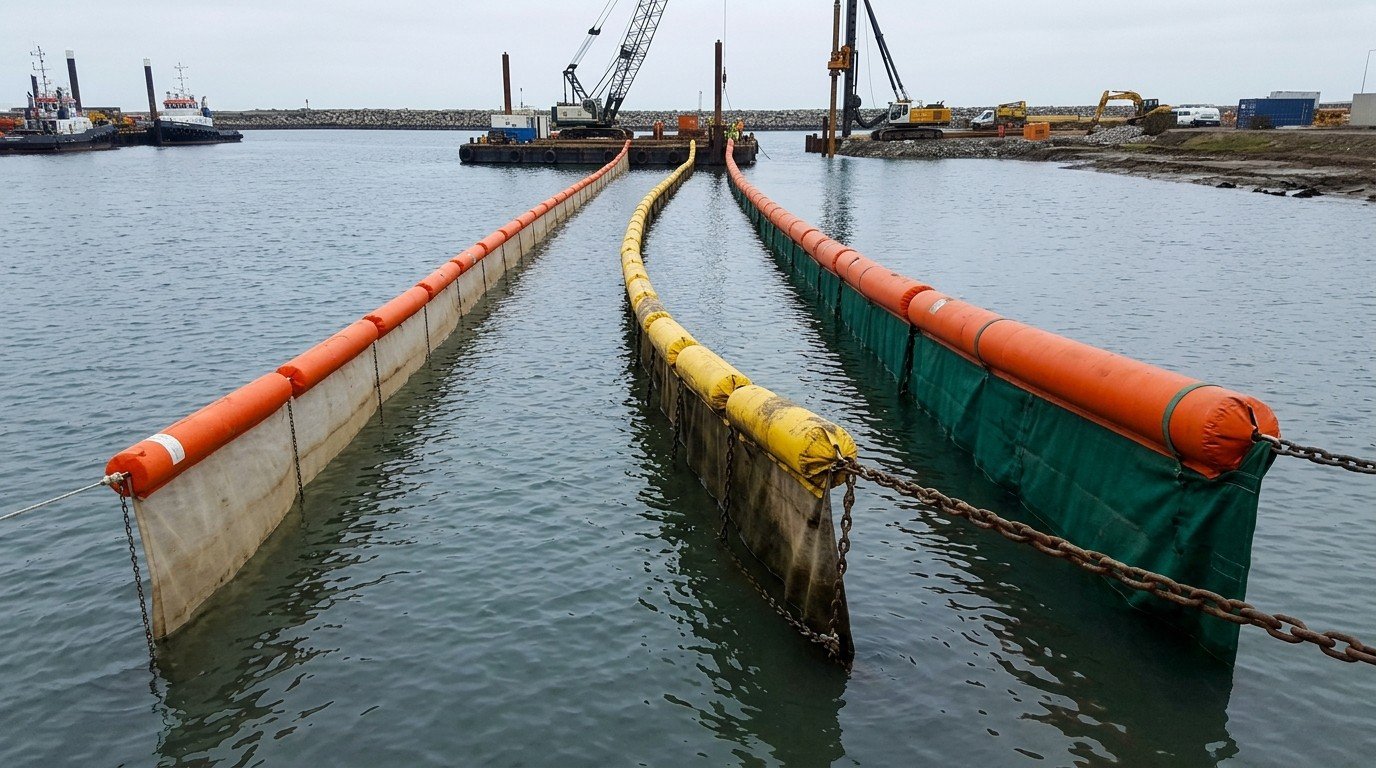
The Type I / II / III convention is a site-condition classification, not a product-quality grade. A correctly specified Type II silt curtain is not lower quality than Type III. It is simply the right product for its site.
Currents above about 1.5 m/s and significant wave heights above about 0.6 m can exceed normal silt-curtain working envelopes regardless of Type. Sites in that envelope need staged works at slack tide, alternative containment, or both.
Ask JettyGuard to review your site data →Applications
Where Silt Curtains Are Used
Silt curtains control suspended sediment around dredging, reclamation, piling, harbour work and remediation sites.
Dredging · Reclamation
Dredging and Reclamation
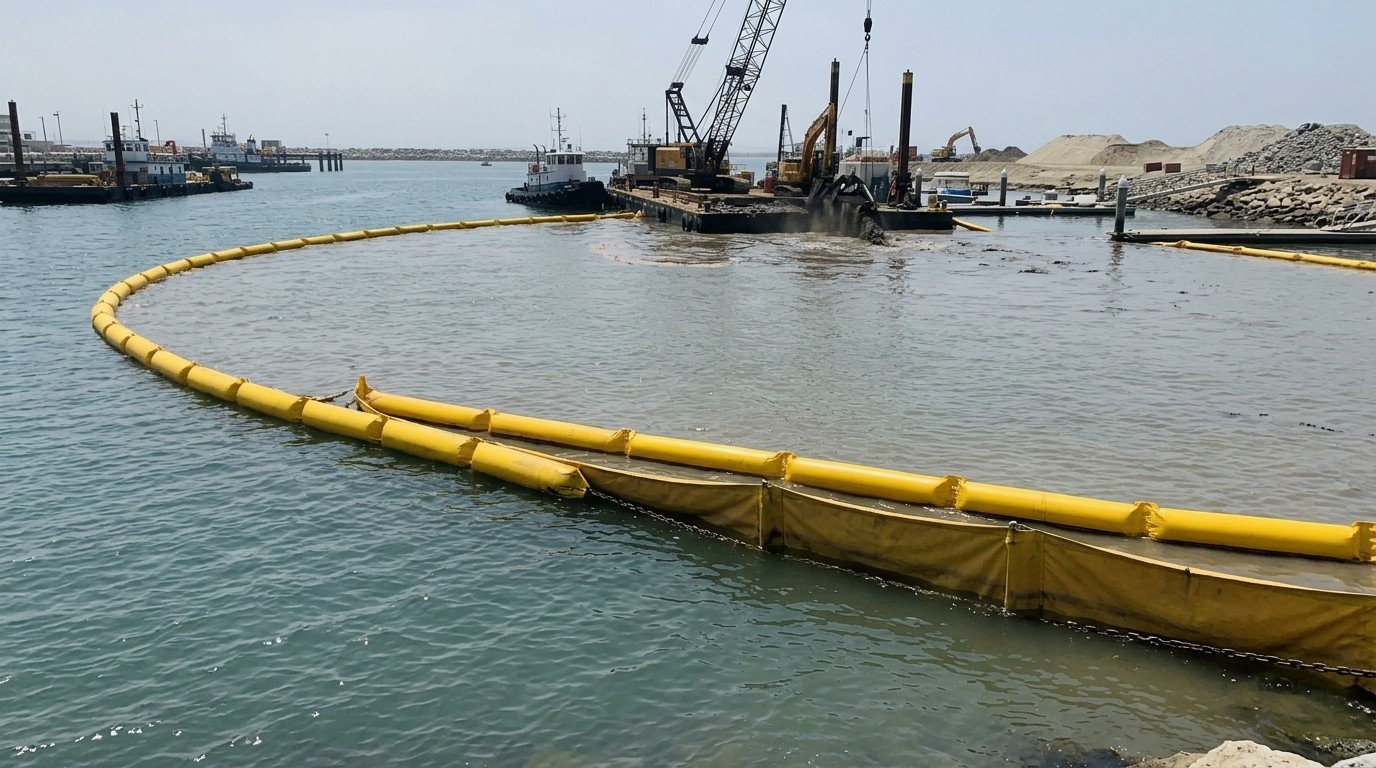
Capital and maintenance dredging generate fine-sediment plumes at the cutter, grab bucket, overflow point or discharge area.
Type II is common inside sheltered cells. Type III may be used at the cell mouth or across tidal exposure.
Send dredging project data →Piling · Jetty Work
Marine Construction and Piling
Pile driving, cofferdam works, jetty construction and quay-wall works all disturb seabed sediment.
A Type II silt curtain around the work zone keeps disturbance from drifting onto navigation channels, fish-farm areas or coral receptors downstream.
Check the eight site questions →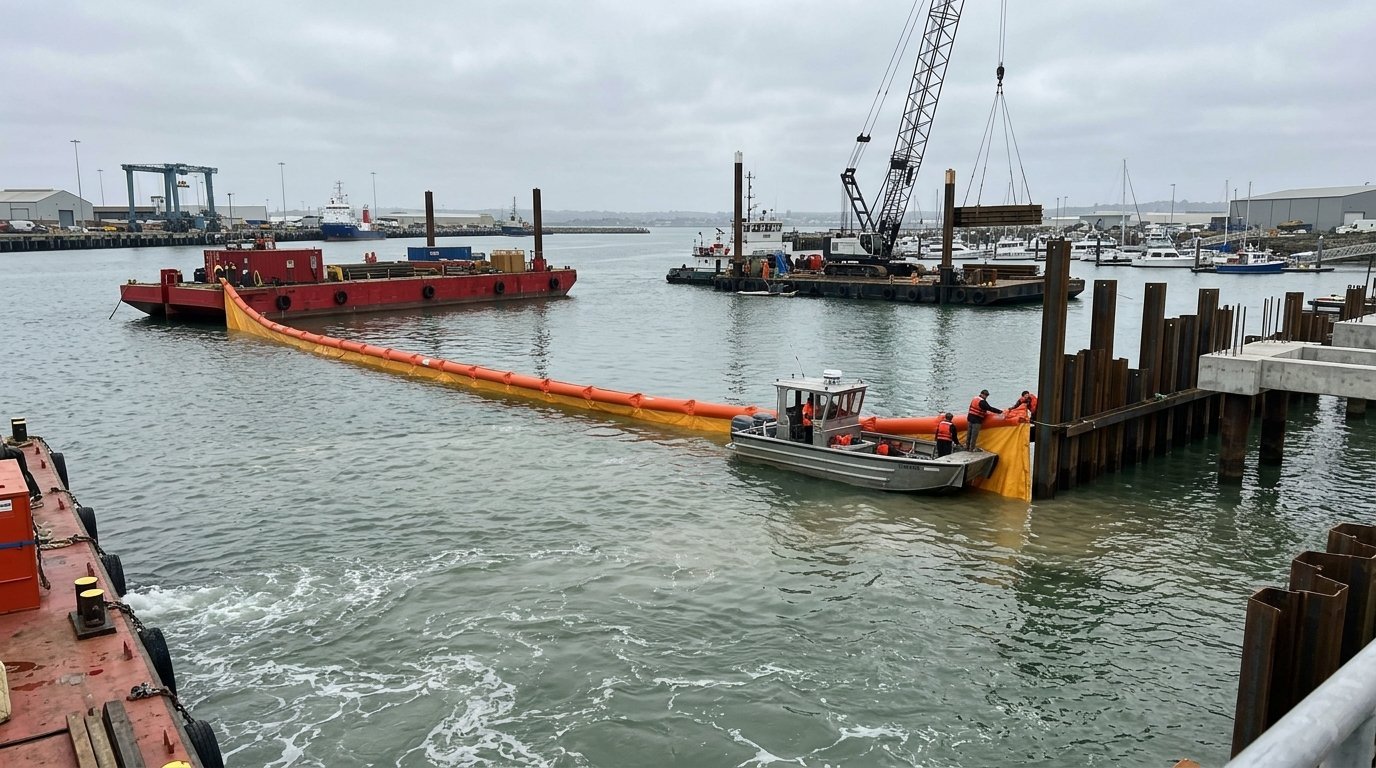
Harbour and Shipyard Works
Lock gate maintenance, dry-dock refilling, slipway repair and scour-protection placement.
Environmental Remediation
Capping of contaminated sediments, removal of hot-spot deposits and permitted in-water work.
Emergency and Short-Duration Works
Storm-debris clean-up, short pipeline crossings or brief seabed surveys with intrusive sensors.
Specification
Specification & Configuration
JettyGuard silt curtains are configured per project. This is the configurable range, not a fixed SKU list.
| Parameter | Configurable Range |
|---|---|
| Type | I (calm) / II (mild current) / III (moderate current) |
| Panel length | 10 m / 20 m / 25 m standard; custom lengths available |
| Skirt depth | 0.6 m up to near full water depth, Type-dependent |
| Top flotation | Closed-cell EVA / PE foam log, 200–400 mm typical, sleeved in PVC-coated polyester |
| Skirt fabric | PVC-coated polyester, project-weighted fabric specification |
| Ballast | Galvanised chain, sized per current and skirt depth |
| Tension cable | Galvanised wire rope, diameter sized per Type and panel length |
| Connectors | Slide connector, lace connector, or project-specified connector system |
| Colour | Standard yellow or orange high-visibility; other colours available |
| Anchor system | Project-specific; supplied when requested |
Final fabric weight, ballast weight per metre and tension-cable diameter are sized from your site data. We do not ship generic off-the-shelf silt curtain — every project is configured.
Specification Review
Not sure which Type your site needs?
Send peak current, water depth and tide range. We will tell you whether Type I, II or III is realistic.
Selection Workflow
Eight Site Questions for Silt Curtain Selection
A silt curtain that does not match its site can tear, drift, lay flat against the bottom, or generate its own plume on recovery.
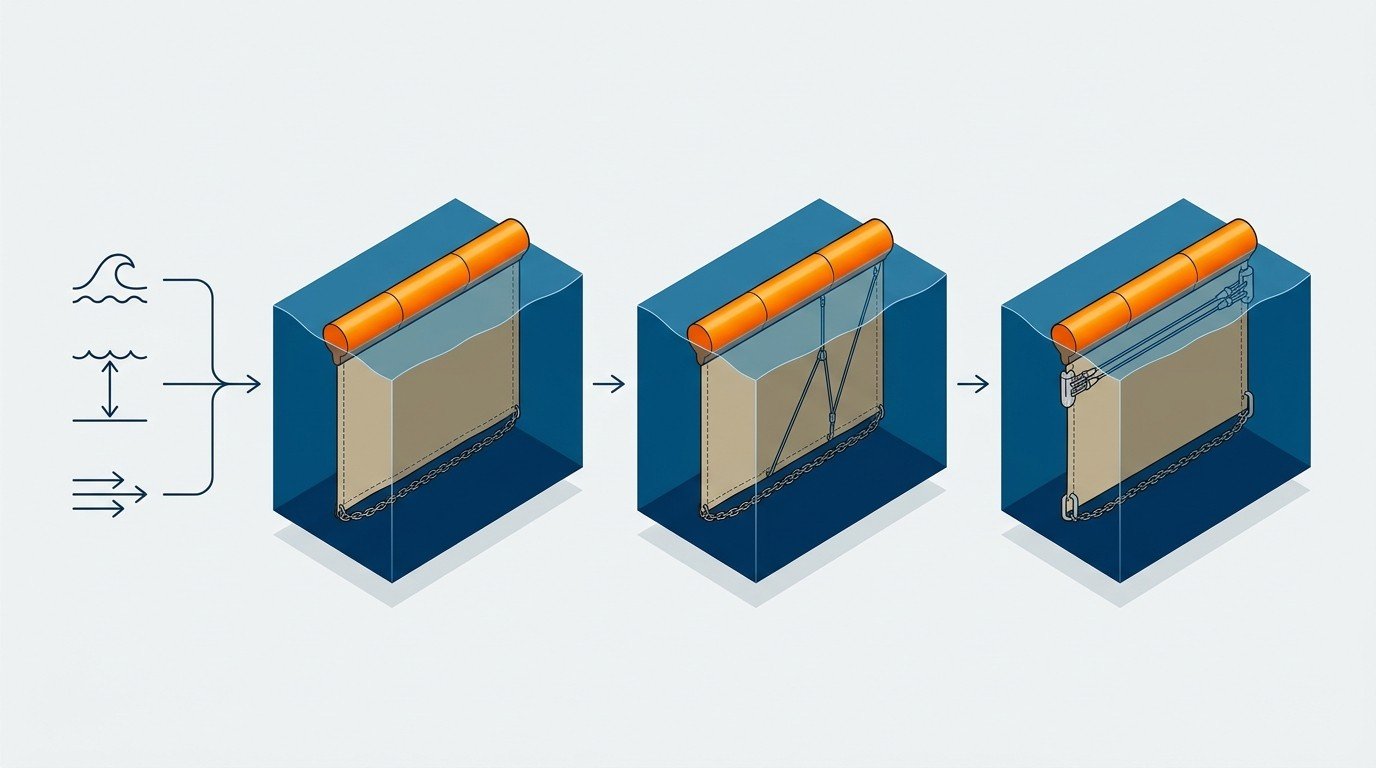
We ask these eight questions on every RFQ. Having the answers ready cuts our quotation turnaround and avoids rework.
1. Peak current
Maximum current at the curtain location.
2. Wave climate
Significant wave height and period.
3. Tide range
Spring / neap range and surface elevation.
4. Water depth
Minimum and maximum depth during work.
5. Sensitive receptors
Coral, seagrass, fish farm, intake or beach.
6. Work method
Cutter suction, grab, piling, capping or discharge.
7. Sediment fines
Silt, clay and contamination flag.
8. Navigation constraints
Vessel traffic, marking and lighting.
Installation
Installation, Anchoring & Accessories
Anchor design is site-specific and should be sized together with the curtain.
Anchor panel ends and any long spans at intermediate points. Anchor weight is sized from projected current load on the curtain, plus a safety factor.
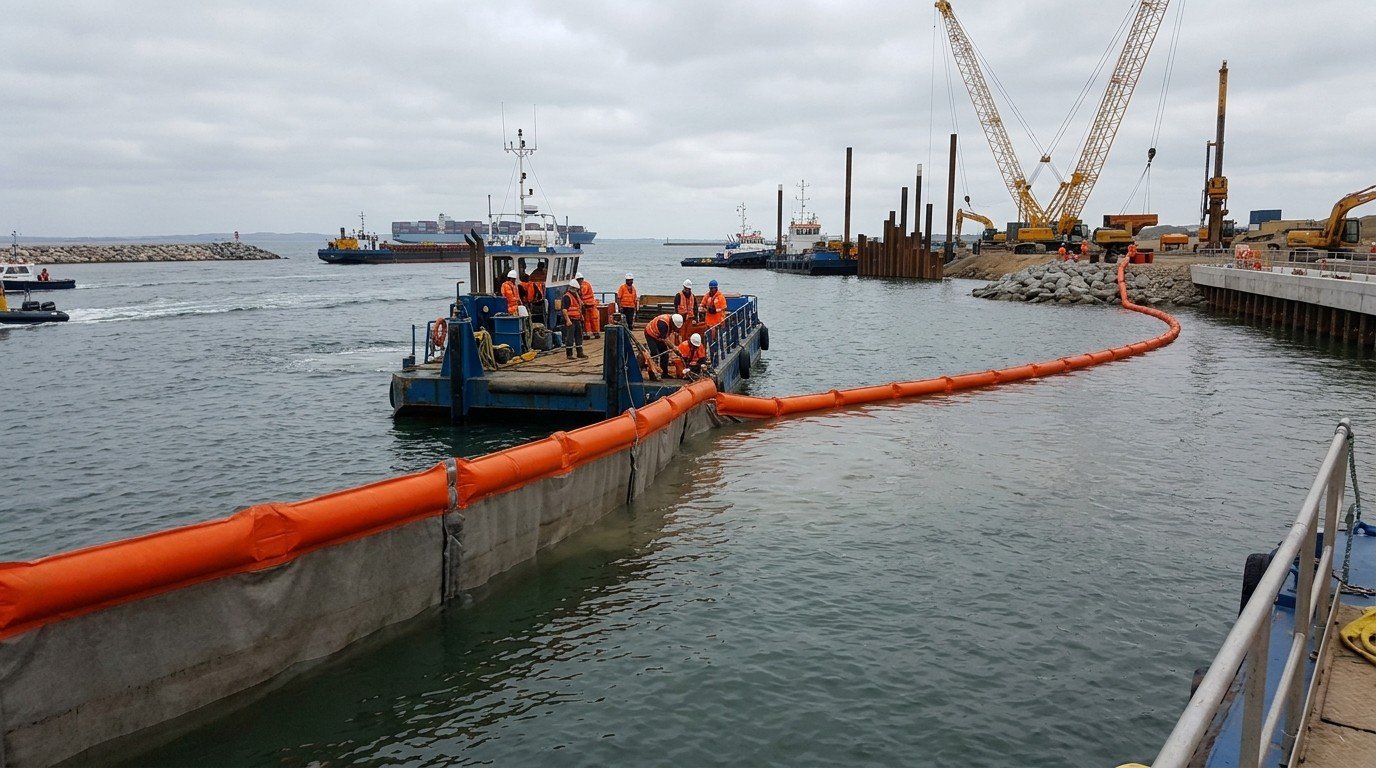
Deployment usually starts from the lead anchor. The work boat runs along the alignment while paying out panels and connecting them. Slack at each anchor point allows tide range without tension-loading the curtain.
Plan recovery before deployment. Lifting a sediment-laden curtain is when secondary plumes get generated. Recover at slack water and lift slowly.
Accessories supplied on request
- Anchor weights
- Anchor lines
- Marker buoys
- Solar lanterns
- Storage bags
- Repair kits
Product Comparison
Silt Curtain vs Floating Boom vs Oil Boom vs Silt Fence
These products are often mixed up in early RFQs. The key difference is what they are designed to contain.
| Product | Where Used | What It Contains | Typical Skirt Depth |
|---|---|---|---|
| Silt curtain | In water | Suspended sediment in the water column | 0.6 m to near full depth |
| Floating boom | On water surface | Floating debris, weed, logs, plastic | Usually shallow |
| Oil containment boom | On water surface | Floating hydrocarbons | Usually 300–900 mm |
| Silt fence | On land | Stormwater-borne sediment overland | Not applicable |
Standards · Manufacturing
Standards, Compliance & Supply
We work to industry-standard references rather than proprietary “silt curtain” certifications, which do not meaningfully exist.
DOT Type I / II / III
Site-condition classification used for practical selection.
ASTM D4884
Sewn-seam strength of geotextiles.
ASTM D5035 / D4595
Fabric tensile strength references.
NPDES / Project Permits
Configure to turbidity or TSS limits stated in the permit.
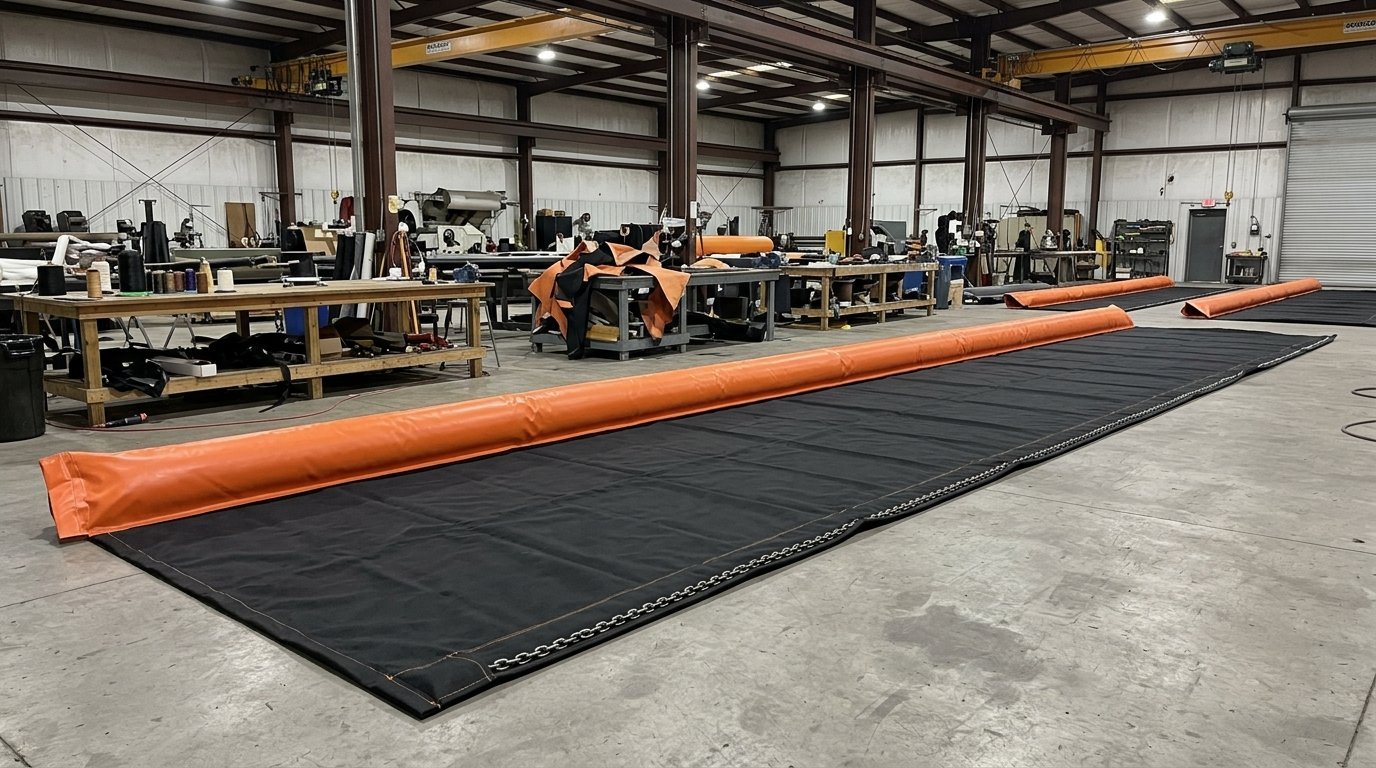
JettyGuard silt curtains are fabricated at our Chongqing factory on lines that handle wide-format PVC-coated polyester, heat-seam welding, sewn-seam construction and integrated chain ballast hemming.
We provide on request: material data sheets, mill certificates, foam density documentation, galvanising specifications and connector load test reports where applicable.
See more about JettyGuard manufacturing →RFQ Checklist
What to Send Us
To quote accurately, send us the following. Anything you do not have, say so — we will ask the right follow-up questions.
- 1. Project location: port / city / country.
- 2. Required deployment date.
- 3. Total length: metres of silt curtain required.
- 4. Site current: peak m/s or knots and direction.
- 5. Water depth: minimum and maximum.
- 6. Tide range, if applicable.
- 7. Wave climate: significant wave height and period.
- 8. Work method: dredging or construction method.
- 9. Sediment: fines percentage and contamination flag.
- 10. Sensitive receptors: distance and direction.
- 11. Port of discharge.
- 12. Local permit conditions.
FAQ
Silt Curtain FAQ
Answers for procurement teams, environmental managers and marine contractors specifying turbidity control.
What is the difference between a silt curtain and a turbidity barrier?⌄
None. They are the same product with different names. “Silt curtain” is common in dredging and harbour engineering. “Turbidity barrier” is common in US NPDES permits and DOT specifications.
How is a silt curtain different from a silt fence?⌄
A silt fence is a land-based stormwater erosion control product. A silt curtain is a floating in-water product. They are not interchangeable.
How do I choose between Type I, Type II and Type III?⌄
Site current is the deciding variable. Below about 0.1 m/s and protected from wind or wave: Type I. Up to about 0.5 m/s with mild wind and wave: Type II. Up to about 1.5 m/s with moderate wind and wave: Type III.
How deep should the skirt be?⌄
Deep enough to intercept the sediment plume, shallow enough to avoid dragging on the seabed at low tide. Final depth is sized from your site data.
How long can a silt curtain stay deployed?⌄
A correctly specified curtain can remain deployed for months. Long dredging campaigns can run 12+ months with periodic inspection, cleaning and repair.
Can a silt curtain stop oil?⌄
No. A silt curtain is designed to contain suspended sediment, not hydrocarbons. For oil containment, use a dedicated oil boom.
Can JettyGuard supply silt curtain together with fenders?⌄
Yes. We can consolidate silt curtain with foam-filled fenders, pneumatic fenders, mooring hardware or other JettyGuard marine products.
Do you supply anchors and accessories?⌄
Yes. Anchor weights, anchor lines, marker buoys, navigation lanterns, storage bags and repair kits are available on request.
What is your typical lead time?⌄
Configuration-dependent. A standard Type I or Type II curtain in moderate length usually ships in several weeks after order confirmation. Type III, long lengths or custom anchor packages need more time.
Do you ship globally?⌄
Yes. We ship by sea freight FOB or CIF and can coordinate consolidation with other JettyGuard floating products on the same project.
Request a Quote
Ready to spec your silt curtain?
Send the eight site variables, or just send what you have. We will follow up with the right questions.
- Best input: current, tide, depth, wave climate, total length and required date.
- If incomplete: send project drawings, permit notes or dredging method first.
- Package supply: combine with fenders, mooring hardware or other marine products.
Send Your RFQ
We review every silt curtain RFQ against site conditions before quoting.
RFQ Review
Need silt curtain pricing?
Send current, depth, tide, work method and required date.
Submit RFQ