
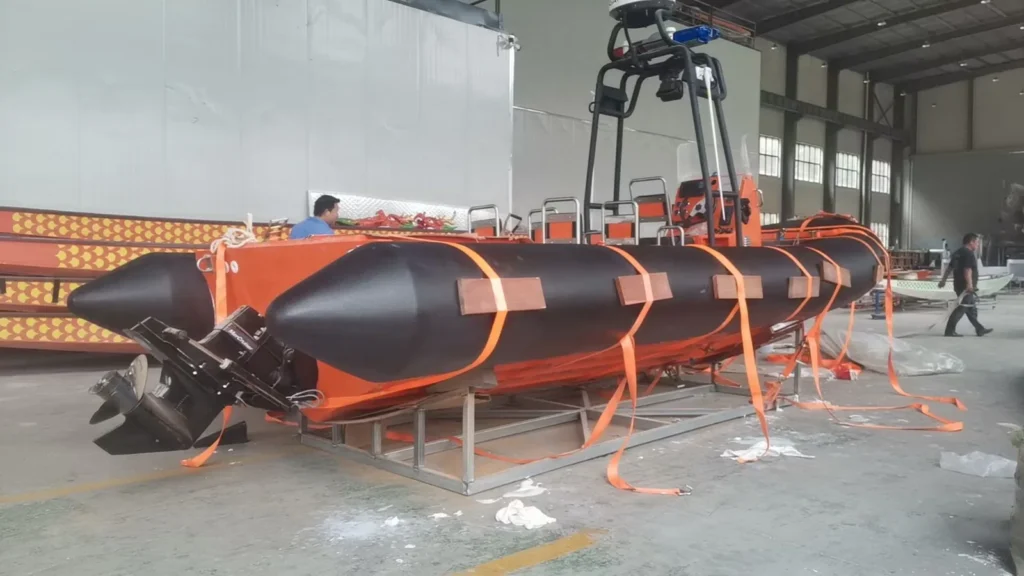
Most response-boat collar enquiries arrive as one line. Offers then look similar, arrive at different prices, and cannot be compared on technical grounds.
A usable specification defines the mission and operating conditions, records hull geometry and collar interfaces, separates core from cover and section construction, defines contact zones and attachment, and names the evidence and verification route.
I treat this as a procurement rule: a response-boat foam-collar RFQ is not technically comparable until it connects mission conditions and hull interfaces to construction/attachment evidence and a defined verification route. This article explains the inputs to collect. It does not design a collar, and it does not give standard dimensions, materials or performance figures for your boat.
What Operating Profile Should the Collar Specification Define?
Buyers often start with collar material. The supplier then guesses the duty, and every offer answers a slightly different question.
Define the mission, operating waters, expected contact pattern, speed and service conditions, plus handling, storage and transport constraints, before any collar material or section language enters the document.
Public US procurement gives useful examples of how this is done. In its 2023 police-boat invitation to bid, the City of Orange Beach, Alabama set out the operating waters, high-speed and extreme-condition use, and operational, safety, storage and transport constraints, and it required bidders to document any deviation from the stated minimum specification. That is one municipal buyer’s practice, not a general rule for every response boat, but the sequence is the point: state the duty, then let the technical answer follow. The US Coast Guard’s Response Boat–Small Third Generation acquisition forecast, published as planning information in 2026, does something similar at programme level. It ties defined response missions to technical data deliverables such as drawings, 3D models, bill of materials and commercial manuals, and states that delivered boats will be operated to check alignment with the evaluated proposals. Again, that is a US federal planning document rather than a specification anyone can claim to meet. What I take from both is a habit worth copying: mission first, evidence attached, verification agreed. When the operating profile is missing, a supplier can only price a shape.
| Operating input | Record it when | What to state in the RFQ |
|---|---|---|
| Mission and duty | Always | Patrol, rescue, towing, boarding, dive support, or mixed use |
| Operating waters | Always | Sheltered, coastal, inshore, or exposed water; salt or fresh |
| Speed and sea state | Speed or rough-water use is part of the duty | Normal operating speed range and the worst condition expected in service |
| Contact pattern | The boat comes alongside vessels, docks or structures | What it contacts, how often, and on which part of the collar |
| Crew and deck use | Crew stand, sit or work on the collar | Boarding points, step or seating use, fitting locations |
| Handling constraints | Trailering, craning, davit launch or shore storage applies | Lifting arrangement, transport width limits, storage exposure |
| Deviation rule | You publish a minimum specification | Whether deviations must be listed and justified in the offer |
Which Hull Geometry and Collar Interfaces Must Be Recorded?
A supplier cannot judge a collar from a photograph. Without geometry, the offer is a guess about the one thing that decides fit.
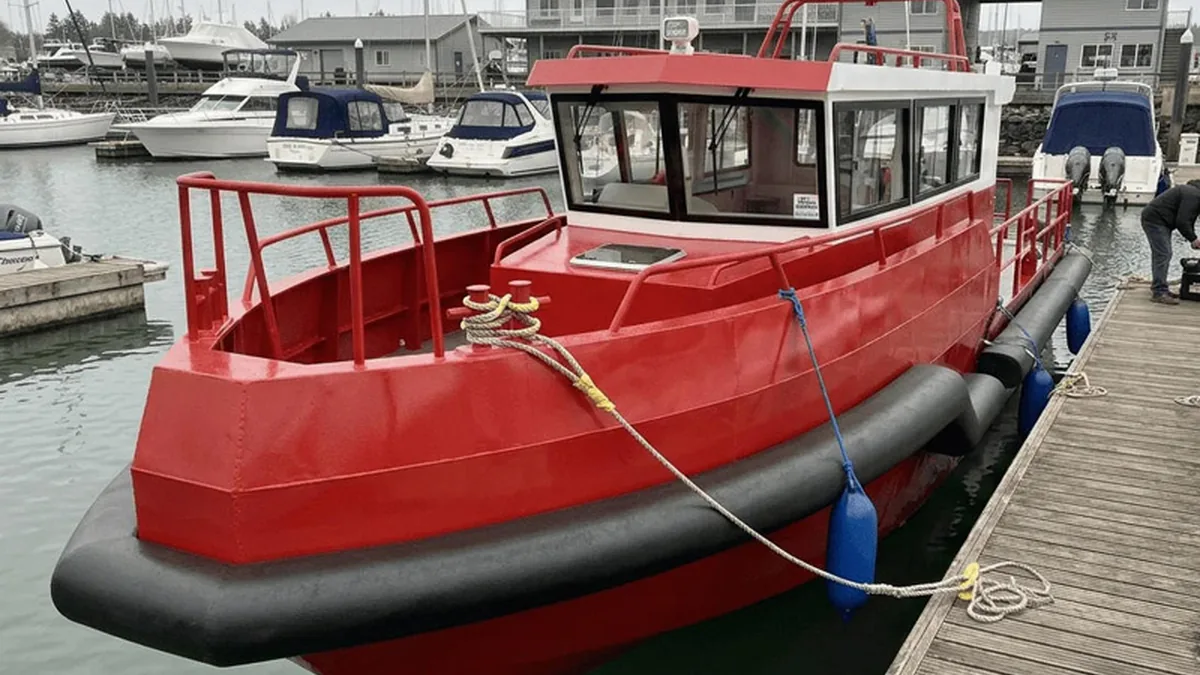
Record the hull profile and sections, the intended collar line and coverage, and every structure the collar meets: rubrail, deck edge, console, fittings, engine cut-out and existing attachment points.
The interface is where a collar scope usually goes wrong. In its review guidance for rigid hull inflatable vessels, the US Coast Guard Marine Safety Center treats the collar and its hull connection as one item that must show adequate strength within that review context. That is a US review setting, not a universal requirement, but it tells you what the reviewer looks at, and it is the same thing a supplier needs to look at: the joint, not the tube. A public US accident record makes the interface concrete in a different way. The National Transportation Safety Board’s 2018 marine accident brief describes an RB-S II as a deep-V rigid monohull with a foam collar in a polyurethane sheath, and records damage to the collar sheath upper track after a collision. That is a single reported event, not a failure-mode rule or a design lesson, but it shows that a collar has tracks, sheaths and terminations that exist in a specific hull arrangement. So I ask for drawings rather than dimensions: hull lines or a builder’s GA, sections at the stations where the collar runs, the collar line in profile and plan, and a note on what the collar must clear. If drawings do not exist, say so in the RFQ and describe how measurements were taken.
How Should Foam Core, Skin and Section Construction Be Specified?
Single-word material requests cause trouble. “Closed-cell foam collar” hides three separate decisions and lets each supplier answer a different one.
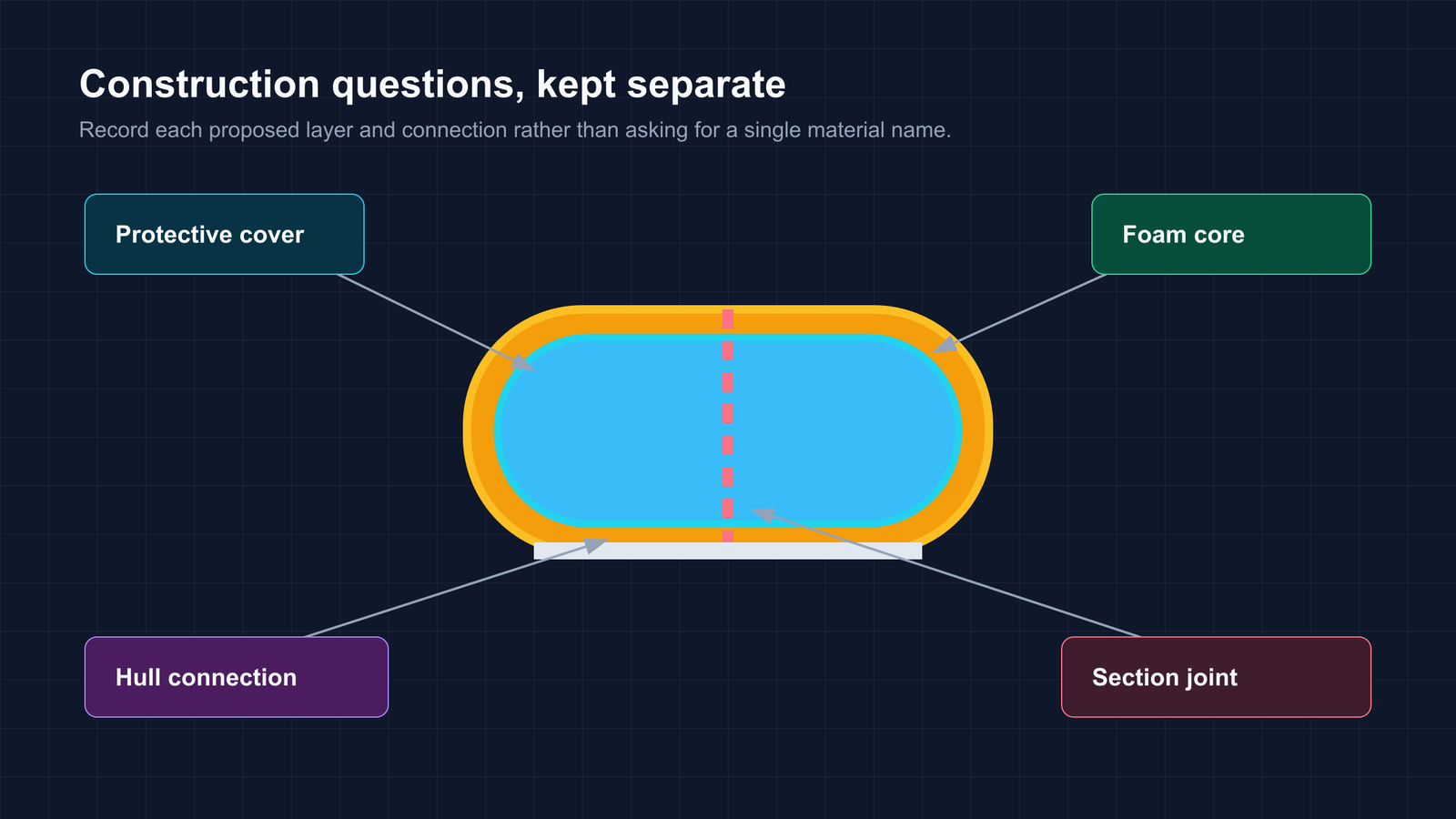
Specify the foam core, the protective skin or cover, and the section construction as three separate lines, each with its own required properties, and ask the supplier to state what it proposes for each.
The US Coast Guard’s rigid hull inflatable review guidance is a helpful reference for how the core is described. Within that review context, foam collars are specified as marine-grade closed-cell foam, with criteria for durability, abrasion, impact, non-absorption and UV resistance, and it accepts that the UV criterion can be handled by a qualifying cover. I read that as a structure for questions, not a specification to paste into your own document, because it belongs to a particular US review process and a particular vessel category. The useful part is the split: the core carries the energy and must not take up water, and the outer layer takes the wear and the sunlight. The same split appears in the public accident record mentioned earlier, where the collar was reported as foam in a polyurethane sheath. That describes one vessel, not a required material. So in an RFQ I would ask for the core type and density basis, the cover or skin material and how it is joined, the number and arrangement of sections, whether sections are replaceable individually, and how the ends and seams are closed. Let the supplier name the material and defend it against your duty, rather than naming it yourself.
Which Contact Zones, Attachments and Reinforcements Need Definition?
Collars are usually quoted as a shape. The attachment and the local structure decide whether it survives service, and they are often left blank.
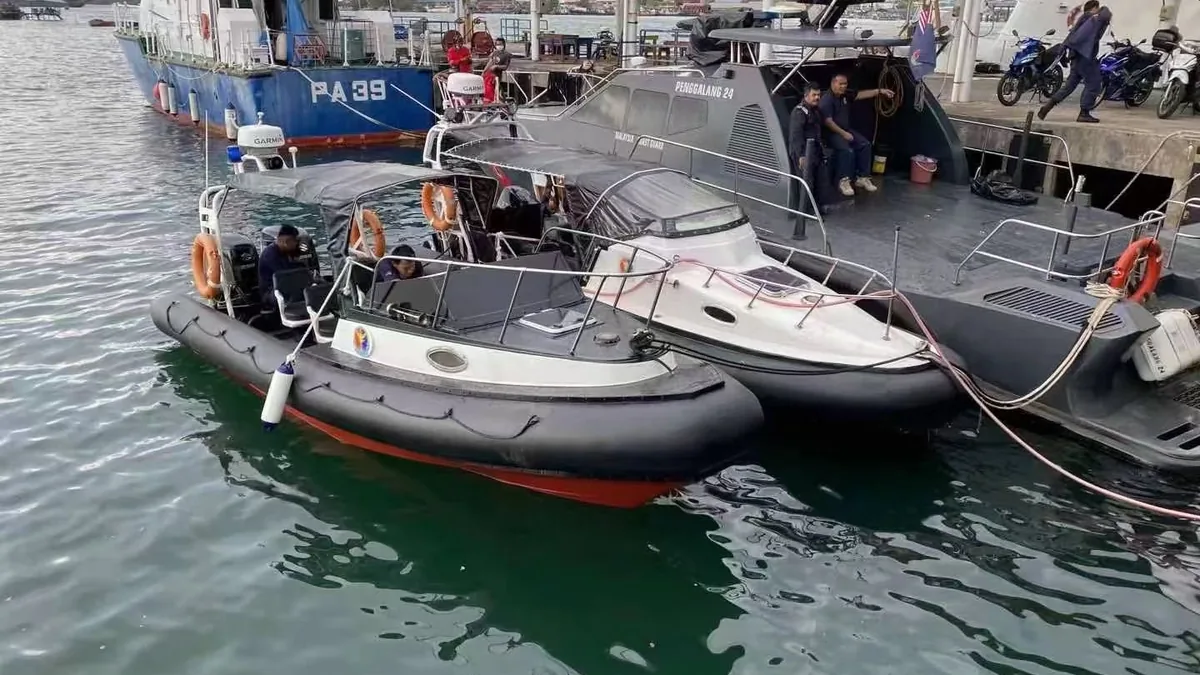
Define where the collar takes contact, how it attaches to the hull, what local reinforcement the hull needs at the connection, and what calculation or documentation supports the proposed connection.
The US Coast Guard review guidance again shows what a reviewer expects to see at this point. For the covered review context, it identifies both glued and mechanical collar-to-hull connections, notes local reinforcement at the connection, and calls for strength calculations based on the design collar loading. I will not quote loads, safety factors or fastener values here, because those belong to a confirmed rule set and a specific vessel, and copying them into a general checklist would be misleading. What transfers is the list of things to define. I would state the intended contact zones first: the bow face if the boat pushes, the side where it comes alongside, the quarter and transom if it works astern, and any area where crew board or step. Then the attachment concept: bonded, mechanically fixed, or a combination, with the fitting positions marked on the drawing. Then the hull side: whether backing plates, doublers or local stiffening exist, and who is responsible for them. Then the evidence: which calculation, drawing or approval the supplier will provide, and under which rule set, if any applies to your project.
What Environmental and Service Conditions Change the Specification?
Conditions get written as adjectives. “Harsh environment” tells a supplier nothing and invites a general material claim in return.
Treat each condition as an input that changes the questions you ask, not as a trigger for a product claim. State the condition, then ask what evidence covers it.
The Orange Beach police-boat bid is a useful example of naming conditions in plain terms: operating waters, high-speed use, extreme-condition use, and the operational, safety, storage and transport limits that follow. That is one municipal project’s context, and its thresholds should not travel to another boat. The US Coast Guard review guidance separates the property questions in a similar way, with abrasion, impact, non-absorption and UV treated as distinct criteria in that review context, and UV resistance allowed to sit with a qualifying cover. Put those two ideas together and you get a practical method. For each condition you can actually describe, ask what it does to the core, what it does to the cover, and what it does to the joint. Sunlight and storage exposure are a cover question. Contact against steel or concrete is an abrasion and section question. Trailering and craning are a fitting and reinforcement question. Nobody can promise a collar will suit an environment described in one adjective, and I would be careful with any supplier who does. The table below is a question map, not a specification.
| Condition you can state | What it changes in the RFQ | Evidence to request |
|---|---|---|
| Continuous outdoor storage or high UV exposure | Cover or skin selection and the UV criterion | How UV resistance is achieved, in the core or in the cover |
| Frequent alongside work with steel or concrete | Abrasion and wear at defined contact zones | Cover material, wear-strip arrangement, repairability of that zone |
| High-speed running in open water | Section arrangement and attachment detail | Attachment concept and any calculation basis the project rule set requires |
| Towing, pushing or boarding duty | Contact zones and local hull reinforcement | Reinforcement scope and who supplies it |
| Trailering, craning or davit launch | Fittings, clearances and handling points | Fitting positions on the drawing and any handling limits |
| Salt-water immersion and fouling | Non-absorption and cleaning access | How the core is protected and how sections are removed |
| Cold, ice or freeze-thaw service | Cover behaviour and joint condition at low temperature | Any temperature range the supplier states, with its basis |
What Inspection and Acceptance Evidence Should Be Requested?
Approval stalls when a scope cannot be checked. Reviewers then ask for drawings late, and the schedule absorbs the delay.
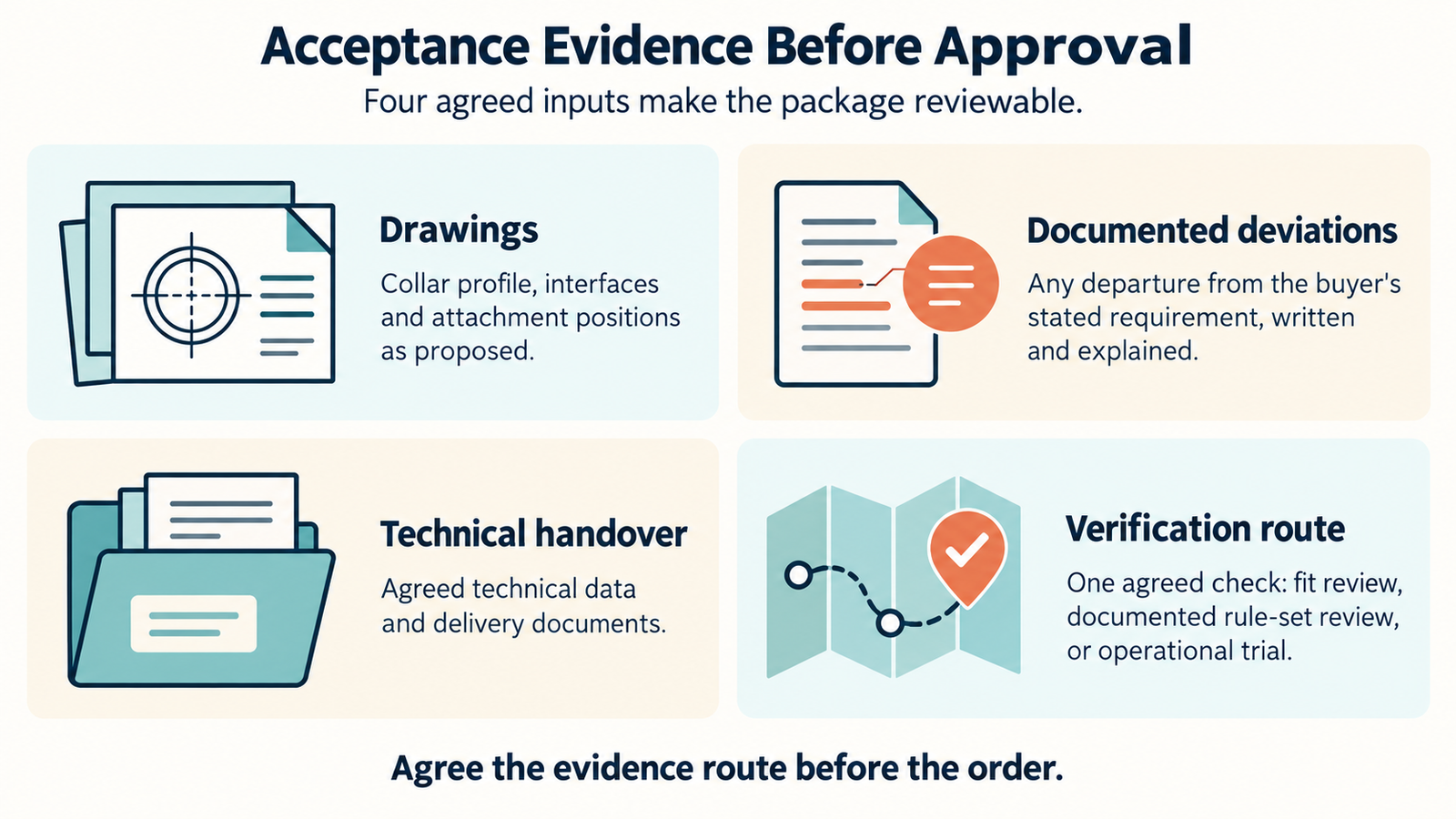
Ask for the drawings, documented deviations, technical data and an agreed verification route up front, tailored to whatever specification actually applies to your project.
Public US procurement records show what a reviewable package looks like. The Orange Beach bid required proposals to document relevant design features with photographs and General Arrangement drawings against its proven-design requirement, and it required deviations from the stated minimum specification to be documented. The US Coast Guard’s Response Boat–Small Third Generation forecast, as planning information, links the defined missions to technical data deliverables including drawings, 3D models, bill of materials and commercial manuals, and states that delivered boats will be operated to check alignment with the evaluated proposals. Both are US public-sector examples with their own contexts, and neither sets a test regime you can apply everywhere. Still, the pattern is worth copying at any scale. I would ask for four things: the drawings that show the collar and its interfaces as proposed, a written list of deviations from your stated requirement, the technical data the supplier will hand over at delivery, and the verification step both sides accept. Verification can be a witnessed fit check, a documented review against a named rule set, or an operational trial. Agree which one before the order, not after.
What Information Should Be Included in the RFQ Package?
Scattered inputs produce scattered offers. Suppliers answer whichever part they understand, and the comparison collapses at the review table.
Send one package: operating profile, hull drawings and interface record, construction requirements split by core, cover and section, contact and attachment definition, condition inputs, and the evidence and verification route.
The order matters more than the format. I would open with the boat and the duty, so the reader knows what the collar is for. Then the geometry, with whatever drawings exist and an honest note where they do not. Then the construction section, kept as three separate requests rather than one material line, following the split the US Coast Guard review guidance uses in its own context. Then the contact zones and the attachment concept, with the reinforcement responsibility stated. Then the conditions, written as facts about your service rather than adjectives. Then the evidence list and the verification step, in the way the public US procurement examples above handle drawings, deviations and technical data. Close with the commercial boundaries you need answered: quantity, delivery point, packing, and whether spares or replacement sections are in scope. This is a neutral working sequence, not a tender form, and a small municipal buyer will use less of it than a fleet programme. The test is simple. If two suppliers read the package and ask the same clarification questions, it is comparable. If they ask different ones, something in the list above is still missing.

If you already hold hull sections, a GA drawing or an operating description, you can request an engineering review of the hull and operating data already available. We review what you supply and tell you what is still needed to quote the same technical question.
Conclusion
A comparable collar RFQ is built from duty, geometry, construction, attachment and verification. Send us your hull sections and operating profile, and we will review the data for a JettyGuard solid foam boat collar and tell you what is still missing.