
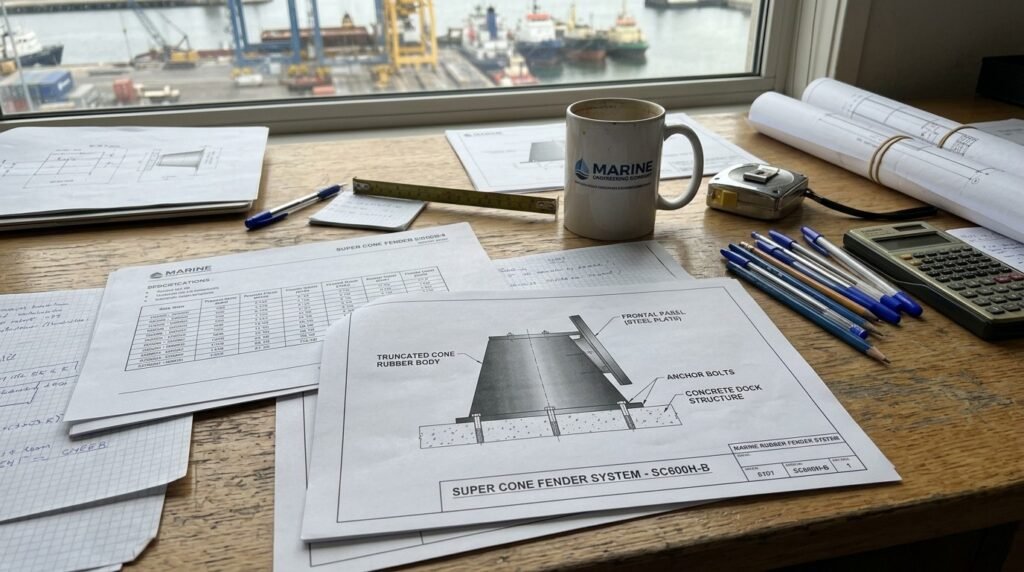
Many buyers receive proposals that look similar but differ significantly in what they include and verify.
Price comparison becomes meaningful only after normalizing the technical basis, verification depth, delivery responsibility and risk allocation across competing bids.
When a buyer requests the lowest price with high quality, most suppliers face a dilemma. That phrase is not actionable without defining a performance floor, verification scope, documentation requirements, allowed deviations and the commercial objective you need to meet. In practice, I make the first distinction based on whether a candidate can provide verification evidence that corresponds to the promised performance. This does not mean every project requires identical testing or that missing evidence proves the product unusable. It means the buyer needs to see where stated performance has been demonstrated and where it relies on declaration alone, so they can assess the risk they inherit.
What Should Buyers Verify Before Comparing Fender Suppliers?
Different suppliers often work to different assumed design conditions and performance definitions.
Fix the application, energy basis, operating environment, interface scope and delivery responsibility before comparing price.
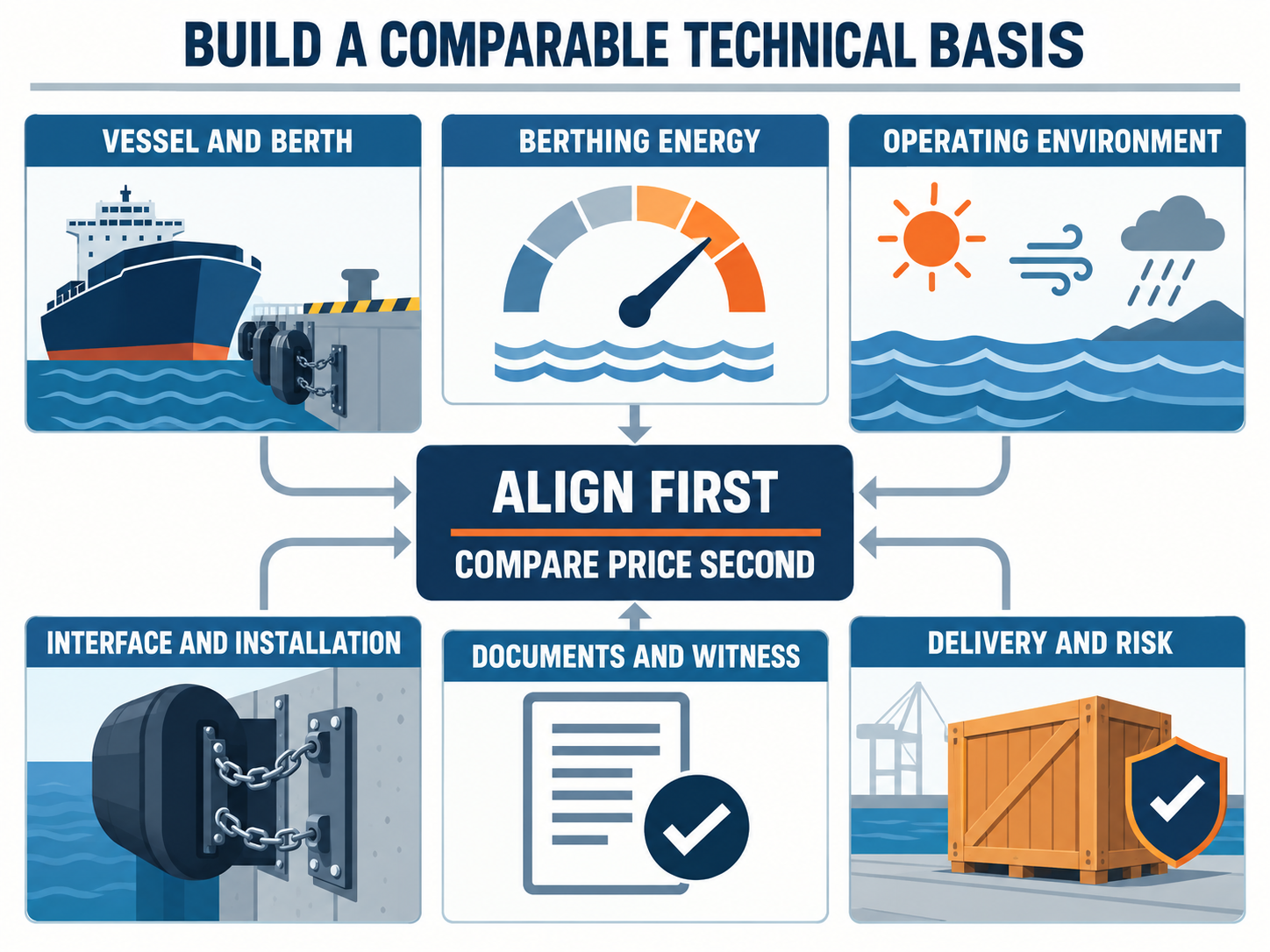
Before I review any pricing, I confirm the supplier and I are discussing the same problem. A fender system’s performance depends on the vessel type, berth configuration, allowable motion, berthing energy and interface loads. PIANC MarCom WG 211 guidance recognizes that fender-system evaluation requires a stated vessel, berth, operating, energy and interface basis. Without these inputs, two identical-looking proposals may address different conditions entirely.
When defining the scope, I make sure the following inputs are stated and shared with every candidate:
- Vessel and berth characteristics: deadweight tonnage, vessel type, berth configuration, tidal variation and water-level conditions.
- Berthing energy basis: approach velocity, added-mass coefficient, eccentricity and the energy absorption the system must provide.
- Operating environment: temperature range, UV exposure, marine-growth conditions and any chemical or abrasion exposure.
- Interface and installation scope: fixing method, concrete or steel backing, front-panel arrangement, fixing hardware and installation sequence.
- Documentation and witness requirements: third-party inspection points, sampling ratios, acceptance criteria and report scope.
- Delivery and risk allocation: transport terms, packing requirements, responsibility for interface components, and who owns the verification evidence.
When these inputs are shared consistently, competing proposals become comparable. When they are not, the lowest price may be quoting a different problem or transferring undisclosed risk to the buyer.
How Should Fender Performance Data Be Compared?
Two energy or reaction-force figures describe comparable performance only when they use the same stated basis and test conditions.
Compare performance data only after confirming the basis, deflection condition and reporting method match across all offers.
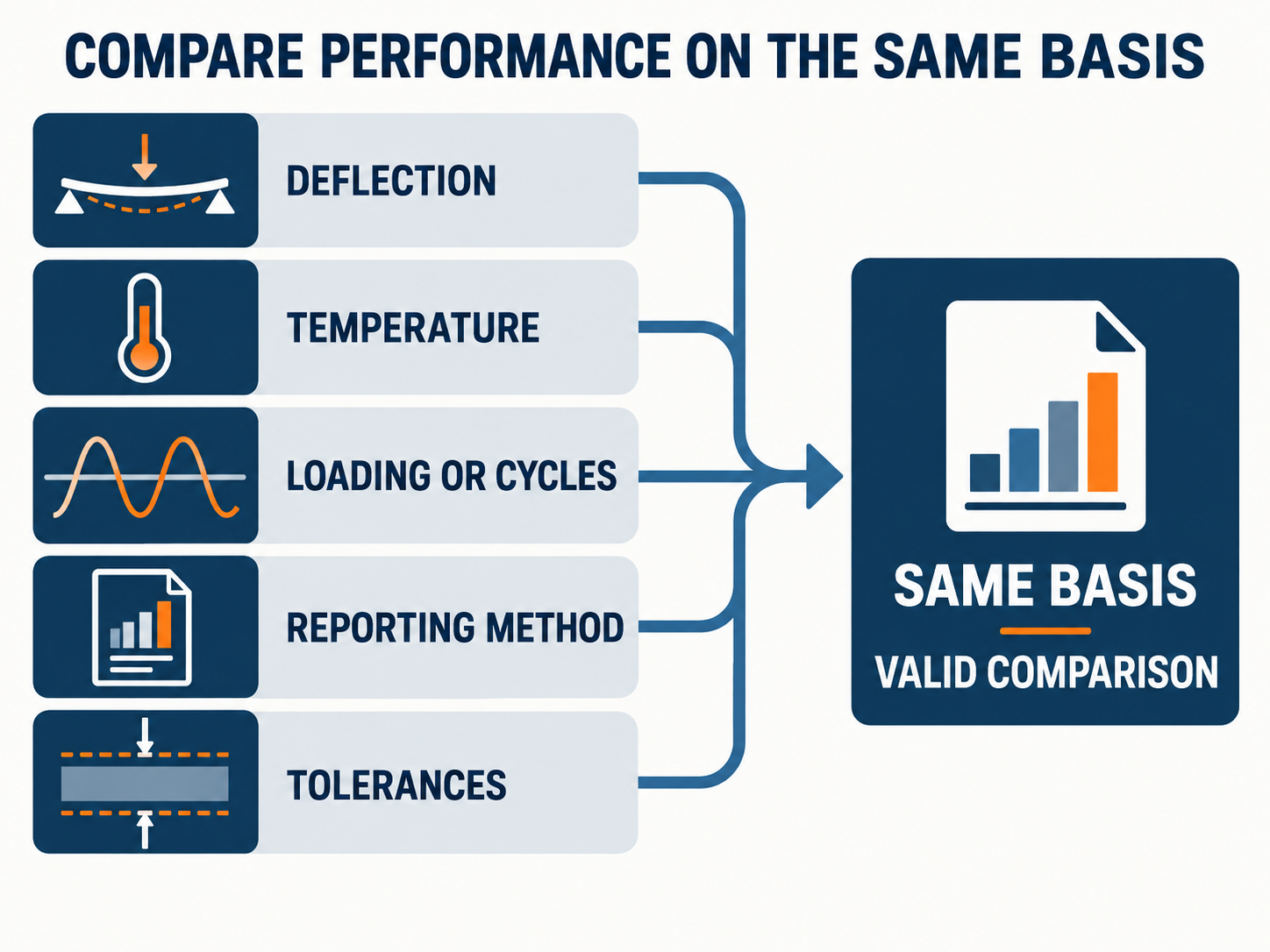
Energy absorption and reaction force are the two primary performance outputs buyers evaluate. ASTM F2192, referenced in government specifications such as UFGS 35 59 13.17, provides a recognized test method for reporting these values. But a single fender type can produce different results depending on deflection percentage, test temperature, loading rate and the number of cycles applied before measurement.
When reviewing performance claims, I check the following before making comparisons:
| Comparison field | What must match |
|---|---|
| Deflection percentage | The same stated deflection condition across all offers |
| Test temperature | Ambient conditions or the operating-temperature range stated in the project |
| Loading rate or cycle number | The same conditioning or test-cycle basis |
| Reporting method | Peak reaction, average reaction or reaction at a specified deflection point |
| Tolerances | Allowable performance deviation from nominal stated values |
If supplier A quotes energy absorption at the project-stated deflection after a conditioning cycle and supplier B quotes the same product at a different deflection condition with no conditioning stated, the figures are not comparable. I ask both suppliers to restate their data using the same basis, or I accept the deviation and record the associated risk.
Performance data should also state whether the figures represent a single-unit result, a batch average, or a design calculation. Test reports, when available, should identify the sample, the testing organization, the relevant standard and the date. When test evidence is not provided, the stated performance remains a declared value rather than a verified one.
Which Tests and Certificates Should Be Reviewed?
Different documents answer different verification questions and should not be confused with one another.
Distinguish product-specific test evidence, witness and sampling scope, and management-system certification when assessing what has been verified.
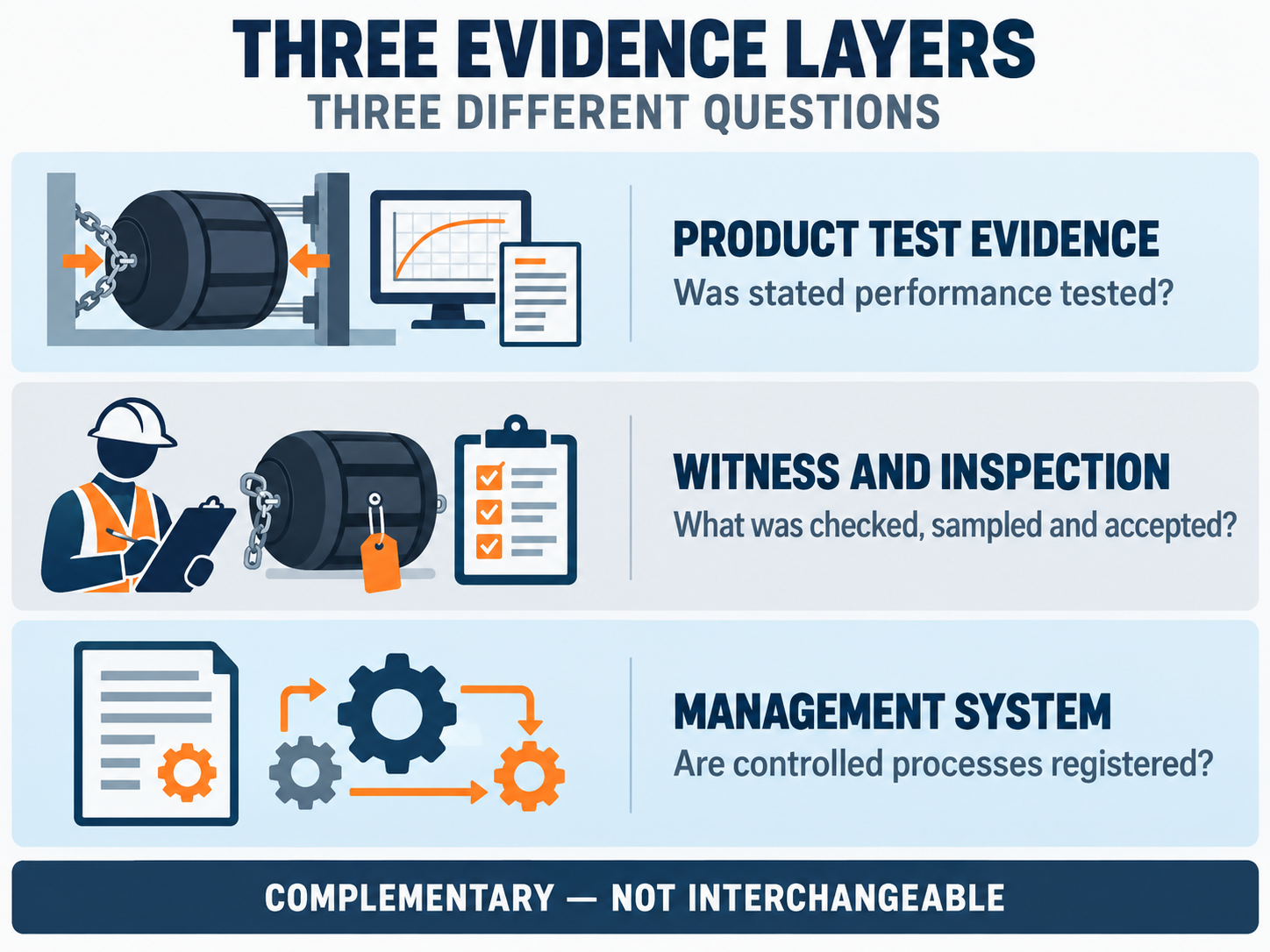
In practice, the first distinction I make is between suppliers who can provide verification evidence that corresponds to the promised performance and those who rely on declarations and company credentials. This does not mean one group is acceptable and the other is not. It means the buyer must understand which performance claims have been tested, which have been witnessed, and which depend on stated capability.
I separate three types of verification evidence:
- Product-specific or project-specific test evidence: test reports that identify the product, the test method, the loading conditions and the results for the stated performance values.
- Third-party witness and inspection: independent verification at defined points in the production process, governed by agreed sampling ratios, witness points, acceptance criteria and reporting scope.
- Management-system documents: ISO 9001 or similar quality-system registration, which addresses process control but does not verify that this order’s stated performance has been tested or will be met.
These three document types answer different questions. A management-system certificate confirms process registration; it does not verify that the product has been tested to the stated energy absorption or reaction force. A test report on a representative product or batch does not prove this order will meet the same result unless sampling and acceptance criteria are defined. A witness agreement defines what will be inspected and who holds responsibility for nonconformance, but it does not by itself prove the product meets stated performance.
When reviewing offers, I use this checklist to assess what each document confirms:
- Does the test report identify the product tested, the test method, the loading conditions and the results?
- Does the witness scope define sampling points, acceptance criteria and who holds responsibility for nonconformance?
- Does the management-system certificate address process control or product performance?
- Are material certificates traceable to the batch supplied, or are they representative samples?
A supplier without product-specific test evidence for a stated performance value has not demonstrated that the product meets that value. This does not prove the product is unusable. It means more technical and delivery risk transfers to the buyer, and the buyer must decide whether they can accept that allocation based on the project’s risk tolerance, the supplier’s track record and the consequences of nonconformance.
Third-party inspection is typically an optional service, quoted separately. When the buyer requires it, the inspection scope, sampling ratio, witness points and reporting requirements must be defined in the RFQ. The cost of third-party witness should appear as a separate line item so the buyer can compare bids with and without inspection included.
How Should Competing Fender Bids Be Normalised?
A quotation is comparable only when the included scope, documentation, logistics and responsibility boundaries are stated.
Normalize bids by listing every assumption, inclusion, exclusion and delivery responsibility as separate fields in a comparison table.
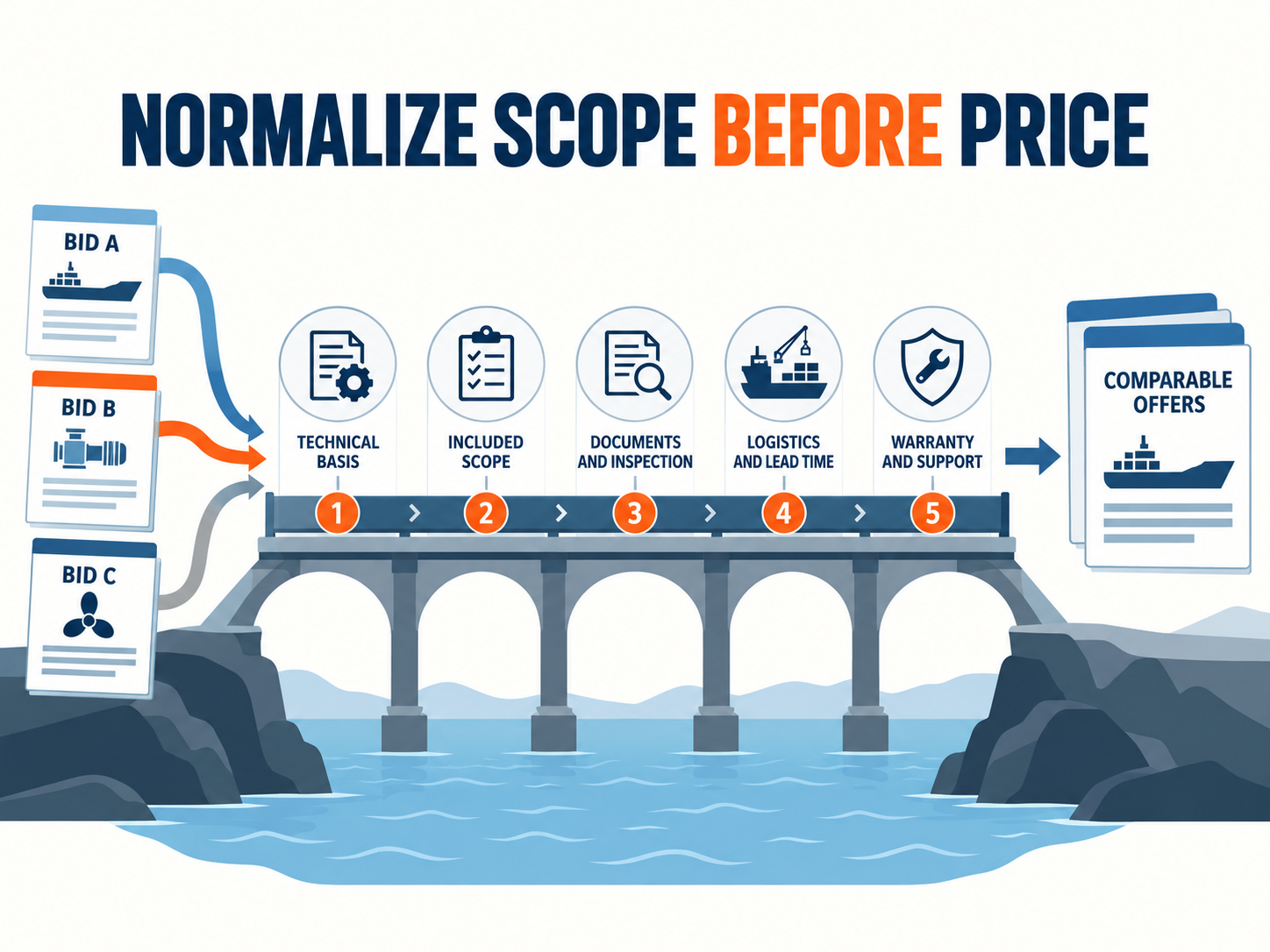
The lowest price becomes meaningful only after I confirm that competing proposals include the same deliverables and allocate the same responsibilities. In practice, buyers often receive quotations where one supplier includes installation guidance, another includes third-party witness, and a third excludes fixing hardware. Without normalization, comparing these offers is comparing different packages.
I use this bid-normalization structure to make offers comparable:
| Comparison field | Supplier A | Supplier B | Supplier C |
|---|---|---|---|
| Fender units and performance basis | Record stated basis | Record stated basis | Record stated basis |
| Fixing hardware and bolts | Record inclusion or exclusion | Record inclusion or exclusion | Record inclusion or exclusion |
| Installation drawings and guidance | Record stated availability | Record stated availability | Record stated availability |
| Third-party inspection and witness | Record stated scope or exclusion | Record stated scope or exclusion | Record stated scope or exclusion |
| Material certificates and test reports | Record stated deliverable | Record stated deliverable | Record stated deliverable |
| Packing and transport method | Record stated method and term | Record stated method and term | Record stated method and term |
| Delivery lead time from order | Record stated duration | Record stated duration | Record stated duration |
| Warranty and quality-defect responsibility | Record stated duration and scope | Record stated duration and scope | Record stated duration and scope |
| On-site technical support | Record stated inclusion or pricing basis | Record stated inclusion or pricing basis | Record stated inclusion or pricing basis |
Once this table is complete, I can compare the base price and the cost to bring every offer to the same scope. If a supplier’s price is lower but excludes third-party inspection and installation guidance, I add the cost of procuring those services separately. If one supplier’s warranty scope differs, I assess the cost of that risk over the project lifecycle.
Delivery responsibility must also be normalized. Transport terms define who owns transport risk, but they do not define who supplies interface components, who verifies dimensional tolerance, or who resolves a late shipment. I confirm these boundaries before comparing price.
When a supplier states an assumption or exclusion, I record it in the comparison table. When an assumption is not stated, I ask the supplier to clarify it. Undisclosed assumptions become invisible risks.
How Should Technical Deviations and Exclusions Be Recorded?
An exclusion or deviation that is not recorded becomes a hidden risk that surfaces only during delivery or installation.
Require every deviation, exclusion or assumption to state the affected requirement, the proposed alternative, the technical effect, who owns the resolution and when it will be closed.
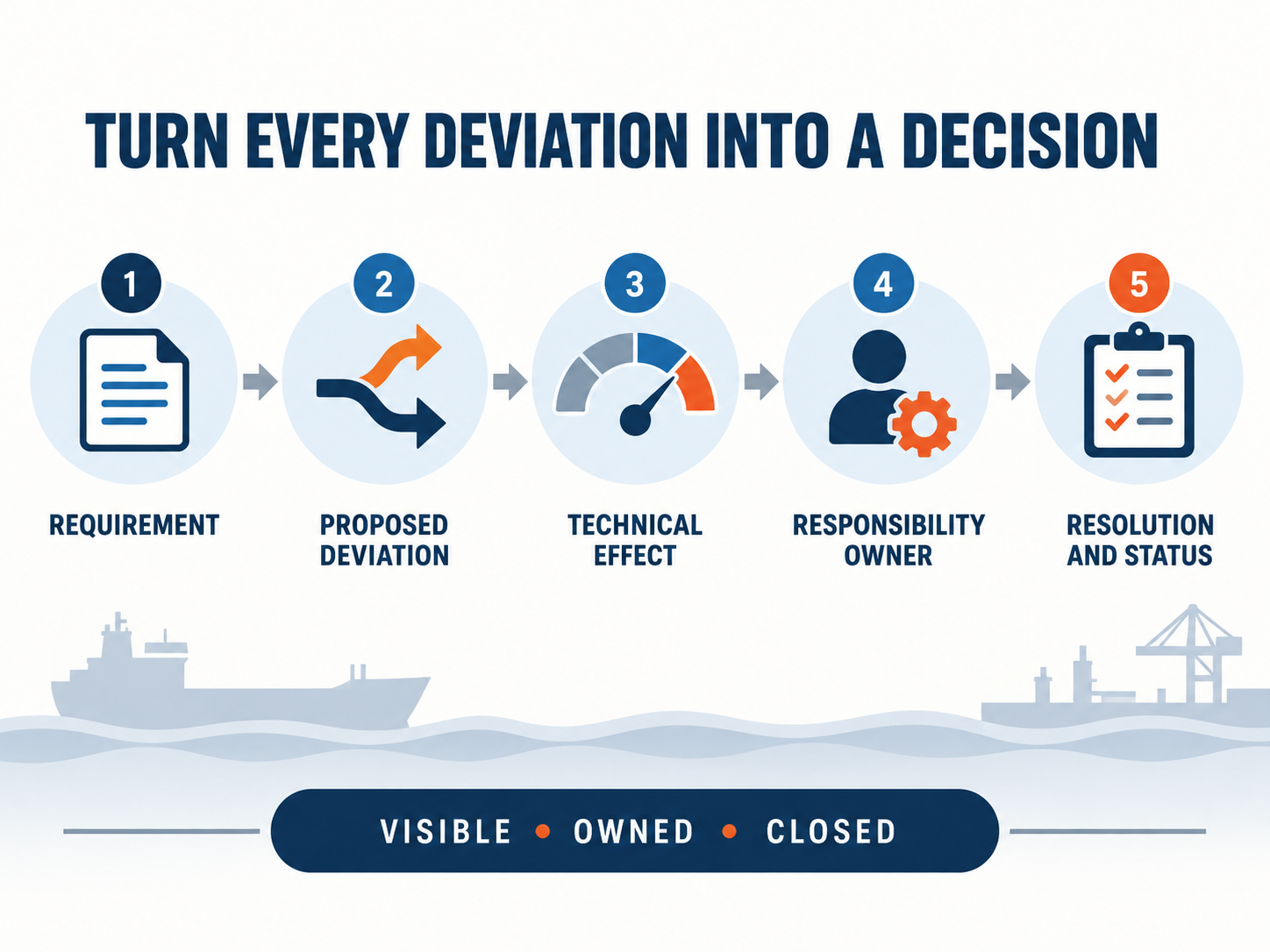
When a supplier cannot meet a stated requirement, the deviation should become a visible decision point rather than a silent risk transfer. I use a deviation-log structure to make exclusions traceable and resolvable:
Example deviation record:
| Field | Entry |
|---|---|
| Requirement affected | Third-party witness during compression testing |
| Proposed deviation | No third-party witness; manufacturer’s test report provided instead |
| Technical effect | Performance values rely on manufacturer’s declaration rather than independent verification |
| Risk or consequence | Buyer accepts increased technical risk; no independent validation of energy absorption or reaction force |
| Responsibility owner | Buyer to decide whether deviation is acceptable or whether witness is required |
| Resolution action | Buyer to confirm acceptance or request revised quotation with third-party witness included |
| Status | Open, awaiting buyer decision |
This structure prevents a deviation from disappearing into the project. When a supplier excludes fixing hardware, states an untested performance value, or assumes a berth condition that differs from the project input, the deviation log makes the gap visible and assigns responsibility for closing it.
Deviations are not inherently unacceptable. Some are minor clarifications. Others require engineering review. The log ensures that every deviation is assessed, accepted or resolved before the contract is signed.
What Evidence Supports Manufacturing and Quality Capability?
Company credentials and product-performance evidence answer different questions and should not be conflated.
Evidence must correspond to the claimed performance and the agreed verification scope; missing proof reallocates risk but does not automatically disqualify a supplier.
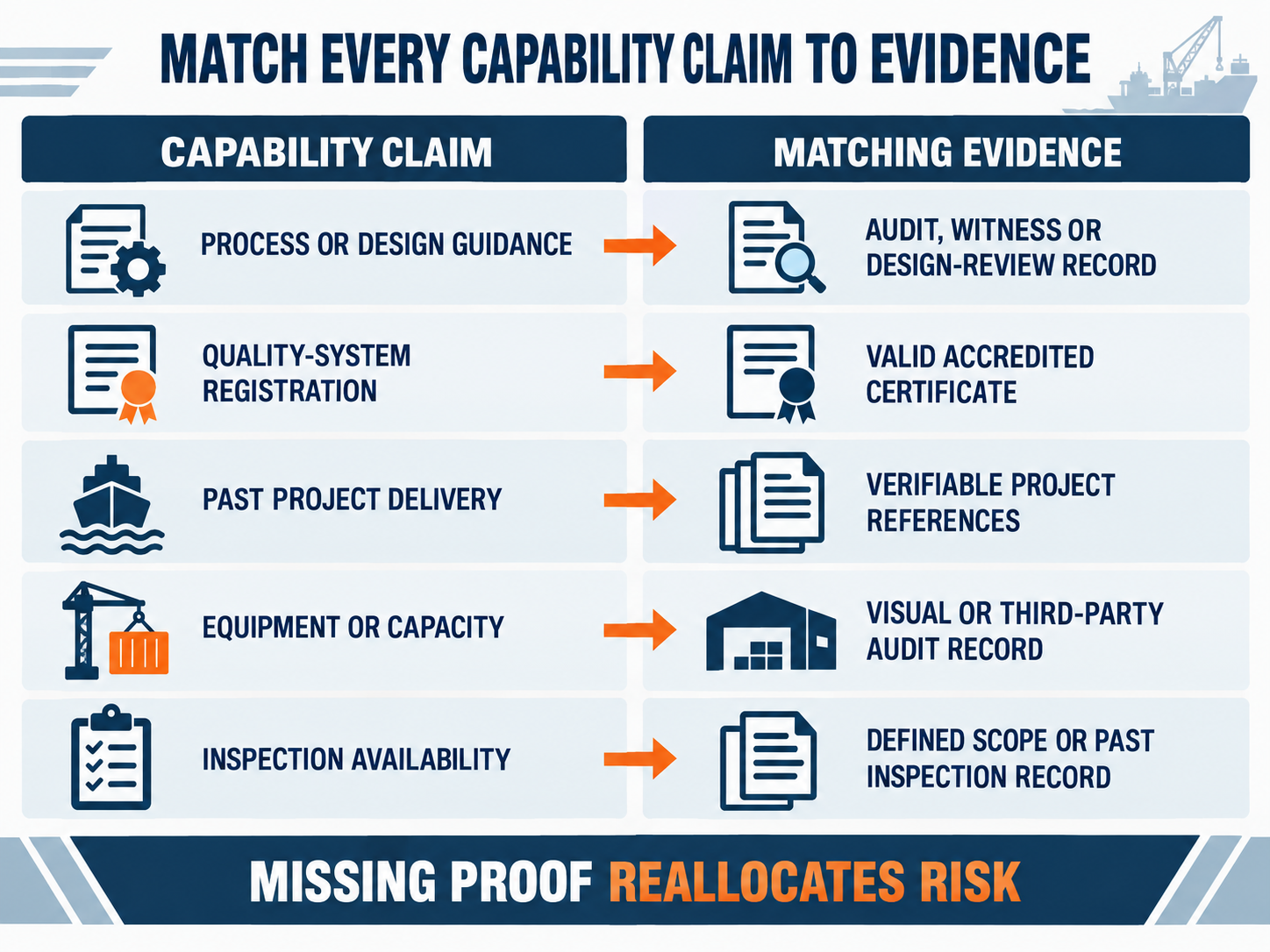
When I assess a manufacturer’s capability, I separate evidence that supports a general claim of competence from evidence that demonstrates the specific product will meet the project’s stated performance. Management-system documents, past-project lists and product-test evidence answer different questions. An ISO 9001 certificate confirms that a quality system is registered; it does not verify that this order’s berthing energy, reaction-force tolerance or material-property requirements have been tested or will be met.
I use this structure to connect a stated capability claim to the corresponding evidence type:
| Stated capability claim | Corresponding evidence type | Buyer records presence or absence |
|---|---|---|
| Stated manufacturing process or design guidance consulted | Buyer-commissioned audit, witness log or design-review record | Does the record confirm which steps were followed, or is the claim unsupported? |
| Quality-system registration | Valid certificate from an accredited registrar | Is the certificate current and does it cover the stated scope? |
| Past project delivery | Reference list with verifiable project names, dates and contact information | Can the reference be verified, and does the product type match this application? |
| Factory equipment or capacity | Photos, videos, audit records or third-party facility report | Does the evidence confirm the stated capability, and is capacity available for this schedule? |
| Third-party inspection availability | Statement of capability or past inspection records | Are inspection scope, sampling, acceptance criteria and reporting deliverables defined for this order? |
Missing evidence does not prove the product is defective or the supplier is incapable. It means the buyer inherits more risk because stated performance or capability has not been independently verified. The buyer must decide whether they can accept that allocation based on the project’s risk tolerance, the supplier’s track record and the consequences of nonconformance.
When verification evidence is incomplete, I consider the following:
- Can the supplier provide test reports or material certificates for a representative product or batch?
- Has the supplier delivered similar products to similar applications with verifiable outcomes?
- Is third-party inspection available, and can it be added to the order?
- What is the cost and schedule impact of requiring additional verification?
- What are the consequences if the product does not meet stated performance, and who owns that risk?
Where the project or contract requires testing, witness points, sampling, acceptance criteria and reports, those requirements must be specified in the RFQ and bid evaluation. The decision to require verification depends on the project’s risk tolerance, the supplier’s track record, the consequences of nonconformance and the allocation agreed in the contract.
Which Supplier Red Flags Require Further Verification?
Certain gaps should trigger clarification rather than automatic rejection, but they must be resolved before the contract is signed.
Missing performance basis, unclear evidence scope, unexplained exclusions, ambiguous witness terms and unassigned responsibilities require follow-up.
Not every gap is a red flag, and not every red flag disqualifies a supplier. But some patterns indicate the supplier has not understood the requirement or is transferring risk without disclosure. I use this escalation checklist to decide which gaps require clarification:
- Performance data without a stated basis: energy or reaction values quoted without deflection percentage, test method, temperature or cycle condition.
- Test reports that do not identify the product tested: generic test reports that reference a product family but not the specific model or batch offered.
- Unclear third-party witness scope: inspection offered without defining sampling points, acceptance criteria, nonconformance process or reporting deliverables.
- Exclusions without technical justification: scope items excluded without explaining the effect on system performance or interface fit.
- Unassigned delivery responsibilities: transport, packing, fixing-hardware supply or installation guidance not clearly allocated to supplier or buyer.
- Contradictory claims: a supplier claims certification or test evidence in marketing material but cannot provide the document when requested.
- Unwillingness to clarify assumptions: a supplier resists requests to state the design basis, verification method or responsibility boundaries.
When I encounter these gaps, I send a clarification request before rejecting the bid. In many cases, the supplier has the evidence but did not realize the buyer needed it stated. In other cases, the gap is real and the supplier must either fill it or accept that the buyer will choose a competitor who provides the missing verification.
What Should a Complete Fender RFQ and Bid-Comparison Pack Include?
A complete RFQ pack makes technical and commercial comparison repeatable and traceable.
A complete RFQ includes project inputs, performance basis, acceptance and witness scope, document requirements, delivery terms and the deviation process; the buyer selects the relevant fields for their project.
When I issue an RFQ for a fender system, I structure it so every supplier receives the same inputs and understands the same evaluation criteria. This reduces the risk of receiving incomparable offers and makes post-award disputes less likely.
The buyer or project team selects the relevant sections from the following field checklist:
| RFQ section | Possible content fields |
|---|---|
| Project overview | Facility type, berth configuration, vessel characteristics, project schedule and the buyer’s decision timeline |
| Performance basis | Berthing energy, allowable vessel motion, reaction-force limits, deflection criteria and operating environment |
| Technical specification | Fender type, dimensions, material properties, fixing method, interface loads and tolerance limits |
| Verification requirements | Test reports, material certificates, witness points, sampling ratios, acceptance criteria and reporting format that the buyer requires |
| Documentation deliverables | Drawings, installation guidance, maintenance instructions and material traceability records requested by the buyer |
| Delivery and logistics | Transport terms, packing method, transport responsibility, delivery schedule and on-site support requirements defined by the project |
| Commercial terms | Payment terms, currency, price validity and liability limits controlled by the buyer’s contracting authority |
| Deviation process | How to request a deviation, required justification, approval authority and resolution timeline |
| Evaluation criteria | Weightings for price, technical compliance, delivery schedule, verification evidence and past performance where the buyer uses weighted scoring |
When the RFQ is complete, I provide it to every candidate and set a consistent deadline for questions and clarifications. This ensures that all suppliers have the same opportunity to understand the requirement and that late clarifications do not create an uneven evaluation.
After bids are received, I use the bid-normalization table and deviation log described earlier to compare offers on a like-for-like basis. Price is the final comparison point, not the first.
Conclusion
Price comparison becomes defensible only after the technical basis, verification depth and responsibility boundaries are normalized. When you need an engineering review of your fender system specification and a comparison basis that ensures competing bids address the same scope, explore product-specific requirements for rubber fenders, foam-filled fenders and pneumatic fenders.