
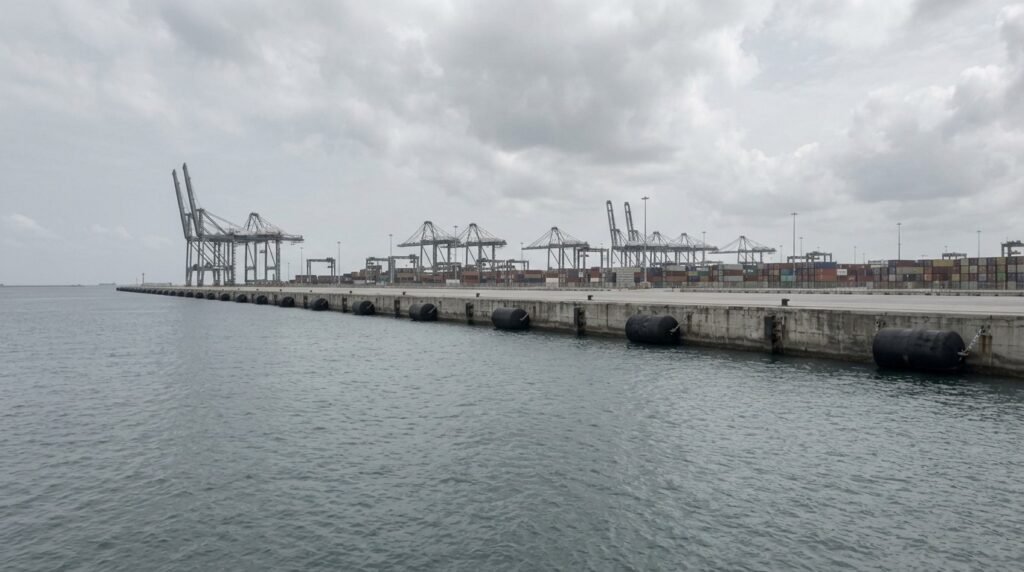
Two foam-filled fenders can look identical on the quay and carry the same size on the drawing. After repeated service, one may still rebound while another takes a permanent set. Core material is one important reason, but many quotations do not define it clearly.
An EVA foam fender uses an ethylene-vinyl acetate closed-cell core rather than the cross-linked polyethylene (PE) named in UFGS 35 59 13.17. EVA grades are often selected for rebound after high compression. The right choice still depends on foam density, compressive set, complete-fender performance and the project specification.
What Is an EVA Foam Fender?
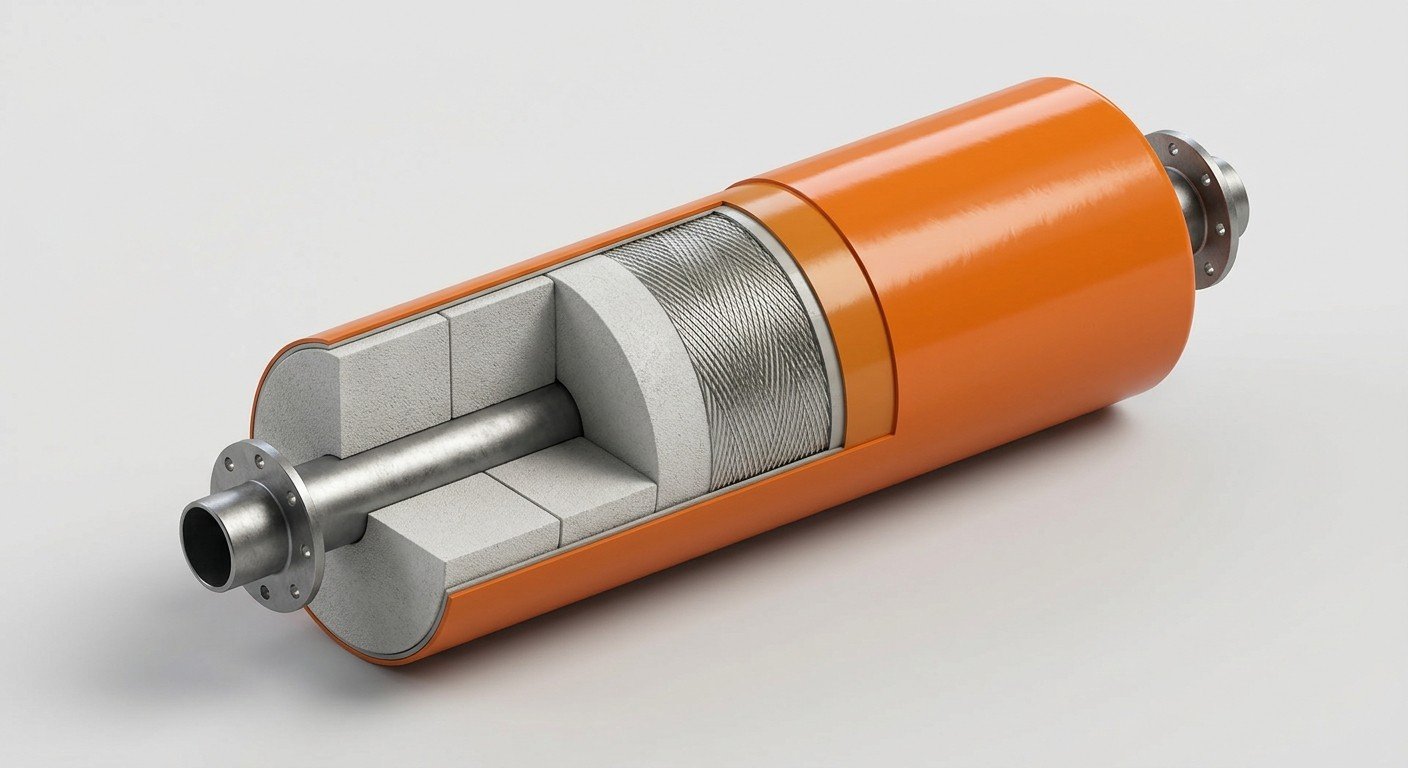
A foam-filled fender is a closed-cell foam core, wrapped in filament reinforcement, then sealed inside a thick elastomer skin. The core absorbs the berthing energy. The skin protects the core and takes the abrasion. EVA describes what the core is made of.
EVA stands for ethylene-vinyl acetate. As a closed-cell foam, it traps gas in isolated cells, so the fender stays buoyant and keeps performing even if the skin is punctured. That closed-cell structure is shared with PE foam — the split is in how the two materials behave under repeated, heavy compression.
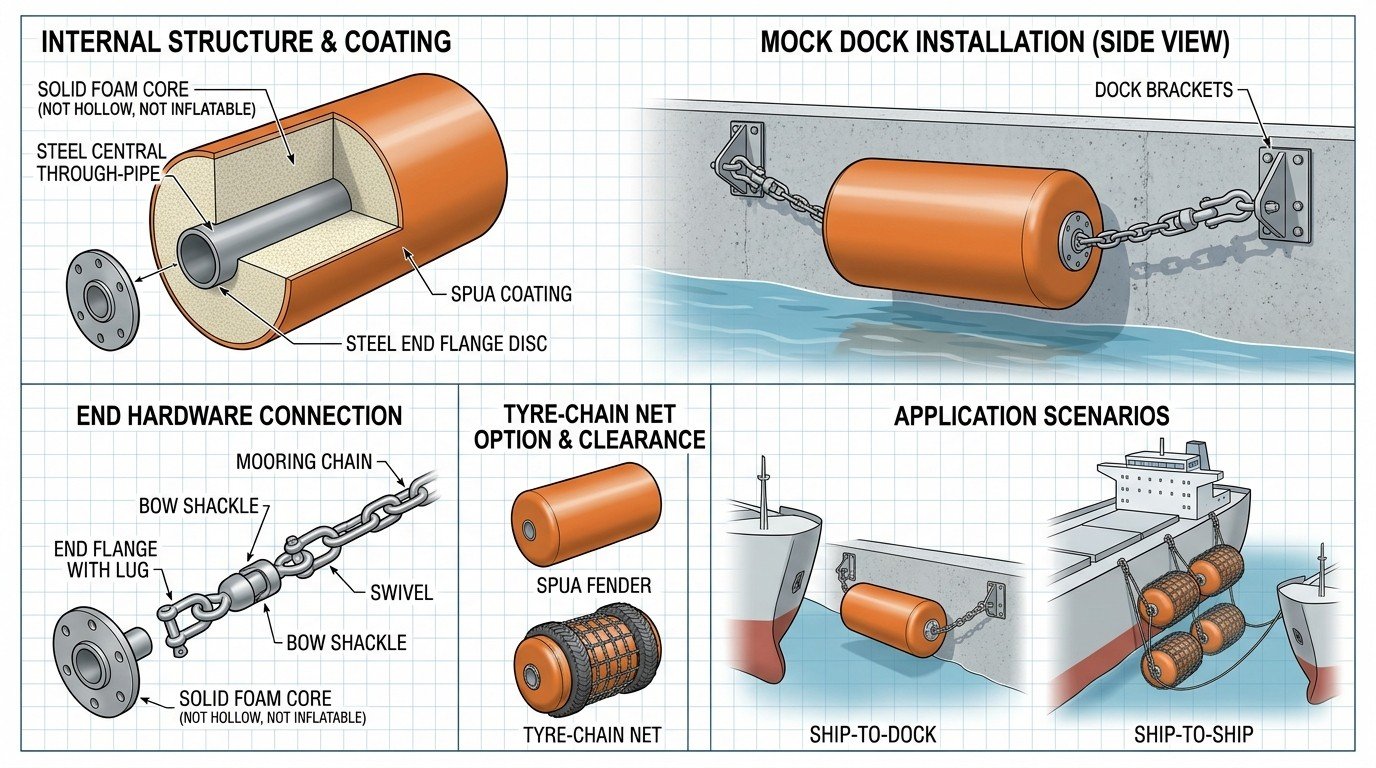
The core is one layer of a larger build. For how the whole product goes together — reinforcement, coating, end fittings — see our foam-filled fender guide. This article stays on the core, because that is the layer a low-cost quote quietly changes.
The Standard Says PE, but Some Projects Use EVA
Here is the gap most buyers never hear about. There is no dedicated international standard written only for foam-filled fenders. The industry leans on a US Navy-style specification, and that spec names polyethylene, not EVA.
UFGS 35 59 13.17 §2.1.2 states that the energy-absorbing core must be closed-cell cross-linked polyethylene. Its master-spec options show density of 52–104 kg/m³, tensile strength of at least 550 kPa, water absorption of no more than 5% by volume after 24 hours, and a continuous service range of -54 to 49°C. These bracketed values must be selected or edited for the project. Trelleborg’s published foam-fender literature also describes a uniformly wrapped core using cross-linked, closed-cell polyethylene.
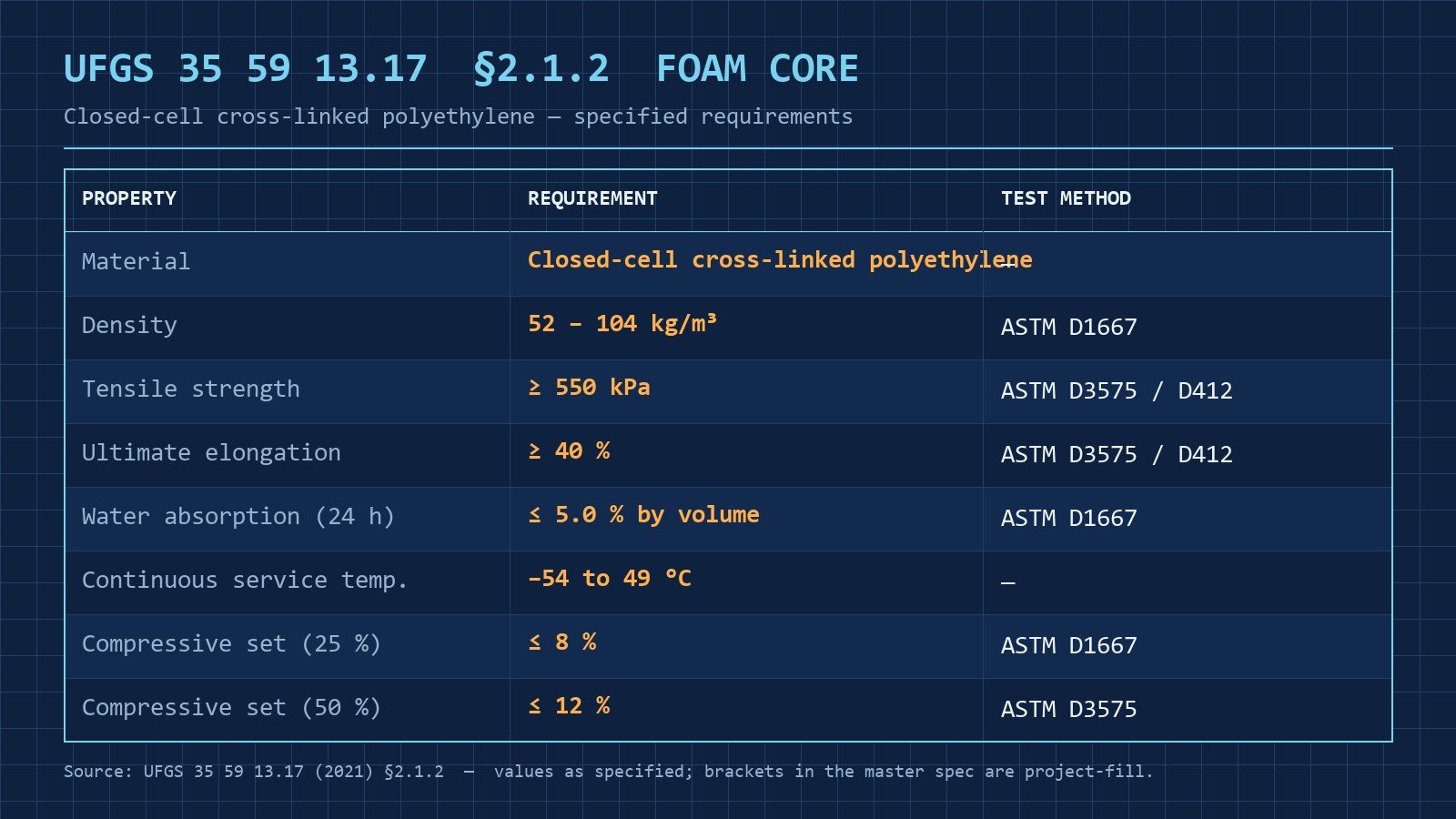
So the paper standard says PE. In the China-sourced projects and quotations I have handled, EVA cores are also common unless the project specification locks in cross-linked PE. EVA is normally the higher-cost option in these cases. The reason buyers choose it is rebound, and that is the next section.
For a buyer, this creates a quiet mismatch. Copy the UFGS clause into an RFQ and you have asked for cross-linked PE. Request a foam-filled fender without naming the core and a supplier may offer EVA or PE. Either material can be a deliberate project choice, but if nobody names it, the technical offer and the purchase order leave an avoidable gap.
Why Rebound Is the Whole Point
A fender’s job is to compress, absorb the energy, then push back to shape for the next berthing. If it cannot push back, it is no longer a fender. It is a flat pad.
The number that measures this is compressive set — the permanent deformation left after the foam is squeezed and released. UFGS provides project-fill options of 8% maximum at 25% compression or 12% maximum at 50% compression. The specification tells the editor to select one of these requirements. Lower is better. A high compressive set means the foam stays dented.
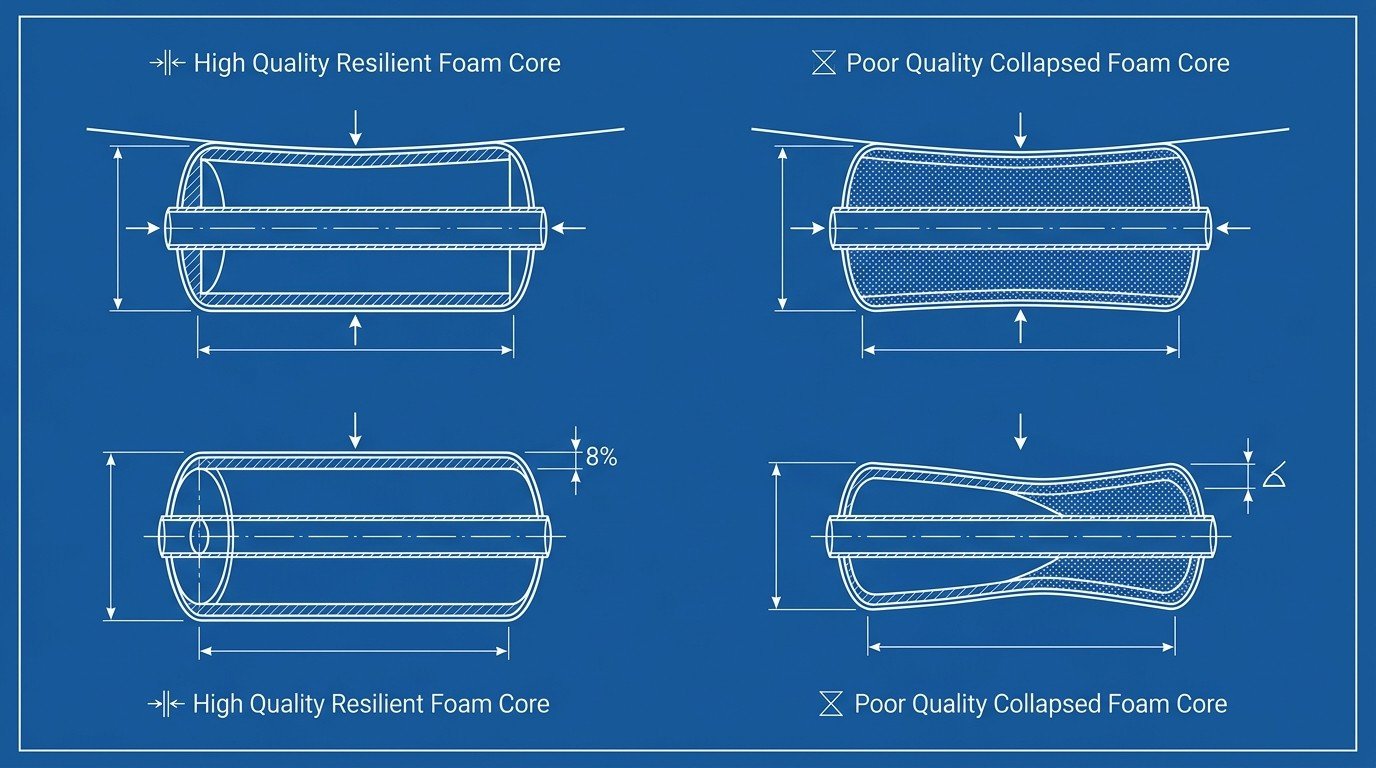
The two limits are alternative test conditions, not labels for routine and heavy berthing duty. What matters is that the RFQ states the selected requirement and asks the supplier for test evidence against it.
In my experience, core selection starts to matter most after repeated high compression. I have seen PE-core fenders remain compressed after hard service instead of returning fully to shape. That does not mean every PE grade will fail or every EVA grade will pass. Foam density, formulation, lamination, reinforcement and the actual compression history all affect the result. For the EVA grades we use, rebound is the main reason we accept the higher material cost.
EVA vs Cross-Linked PE: The Real Trade-off
Both are closed-cell foams. Both float. Both absorb energy on the first compression. The separation shows up over service life and cost, not on the day of delivery.
| Factor | EVA closed-cell core | Cross-linked PE core |
|---|---|---|
| Standard status | Widely used in practice, not named in UFGS | Named in UFGS 35 59 13.17 §2.1.2 |
| Rebound after heavy compression | The grades we use are selected for strong recovery | Depends on grade and compression history; permanent set can occur |
| Energy absorption | Must be confirmed by the complete fender performance curve | Must be confirmed by the complete fender performance curve |
| Relative cost in our sourcing experience | Usually higher | Usually lower |
| Main selection risk | Buying by material name without test evidence | Buying by material name without test evidence |
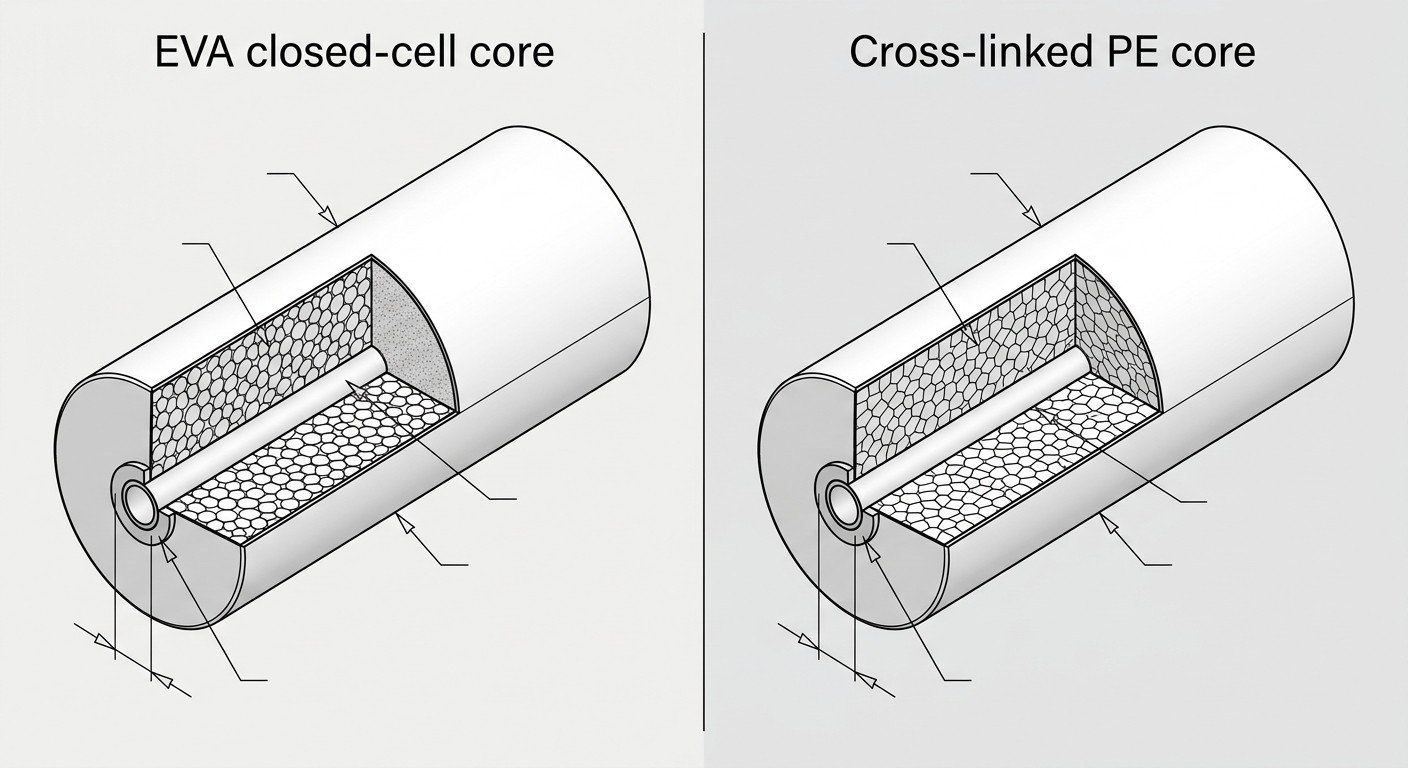
The honest read: if a specification requires cross-linked PE, we supply to that requirement. When the project allows an alternative and rebound is the main concern, I normally recommend the EVA grade we use — together with material data and complete-fender performance evidence. The trade is a higher core cost against lower permanent-set risk in the applications we have handled.
The Procurement Trap: When Cost-Cutting Flattens Your Fenders
This is the part that costs buyers real money. Foam-filled fender tenders get competitive, and price gets cut hard. A low quote may be based on a different foam grade, density or core material while the outside dimensions still look the same.
The fender arrives and passes a visual inspection. Permanent set may only become clear after repeated service. The failure is not always a burst or a torn skin. Sometimes the body simply stays compressed and loses the stand-off needed for the next berthing.
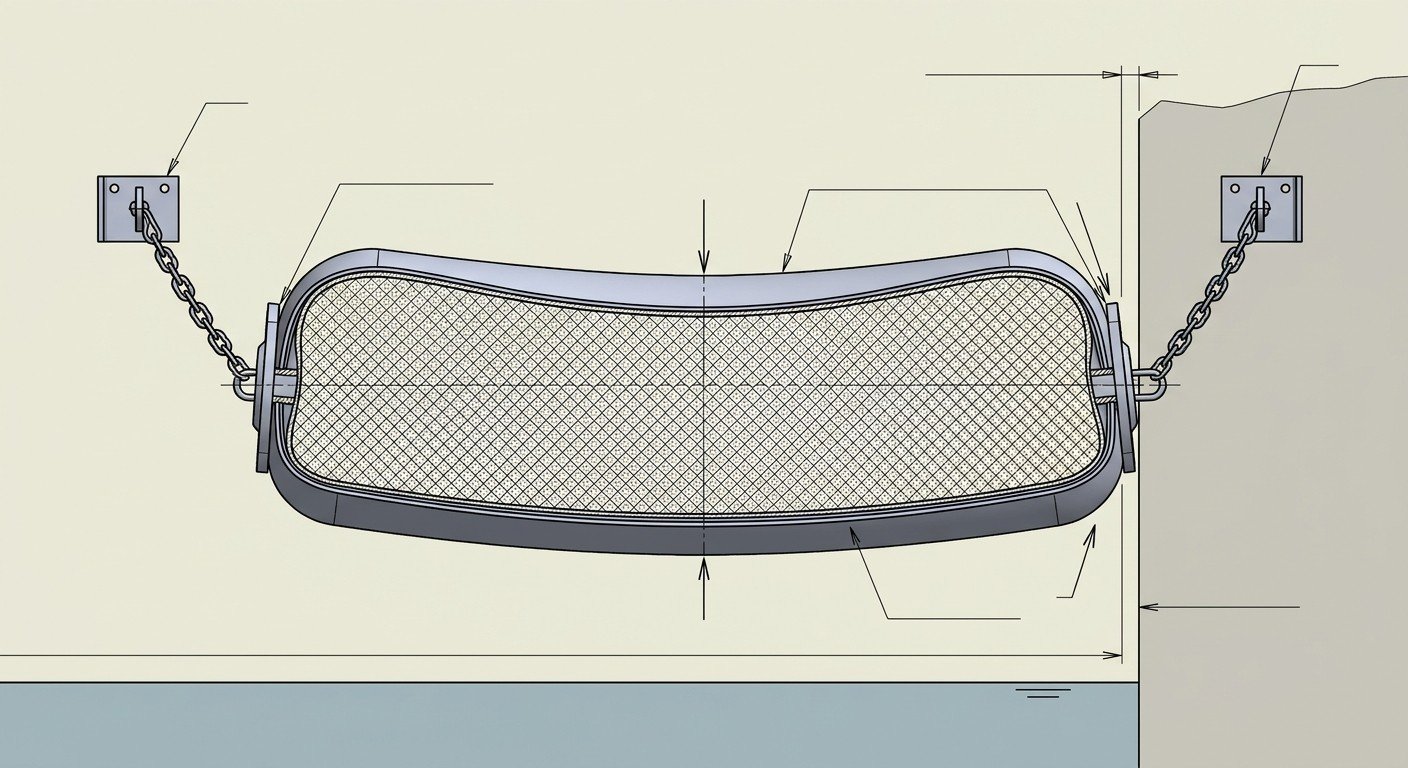
I’ve watched this happen. The skin was intact, with no obvious tear, but the fender body stayed squashed and would not return to shape. It had lost useful stand-off, so the berth no longer had the protection expected from the original size.
In one case I handled, the buyer compared quotes size for size, but the order did not name the core material or a compressive-set requirement. The fenders looked right on arrival. Later, some began sitting flat against the wall while the skins remained whole. The lesson was simple: outside size alone did not define what had been purchased.
That is why I push buyers to specify the core material, foam density, selected compressive-set requirement and supporting test method — not just size and reaction force. Also ask for the complete fender performance curve. The outer polyurea/SPUA coating protects the core, but no skin can restore a core that has taken a permanent set.
How JettyGuard Builds Foam-Filled Fenders
JettyGuard manufactures foam-filled fenders. The closed-cell foam core is a bought-in raw material; the forming, filament reinforcement, polyurea coating, and steel-fitting assembly are done in-house under our own quality control.
We normally build our foam-filled fenders with the EVA closed-cell foam grades selected for our designs, and use a cross-linked PE core when the project specification requires it. The core material is only one part of the design; density, core build, reinforcement, skin and complete-fender testing must work together. Our foam-fender production follows documented quality-control procedures from core forming through final inspection.
Frequently Asked Questions
Is EVA foam better than PE foam for fenders?
Not by material name alone. In the projects I have handled, the EVA grades we use are chosen for strong rebound after high compression. Cross-linked PE remains the material named in UFGS and can meet demanding requirements when the grade and core design are right. Compare density, compressive set, material data and complete-fender performance evidence.
Why do fender specifications call for polyethylene, not EVA?
UFGS 35 59 13.17 is a widely referenced US guide specification for foam-filled fenders, and §2.1.2 names cross-linked polyethylene. EVA is an alternative used by some manufacturers and projects, but it should not be treated as automatically compliant with a specification that explicitly requires PE. Any deviation needs to be declared and accepted.
What is compressive set and why does it matter?
Compressive set is the permanent deformation left in the foam after it is compressed and released. UFGS provides editable options of 8% maximum at 25% compression or 12% maximum at 50% compression and instructs the specifier to select one. A high result means more permanent deformation and less rebound.
How do I reduce the risk of buying a fender that takes a permanent set?
Specify the core material, density, selected compressive-set limit and test method in the RFQ, not just size and reaction force. Ask the supplier to declare any deviation and provide the complete-fender performance data. This makes quotations comparable before purchase.
Specifying foam-filled fenders? Send us your vessel size, berthing energy and operating environment through our foam-filled fender enquiry page. We’ll recommend the core material, density and fender performance range for the duty.