
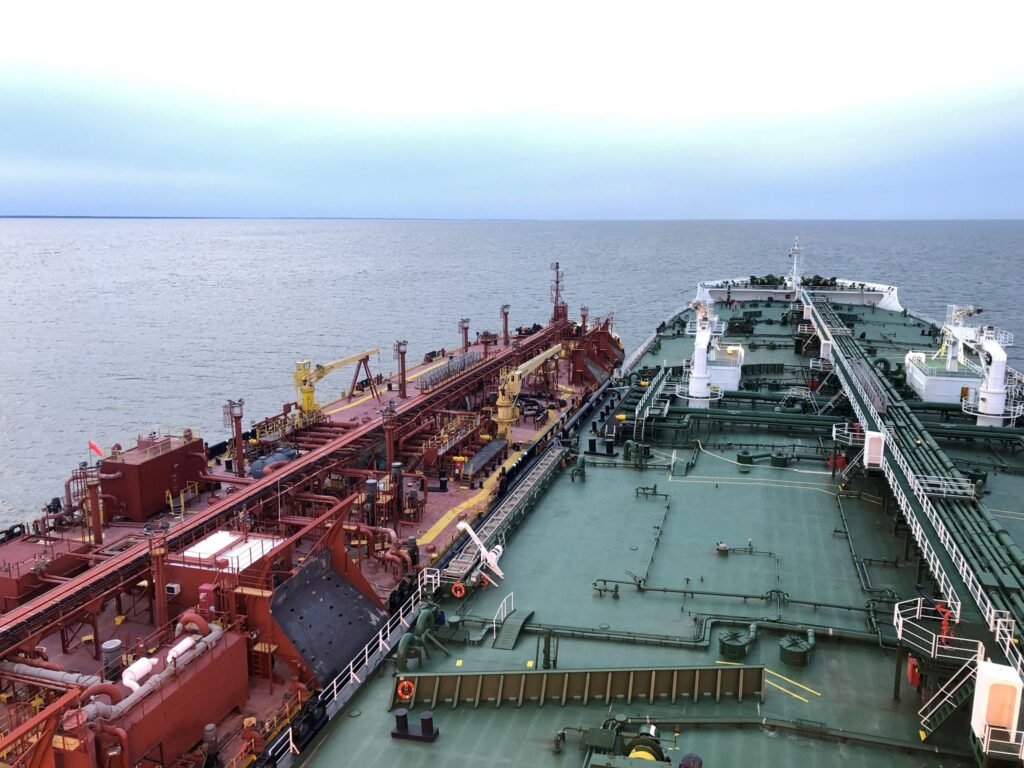
You need to transfer cargo between vessels, but you don’t know whether you need an operation plan or a fender quotation first.
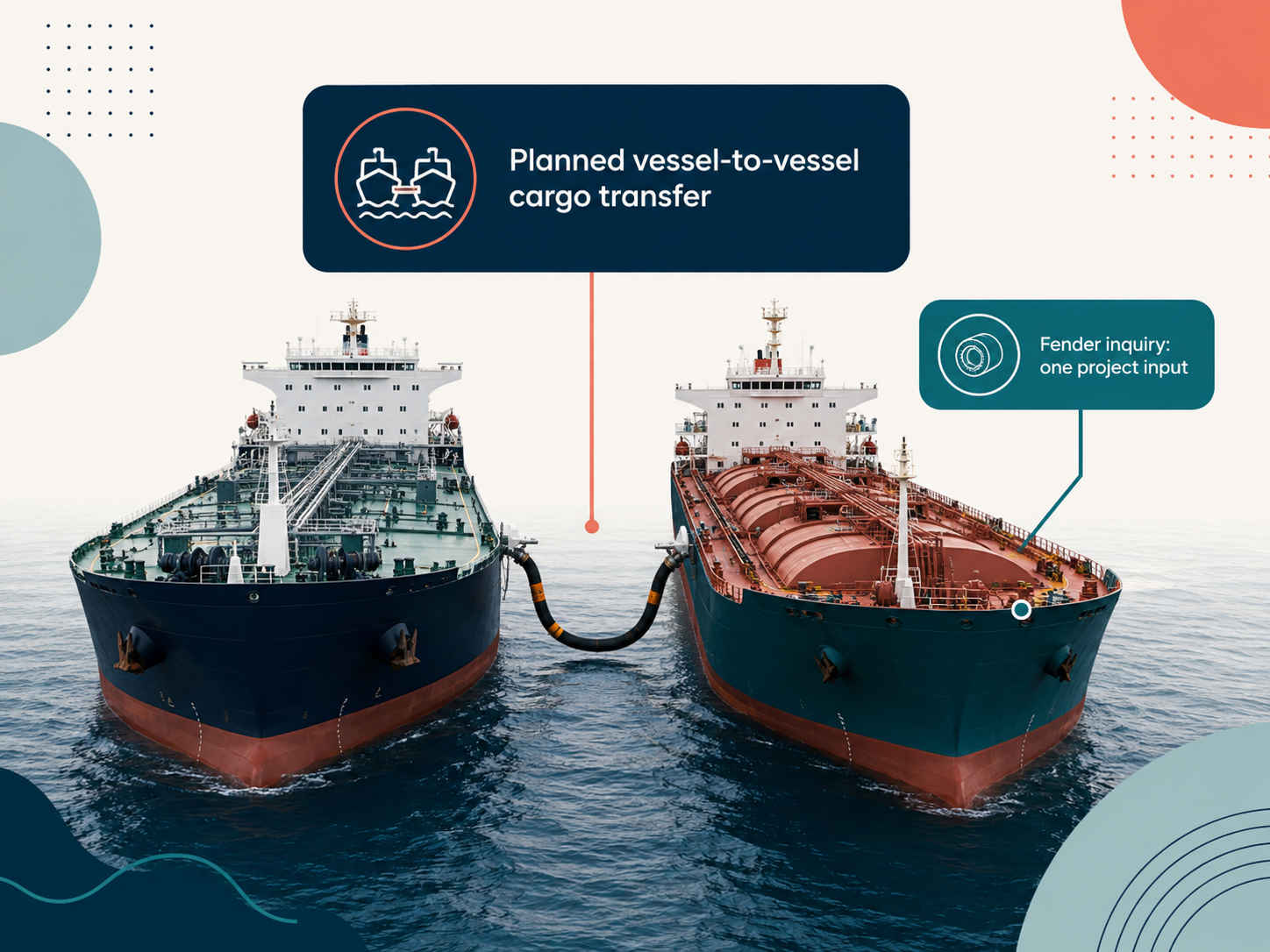
Ship-to-ship transfer is a planned vessel-to-vessel cargo operation requiring compatibility review, operational coordination, and equipment planning. Fender selection is one project-specific part of that planning, not the operation itself.
If you have an operational transfer plan with vessel information, location, and coordination, you’re working within the STS operation scope and you should confirm compatibility and review equipment needs. If you have a product inquiry without vessel, operating, or engineering inputs, you need to prepare vessel data, operating scenario, and project constraints before comparing products. A fender supplier cannot substitute for operational planning. When you separate the operation from the fender decision, you can prepare the inputs that make comparison meaningful.
What Does an STS Operation Cover?
You know what ship-to-ship transfer means, but you need to understand where the operation ends and a fender inquiry begins.
An STS operation covers vessel compatibility, operating location and conditions, risk assessment, coordination procedures, the planned vessel interface, cargo-transfer planning, and clear assignment of responsibilities. A fender inquiry is one equipment scope inside that wider operation.
The OCIMF Ship to Ship Transfer Guide for Petroleum, Chemicals and Liquefied Gases describes the operational scope that must be established before equipment can be meaningfully specified. That scope includes compatibility information: vessel dimensions, freeboard, manifolds, mooring points, and fenders. It includes risk assessment: the operating location, environmental conditions, cargo characteristics, and agreed procedures. It includes coordination: the parties responsible for planning, execution, and oversight, and the communication protocols that connect them.
A fender inquiry addresses one part of that operation. When you ask for an STS fender, you’re selecting equipment to manage the vessel interface during the transfer. That selection depends on the operational inputs: which vessels, what operating scenario, what contact conditions, and what project constraints. A fender supplier cannot replace that planning. The supplier needs those inputs to recommend a product that fits the actual transfer.
When I receive an STS fender inquiry, I confirm whether the operational scope is ready. If the vessels, the operating scenario, and the coordination plan are already in place, the project is ready for a fender discussion. If those inputs are still being prepared, the inquiry should go back to the operational planning stage first. A fender request that arrives before the operation is defined asks the supplier to assume the operational inputs.
An operation plan establishes the compatibility, risk, coordination, and interface requirements that procurement must meet. A fender inquiry progresses that plan by addressing one equipment scope after the operation has provided the inputs that make selection defensible.
When Is an STS Transfer Used?
You see STS mentioned in different contexts, but you’re not sure when it applies to your project.
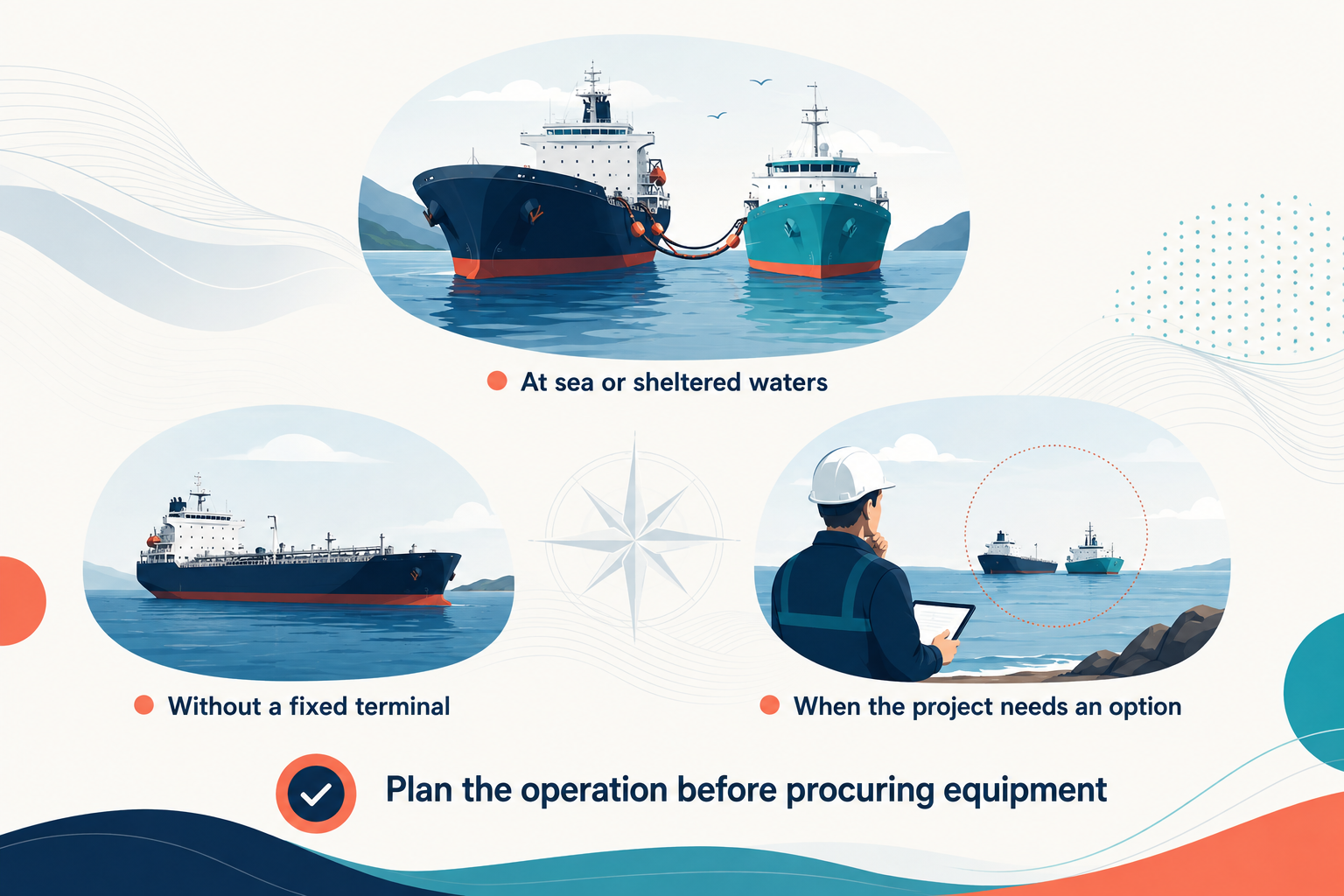
STS transfers are used when cargo must move between vessels at sea, in sheltered waters, or near a port without using fixed terminal infrastructure. The decision depends on operational, commercial, or logistical constraints.
Three common situations illustrate when STS applies:
- A vessel-to-vessel transfer is planned at sea or in sheltered waters and you need to confirm whether this is a planned operational transfer requiring compatibility and risk review, not just equipment procurement.
- Cargo must move between vessels without fixed terminal use, and you need to identify what compatibility, risk, equipment, and coordination inputs are needed before selecting suppliers.
- A vessel-to-vessel transfer is being considered as an option, and you need to resolve what operational, commercial, or logistical constraints make this relevant before requesting equipment quotations.
STS is a planned vessel-to-vessel cargo operation. The OCIMF guide describes its planning phase as including vessel identification, cargo compatibility, location selection, weather assessment, and coordination of the parties who will conduct the transfer.
If you’re deciding whether to use STS, confirm that the operational plan can provide compatibility information, risk assessment, location approval, equipment coordination, and the accountable parties before requesting equipment or services. That planning phase establishes the boundary between the operational need and the equipment supply decision.
When I see an STS inquiry that doesn’t state the operational context, I ask why the transfer is being considered and what constraints the project must meet. That question separates a real operational need from a generic equipment search.
How Does a Ship-to-Ship Transfer Work?
You need to understand the high-level process before you discuss equipment or services.
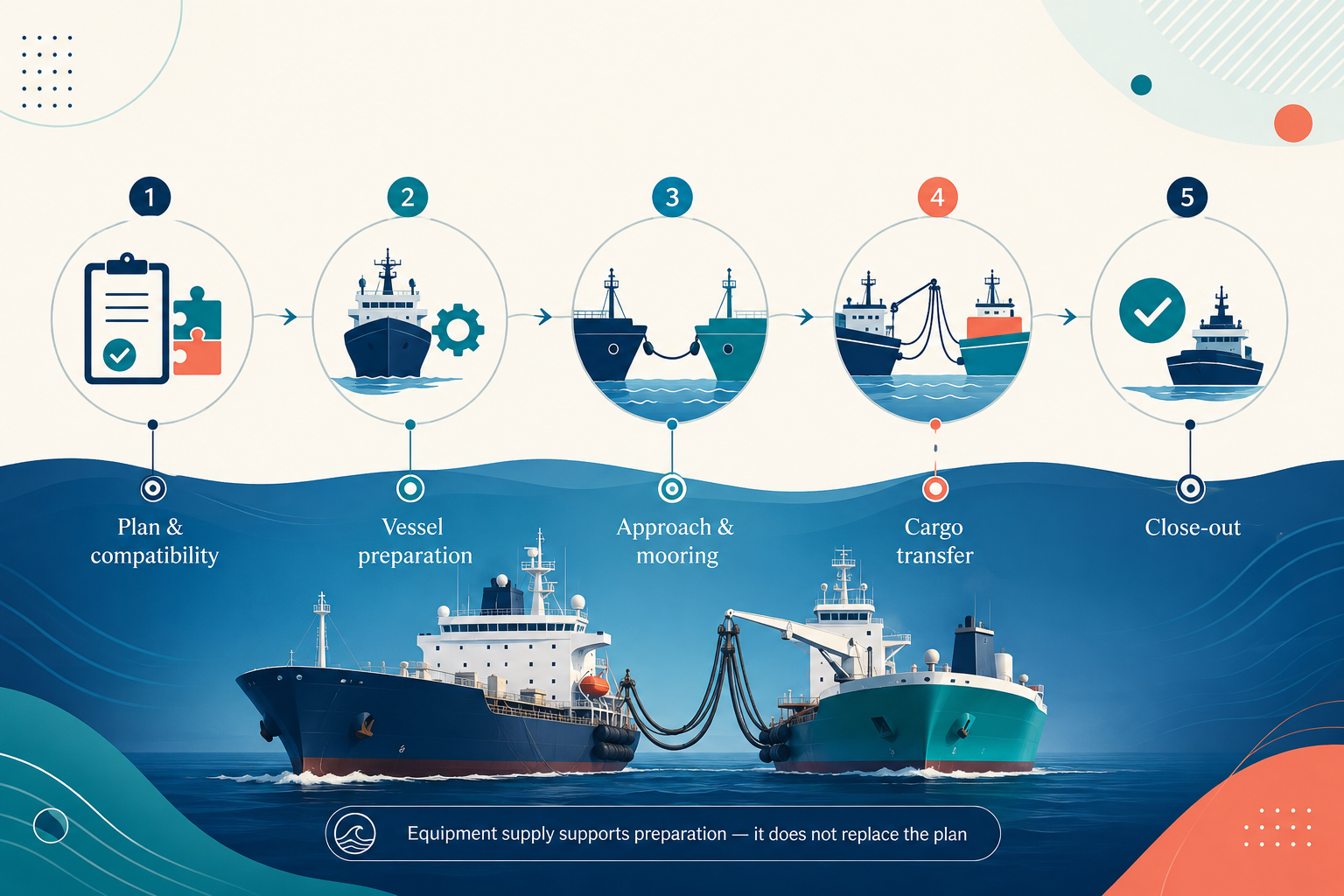
An STS transfer follows a planned sequence: operational planning and compatibility review, vessel preparation, approach and mooring, cargo transfer, and close-out. Equipment supply is one part of that preparation, not the entire process.
The OCIMF guide describes operational planning and compatibility review as the starting point of an STS transfer. That planning phase identifies the vessels, reviews their compatibility information, assesses the operational risks, and establishes the coordination and communication procedures that the transfer will follow. If you’re preparing an STS project, complete that planning phase before requesting equipment quotations.
Vessel preparation includes arranging the equipment that the transfer needs: mooring lines, fenders, hoses or arms, communication systems, and inspection tools. A product supplier delivers equipment to the vessel or a designated location, but the deployment, rigging, and operational use of that equipment remain the responsibility of the vessel’s crew or a designated service provider. If you’re requesting equipment, state whether the supplier’s scope includes delivery only, or whether it also includes on-site guidance.
The approach, mooring, transfer, and close-out phases are operational activities conducted by the vessels’ Masters and crews, with coordination and advisory support where applicable. A fender supplier doesn’t control those phases. If you’re evaluating an equipment quotation, confirm that the operational plan, the crew briefing, and the coordination procedures are already in place, and that the equipment specification fits the approved compatibility and risk-assessment results.
When I explain the STS process, I emphasise that a product quotation doesn’t replace the operational plan. You must prepare the compatibility information, assess the operational risks, and confirm the coordination procedures before a supplier can deliver a meaningful equipment scope.
Who Is Involved in an STS Operation?
You receive an inquiry or a quotation request, but you’re not sure who is responsible for what.
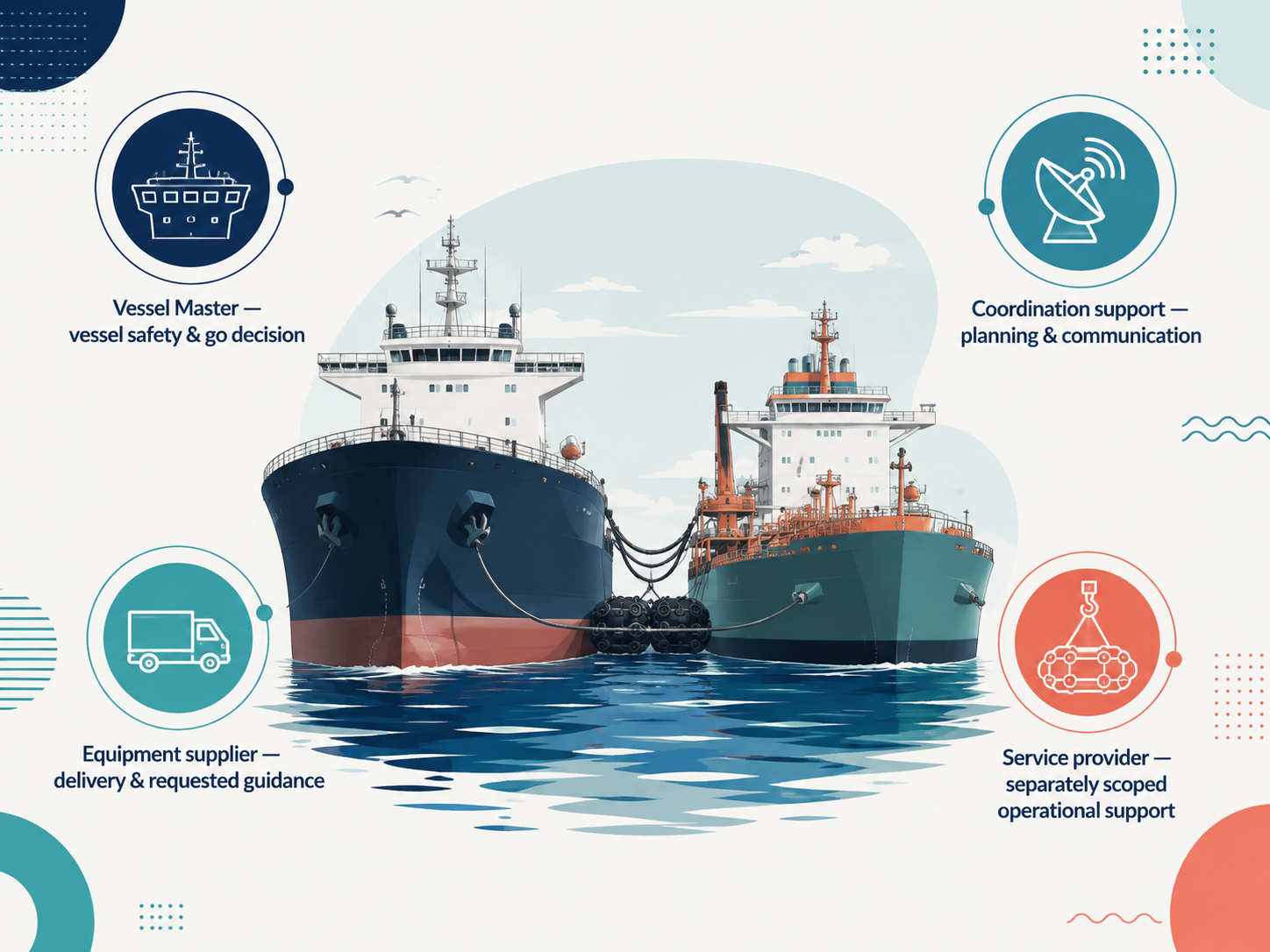
An STS operation involves vessel Masters, a designated coordinating or advisory role where applicable, equipment and service providers, and sometimes port or coastal authorities. Each party has a distinct scope that must be stated before equipment is supplied.
The OCIMF guide describes the Master’s responsibility for the safety of their own vessel and the decision to proceed with the transfer. That responsibility cannot be delegated to a product supplier, a service provider, or a coordinating party. If you’re requesting equipment, confirm that the operational plan, the compatibility review, and the Master’s approval are already in place before the supplier delivers the product.
A designated coordinating or advisory role, where applicable, supports the planning and communication between the vessels. That role doesn’t replace the Master’s command or the operational responsibility. If you’re evaluating a project, confirm which party holds that role and what their scope includes.
An equipment supplier delivers the product to the vessel or a designated location. At JettyGuard, we supply fenders and deliver them to the agreed point, and we can provide on-site guidance when the project requests it. We don’t deploy the fenders operationally, rig the mooring lines, or conduct the transfer. That distinction protects the project from assigning operational responsibility to a party who doesn’t hold it.
A service provider may deploy the equipment, inspect the rigging, or provide standby support. That scope must be stated separately. If you’re preparing an STS project, distinguish the equipment-supply scope from the service-provider scope, and confirm that the operational plan assigns each responsibility to the correct party.
When I review an STS inquiry, I ask who is responsible for the operational plan, who will deploy the equipment, and who holds the authority to approve the transfer. That question prevents the project from assigning a supplier’s delivery scope to an operational execution role.
What Equipment Is Required for STS Transfer?
You need to understand what equipment an STS operation requires, but you’re not sure how to separate compatibility planning from a shopping list.
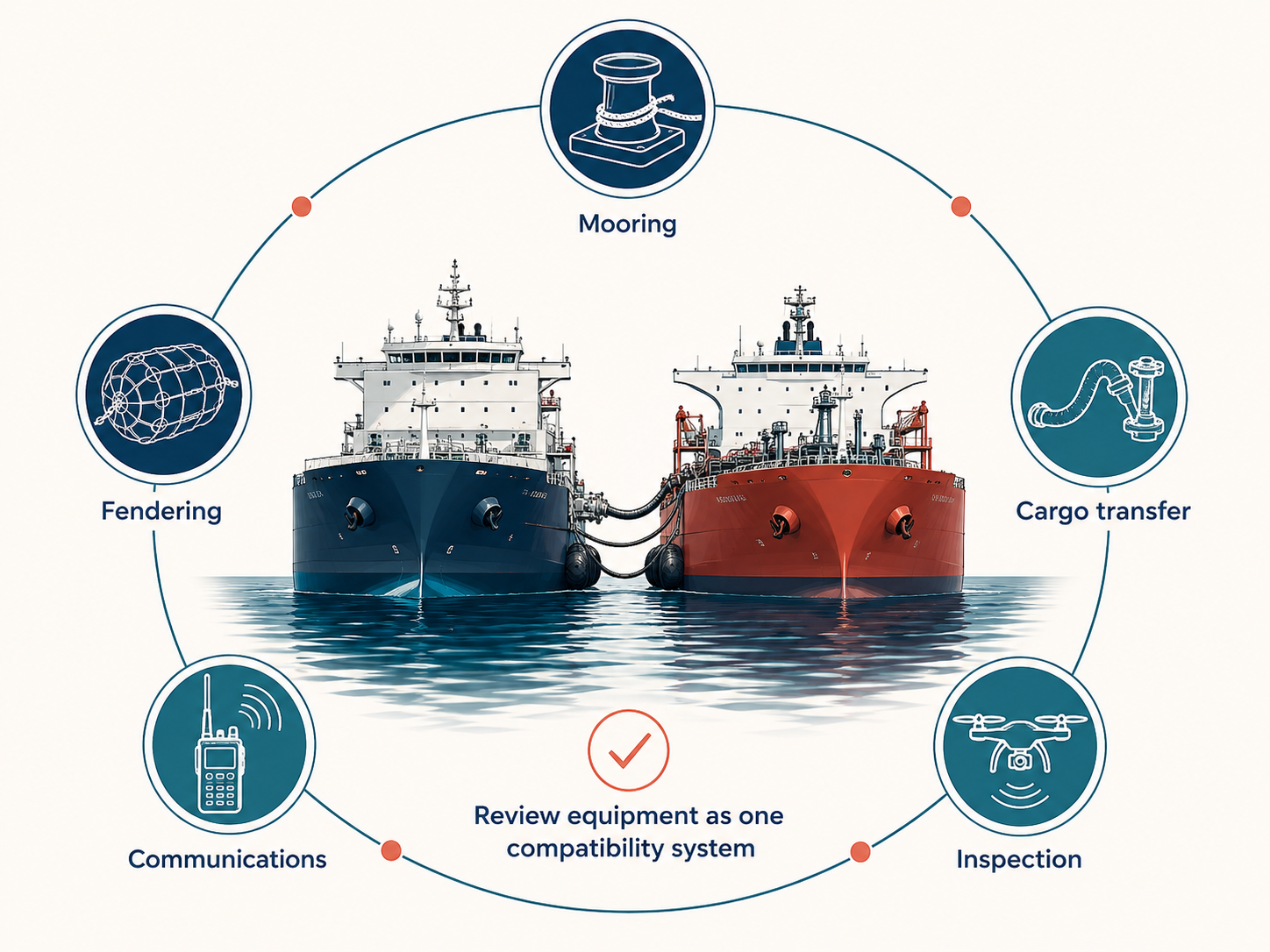
STS equipment includes mooring lines, fenders, cargo transfer hoses or arms, communication systems, and inspection tools. These items must be reviewed as part of vessel compatibility and operational planning, not purchased as a standalone list.
The OCIMF guide states that fendering and equipment belong in the pre-operation planning and compatibility review. That review examines the equipment as part of the operational system, not as isolated products. If you’re requesting equipment, prepare the compatibility information that allows a supplier to confirm whether the proposed product fits the actual vessels, the operating conditions, and the transfer plan.
A product supplier cannot specify these items without the operational inputs. If you request a fender quotation without stating the vessels, the operating scenario, the contact conditions, and the project constraints, you’re asking the supplier to assume those inputs. Prepare the compatibility information, review the equipment requirements as part of the operational plan, and then request product quotations that fit the approved inputs.
When I receive an equipment inquiry, I ask whether the operational plan has already reviewed the equipment requirements and whether the compatibility information is available. If the answer is no, I recommend preparing that information before comparing products. That preparation protects the project from selecting equipment that doesn’t fit the actual transfer.
Where Do Marine Fenders Fit in the STS Process?
You know fenders are part of an STS operation, but you’re not sure when to discuss them or what information you need.
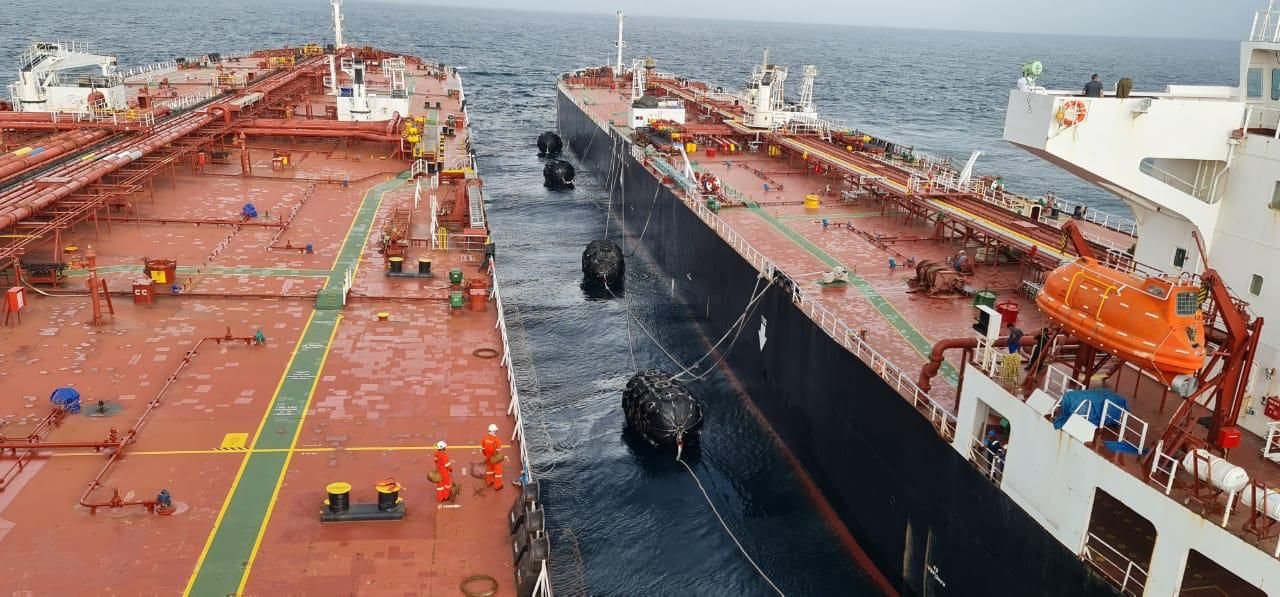
Marine fenders enter the STS discussion during the operational planning and compatibility review phase, after the vessels, operating scenario, and contact conditions are known. A fender inquiry before that phase cannot produce a defensible comparison.
The project-readiness inputs determine when a fender discussion becomes productive. If the vessel identification and operating scenario are already known but energy calculation inputs, hull contact geometry, or deployment method are still needed, the project is ready for an engineering-level fender review. If only the generic STS operation type is known and vessel data, relative closing velocity, freeboard, or project constraints are still needed, the project requires a compatibility review before a fender inquiry can begin. If there is fender product interest without vessel or project data, all operational and engineering inputs must be prepared through operational planning first.
The PIANC Fender Guidelines describe a near-shore or in-port STS energy calculation that considers both vessels’ displacement and added-mass effects, the relative closing velocity, and the contact location and eccentricity assumptions. That calculation provides the engineering basis for a fender comparison. The PIANC scope is explicit: it covers in-port or near-shore STS, while offshore STS activity is covered by OCIMF guidance.
A fender inquiry that arrives before the vessels, the operating scenario, or the engineering inputs are known cannot produce a meaningful result. Some inquiries state “STS fender” but don’t provide the vessel pair, the operating location, the relative velocity, the freeboard, the expected service life, or the budget. That inquiry asks the supplier to assume those inputs. The supplier cannot.
I’ve seen consultant-led RFQs that start with a familiar pneumatic-fender standard and move directly to quotation, without documenting whether a foam-filled alternative was evaluated against the operating and project conditions. A familiar standard isn’t the problem. Product procurement becomes weak when it starts before available fender types have been compared against the operating and project conditions.
Apparently similar pneumatic-fender offers may not be equivalent when construction approach, quality evidence, expected service life, and price basis differ. When you compare fenders, request product documentation and evidence that supports the comparison.
At JettyGuard, we supply pneumatic fenders. We can discuss fender options when the operational plan has provided the vessel data, the operating scenario, and the project constraints. We cannot recommend a fender type, calculate a size, or provide a meaningful quotation without those inputs. If you’re ready for a project-specific fender discussion, visit our ship-to-ship transfer fenders page to understand what information makes that discussion productive.
What Information Is Needed to Select STS Fenders?
You’re ready to request a fender quotation, but you’re not sure what information the supplier needs.
Selecting an STS fender requires vessel identification and displacement, operating scenario and relative closing velocity, contact geometry and eccentricity treatment, freeboard and compatibility data, and project constraints including budget, expected service life, documentation requirements, and delivery versus deployment responsibility.
| Input group | Why it matters | Source or responsible party |
|---|---|---|
| Both vessels’ identification and loading condition or displacement | Vessel mass and added-mass effects drive the energy calculation and fender selection | Vessel owner, operator, or operational planner |
| Operating scenario and relative closing velocity | The closing velocity determines the kinetic energy the fender must absorb | Operational planner or engineering consultant |
| Contact location, geometry, and eccentricity treatment | The contact point and hull shape affect the energy distribution and fender stability | Engineering consultant or operational planner using approved calculation methods |
| Freeboard and compatibility information | The freeboard affects fender deployment, rigging, and stability during the transfer | Vessel compatibility review or operational plan |
| Budget, expected service life, and documentation requirements | These constraints determine which product options are viable and what evidence the project needs | Project owner, procurement manager, or engineering authority |
| Delivery versus deployment responsibility | The supplier’s scope must state whether it includes delivery only or also on-site guidance | Procurement and operational planning agreement |
The PIANC Fender Guidelines state that an in-port or near-shore STS calculation depends on the displacement of both vessels, the added-mass coefficient for each vessel, the relative closing velocity, the contact location, and the eccentricity factor. That calculation framework is public, but the project-specific values are not. A supplier cannot calculate the fender requirement without those values.
If you request a fender quotation, provide the vessel names or types, their loading conditions, the operating location, the environmental conditions, and the expected closing velocity. If the project hasn’t calculated those values yet, state that the calculation is pending and request preliminary options based on a bounded scenario. That approach allows the supplier to provide an initial scope and identify the inputs that will refine the final recommendation.
The project budget and expected service life are commercial constraints that affect the product comparison. If you don’t state those constraints, you’re asking the supplier to assume them. State the budget range, the expected service life, and the documentation requirements, and then request options that fit those boundaries.
The distinction between product delivery and deployment must be stated before the quotation. At JettyGuard, we deliver fenders to the agreed point and can provide on-site guidance when the project requests it. We don’t deploy the fenders operationally, and we don’t accept deployment responsibility unless that scope is explicitly agreed and documented. If you’re requesting a fender quotation, confirm whether the supplier’s scope includes delivery only, whether it includes on-site guidance, or whether a separate service provider will handle the deployment.
I’ve observed two situations that should prompt deeper evidence review. If a fender fails under routine operation after roughly three years, that’s a signal to request project-specific product evidence before selecting. Three years is not an expected service-life benchmark; it’s a warning sign. If prices for apparently similar products differ by more than fivefold, that spread isn’t typical. It suggests hidden differences in construction approach, quality evidence, or expected service life. Both situations call for evidence-based comparison rather than accepting the inquiry as it arrived.
I recommend that you prepare a bounded information pack before requesting quotations: vessel pair, operating scenario, energy calculation or preliminary inputs, project constraints, and delivery versus deployment scope. That preparation allows suppliers to provide comparable quotations and identify the evidence that separates a viable option from an unsuitable one. If you’re ready for that discussion, visit our ship-to-ship transfer fenders page to review the project-specific inputs that make a fender selection defensible.
Conclusion
Separate the STS operation from the fender decision, prepare the compatibility and engineering inputs, and request quotations only when the project boundaries are clear. For project-specific fender selection guidance, visit our ship-to-ship transfer fenders page.